Wu Zhi-Feng, Wang Ying, Yang Ping, Hou Jia-Zhou, Zhang Jian-Ying, Hu Yong, Zeng Zhao-Chong
Department of Radiation Oncology, Zhongshan Hospital, Fudan University, Shanghai 200032, P.R. China.
Department of Ultrasonography, Huashan Hospital, Fudan University, Shanghai 200032, P.R. China.
Oncol Lett. 2018 Jun;15(6):9599-9608. doi: 10.3892/ol.2018.8583. Epub 2018 Apr 26.
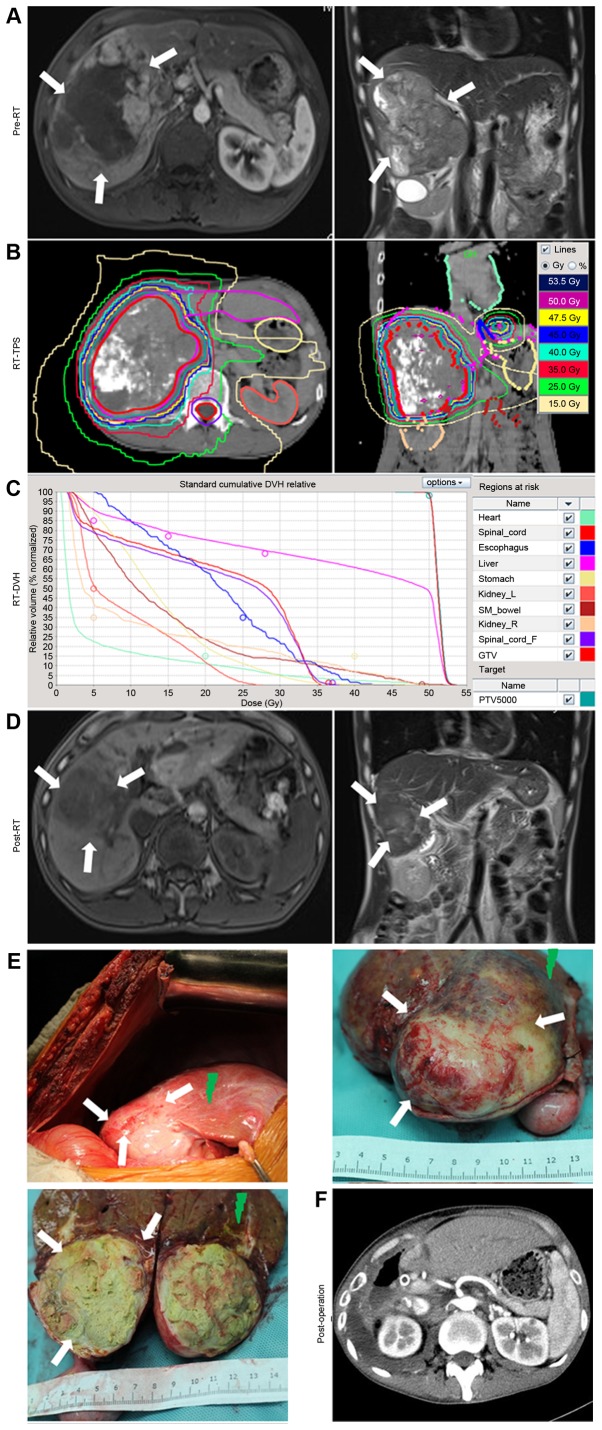
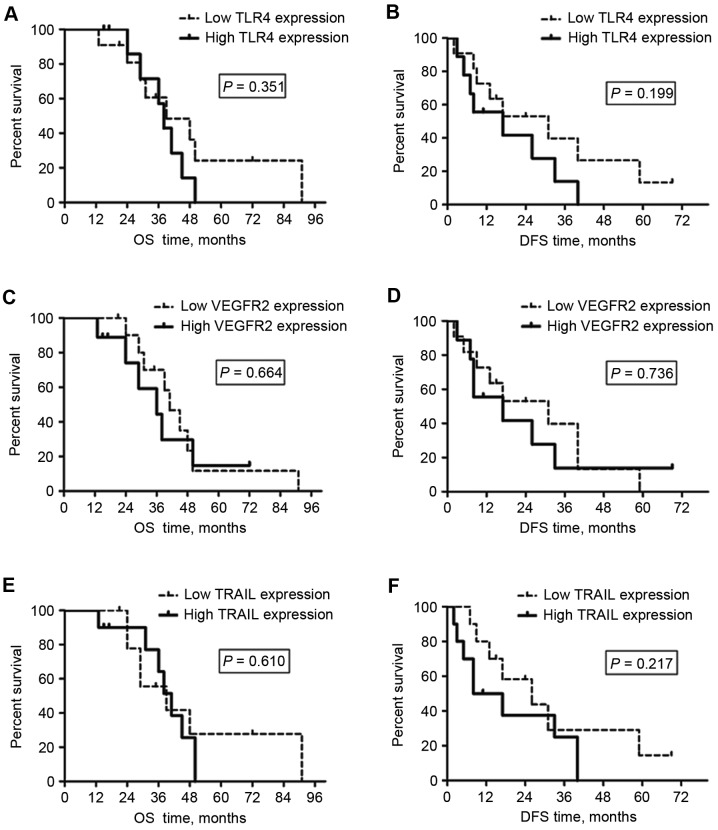
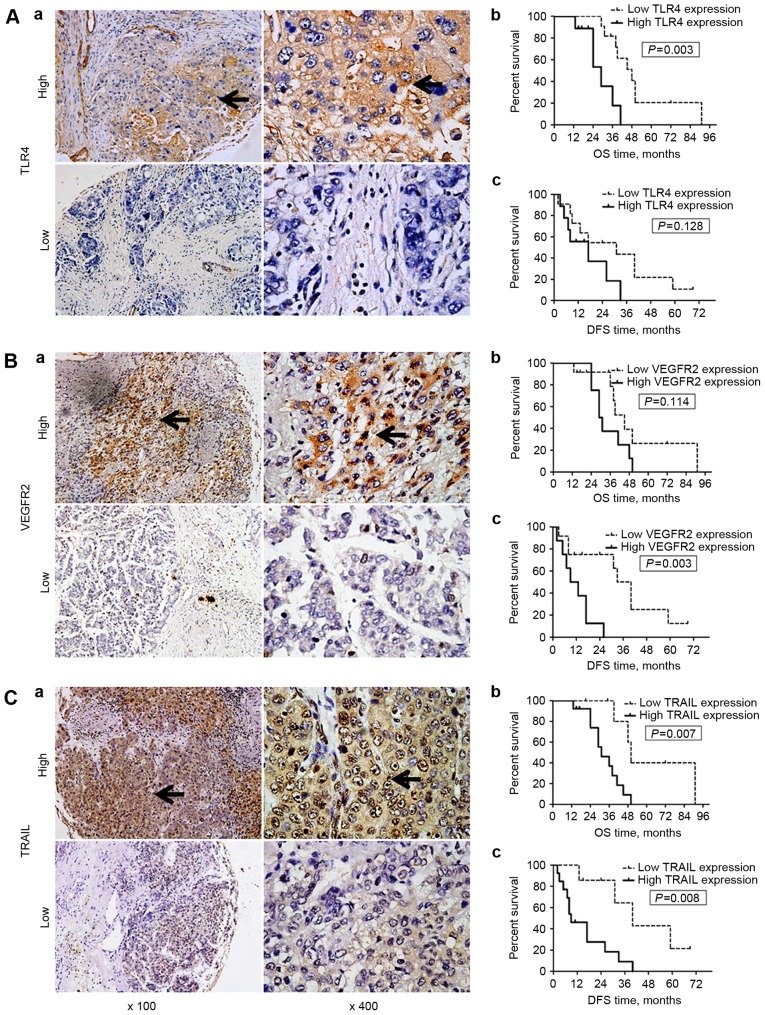
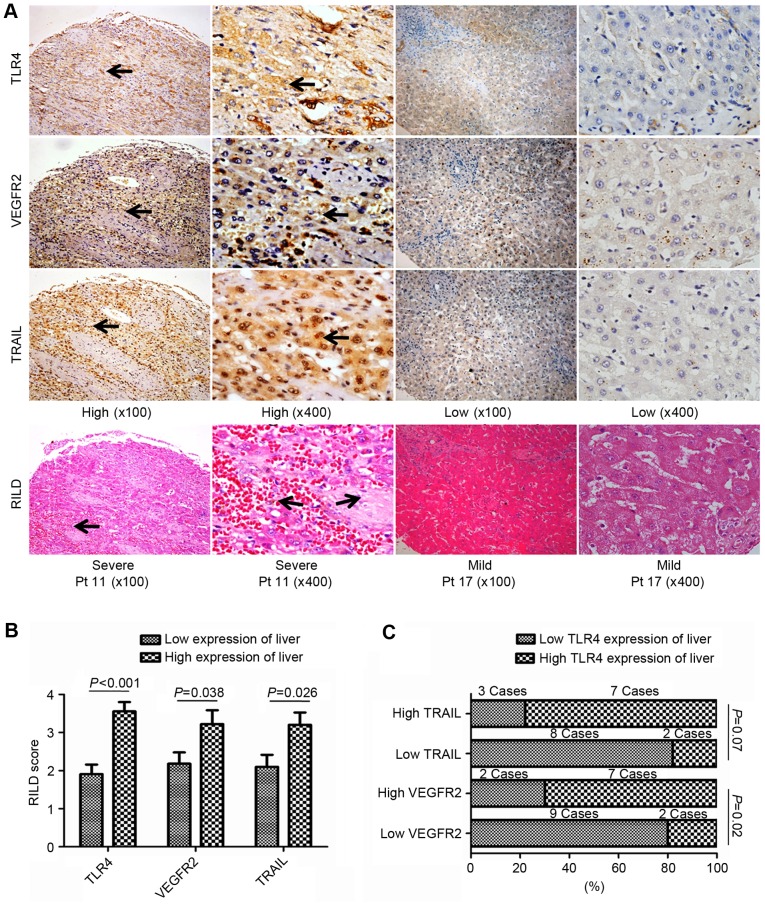
Locally advanced hepatocellular carcinoma (HCC) treated by radiotherapy (RT) may be suited for further treatment with surgery. As a critical mediator of the post-RT immune response, Toll-like receptor 4 (TLR4) and its associated proteins may serve as prognostic factors for patients with HCC treated by post-RT surgery. In the present study, a total of 20 patients with HCC treated by post-RT surgery were enrolled. Resected tumor and peritumoral liver tissues were used to construct tissue microarrays that were assessed with immunohistochemical staining for the expression levels of TLR4, tumor necrosis factor-related apoptosis-inducing ligand (TRAIL) and vascular endothelial growth factor receptor 2 (VEGFR2). The overall (OS) and disease-free (DFS) survival outcomes for each patient were assessed, and the severity of radiation-induced liver diseases (RILDs) was detected. The patients with low TLR4 or TRAIL expression exhibited significantly better OS times than those with high TLR4 (P=0.003) or TRAIL (P=0.007) expression, whereas the median DFS times for patients with low VEGFR2 or TRAIL were significantly longer than those with high VEGFR2 (P=0.003) or TRAIL (P=0.008) expression. No significant differences in OS or DFS times were identified according to the expression of TLR4, VEGFR2 or TRAIL in peritumoral liver tissue, although more severe RILDs were identified in patients with the high expression of these factors in the peritumoral liver tissue post-RT (P<0.05). Therefore, the expression levels of TLR4 and its associated proteins in HCC tumors may be suitable as prognostic factors for patients with HCC treated by post-RT surgery. The inhibition of TLR4, VEGFR2 and TRAIL expression in HCC and non-tumor liver tissue may lessen the severity of RILDs and improve survival outcomes in the future.
接受放射治疗(RT)的局部晚期肝细胞癌(HCC)患者可能适合进一步接受手术治疗。作为放疗后免疫反应的关键介质,Toll样受体4(TLR4)及其相关蛋白可能作为接受放疗后手术治疗的HCC患者的预后因素。在本研究中,共纳入20例接受放疗后手术治疗的HCC患者。使用切除的肿瘤组织和瘤旁肝组织构建组织芯片,通过免疫组化染色评估TLR4、肿瘤坏死因子相关凋亡诱导配体(TRAIL)和血管内皮生长因子受体2(VEGFR2)的表达水平。评估每位患者的总生存期(OS)和无病生存期(DFS),并检测放射性肝病(RILD)的严重程度。TLR4或TRAIL表达低的患者的OS时间明显优于TLR4(P=0.003)或TRAIL(P=0.007)表达高的患者,而VEGFR2或TRAIL表达低的患者的中位DFS时间明显长于VEGFR2(P=0.003)或TRAIL(P=0.008)表达高的患者。根据瘤旁肝组织中TLR4、VEGFR2或TRAIL的表达,未发现OS或DFS时间有显著差异,尽管在放疗后瘤旁肝组织中这些因子高表达的患者中发现了更严重的RILD(P<0.05)。因此,HCC肿瘤中TLR4及其相关蛋白的表达水平可能适合作为接受放疗后手术治疗的HCC患者的预后因素。抑制HCC和非肿瘤肝组织中TLR4、VEGFR2和TRAIL的表达可能会减轻RILD的严重程度,并在未来改善生存结果。