R&D Division, Hayashibara Co., Ltd., Okayama, Japan.
PLoS One. 2018 Jun 22;13(6):e0199666. doi: 10.1371/journal.pone.0199666. eCollection 2018.
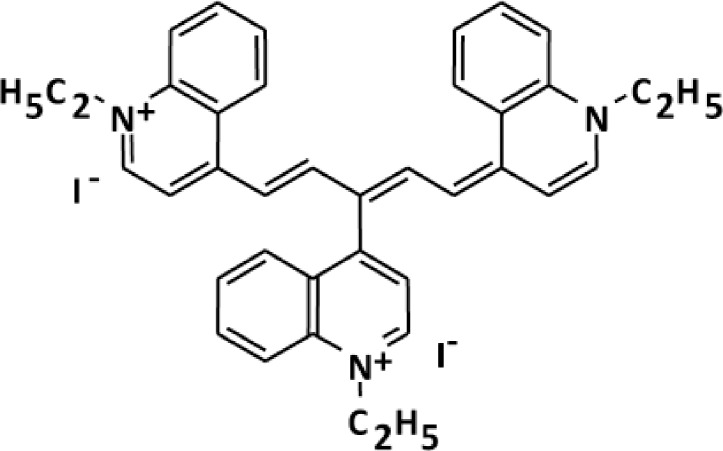
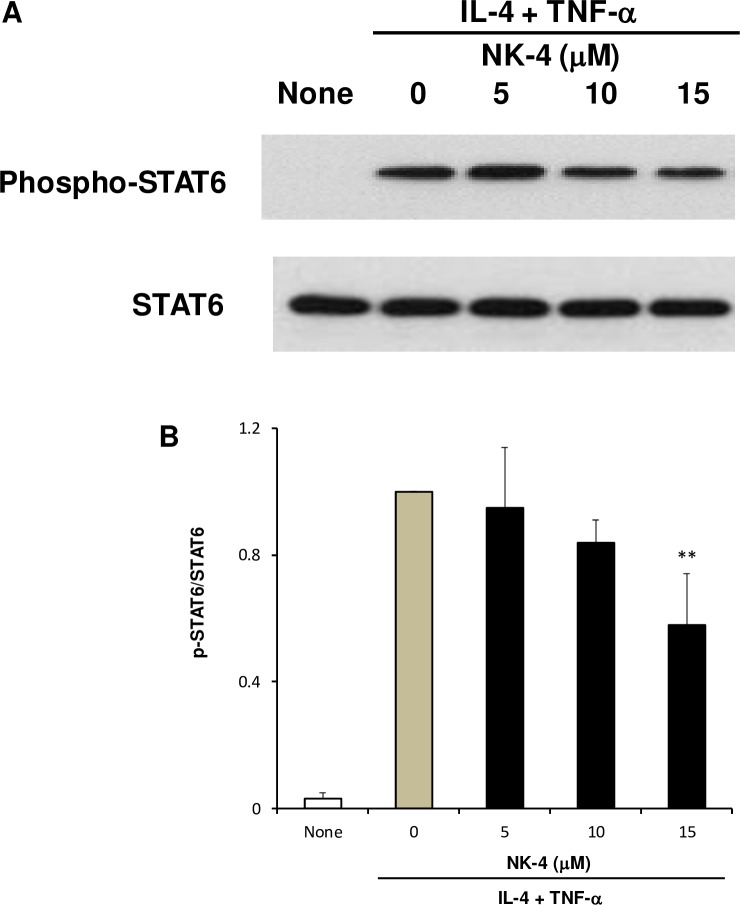
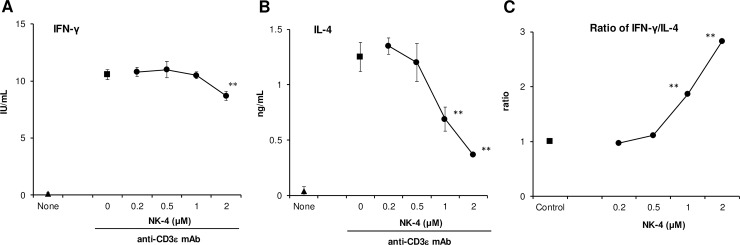
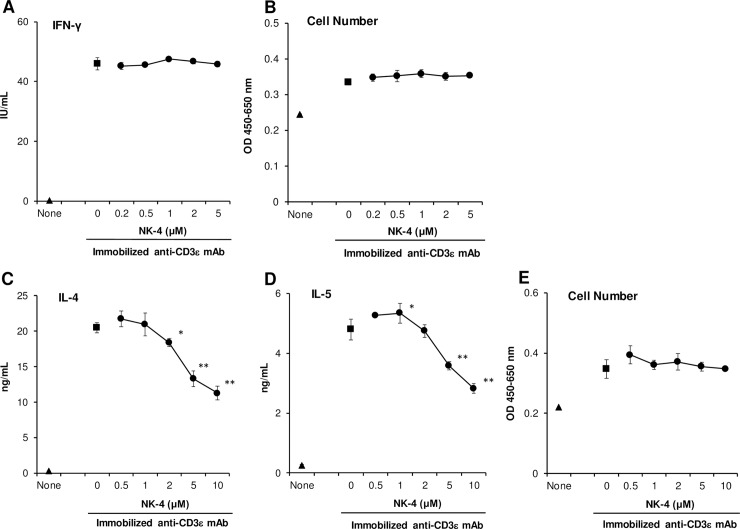
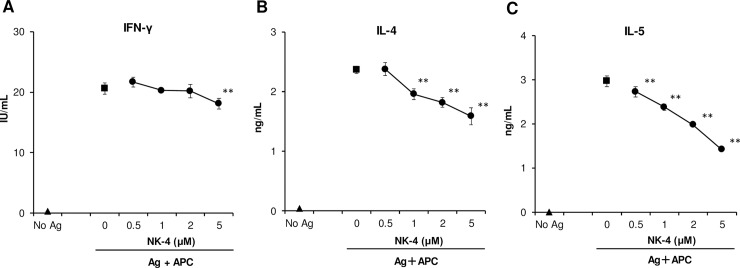
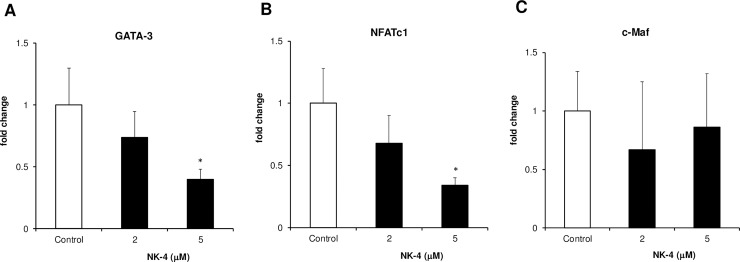
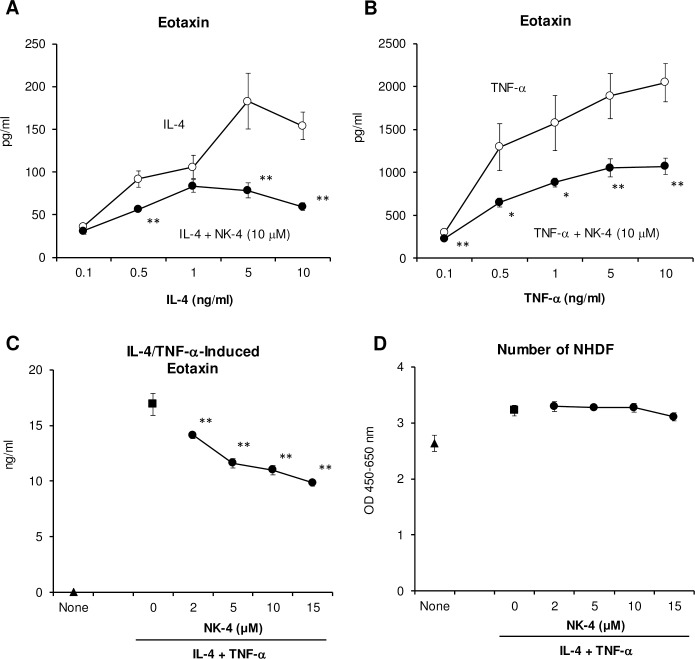
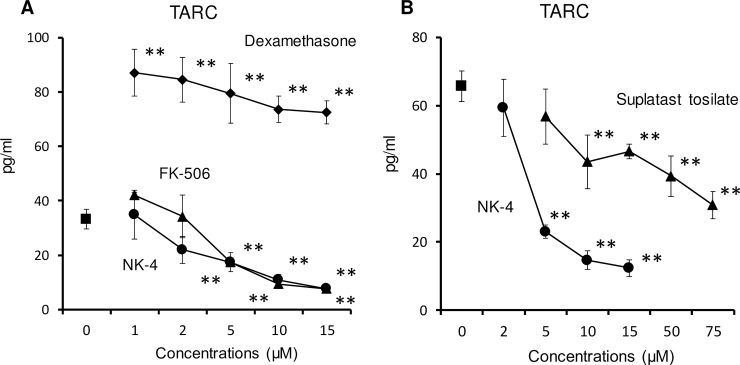
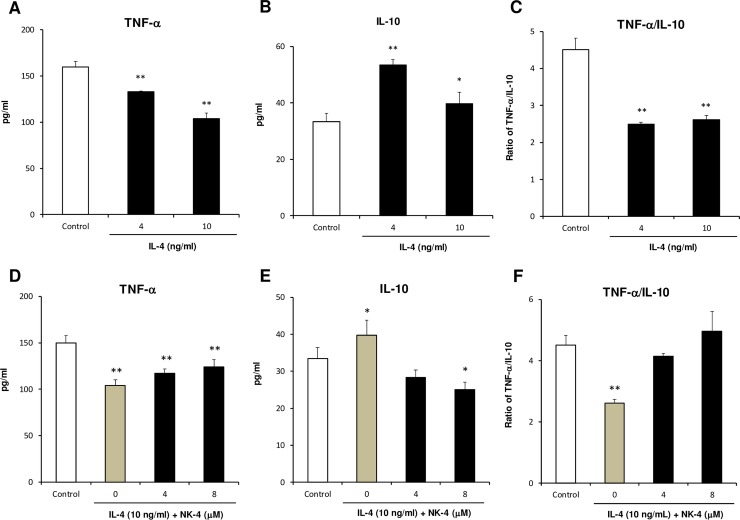
NK-4 is the main component of the antiallergic drug Lumin, which has been in popular usage since the early 1950s. In this study, we examined whether NK-4 exerts a regulatory effect on the activation and effector function of Th2 cells. NK-4 inhibited IL-4 production by anti-CD3ε mAb-stimulated BALB/c mouse spleen cells, whereas NK-4 had little effect on IFN-γ production. IL-4 and IL-5 secretion by anti-CD3ε mAb- or antigen-stimulated Th2 cells (D10.G4.1) was abrogated by NK-4 without affecting cell numbers, whereas IFN-γ secretion by activated Th1 cells was unchanged. Mechanistic analysis revealed that NK-4 inhibited mRNA expression of the Th2-associated transcription factors GATA-3 and NFATc1 in anti-CD3ε mAb-stimulated D10.G4.1 cells. Regarding the regulation of Th2 cell effector functions, NK-4 inhibited the secretion of eotaxin and thymus and activation-regulated chemokine (TARC) by normal human dermal fibroblasts in response to IL-4 and/or TNF-α. NK-4 achieved TARC attenuation comparable to what is observed with suplatast tosilate, an antiallergic drug that selectively inhibits Th2 cytokine production, at 14-fold lower concentrations of suplatast tosilate. Dexamethasone increased TARC production by 2.2- to 2.6-fold of control cultures. NK-4 successfully inhibited the STAT6 signaling pathway, suggesting a potential mechanism for down-regulating chemokines expression. In addition, NK-4 abrogated IL-4-driven modulation of cytokine production profile in human monocytic THP-1 cells from proinflammatory to anti-inflammatory response, as seen in the inverted ratio of TNF-α to IL-10 produced in response to LPS. These results suggest that NK-4 could prevent IL-4-driven polarization to alternatively activated macrophages, which are proposed to have pathogenic roles in allergic asthma. The importance of Th2 cytokines and chemokines in the development and progression of type 2 inflammatory disorders has been highlighted by recent advance in our understanding the immunological mechanism underlying allergic disease. Our results support the use of NK-4 as a reasonable therapeutic option to alleviate Th2-mediated allergic inflammation.
NK-4 是抗过敏药物 Lumin 的主要成分,自 20 世纪 50 年代初以来一直广泛使用。在这项研究中,我们研究了 NK-4 是否对 Th2 细胞的激活和效应功能产生调节作用。NK-4 抑制抗 CD3ε mAb 刺激的 BALB/c 小鼠脾细胞产生 IL-4,而对 IFN-γ 的产生影响较小。NK-4 抑制抗 CD3ε mAb 或抗原刺激的 Th2 细胞(D10.G4.1)分泌 IL-4 和 IL-5,但不影响细胞数量,而对激活的 Th1 细胞分泌 IFN-γ没有影响。机制分析表明,NK-4 抑制抗 CD3ε mAb 刺激的 D10.G4.1 细胞中与 Th2 相关的转录因子 GATA-3 和 NFATc1 的 mRNA 表达。关于 Th2 细胞效应功能的调节,NK-4 抑制正常人类真皮成纤维细胞对 IL-4 和/或 TNF-α反应时的嗜酸性粒细胞趋化因子和胸腺激活调节趋化因子(TARC)的分泌。NK-4 以比选择性抑制 Th2 细胞因子产生的抗过敏药物苏普拉沙托西尔(suplatast tosilate)低 14 倍的浓度达到 TARC 衰减作用。地塞米松使 TARC 的产生增加到对照培养物的 2.2-2.6 倍。NK-4 成功抑制了 STAT6 信号通路,这表明下调趋化因子表达的潜在机制。此外,NK-4 阻断了 IL-4 驱动的人单核细胞 THP-1 细胞细胞因子产生谱从促炎到抗炎反应的调节,就像 LPS 反应中产生的 TNF-α与 IL-10 的比例倒置一样。这些结果表明,NK-4 可以防止 IL-4 驱动向替代激活的巨噬细胞极化,据认为,这些细胞在过敏性哮喘中具有致病性作用。最近对过敏疾病免疫机制的认识的进展突出了 Th2 细胞因子和趋化因子在 2 型炎症性疾病的发展和进展中的重要性。我们的结果支持将 NK-4 用作减轻 Th2 介导的过敏炎症的合理治疗选择。