Preclinical Program, Hopp Children's Cancer Center at NCT Heidelberg (KiTZ), 69120, Heidelberg, Germany.
Clinical Cooperation Unit Pediatric Oncology, German Cancer Research Center (DKFZ), and German Cancer Consortium (DKTK), Im Neuenheimer Feld 280, 69120, Heidelberg, Germany.
Arch Toxicol. 2018 Aug;92(8):2649-2664. doi: 10.1007/s00204-018-2234-8. Epub 2018 Jun 9.
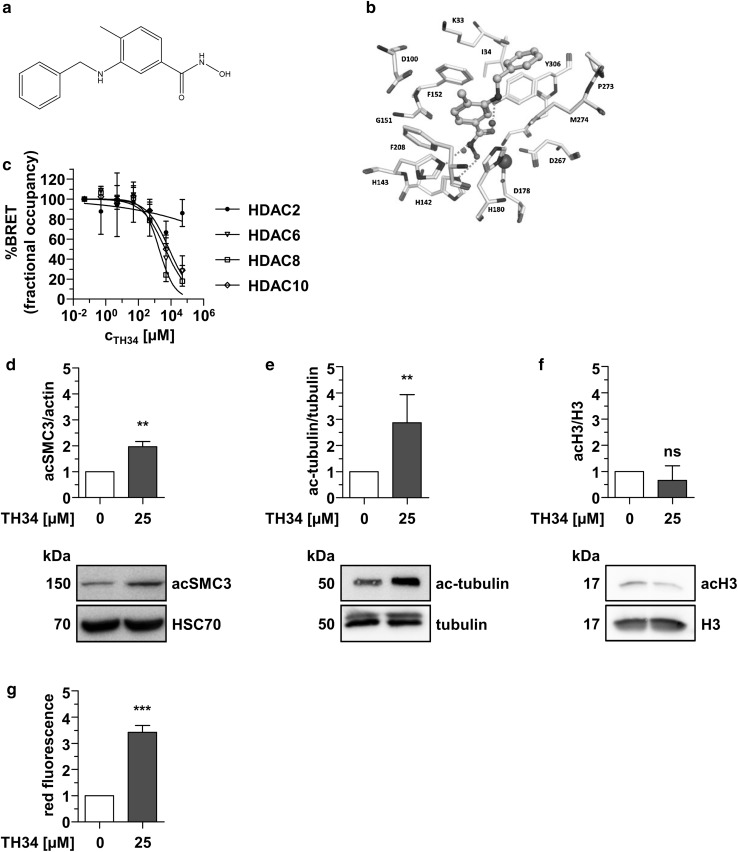
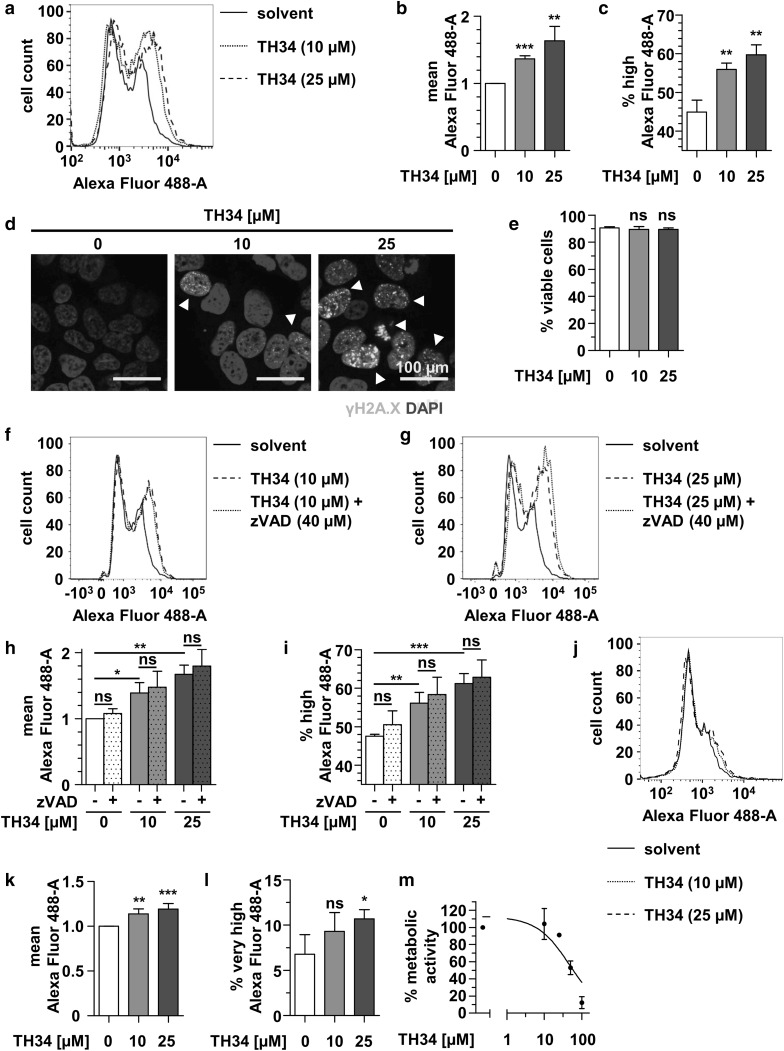
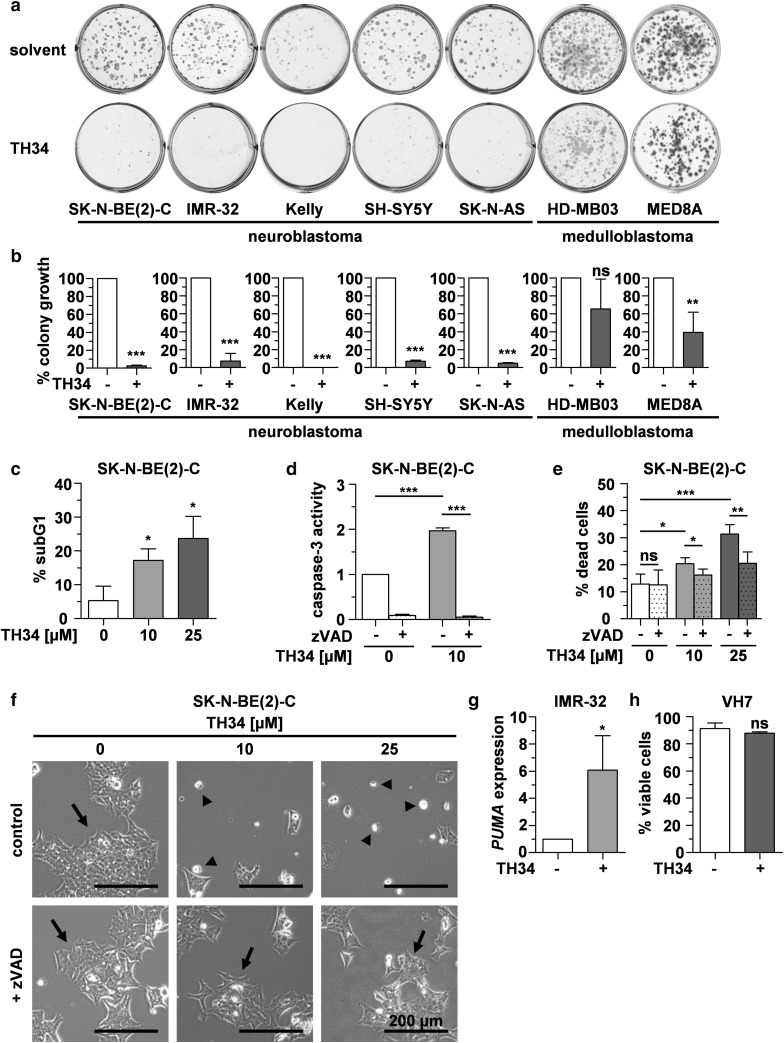
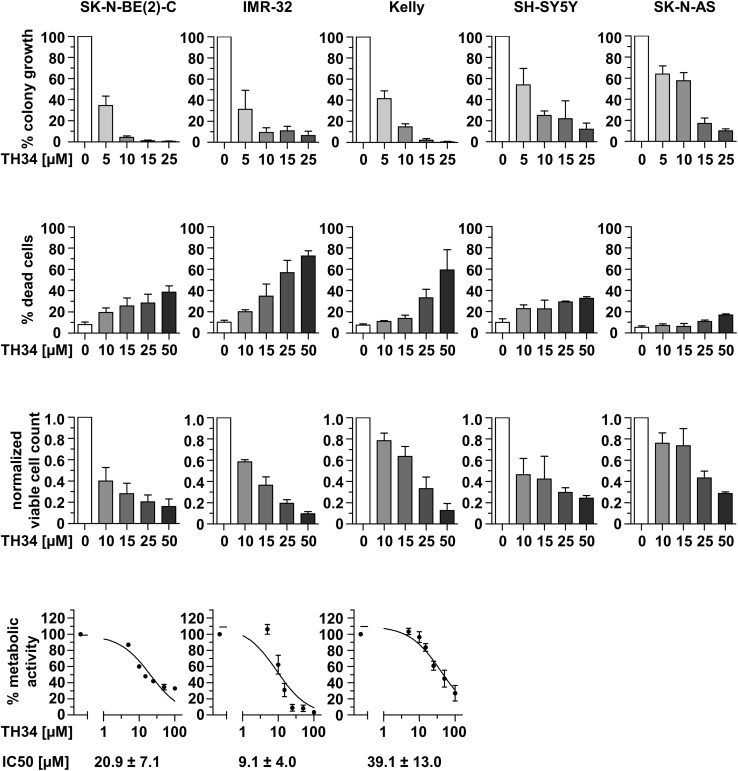
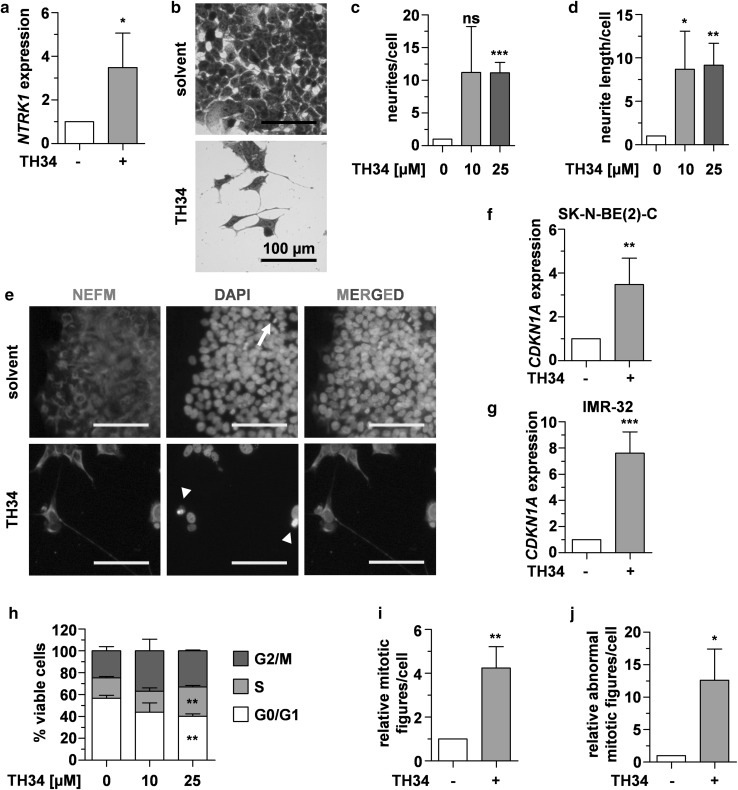
High histone deacetylase (HDAC) 8 and HDAC10 expression levels have been identified as predictors of exceptionally poor outcomes in neuroblastoma, the most common extracranial solid tumor in childhood. HDAC8 inhibition synergizes with retinoic acid treatment to induce neuroblast maturation in vitro and to inhibit neuroblastoma xenograft growth in vivo. HDAC10 inhibition increases intracellular accumulation of chemotherapeutics through interference with lysosomal homeostasis, ultimately leading to cell death in cultured neuroblastoma cells. So far, no HDAC inhibitor covering HDAC8 and HDAC10 at micromolar concentrations without inhibiting HDACs 1, 2 and 3 has been described. Here, we introduce TH34 (3-(N-benzylamino)-4-methylbenzhydroxamic acid), a novel HDAC6/8/10 inhibitor for neuroblastoma therapy. TH34 is well-tolerated by non-transformed human skin fibroblasts at concentrations up to 25 µM and modestly impairs colony growth in medulloblastoma cell lines, but specifically induces caspase-dependent programmed cell death in a concentration-dependent manner in several human neuroblastoma cell lines. In addition to the induction of DNA double-strand breaks, HDAC6/8/10 inhibition also leads to mitotic aberrations and cell-cycle arrest. Neuroblastoma cells display elevated levels of neuronal differentiation markers, mirrored by formation of neurite-like outgrowths under maintained TH34 treatment. Eventually, after long-term treatment, all neuroblastoma cells undergo cell death. The combination of TH34 with plasma-achievable concentrations of retinoic acid, a drug applied in neuroblastoma therapy, synergistically inhibits colony growth (combination index (CI) < 0.1 for 10 µM of each). In summary, our study supports using selective HDAC inhibitors as targeted antineoplastic agents and underlines the therapeutic potential of selective HDAC6/8/10 inhibition in high-grade neuroblastoma.
高组蛋白去乙酰化酶(HDAC)8 和 HDAC10 的表达水平已被确定为神经母细胞瘤预后极差的预测因子,神经母细胞瘤是儿童中最常见的颅外实体瘤。HDAC8 抑制与维甲酸治疗协同作用,可在体外诱导神经母细胞成熟,并在体内抑制神经母细胞瘤异种移植物生长。HDAC10 抑制通过干扰溶酶体稳态增加化疗药物的细胞内积累,最终导致培养的神经母细胞瘤细胞死亡。到目前为止,还没有描述过在微摩尔浓度下同时抑制 HDAC8 和 HDAC10 而不抑制 HDAC1、2 和 3 的 HDAC 抑制剂。在这里,我们介绍了 TH34(3-(N-苄基氨基)-4-甲基苯甲羟肟酸),一种用于神经母细胞瘤治疗的新型 HDAC6/8/10 抑制剂。TH34 在高达 25µM 的浓度下可被未转化的人皮肤成纤维细胞耐受,并且适度地损害成神经管细胞瘤细胞系中的集落生长,但在几种人神经母细胞瘤细胞系中以浓度依赖的方式特异性诱导 caspase 依赖性程序性细胞死亡。除了诱导 DNA 双链断裂外,HDAC6/8/10 抑制还导致有丝分裂异常和细胞周期停滞。神经母细胞瘤细胞显示出神经元分化标志物的升高水平,在维持 TH34 治疗下形成类神经突样突起。最终,经过长期治疗,所有神经母细胞瘤细胞都经历了细胞死亡。TH34 与可达到血浆浓度的维甲酸(神经母细胞瘤治疗中应用的药物)联合使用可协同抑制集落生长(每种药物的组合指数(CI)<0.1 为 10µM)。总之,我们的研究支持将选择性 HDAC 抑制剂用作靶向抗肿瘤药物,并强调了选择性 HDAC6/8/10 抑制在高级别神经母细胞瘤中的治疗潜力。