Department of Internal Medicine III, University Hospital of Schleswig Holstein, Campus Kiel, Rosalind-Franklin-Str. 12, 24105, Kiel, Germany.
Department of Medicine III, University Hospital RWTH Aachen, Pauwelsstrasse 30, 52074, Aachen, Germany.
Sci Rep. 2018 Jun 27;8(1):9750. doi: 10.1038/s41598-018-28201-7.
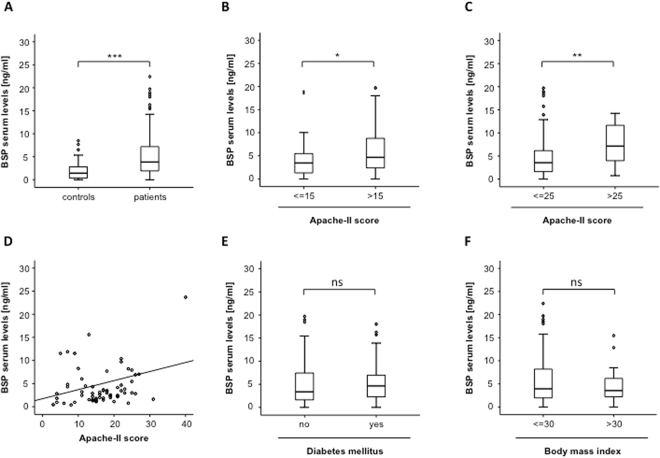
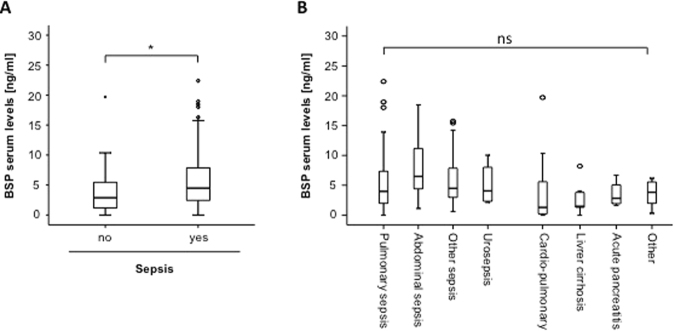
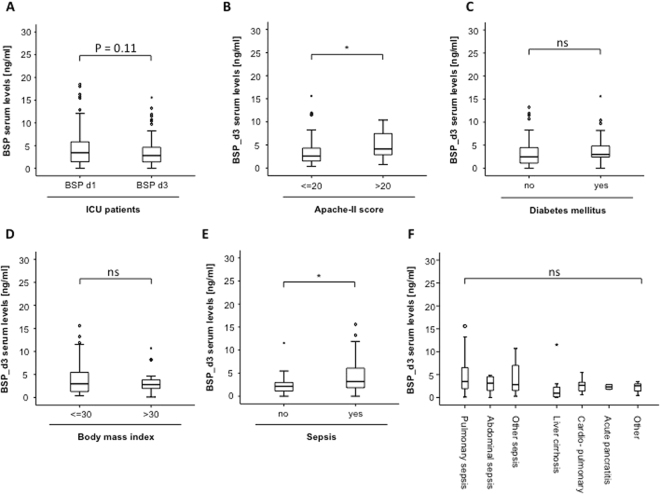
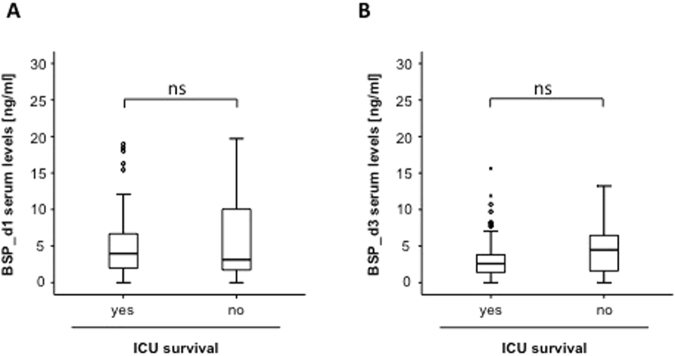
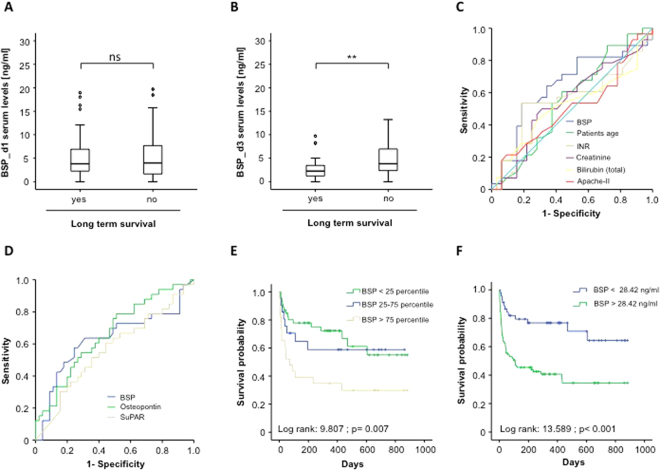
Bone sialoprotein (BSP), a member of the SIBLINGs (for Small Integrin-Binding LIgand, N-linked Glycoproteins) family, has recently be associated to inflammatory and infectious diseases. We therefore measured BSP concentrations in 136 patients at admission to the intensive care unit (ICU) and 3 days of ICU. BSP levels were compared to 36 healthy blood donors and correlated to clinical data. In these analysis, BSP serum levels were strongly elevated at the time point of admission to the ICU when compared to healthy controls. Moreover BSP concentrations were significantly elevated after 3 days of treatment on the intensive care unit. A further increase in BSP levels was detected in patients with higher APACHE-II-scores and in patients with septic disease. While in most patients, BSP levels decreased during the first three days of treatment on a medical ICU, patients with persistently elevated BSP levels displayed an unfavorable outcome. In these patients, persistently elevated BSP concentrations were a superior predictor of mortality than established indicators of patient´ prognosis such as the SAPS2 or the APACHE-II score. In summary, our data argue for a novel utility for BSP as a biomarker in patients treated on a medical ICU.
骨唾液蛋白(BSP)是 SIBLINGs(Small Integrin-Binding LIgand,N-linked Glycoproteins 的缩写)家族的成员,最近与炎症和感染性疾病有关。因此,我们测量了 136 名入住重症监护病房(ICU)的患者和 ICU 入住 3 天的患者的 BSP 浓度。将 BSP 水平与 36 名健康献血者进行比较,并与临床数据相关联。在这些分析中,与健康对照组相比,患者入住 ICU 时的血清 BSP 水平明显升高。此外,在 ICU 治疗 3 天后,BSP 浓度显著升高。在 APACHE-II 评分较高和患有败血症的患者中,BSP 水平进一步升高。虽然在大多数患者中,BSP 水平在入住内科 ICU 的前三天内下降,但 BSP 水平持续升高的患者预后不良。在这些患者中,持续升高的 BSP 浓度是死亡率的一个优于 SAPS2 或 APACHE-II 评分等患者预后既定指标的预测因子。总之,我们的数据表明,BSP 作为内科 ICU 治疗患者的生物标志物具有新的用途。