Delimont Nicole M, Haub Mark D, Lindshield Brian L
Department of Food, Nutrition, Dietetics, and Health, Kansas State University, Manhattan, KS.
Curr Dev Nutr. 2017 Jan 19;1(2):1-12. doi: 10.3945/cdn.116.000042. eCollection 2017 Feb.
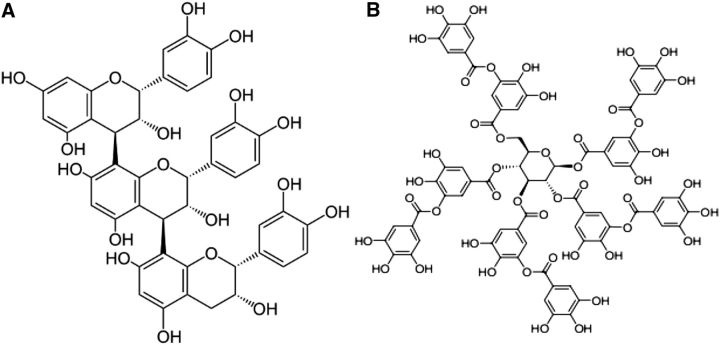
Iron deficiency remains a global health issue, and antinutritional factors, such as tannins, are often cited as contributors to the high prevalence of deficiency. Despite this, tannin-rich diets may have potential beneficial cardiovascular and cancer-fighting properties because of the antioxidant activity of tannins. Furthermore, epidemiologic studies and long-term trials involving participants who consumed diets rich in antinutritional factors, particularly tannins, conflict with single-meal bioavailability studies. The purpose of this narrative review is to determine the effect of tannins on iron bioavailability and status and establish whether adaptation to tannins reduces the antinutritional effects of tannins over time. We also aimed to compare tannins used in iron studies. Common themes related to iron bioavailability and iron status with tannin consumption were collected and collated for summary and synthesis based on models and subjects used. Overall, there was dissonance between iron bioavailability and status in studies. Single-meal studies with hydrolyzable and oligomeric catechin and epicatechin tannins (tea and tannic acid) generally support reductions in bioavailability related to tannin consumption but not consumption of condensed tannin, which are more commonly found in food. Long-term animal model, epidemiologic, and multimeal studies generally do not support changes in iron status related to tannin intake. Studies suggest that long-term tannin consumption may impact iron status in a different manner than single-meal studies or bioavailability iron models predict. Furthermore, iron bioavailability studies that use condensed tannins, which are more commonly consumed, may better predict mealtime iron bioavailability. More research is needed to develop representative antinutritional iron studies and investigate mechanisms underlying the adaptation to tannins and other antinutritional factors that occur over time.
缺铁仍然是一个全球性的健康问题,抗营养因子,如单宁,常被认为是导致缺铁高患病率的因素。尽管如此,富含单宁的饮食可能因其抗氧化活性而具有潜在的有益心血管和抗癌特性。此外,涉及食用富含抗营养因子(尤其是单宁)饮食的参与者的流行病学研究和长期试验,与单餐生物利用度研究结果相互矛盾。本叙述性综述的目的是确定单宁对铁生物利用度和铁状态的影响,并确定随着时间的推移,对单宁的适应性是否会降低单宁的抗营养作用。我们还旨在比较铁研究中使用的单宁。收集并整理了与单宁摄入相关的铁生物利用度和铁状态的常见主题,以便根据所使用的模型和研究对象进行总结和综合。总体而言,各项研究中铁生物利用度和铁状态之间存在不一致。关于可水解和低聚儿茶素及表儿茶素单宁(茶和单宁酸)的单餐研究通常支持单宁摄入会降低生物利用度,但缩合单宁的摄入则不然,缩合单宁在食物中更为常见。长期动物模型、流行病学和多餐研究通常不支持铁状态与单宁摄入量有关的变化。研究表明,长期摄入单宁可能以与单餐研究或生物利用度铁模型预测不同的方式影响铁状态。此外,使用更常见的缩合单宁进行的铁生物利用度研究可能能更好地预测进餐时的铁生物利用度。需要开展更多研究,以开发具有代表性的抗营养铁研究,并探究随着时间推移对单宁和其他抗营养因子产生适应性的潜在机制。