Bongaarts Anika, Prabowo Avanita S, Arena Andrea, Anink Jasper J, Reinten Roy J, Jansen Floor E, Spliet Wim G M, Thom Maria, Coras Roland, Blümcke Ingmar, Kotulska Katarzyna, Jozwiak Sergiusz, Grajkowska Wieslawa, Söylemezoğlu Figen, Pimentel José, Schouten-van Meeteren Antoinette Y N, Mills James D, Iyer Anand M, van Vliet Erwin A, Mühlebner Angelika, Aronica Eleonora
Department of (Neuro)Pathology, Academic Medical Center, University of Amsterdam, Amsterdam, The Netherlands.
Department of Biochemical Sciences, Sapienza University of Rome, Rome, Italy.
Oncotarget. 2018 Jun 15;9(46):28103-28115. doi: 10.18632/oncotarget.25563.
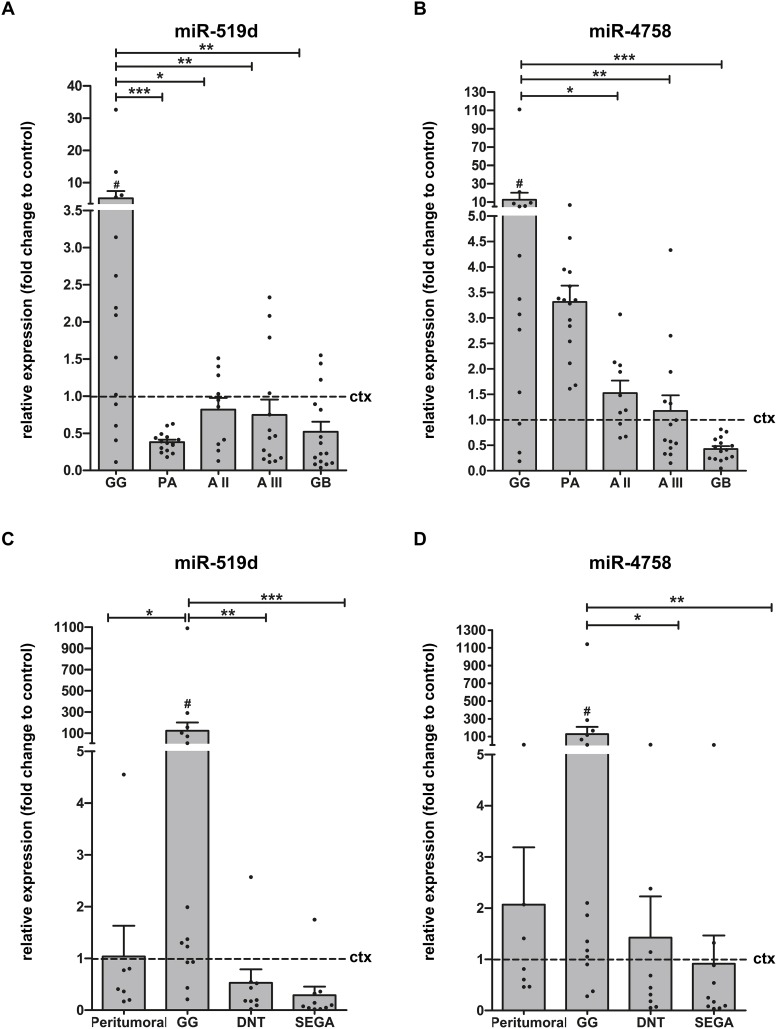
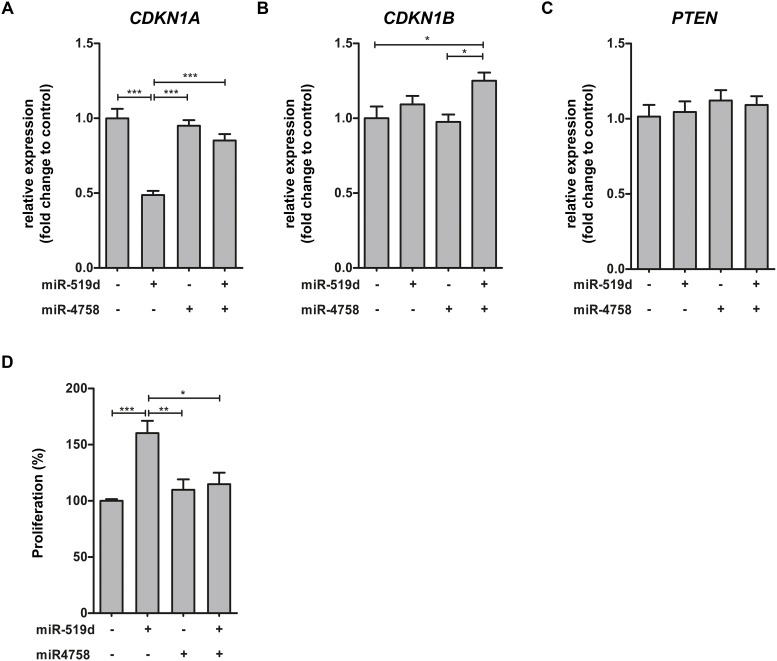
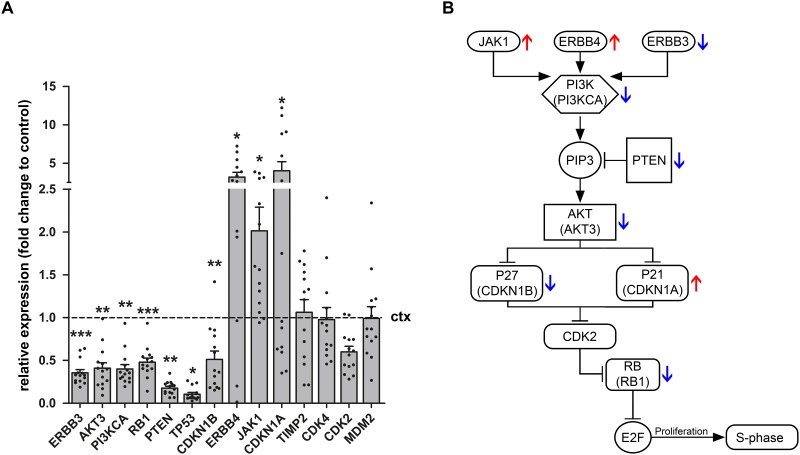
Glioneuronal tumours, including gangliogliomas and dysembryoplastic neuroepithelial tumours, represent the most common low-grade epilepsy-associated brain tumours and are a well-recognized cause of intractable focal epilepsy in children and young adults. Classification is predominantly based on histological features, which is difficult due to the broad histological spectrum of these tumours. The aim of the present study was to find molecular markers that can be used to identify entities within the histopathology spectrum of glioneuronal tumours. The focus of this study was on microRNAs (miRNAs). miRNAs are important post-transcriptional regulators of gene expression and are involved in the pathogenesis of different neurological diseases and oncogenesis. Using a miRNA array, miR-519d and miR-4758 were found to be upregulated in gangliogliomas (n=26) compared to control cortex (n=17), peritumoural tissue (n=7), dysembryoplastic neuroepithelial tumours (n=9) and astrocytomas (grade I-IV; subependymal giant cell astrocytomas, n=10; pilocytic astrocytoma, n=15; diffuse astrocytoma grade II, n=10; grade III, n=14 and glioblastoma n=15). Furthermore, the PI3K/AKT3/P21 pathway, which is predicated to be targeted by miR-519d and miR-4758, was deregulated in gangliogliomas. Functionally, overexpression of miR-519d in an astrocytic cell line resulted in a downregulation of (P21) and an increase in cell proliferation, whereas co-transfection with miR-4758 counteracted this effect. These results suggest that miR-519d and miR-4758 might work in concert as regulators of the cell cycle in low grade gliomas. Furthermore, these miRNAs could be used to distinguish gangliogliomas from dysembryoplastic neuroepithelial tumours and other low and high grade gliomas and may lead to more targeted therapy.
神经胶质神经元肿瘤,包括神经节胶质瘤和胚胎发育不良性神经上皮肿瘤,是最常见的与癫痫相关的低度脑肿瘤,也是儿童和年轻成人顽固性局灶性癫痫的公认病因。分类主要基于组织学特征,但由于这些肿瘤具有广泛的组织学谱,这一过程存在困难。本研究的目的是寻找可用于在神经胶质神经元肿瘤组织病理学谱内识别不同实体的分子标志物。本研究的重点是微小RNA(miRNA)。miRNA是基因表达的重要转录后调节因子,参与不同神经疾病和肿瘤发生的发病机制。使用miRNA阵列发现,与对照皮质(n = 17)、瘤周组织(n = 7)、胚胎发育不良性神经上皮肿瘤(n = 9)和星形细胞瘤(I-IV级;室管膜下巨细胞星形细胞瘤,n = 10;毛细胞型星形细胞瘤,n = 15;弥漫性II级星形细胞瘤,n = 10;III级,n = 14和胶质母细胞瘤,n = 15)相比,miR-519d和miR-4758在神经节胶质瘤(n = 26)中上调。此外,预计miR-519d和miR-4758靶向的PI3K/AKT3/P21通路在神经节胶质瘤中失调。在功能上,miR-519d在星形胶质细胞系中的过表达导致P21下调和细胞增殖增加,而与miR-4758共转染可抵消这种效应。这些结果表明,miR-519d和miR-4758可能协同作用,作为低度胶质瘤细胞周期的调节因子。此外,这些miRNA可用于区分神经节胶质瘤与胚胎发育不良性神经上皮肿瘤以及其他低度和高度胶质瘤,并可能导致更具针对性的治疗。