Wetsus, Centre of Excellence for Sustainable Water Technology, P.O. Box 1113, 8900CC Leeuwarden , The Netherlands.
Sub-department Environmental Technology , Wageningen University and Research , P.O. Box 17, 6700AA Wageningen , The Netherlands.
Environ Sci Technol. 2018 Aug 7;52(15):8399-8407. doi: 10.1021/acs.est.8b02869. Epub 2018 Jul 17.
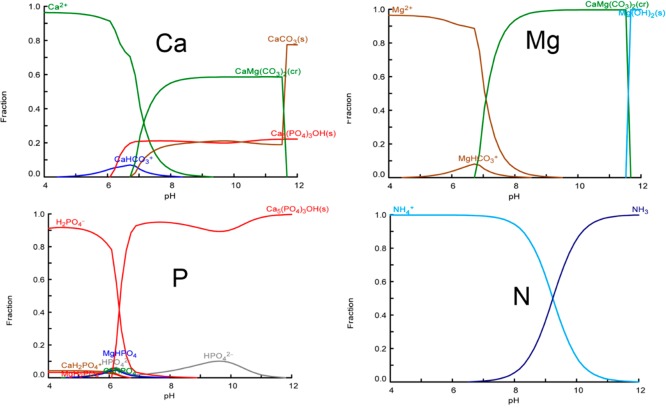
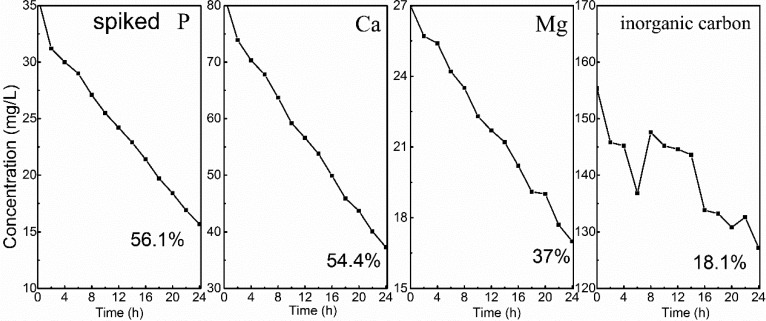
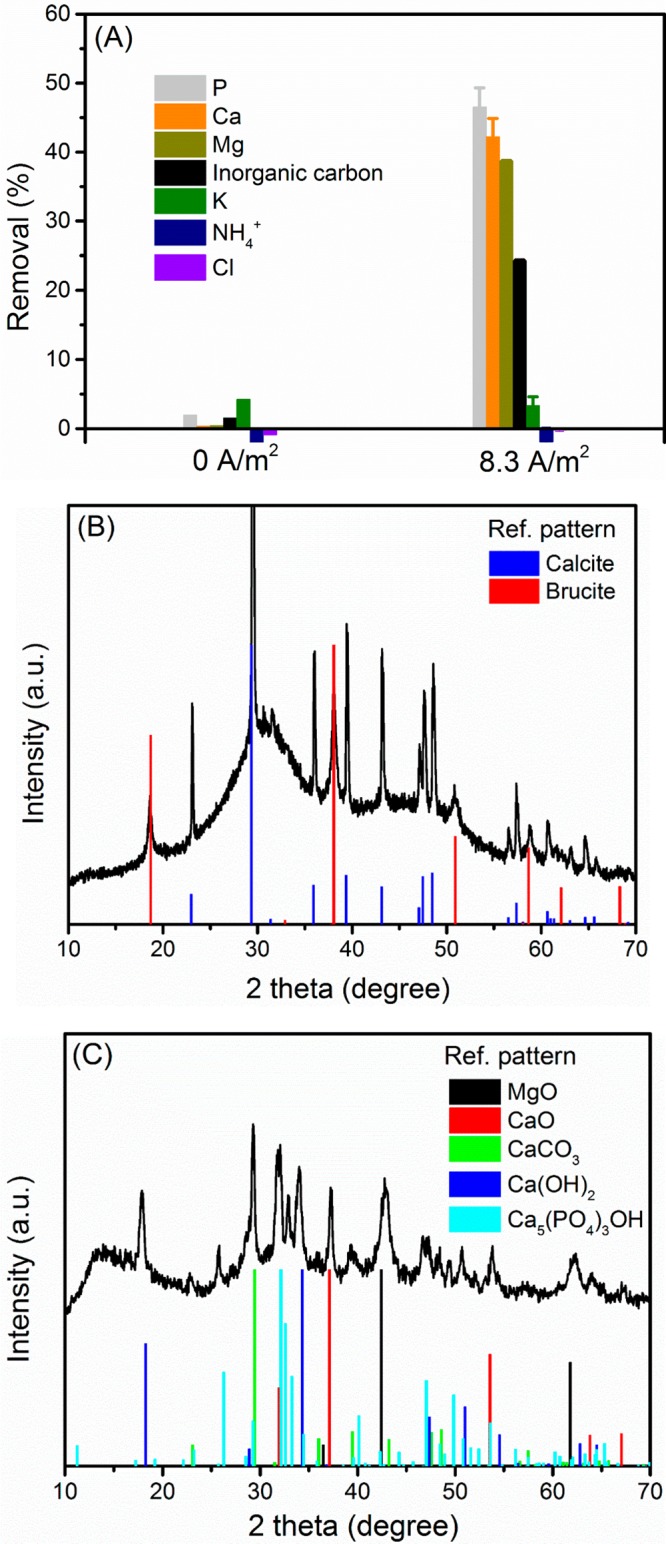
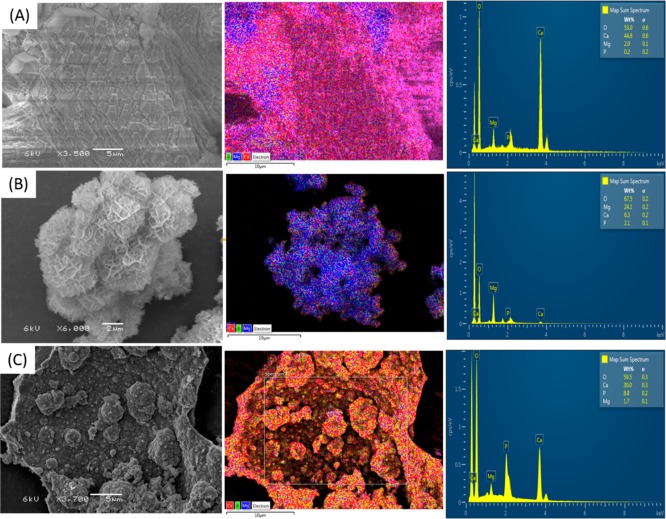
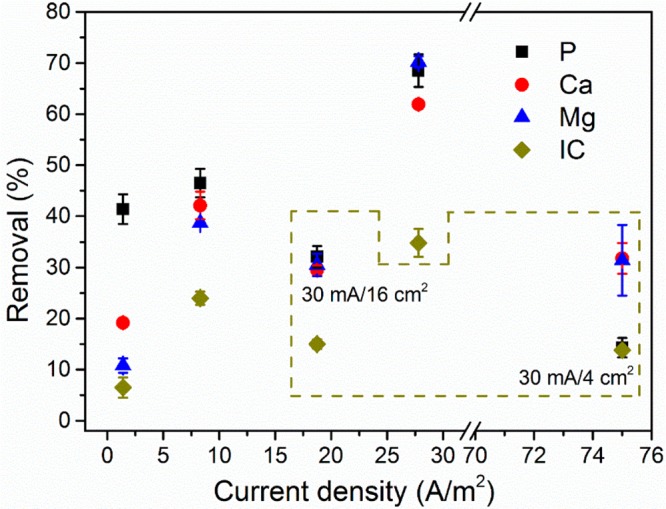
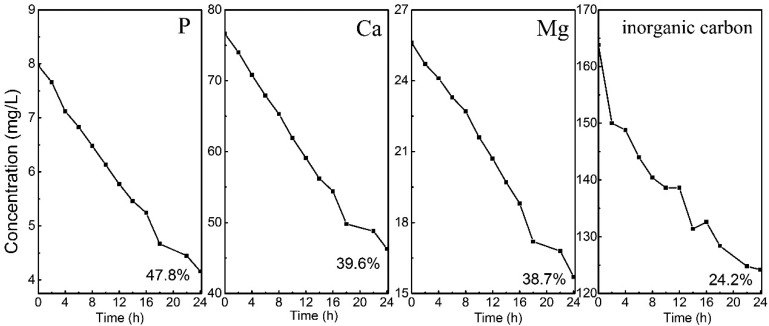
Electrochemical wastewater treatment can induce calcium phosphate precipitation on the cathode surface. This provides a simple yet efficient way for extracting phosphorus from municipal wastewater without dosing chemicals. However, the precipitation of amorphous calcium phosphate (ACP) is accompanied by the precipitation of calcite (CaCO) and brucite (Mg(OH)). To increase the content of ACP in the products, it is essential to understand the precipitation sequence of ACP, calcite, and brucite in electrochemical wastewater treatment. Given the fact that calcium phosphate (i.e., hydroxyapatite) has the lowest thermodynamic solubility product and highest saturation index in the wastewater, it has the potential to precipitate first. However, this is not observed in electrochemical phosphate recovery from raw wastewater, which is probably because of the very high Ca/P molar ratio (7.5) and high bicarbonate concentration in the wastewater resulting in formation of calcite. In the case of decreased Ca/P molar ratio (1.77) by spiking external phosphate, most of the removed Ca in the wastewater was used for ACP formation instead of calcite. The formation of of brucite, however, was only affected when the current density was decreased or the size of cathode was changed. Overall, the removal of Ca and Mg is much more affected by current density than the surface area of cathode, whereas for P removal, the reverse is true. Because of these dependencies, though there is no definite precipitation sequence among ACP, calcite, and brucite, it is still possible to influence the precipitation degree of these species by relatively low current density and high surface area or by targeting phosphorus-rich wastewaters.
电化学废水处理可以在阴极表面诱导磷酸钙沉淀。这为从城市废水中提取磷提供了一种简单而有效的方法,无需投加化学药剂。然而,无定形磷酸钙 (ACP) 的沉淀伴随着方解石 (CaCO) 和水镁石 (Mg(OH)) 的沉淀。为了提高产品中 ACP 的含量,了解电化学废水处理中 ACP、方解石和水镁石的沉淀顺序至关重要。鉴于废水中的磷酸钙(即羟基磷灰石)具有最低的热力学溶解度产物和最高的饱和度指数,它有可能首先沉淀。然而,在从原废水电化学回收磷酸盐的过程中并没有观察到这一点,这可能是因为废水中的 Ca/P 摩尔比(7.5)非常高,且碳酸氢盐浓度很高,导致方解石的形成。在通过添加外部磷酸盐将 Ca/P 摩尔比降低至 1.77 的情况下,废水中大部分被去除的 Ca 用于 ACP 的形成,而不是方解石。然而,只有当电流密度降低或阴极尺寸改变时,水镁石的形成才会受到影响。总的来说,与阴极表面积相比,电流密度对 Ca 和 Mg 的去除影响更大,而对于 P 的去除则相反。由于这些依赖性,尽管 ACP、方解石和水镁石之间没有明确的沉淀顺序,但通过相对低的电流密度和高的表面积,或者通过针对富磷废水,仍然有可能影响这些物质的沉淀程度。