Department for the Treatment and Study of Abdominal Diseases and Abdominal Transplantation, IRCCS-ISMETT (Istituto di Ricovero e Cura a Carattere Scientifico - Istituto Mediterraneo per i Trapianti e Terapie ad alta specializzazione), UPMC (University of Pittsburgh Medical Center) Italy, Via E. Tricomi 5, 90127, Palermo, Italy.
Department of Diagnostic and Therapeutic Services, IRCCS-ISMETT, UPMC Italy, Palermo, Italy.
World J Surg Oncol. 2018 Jul 2;16(1):123. doi: 10.1186/s12957-018-1426-2.
The ethical implications of the utilization of kidneys with solid renal masses (SRMs) in transplantation are the subject of lively debate in the transplantation community and beyond. One of such implications is that as the life expectancy of renal transplant patients improve, the prevalence of SRMs in donors is likely to increase. We report a case of an oncocytoma in a renal allograft complicating a deceased-donor kidney transplant.
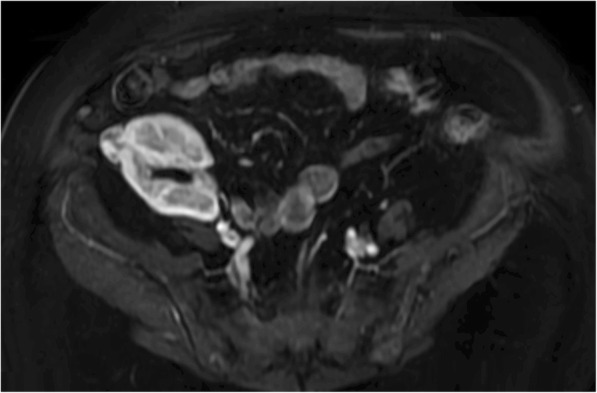
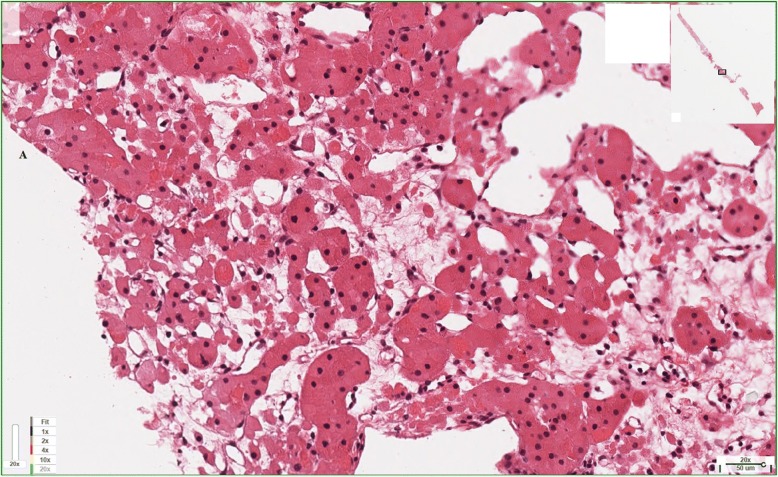
A 60-year-old woman received and underwent deceased-donor renal transplantation for end-stage renal disease after a waiting-list period of 11 years. Kidney Doppler ultrasound (DUS) of the deceased donor was negative for any nodular lesion. The finding of the DUS, done on postoperative day 1, to assess the patency of the graft, was suspicious for an acute arterial thrombosis but did not reveal any focal irregularities. An ensuing computed tomography (CT) scan did not show any arterial complications but serendipitously revealed a 2.4-cm lesion on the upper pole of the renal allograft, which was not detected during the back-table or ultrasonography monitoring. Histology of the biopsied lesion was consistent with oncocytoma. However, because the eosinophilic variant of chromophobe renal cell carcinoma may morphologically resemble renal oncocytoma, immunohistochemical staining was performed. The results were negative, ruling out chromophobe RCC. After discussing the therapeutic options and potential related outcomes with the patient, we found no reason for resection of the lesion or an allograft nephrectomy, given the low risk of malignant transformation in an oncocytoma. Active surveillance of the benign tumor was done with ultrasonography, every 2 months, for the first year and, then, with magnetic resonance imaging, every year. The patient received mycophenolate-mofetil, tacrolimus, and prednisone throughout the 5-year follow-up period, and the regimen for immunosuppression was not changed despite the presence of the renal mass. After 60 months, we report that none of the radiological findings have shown any morphological changes of the lesion, and the patient is well.
To the best of our knowledge, we report the first case of an oncocytoma in a renal allograft complicating a deceased-donor kidney transplant, which was successfully managed by active surveillance.
在移植领域内外,人们对利用存在实体性肾肿块(SRMs)的肾脏进行移植的伦理影响进行了激烈的辩论。其中一个影响是,随着肾移植患者预期寿命的延长,供体中 SRMs 的患病率可能会增加。我们报告了一例肾移植后发生的肾移植供体的嗜酸细胞瘤病例。
一名 60 岁女性,在等待 11 年后,因终末期肾病接受并进行了死亡供体肾移植。死亡供体的肾脏多普勒超声(DUS)检查未见任何结节性病变。术后第 1 天进行的 DUS 检查用于评估移植物的通畅性,结果提示急性动脉血栓形成,但未发现任何局灶性不规则。随后进行的计算机断层扫描(CT)检查未显示任何动脉并发症,但偶然发现移植肾的上极有一个 2.4 厘米的病变,这在手术台上或超声监测期间未被发现。活检病变的组织学检查符合嗜酸细胞瘤。然而,由于嗜酸性肾嫌色细胞癌的形态可能类似于肾嗜酸细胞瘤,因此进行了免疫组织化学染色。结果为阴性,排除了嗜酸性肾嫌色细胞癌。与患者讨论了治疗方案和潜在相关结果后,我们发现由于嗜酸细胞瘤恶性转化的风险较低,因此无需切除病变或进行移植肾切除术。对良性肿瘤进行了主动监测,第一年每 2 个月进行一次超声检查,然后每年进行一次磁共振成像检查。在 5 年的随访期间,患者接受了霉酚酸酯、他克莫司和泼尼松治疗,尽管存在肾肿块,但免疫抑制方案没有改变。60 个月后,我们报告说,病变的任何影像学发现均未显示出任何形态变化,患者情况良好。
据我们所知,我们报告了首例肾移植后发生的肾移植供体嗜酸细胞瘤病例,通过主动监测成功进行了管理。