Department of Biomedical Engineering, University of California, Davis, Davis, California, USA.
Department of Orthopaedic Surgery, UC Davis Health, Sacramento, California, USA.
Stem Cells. 2018 Sep;36(9):1393-1403. doi: 10.1002/stem.2853. Epub 2018 Jul 3.
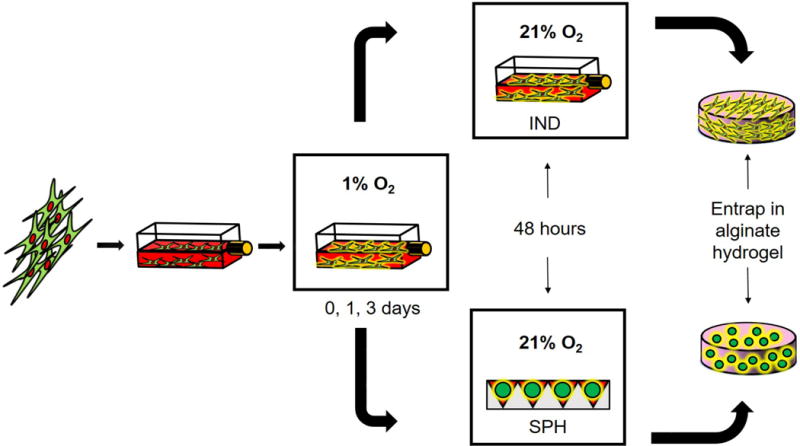
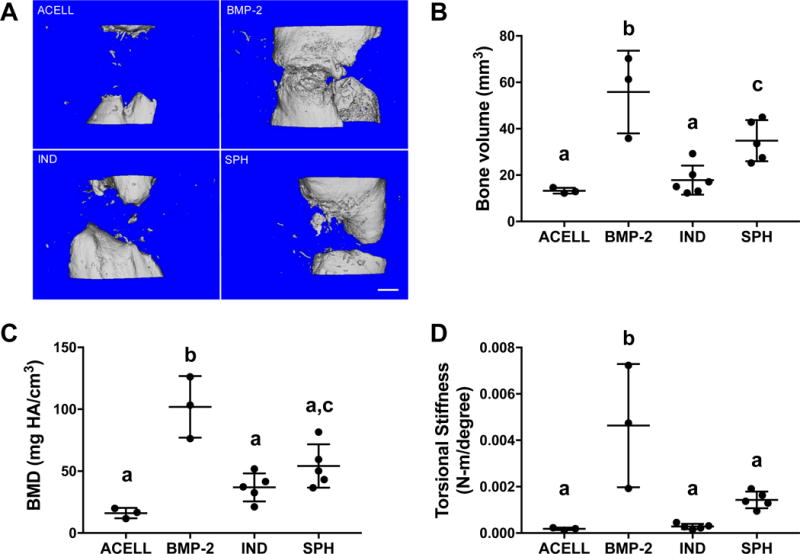
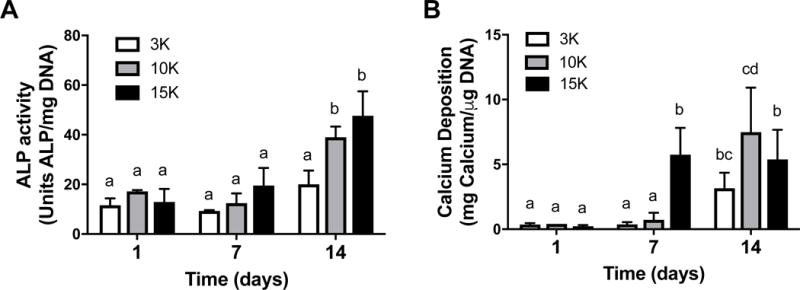
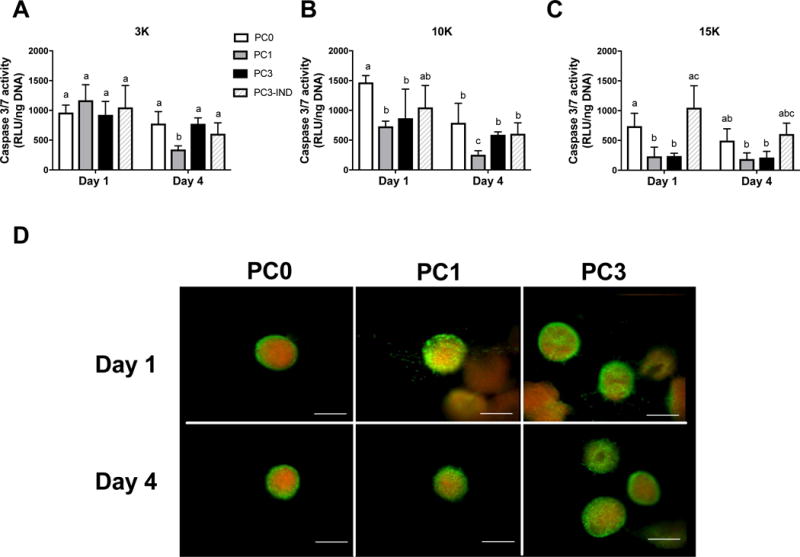
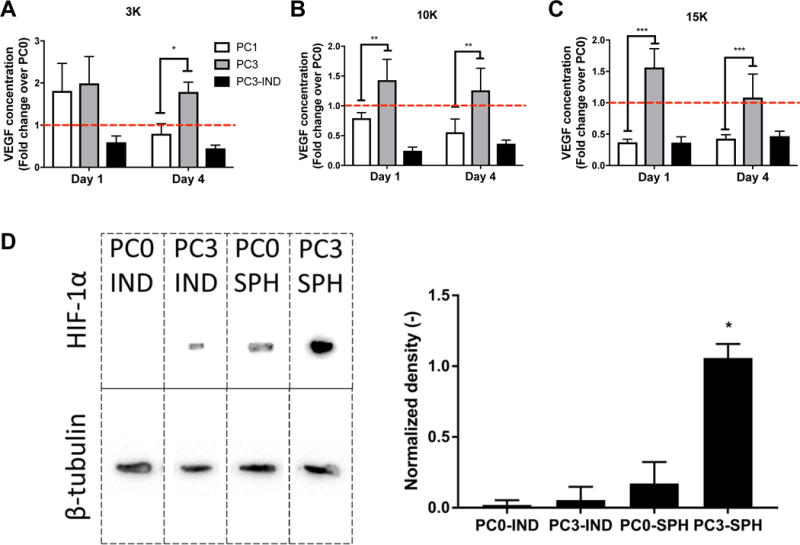
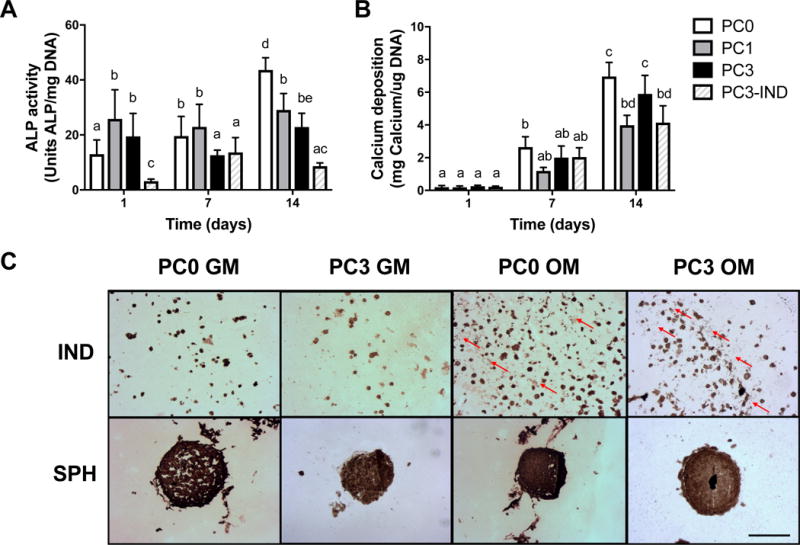
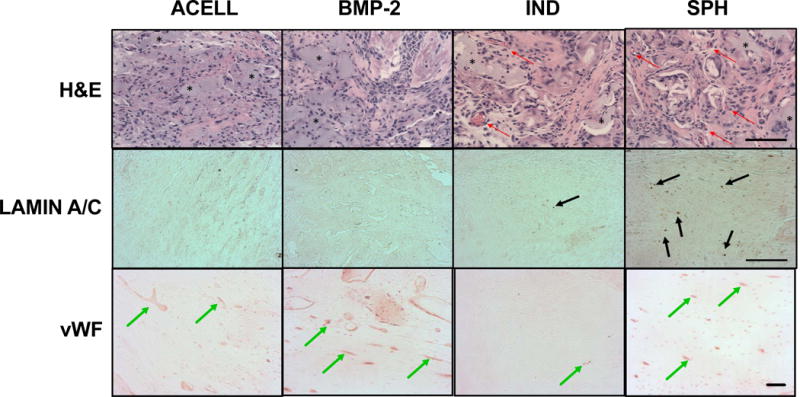
Cell-based approaches for musculoskeletal tissue repair are limited by poor cell survival and engraftment. Short-term hypoxic preconditioning of mesenchymal stem cells (MSCs) can prolong cell viability in vivo, while the aggregation of MSCs into spheroids increases cell survival, trophic factor secretion, and tissue formation in vivo. We hypothesized that preconditioning MSCs in hypoxic culture before spheroid formation would increase cell viability, proangiogenic potential, and resultant bone repair compared with that of individual MSCs. Human MSCs were preconditioned in 1% O in monolayer culture for 3 days (PC3) or kept in ambient air (PC0), formed into spheroids of increasing cell density, and then entrapped in alginate hydrogels. Hypoxia-preconditioned MSC spheroids were more resistant to apoptosis than ambient air controls and this response correlated with duration of hypoxia exposure. Spheroids of the highest cell density exhibited the greatest osteogenic potential in vitro and vascular endothelial growth factor (VEGF) secretion was greatest in PC3 spheroids. PC3 spheroids were then transplanted into rat critical-sized femoral segmental defects to evaluate their potential for bone healing. Spheroid-containing gels induced significantly more bone healing compared with gels containing preconditioned individual MSCs or acellular gels. These data demonstrate that hypoxic preconditioning represents a simple approach for enhancing the therapeutic potential of MSC spheroids when used for bone healing. Stem Cells 2018;36:1393-1403.
基于细胞的方法修复肌肉骨骼组织受到细胞存活率和植入率差的限制。短期缺氧预处理间充质干细胞(MSCs)可以延长体内细胞活力,而将 MSCs 聚集形成球体可以增加体内细胞存活率、营养因子分泌和组织形成。我们假设在形成球体之前在缺氧培养中对 MSCs 进行预处理,与单个 MSCs 相比,会增加细胞活力、促血管生成潜能和最终的骨修复。将人 MSCs 在单层培养中的 1%O 中预培养 3 天(PC3)或在环境空气中培养(PC0),形成细胞密度逐渐增加的球体,然后包埋在藻酸盐水凝胶中。缺氧预处理 MSC 球体比环境空气对照更能抵抗细胞凋亡,这种反应与缺氧暴露的持续时间相关。细胞密度最高的球体在体外表现出最大的成骨潜能,PC3 球体分泌的血管内皮生长因子(VEGF)最多。然后将 PC3 球体移植到大鼠临界尺寸股骨节段性缺损中,以评估它们在骨愈合中的潜力。含有球体的凝胶与含有预处理的单个 MSC 或无细胞凝胶相比,诱导的骨愈合明显更多。这些数据表明,缺氧预处理代表了一种简单的方法,可以增强用于骨愈合的 MSC 球体的治疗潜力。干细胞 2018;36:1393-1403.