Department of Global Health and Population, Harvard T.H. Chan School of Public Health, Boston, MA, USA.
Institute for Health Metrics and Evaluation, University of Washington, Seattle, WA, USA.
BMC Med. 2018 Jul 4;16(1):102. doi: 10.1186/s12916-018-1074-y.
Equitable access to vaccines has been suggested as a priority for low- and middle-income countries (LMICs). However, it is unclear whether providing equitable access is enough to ensure health equity. Furthermore, disaggregated data on health outcomes and benefits gained across population subgroups are often unavailable. This paper develops a model to estimate the distribution of childhood disease cases and deaths across socioeconomic groups, and the potential benefits of three vaccine programs in LMICs.
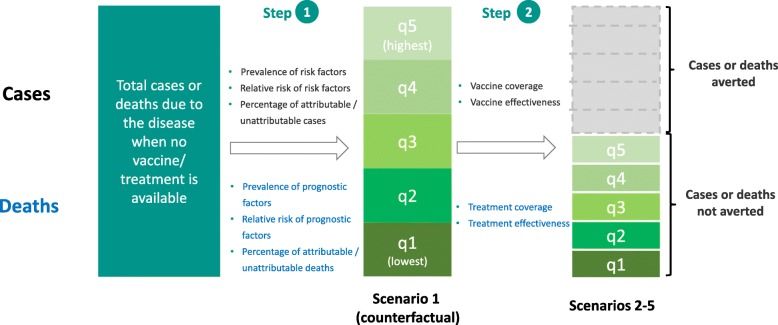
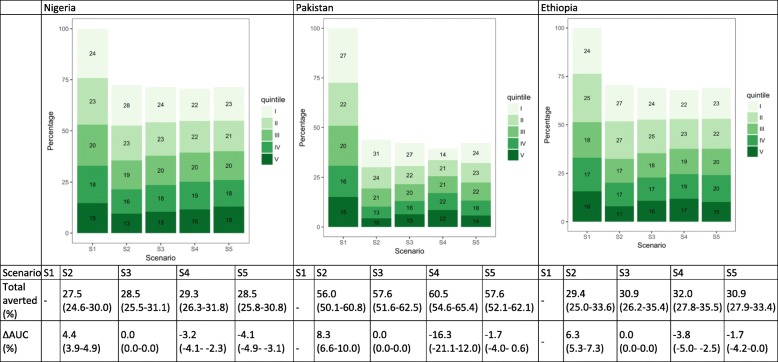
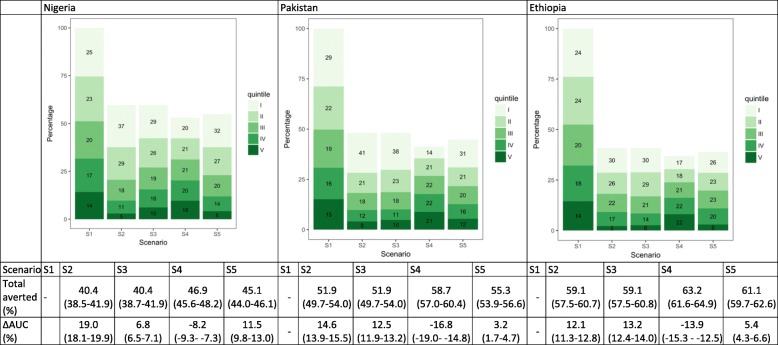
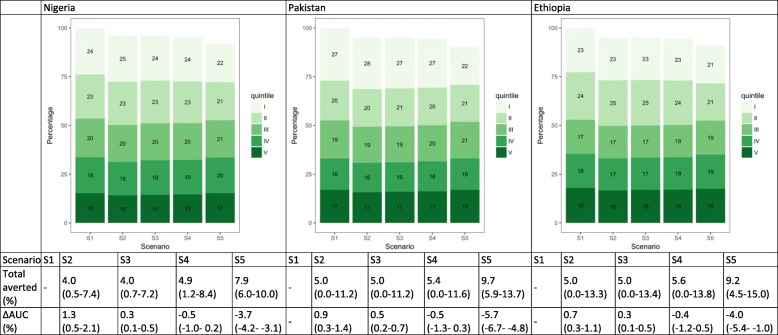
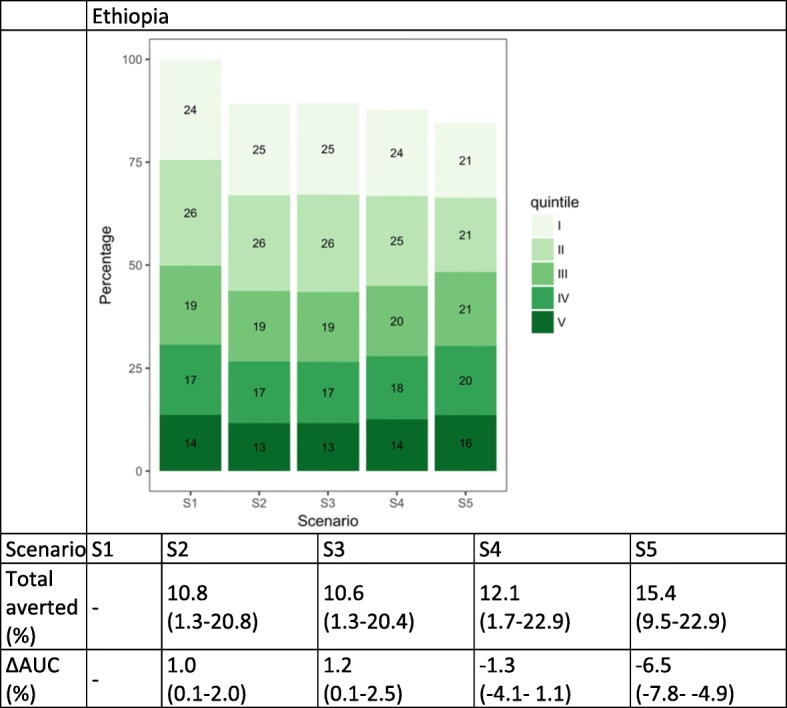
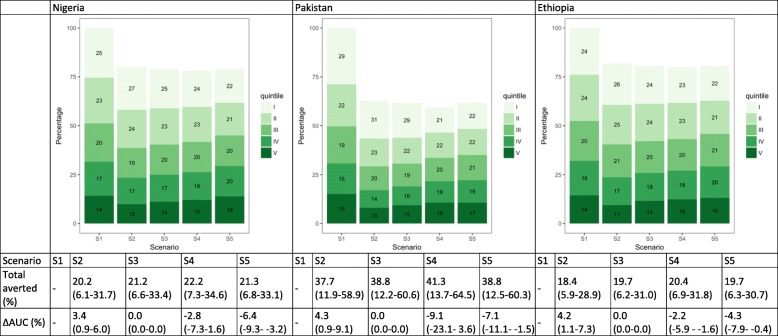
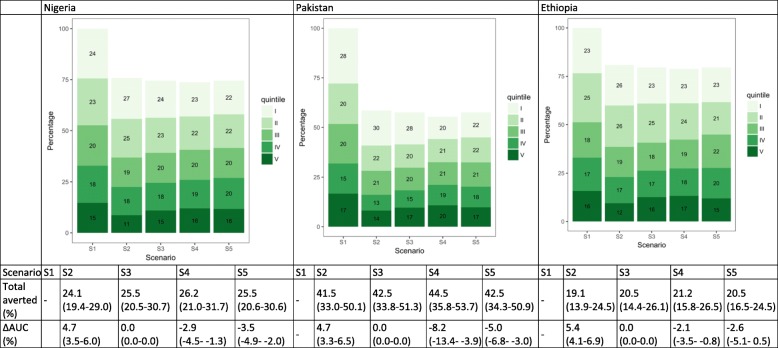
For each country and for three diseases (diarrhea, measles, pneumonia), we estimated the distributions of cases and deaths that would occur across wealth quintiles in the absence of any immunization or treatment programs, using both the prevalence and relative risk of a set of risk and prognostic factors. Building on these baseline estimates, we examined what might be the impact of three vaccines (first dose of measles, pneumococcal conjugate, and rotavirus vaccines), under five scenarios based on different sets of quintile-specific immunization coverage and disease treatment utilization rates.
Due to higher prevalence of risk factors among the poor, disproportionately more disease cases and deaths would occur among the two lowest wealth quintiles for all three diseases when vaccines or treatment are unavailable. Country-specific context, including how the baseline risks, immunization coverage, and treatment utilization are currently distributed across quintiles, affects how different policies translate into changes in cases and deaths distribution.
Our study highlights several factors that would substantially contribute to the unequal distribution of childhood diseases, and finds that merely ensuring equal access to vaccines will not reduce the health outcomes gap across wealth quintiles. Such information can inform policies and planning of programs that aim to improve equitable delivery of healthcare services.
公平获取疫苗被认为是中低收入国家(LMICs)的优先事项。然而,提供公平获取疫苗是否足以确保健康公平仍不清楚。此外,通常无法获得针对人口亚组的健康结果和收益的分类数据。本文开发了一个模型,用于估计儿童疾病病例和死亡在社会经济群体中的分布,以及在 LMICs 中三种疫苗计划的潜在收益。
对于每个国家和三种疾病(腹泻、麻疹、肺炎),我们使用一组风险和预后因素的流行率和相对风险,估计在没有任何免疫或治疗计划的情况下,财富五分位数之间会发生的病例和死亡分布。基于这些基线估计,我们研究了三种疫苗(麻疹、肺炎球菌结合疫苗和轮状病毒疫苗的第一剂)在五种情况下可能会产生什么影响,这五种情况基于五分位数特定免疫覆盖率和疾病治疗利用率的不同组合。
由于穷人中风险因素的患病率更高,在没有疫苗或治疗的情况下,所有三种疾病的两个最低财富五分位数中,疾病病例和死亡的比例不成比例地更高。国家特定的背景,包括基线风险、免疫覆盖率和治疗利用率目前在五分位数中的分布情况,都会影响不同政策如何转化为病例和死亡分布的变化。
我们的研究强调了几个因素,这些因素会极大地导致儿童疾病的不平等分布,并发现仅仅确保平等获得疫苗并不能缩小财富五分位数之间的健康结果差距。此类信息可以为旨在改善医疗服务公平分配的政策和规划提供信息。