Shiu Yan-Ting, Jaimes Edgar A
Division of Nephrology and Hypertension, University of Utah, Salt Lake City, UT 84112, USA.
Renal Service, Memorial Sloan Kettering Cancer Center, New York, NY 10065, USA.
Antioxidants (Basel). 2018 Jul 3;7(7):84. doi: 10.3390/antiox7070084.
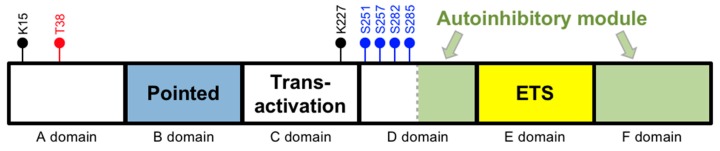
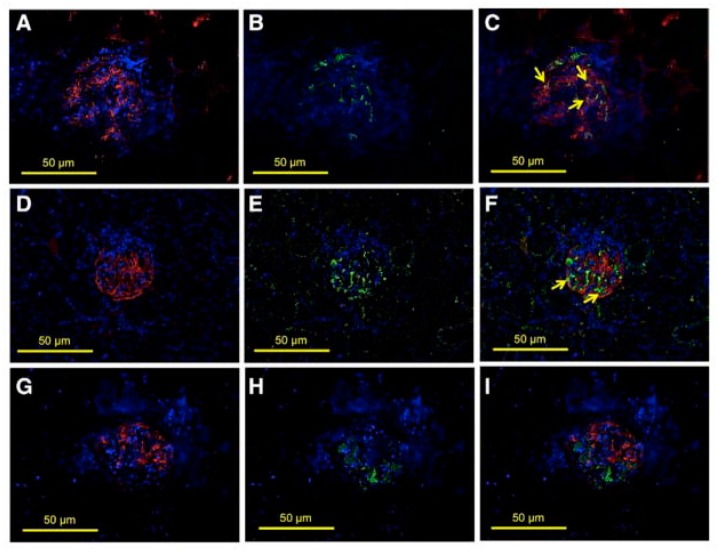
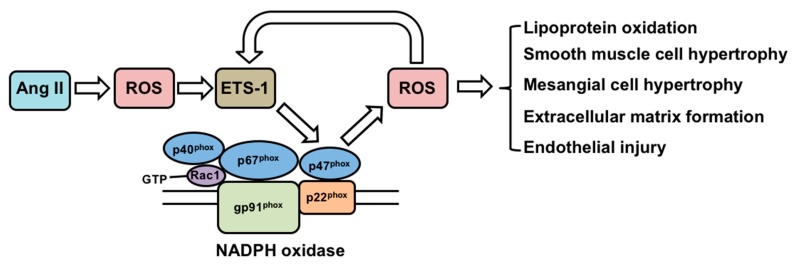
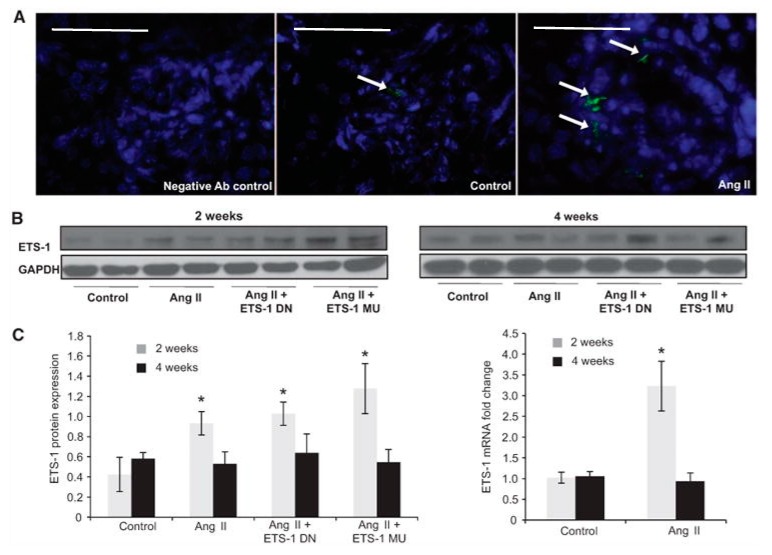
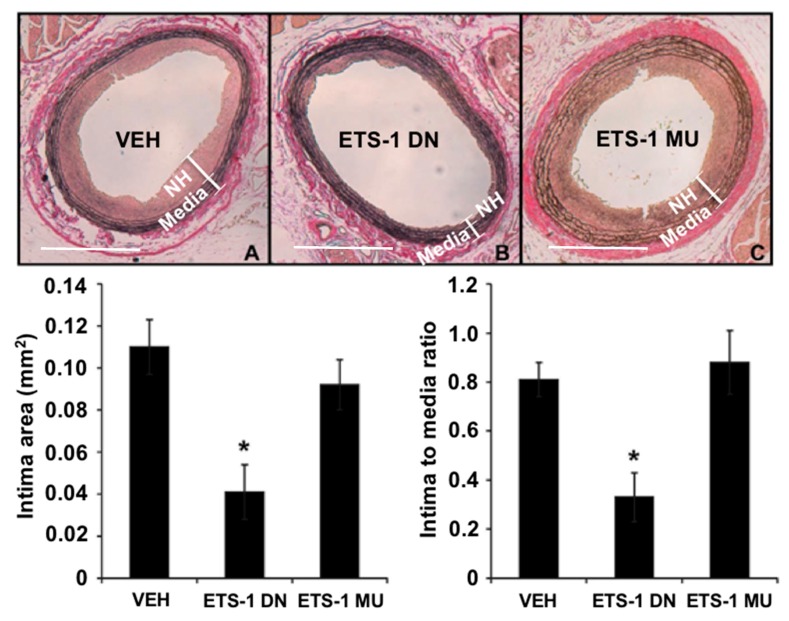
The E26 avian erythroblastosis virus transcription factor-1 (ETS-1) is a member of the ETS family and regulates the expression of a variety of genes including growth factors, chemokines and adhesion molecules. Although ETS-1 was discovered as an oncogene, several lines of research show that it is up-regulated by angiotensin II (Ang II) both in the vasculature and the glomerulus. While reactive oxygen species (ROS) are required for Ang II-induced ETS-1 expression, ETS-1 also regulates the expression of p47, which is one of the subunits of nicotinamide adenine dinucleotide phosphate (NADPH) oxidase and a major source of ROS in the kidney and vasculature. Thus, there appears to be a positive feedback between ETS-1 and ROS. ETS-1 is also upregulated in the kidneys of rats with salt-sensitive hypertension and plays a major role in the development of end-organ injury in this animal model. Activation of the renin angiotensin system is required for the increased ETS-1 expression in these rats, and blockade of ETS-1 or haplodeficiency reduces the severity of kidney injury in these rats. In summary, ETS-1 plays a major role in the development of vascular and renal injury and is a potential target for the development of novel therapeutic strategies to ameliorate end-organ injury in hypertension.
E26禽成红细胞增多症病毒转录因子-1(ETS-1)是ETS家族的成员,可调节多种基因的表达,包括生长因子、趋化因子和黏附分子。尽管ETS-1最初被发现是一种癌基因,但多项研究表明,在血管系统和肾小球中,血管紧张素II(Ang II)均可使其上调。虽然活性氧(ROS)是Ang II诱导ETS-1表达所必需的,但ETS-1也可调节p47的表达,p47是烟酰胺腺嘌呤二核苷酸磷酸(NADPH)氧化酶的亚基之一,是肾脏和血管系统中ROS的主要来源。因此,ETS-1与ROS之间似乎存在正反馈。在盐敏感性高血压大鼠的肾脏中,ETS-1也会上调,并且在该动物模型的终末器官损伤发展中起主要作用。这些大鼠中ETS-1表达增加需要肾素血管紧张素系统的激活,而ETS-1的阻断或单倍体不足可降低这些大鼠肾脏损伤的严重程度。总之,ETS-1在血管和肾脏损伤的发展中起主要作用,并且是开发新型治疗策略以改善高血压终末器官损伤的潜在靶点。