Heydari Alireza, Nakhjavani Yahya Baradaran, Anaraki Elnaz Askari, Arvan Siavash, Shafizadeh Maryam
Assistant Professor, Dental Research Center, Dentistry Research Institute, Tehran University of Medical Sciences, Tehran, Iran; Department of Pediatric Dentistry, School of Dentistry, Tehran University of Medical Sciences, Tehran, Iran.
Associate Professor, Department of Pediatric Dentistry, School of Dentistry, Tehran University of Medical Sciences, Tehran, Iran.
J Dent (Tehran). 2018 Jan;15(1):47-53.
This study aimed to assess the bite force of 3-6-year-old children in primary dentition period after unilateral extraction of a primary first molar (D) and its correlation with the height, weight, gender, type of occlusion, and temporomandibular disorders (TMDs).
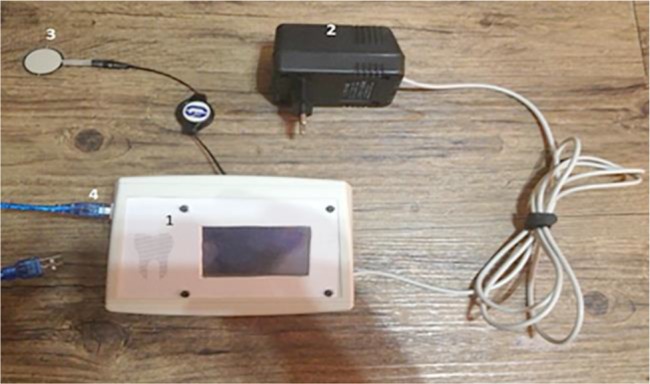
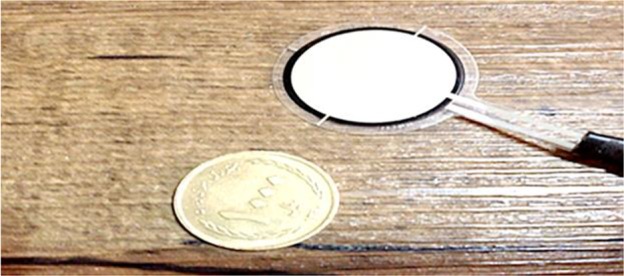
Twenty children between the ages of 3 and 6 years with a unilaterally extracted D comprised our case group, and 29 age-matched children with no extracted teeth comprised the control group. The maximum bite force at the site of posterior teeth was measured using a bite force measuring device with a 0.2-mm thickness and 3-cm diameter, attached to a strain-gage sensor. Each child bit the sensor with maximum force for 3 seconds, and this was repeated three times at 10-minute intervals. The mean value was calculated. Data were analyzed using SPSS 18 software program via generalized estimating equation (GEE).
the bite force on the side of extraction was significantly lower than that on the contralateral side (P<0.05). Also, the bite force was significantly correlated with the height, gender, and age, but the correlations between the bite force and weight, type of occlusion and side of the jaw were not significant (P>0.05).
Extraction of primary first molars decreases the bite force on the respective side of the jaw.
本研究旨在评估乳牙列期3至6岁儿童单侧拔除第一乳磨牙(D)后的咬合力,及其与身高、体重、性别、咬合类型和颞下颌关节紊乱病(TMD)的相关性。
我们的病例组包括20名年龄在3至6岁之间且单侧拔除D的儿童,对照组包括29名年龄匹配且未拔牙的儿童。使用厚度为0.2毫米、直径为3厘米并附着应变片式传感器的咬力测量装置测量后牙部位的最大咬合力。每个儿童以最大力咬住传感器3秒,每隔10分钟重复3次。计算平均值。使用SPSS 18软件程序通过广义估计方程(GEE)对数据进行分析。
拔牙侧的咬合力显著低于对侧(P<0.05)。此外,咬合力与身高、性别和年龄显著相关,但咬合力与体重、咬合类型和颌侧之间的相关性不显著(P>0.05)。
拔除第一乳磨牙会降低颌骨相应侧的咬合力。