Institute of Translational Medicine, Nanchang University, Nanchang 330031, China.
Georgia Cancer Center, Augusta University, Augusta, GA 30912, USA.
Mediators Inflamm. 2018 May 27;2018:8736949. doi: 10.1155/2018/8736949. eCollection 2018.
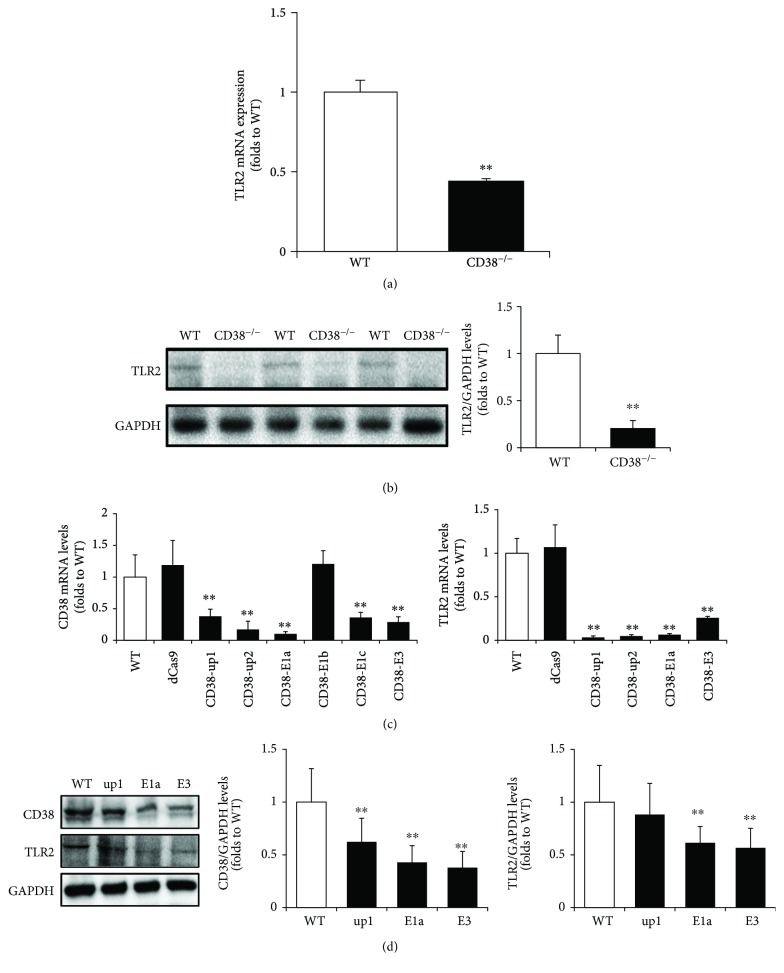
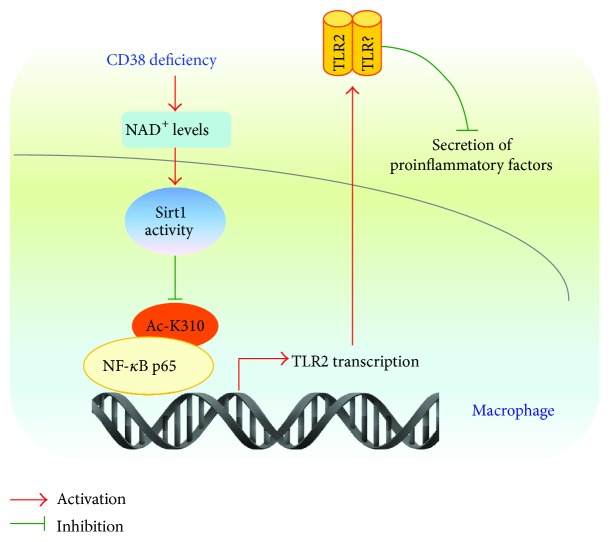
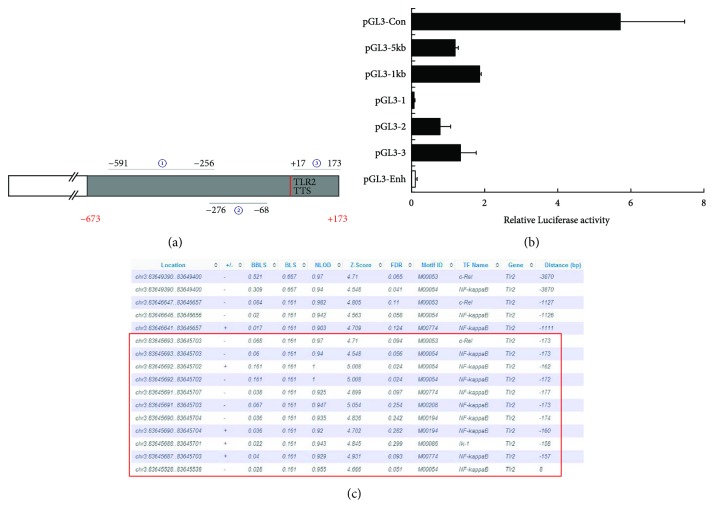
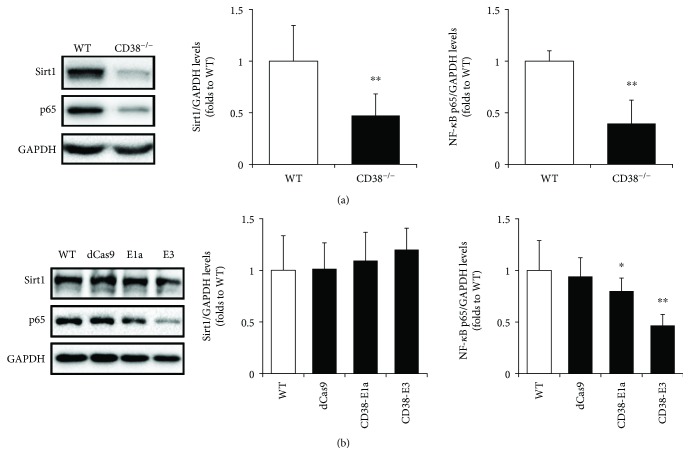
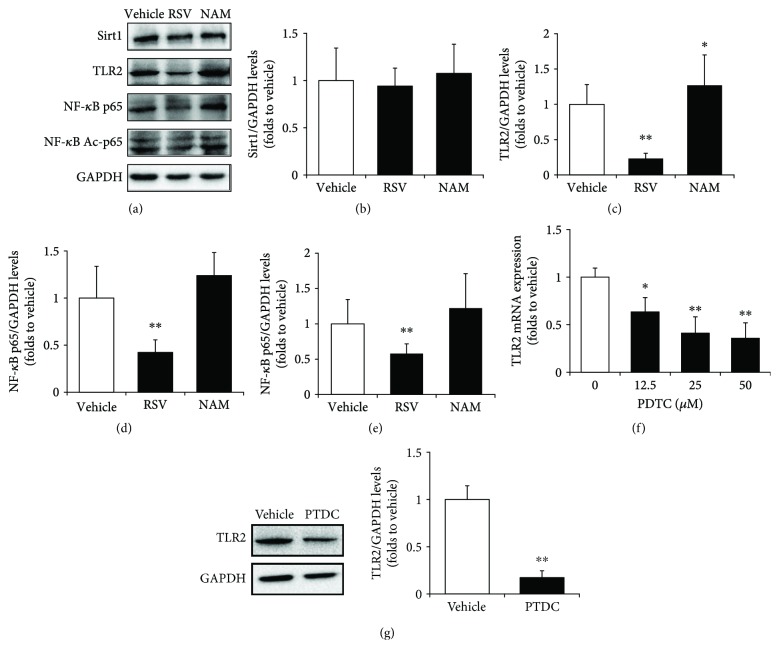
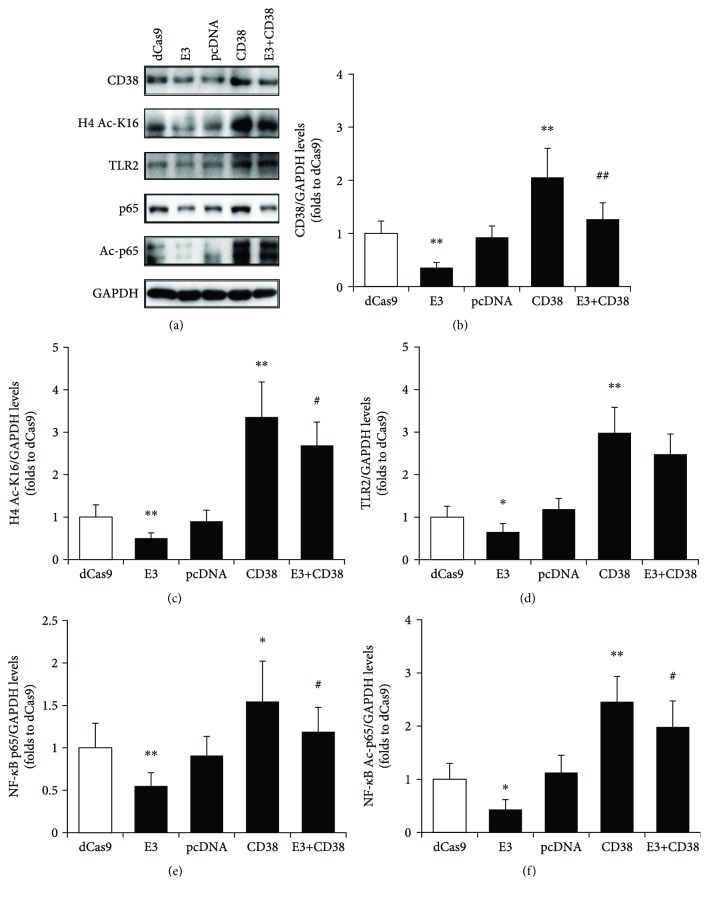
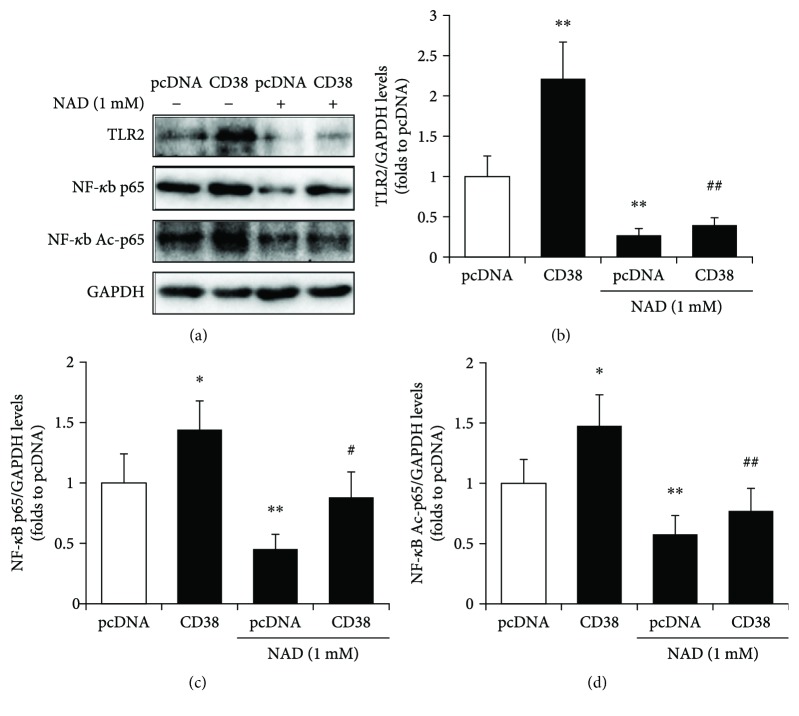
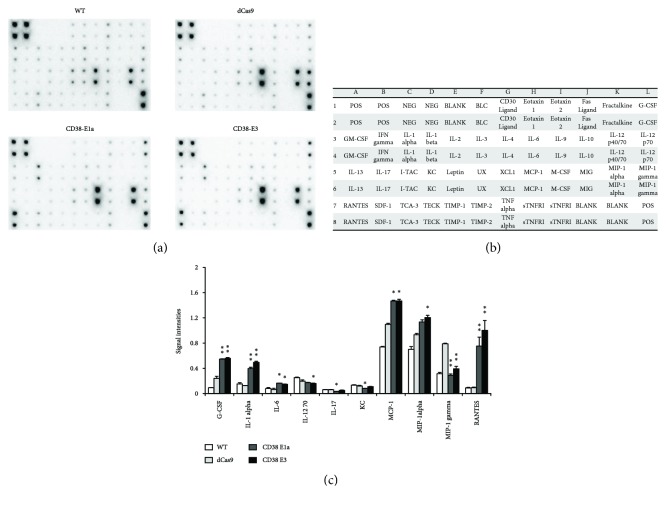
CD38 was first identified as a lymphocyte-specific antigen and then has been found to be widely expressed in a variety of cell types. The functions of CD38 are involved in numerous biological processes including immune responses. Here, we showed the downregulations of both TLR2 mRNA and protein in macrophages from CD38 mice and in CD38 knockdown RAW264.7 cells. Several NF-B-binding motifs in the promoter region of the TLR2 gene were identified by the bioinformatics analysis and were confirmed by the luciferase activity assay with the different truncated TLR2 promoters. CD38 deficiency resulted in the reduction of NF-B p65 and acetyl-NF-B p65 (Ac-p65) levels as determined by Western blot. The expression of Sirt1 did not change, but an increased activity of Sirt1 was observed in CD38-deficient macrophages. Inhibition of the Sirt1/NF-B signaling pathway resulted in downregulation of TLR2 expression in RAW264.7 cells. However, re-expression of CD38 in the knockdown clones reversed the effect on Sirt1/NF-B/TLR2 signaling, which is NAD-dependent. Moreover, the inflammatory cytokines including G-CSF, IL-1alpha, IL-6, MCP-1, MIP-1alpha, and RANTES were increased in CD38 knockdown RAW264.7 cells. Taken together, our data demonstrated that CD38 deficiency enhances inflammatory response in macrophages, and the mechanism may be partly associated with increased Sirt1 activity, which promoted NF-B deacetylation and then inhibited expression of the TLR2 gene. Obviously, our study may provide an insight into the molecular mechanisms in CD38-mediated inflammation.
CD38 最初被鉴定为淋巴细胞特异性抗原,后来发现它在多种细胞类型中广泛表达。CD38 的功能涉及许多生物学过程,包括免疫反应。在这里,我们显示了 CD38 小鼠巨噬细胞和 CD38 敲低 RAW264.7 细胞中 TLR2 mRNA 和蛋白的下调。通过生物信息学分析鉴定了 TLR2 基因启动子区域中的几个 NF-B 结合基序,并通过不同截断的 TLR2 启动子的荧光素酶活性测定进行了验证。CD38 缺乏导致 NF-B p65 和乙酰化-NF-B p65 (Ac-p65) 水平降低,这是通过 Western blot 确定的。Sirt1 的表达没有改变,但在 CD38 缺陷型巨噬细胞中观察到 Sirt1 活性增加。Sirt1/NF-B 信号通路的抑制导致 RAW264.7 细胞中 TLR2 表达下调。然而,在敲低克隆中重新表达 CD38 逆转了对 Sirt1/NF-B/TLR2 信号的影响,这是 NAD 依赖性的。此外,在 CD38 敲低 RAW264.7 细胞中,炎性细胞因子包括 G-CSF、IL-1alpha、IL-6、MCP-1、MIP-1alpha 和 RANTES 的表达增加。总之,我们的数据表明 CD38 缺乏增强了巨噬细胞的炎症反应,其机制可能部分与 Sirt1 活性增加有关,Sirt1 活性增加促进了 NF-B 去乙酰化,从而抑制了 TLR2 基因的表达。显然,我们的研究可能为 CD38 介导的炎症的分子机制提供了一个新视角。