Institute of Marine Research (IMR), Postbox 1870, N-5817, Bergen, Norway.
Department of Biology, University of Bergen, Bergen, Norway.
BMC Genet. 2018 Jul 9;19(1):42. doi: 10.1186/s12863-018-0625-8.
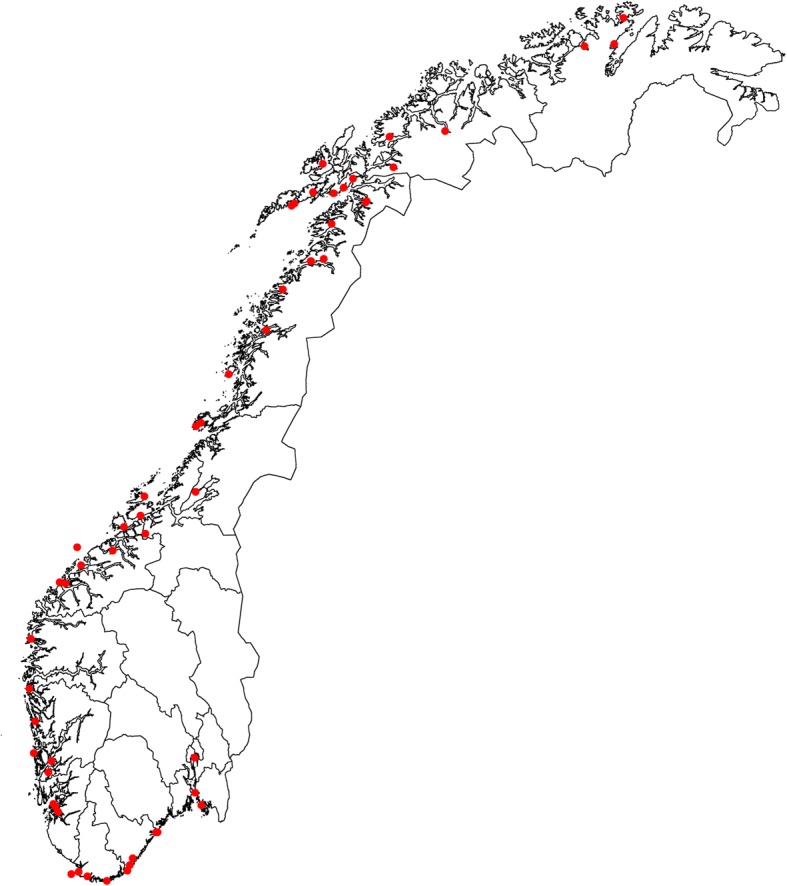
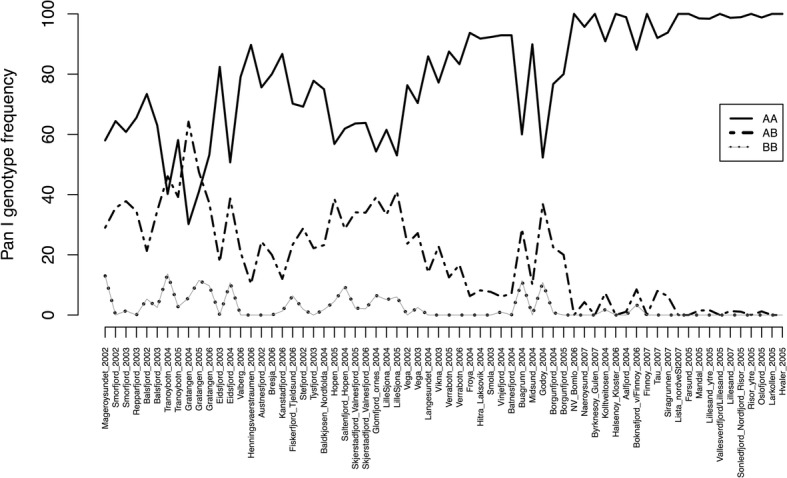
Atlantic cod (Gadus morhua L.) has formed the basis of many economically significant fisheries in the North Atlantic, and is one of the best studied marine fishes, but a legacy of overexploitation has depleted populations and collapsed fisheries in several regions. Previous studies have identified considerable population genetic structure for Atlantic cod. However, within Norway, which is the country with the largest remaining catch in the Atlantic, the population genetic structure of coastal cod (NCC) along the entire coastline has not yet been investigated. We sampled > 4000 cod from 55 spawning sites. All fish were genotyped with 6 microsatellite markers and Pan I (Dataset 1). A sub-set of the samples (1295 fish from 17 locations) were also genotyped with an additional 9 microsatellites (Dataset 2). Otoliths were read in order to exclude North East Arctic Cod (NEAC) from the analyses, as and where appropriate.
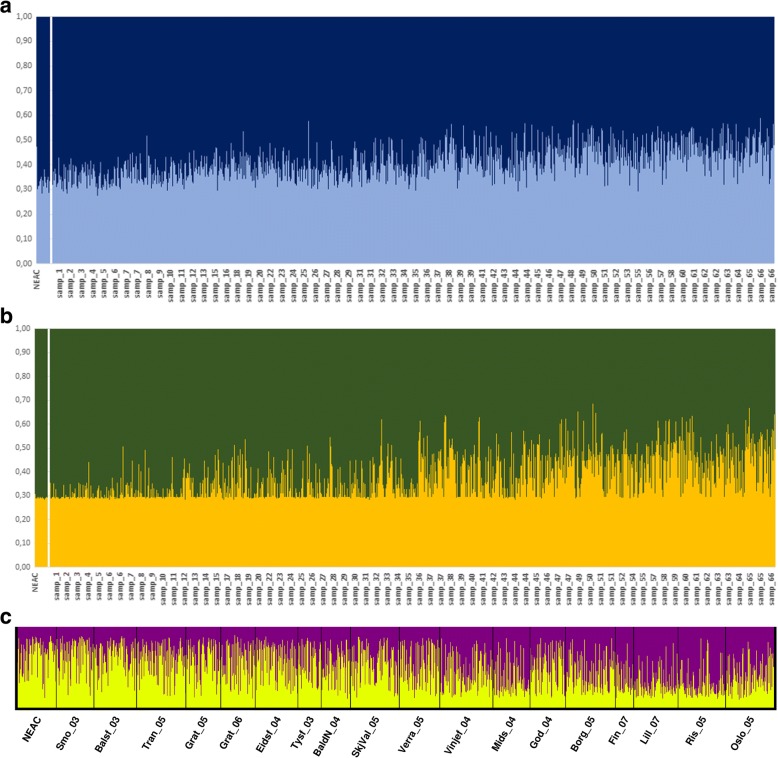
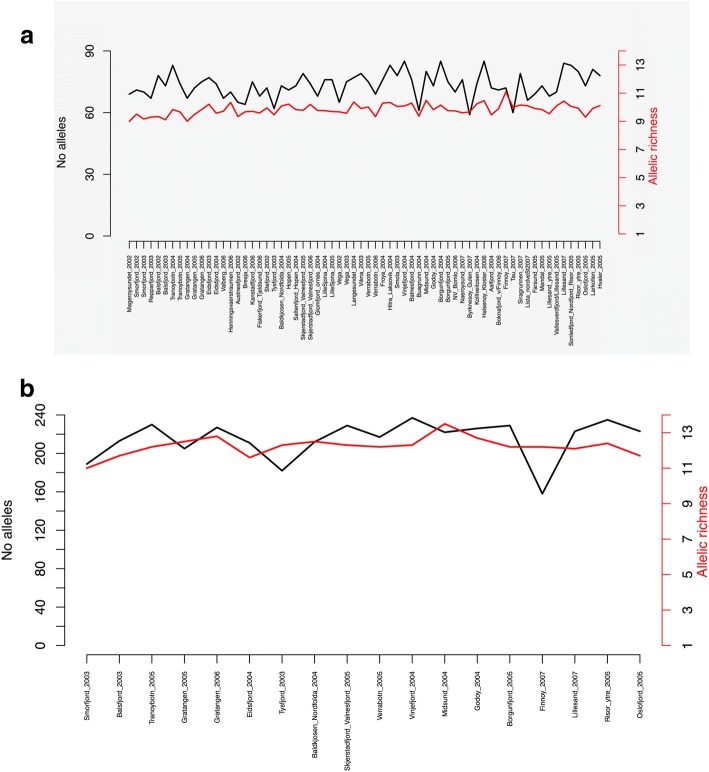
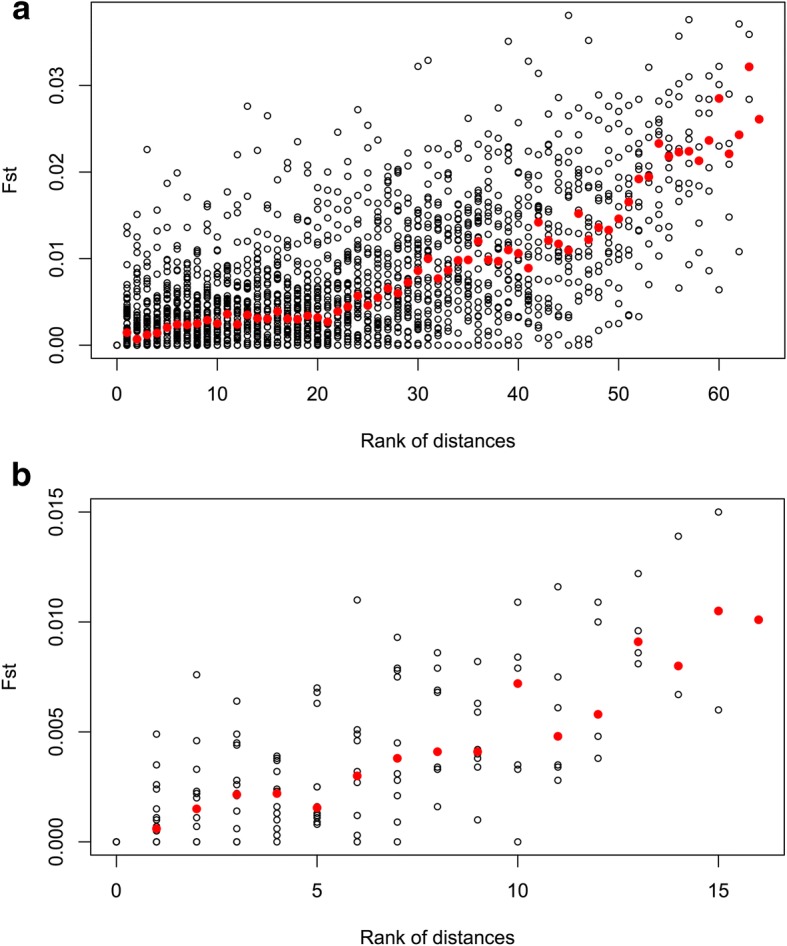
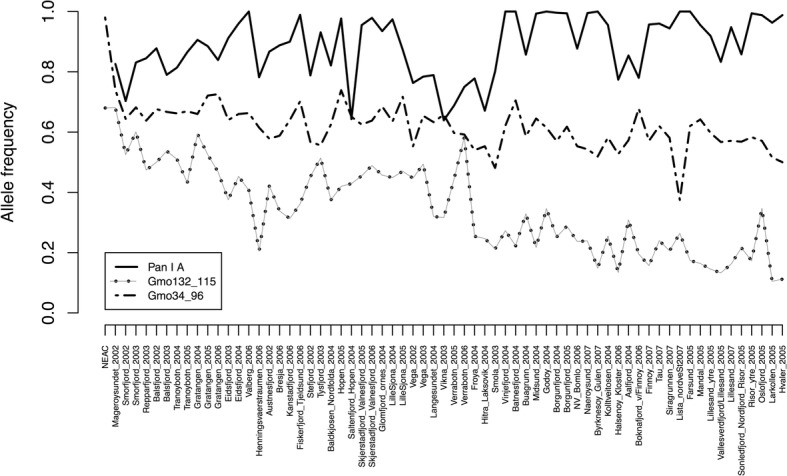
We found no difference in genetic diversity, measured as number of alleles, allelic richness, heterozygosity nor effective population sizes, in the north-south gradient. In both data sets, weak but significant population genetic structure was revealed (Dataset 1: global F = 0.008, P < 0.0001. Dataset 2: global F = 0.004, P < 0.0001). While no clear genetic groups were identified, genetic differentiation increased among geographically-distinct samples. Although the locus Gmo132 was identified as a candidate for positive selection, possibly through linkage with a genomic region under selection, overall trends remained when this locus was excluded from the analyses. The most common allele in loci Gmo132 and Gmo34 showed a marked frequency change in the north-south gradient, increasing towards the frequency observed in NEAC in the north.
We conclude that Norwegian coastal cod displays significant population genetic structure throughout its entire range, that follows a trend of isolation by distance. Furthermore, we suggest that a gradient of genetic introgression between NEAC and NCC contributes to the observed population genetic structure. The current management regime for coastal cod in Norway, dividing it into two stocks at 62°N, represents a simplification of the level of genetic connectivity among coastal cod in Norway, and needs revision.
大西洋鳕鱼(Gadus morhua L.)是北大西洋许多具有重要经济意义的渔业的基础,也是研究最多的海洋鱼类之一,但过度捕捞的遗留问题导致该种群数量减少,多个地区的渔业崩溃。先前的研究已经确定了大西洋鳕鱼存在相当大的种群遗传结构。然而,在挪威,这个大西洋鳕鱼剩余捕捞量最大的国家,其整个海岸线的沿海鳕鱼(NCC)的种群遗传结构尚未得到调查。我们从 55 个产卵地采集了超过 4000 条鳕鱼。所有的鱼都用 6 个微卫星标记和 Pan I(数据集 1)进行了基因分型。样本的一个子集(来自 17 个地点的 1295 条鱼)也用另外 9 个微卫星进行了基因分型(数据集 2)。为了在适当的情况下将北极鳕鱼(NEAC)排除在分析之外,我们读取了耳石。
我们在南北梯度上没有发现遗传多样性的差异,以等位基因数、等位基因丰富度、杂合度和有效种群大小来衡量。在两个数据集,都显示出了微弱但显著的种群遗传结构(数据集 1:全球 F=0.008,P<0.0001。数据集 2:全球 F=0.004,P<0.0001)。虽然没有明确的遗传群体被识别出来,但地理上不同的样本之间的遗传分化增加了。尽管位点 Gmo132 被鉴定为正选择的候选者,可能是通过与受选择的基因组区域的连锁,但当该位点从分析中排除时,总体趋势仍然存在。在南北梯度上,最常见的等位基因在 Gmo132 和 Gmo34 位点上显示出明显的频率变化,向北增加到在北部观察到的 NEAC 频率。
我们的结论是,挪威沿海鳕鱼在其整个分布范围内表现出显著的种群遗传结构,这种结构遵循距离隔离的趋势。此外,我们认为,NEAC 和 NCC 之间遗传渐渗的梯度导致了观察到的种群遗传结构。挪威沿海鳕鱼的现行管理机制将其划分为 62°N 处的两个种群,这简化了挪威沿海鳕鱼之间的遗传连通性水平,需要进行修订。