Pettit Cory, Webb Amy, Walston Steve, Chatterjee Moumita, Chen Wei, Frankel Wendy, Croce Carlo, Williams Terence M
The Ohio State University Medical Center, Arthur G. James Comprehensive Cancer Center and Richard J. Solove Research Institute, Columbus, OH 43210, USA.
Oncotarget. 2018 Jun 22;9(48):28951-28964. doi: 10.18632/oncotarget.25652.
There has been growing interest in using chemoradiation (CRT) for non-operative management of rectal cancer, and identifying patients who might benefit most from this approach is crucial. This study identified miRNAs (miRs) associated with clinical outcomes and treatment resistance by evaluating both pre- and post-CRT expression profiles.
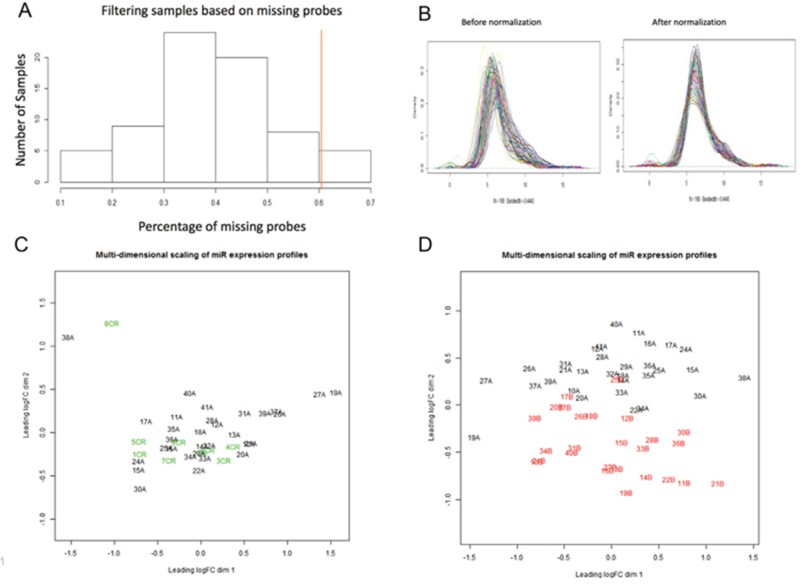
Forty patients, 9 with pathologic complete response (pCR) and 31 with pathologic incomplete response (pIR) were included. MicroRNA was extracted from 40 pre-therapy tumor samples and 31 post-chemoradiation surgical samples with pathologic incomplete response (pIR). A generalized linear model was used to identify miRs associated with pCR. A linear mixed effects model was used to identify miRs differentially expressed before and after treatment. miR expression was dichotomized at the mean and clinical outcomes were evaluated using Cox proportional hazard modeling.
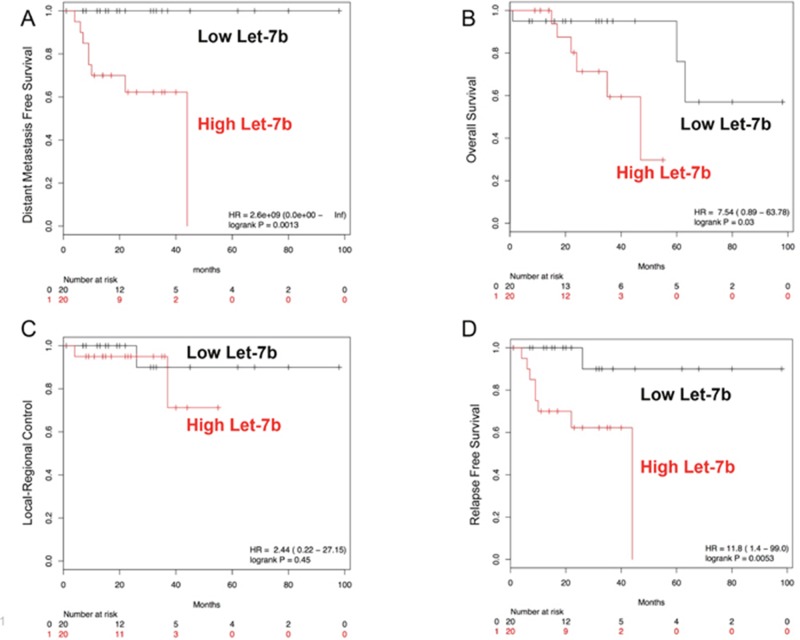
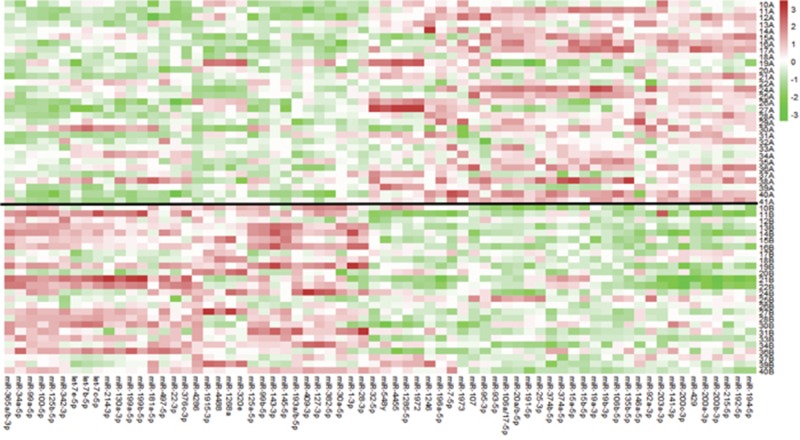
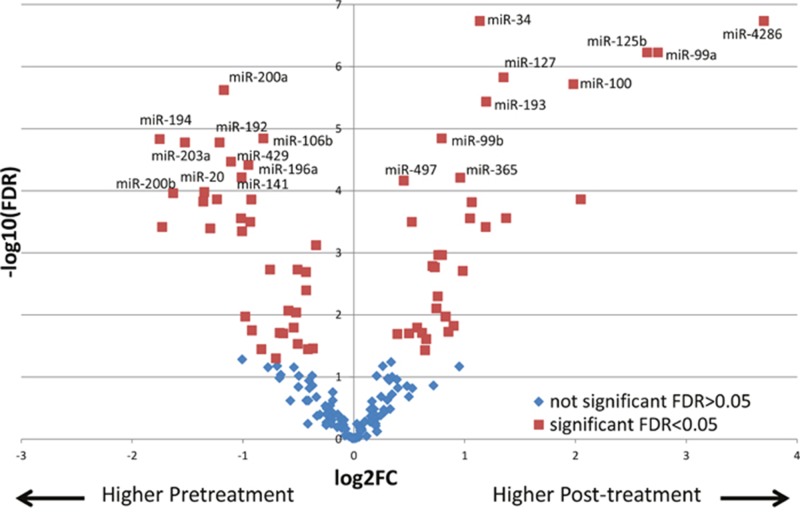
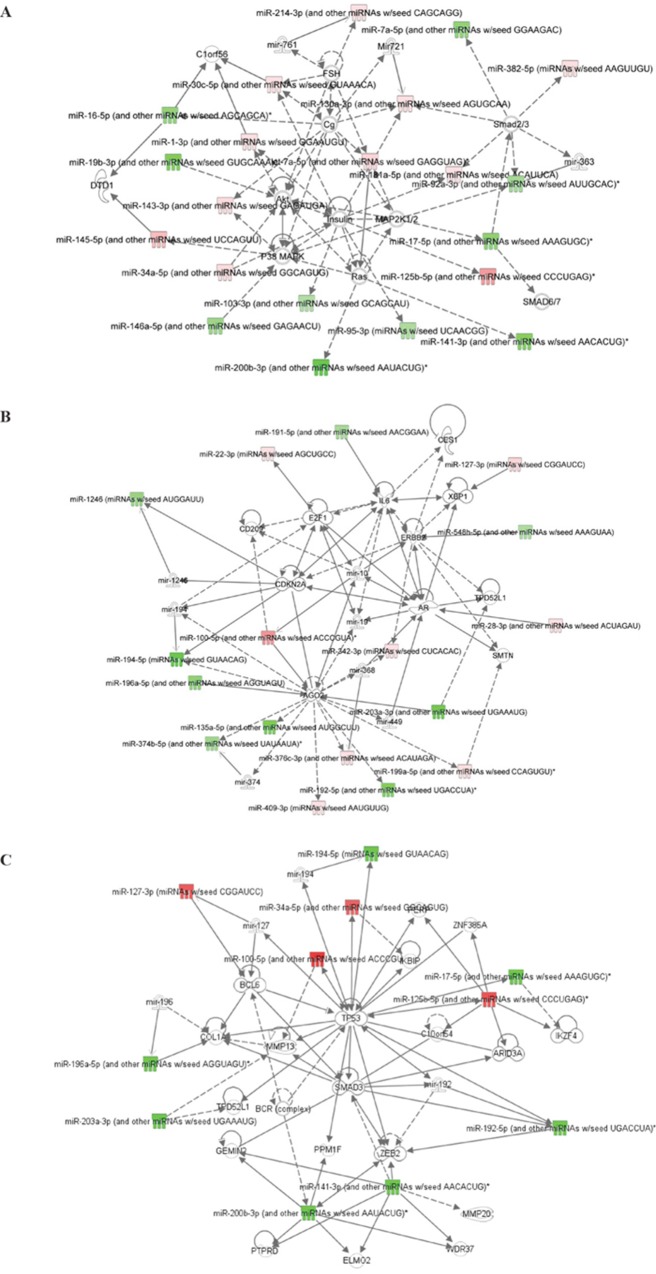
Nine miRs were associated with pCR (p<0.05), but none were significant after false discovery rate correction. Among patients with pIR, 68 miRs were differentially expressed between the pre and post-CRT groups (FDR p<0.05). Ingenuity pathway analysis (IPA) demonstrated multiple signaling networks associated with pIR, including p38MAPK, TP53, AKT, IL-6, and RAS. Increased let-7b was correlated with increased distant metastasis (DM), worse relapse-free survival (RFS), and worse overall survival (OS) (p<0.05).
No miRs were significantly correlated with pCR. We identified miRs that were differentially expressed between pre- and post-CRT tumor samples, and these miRs implicated multiple signaling pathways that may confer resistance to CRT. In addition, we identified an association between increased let-7b and worse clinical outcomes (DM, DFS, OS).
采用放化疗(CRT)对直肠癌进行非手术治疗的关注度日益增加,识别最能从该方法中获益的患者至关重要。本研究通过评估CRT前后的表达谱,确定与临床结局和治疗耐药相关的微小RNA(miRNA,miR)。
纳入40例患者,其中9例为病理完全缓解(pCR),31例为病理不完全缓解(pIR)。从40份治疗前肿瘤样本和31份化疗放疗后病理不完全缓解(pIR)的手术样本中提取微小RNA。使用广义线性模型确定与pCR相关的miR。使用线性混合效应模型确定治疗前后差异表达的miR。将miR表达在均值处进行二分,并使用Cox比例风险模型评估临床结局。
9个miR与pCR相关(p<0.05),但在错误发现率校正后均无显著性。在pIR患者中,CRT前后两组之间有68个miR差异表达(FDR p<0.05)。 Ingenuity通路分析(IPA)显示多个与pIR相关的信号网络,包括p38MAPK、TP53、AKT、IL-6和RAS。let-7b升高与远处转移(DM)增加、无复发生存期(RFS)较差和总生存期(OS)较差相关(p<0.05)。
没有miR与pCR显著相关。我们确定了CRT前后肿瘤样本之间差异表达的miR,这些miR涉及多个可能赋予CRT耐药性的信号通路。此外,我们确定了let-7b升高与较差临床结局(DM、DFS、OS)之间的关联。