Faculdade de Medicina, Instituto de Farmacologia e Neurociências, Universidade de Lisboa, Lisboa, Portugal.
Faculdade de Medicina, Instituto de Medicina Molecular, Universidade de Lisboa, Lisboa, Portugal.
J Neurochem. 2018 Oct;147(1):71-83. doi: 10.1111/jnc.14549. Epub 2018 Sep 27.
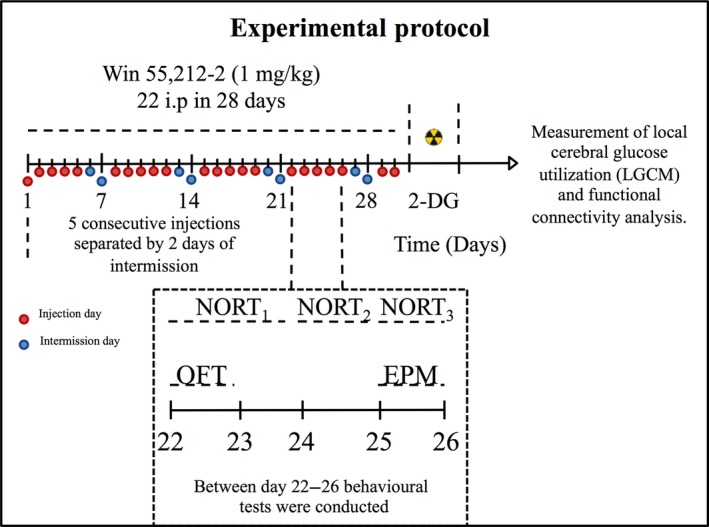
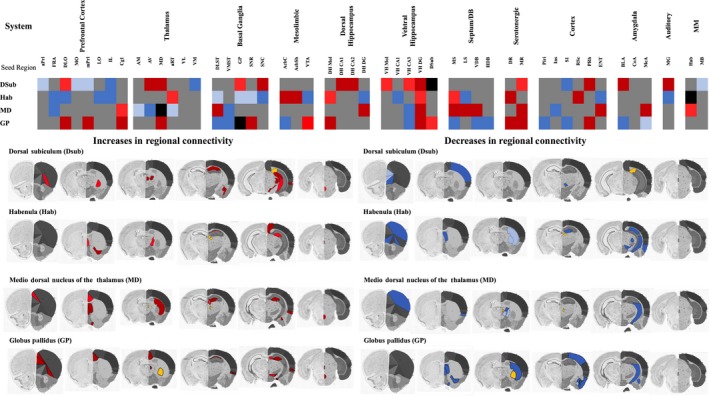
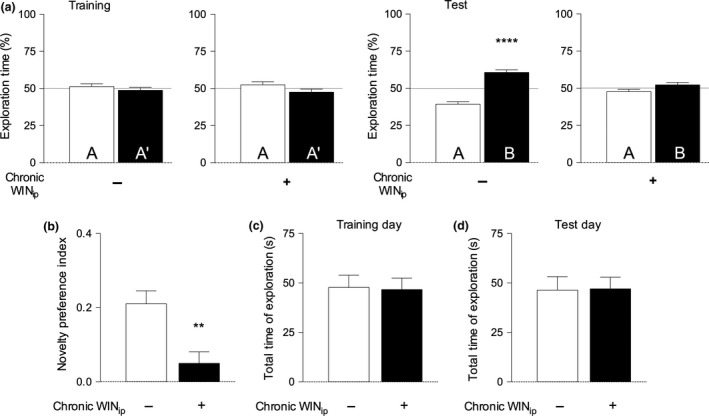
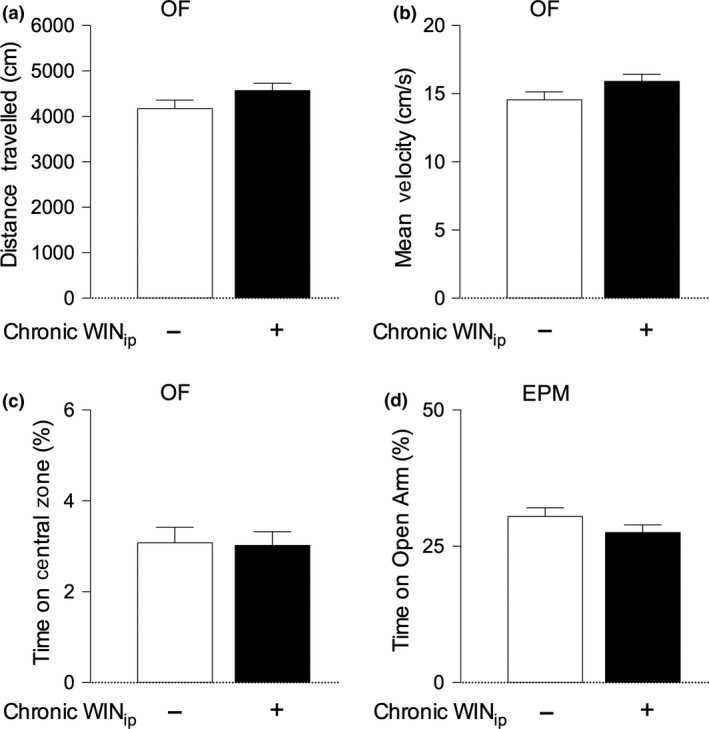
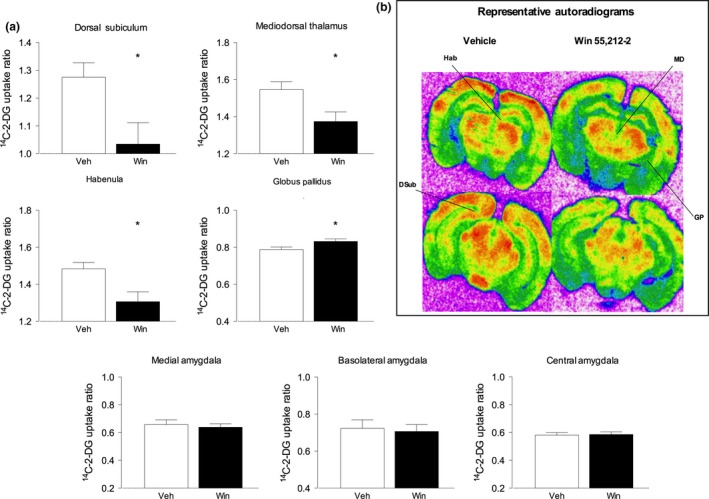
Elucidating how cannabinoids affect brain function is instrumental for the development of therapeutic tools aiming to mitigate 'on target' side effects of cannabinoid-based therapies. A single treatment with the cannabinoid receptor agonist, WIN 55,212-2, disrupts recognition memory in mice. Here, we evaluate how prolonged, intermittent (30 days) exposure to WIN 55,212-2 (1 mg/kg) alters recognition memory and impacts on brain metabolism and functional connectivity. We show that chronic, intermittent treatment with WIN 55,212-2 disrupts recognition memory (Novel Object Recognition Test) without affecting locomotion and anxiety-like behaviour (Open Field and Elevated Plus Maze). Through C-2-deoxyglucose functional brain imaging we show that chronic, intermittent WIN 55,212-2 exposure induces hypometabolism in the hippocampal dorsal subiculum and in the mediodorsal nucleus of the thalamus, two brain regions directly involved in recognition memory. In addition, WIN 55,212-2 exposure induces hypometabolism in the habenula with a contrasting hypermetabolism in the globus pallidus. Through the application of the Partial Least Squares Regression (PLSR) algorithm to the brain imaging data, we observed that prolonged WIN 55,212-2 administration alters functional connectivity in brain networks that underlie recognition memory, including that between the hippocampus and prefrontal cortex, the thalamus and prefrontal cortex, and between the hippocampus and the perirhinal cortex. In addition, our results support disturbed lateral habenula and serotonin system functional connectivity following WIN 55,212-2 exposure. Overall, this study provides new insight into the functional mechanisms underlying the impact of chronic cannabinoid exposure on memory and highlights the serotonin system as a particularly vulnerable target.
阐明大麻素如何影响大脑功能对于开发治疗工具至关重要,这些治疗工具旨在减轻基于大麻素的疗法的“靶向”副作用。单次给予大麻素受体激动剂 WIN 55,212-2 会破坏小鼠的识别记忆。在这里,我们评估了长期、间歇性(30 天)暴露于 WIN 55,212-2(1mg/kg)如何改变识别记忆并影响大脑代谢和功能连接。我们表明,慢性、间歇性 WIN 55,212-2 治疗会破坏识别记忆(新物体识别测试),而不会影响运动和焦虑样行为(旷场和高架十字迷宫)。通过 C-2-脱氧葡萄糖功能脑成像,我们表明慢性、间歇性 WIN 55,212-2 暴露会导致海马背侧下托和丘脑中背侧核的代谢减少,这两个大脑区域直接参与识别记忆。此外,WIN 55,212-2 暴露会导致缰核代谢减少,而苍白球代谢增加。通过对脑成像数据应用偏最小二乘回归(PLSR)算法,我们观察到长期 WIN 55,212-2 给药会改变识别记忆相关脑网络的功能连接,包括海马体和前额叶皮层、丘脑和前额叶皮层以及海马体和边缘皮层之间的连接。此外,我们的结果支持 WIN 55,212-2 暴露后外侧缰核和血清素系统功能连接的紊乱。总体而言,这项研究提供了关于慢性大麻素暴露对记忆影响的功能机制的新见解,并强调了血清素系统作为一个特别脆弱的靶点。