Division of Pharmacoengineering and Molecular Pharmaceutics, UNC Eshelman School of Pharmacy, University of North Carolina at Chapel Hill, Chapel Hill, North Carolina, United States of America.
Lineberger Comprehensive Cancer Center, University of North Carolina at Chapel Hill, Chapel Hill, North Carolina, United States of America.
PLoS One. 2018 Jul 10;13(7):e0198596. doi: 10.1371/journal.pone.0198596. eCollection 2018.
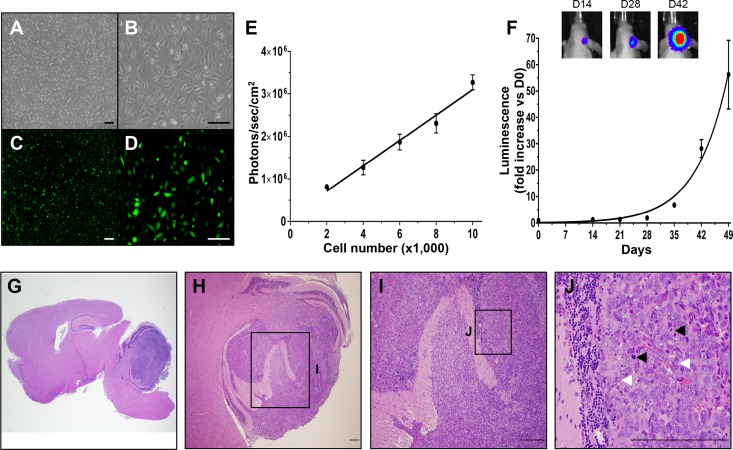
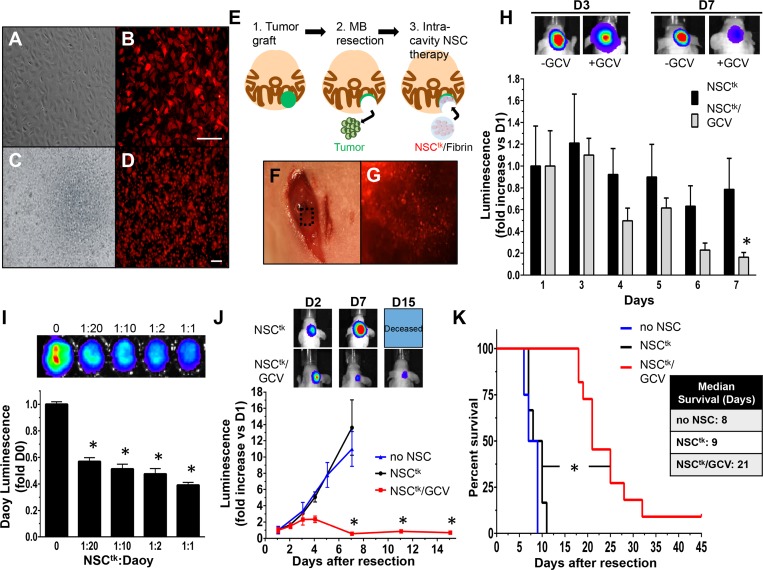
Cytotoxic neural stem cells (NSCs) have emerged as a promising treatment for Medulloblastoma (MB), the most common malignant primary pediatric brain tumor. The lack of accurate pre-clinical models incorporating surgical resection and tumor recurrence limits advancement in post-surgical MB treatments. Using cell lines from two of the 5 distinct MB molecular sub-groups, in this study, we developed an image-guided mouse model of MB surgical resection and investigate intra-cavity NSC therapy for post-operative MB.
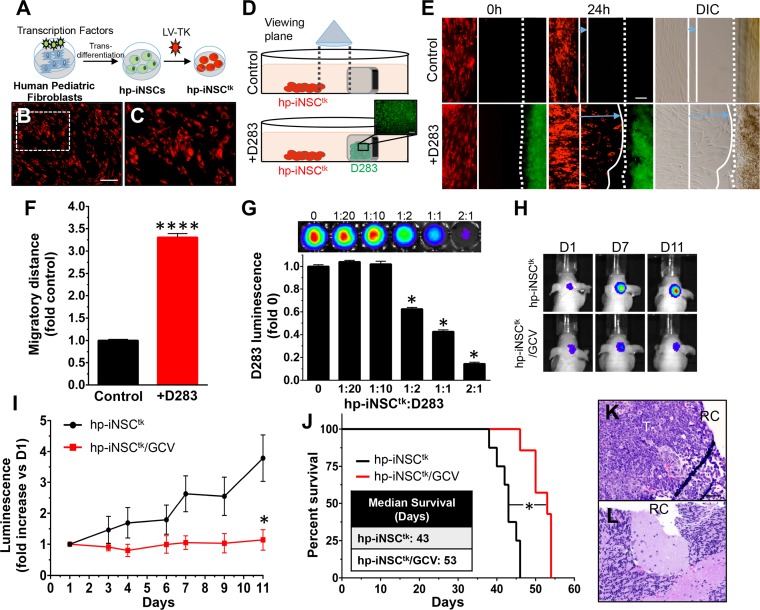
Using D283 and Daoy human MB cells engineered to express multi-modality optical reporters, we created the first image-guided resection model of orthotopic MB. Brain-derived NSCs and novel induced NSCs (iNSCs) generated from pediatric skin were engineered to express the pro-drug/enzyme therapy thymidine kinase/ganciclovir, seeded into the post-operative cavity, and used to investigate intra-cavity therapy for post-surgical MB.
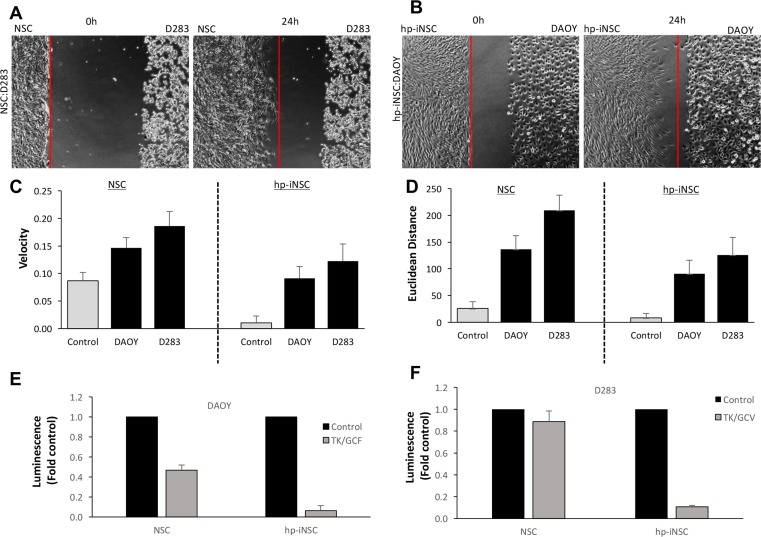
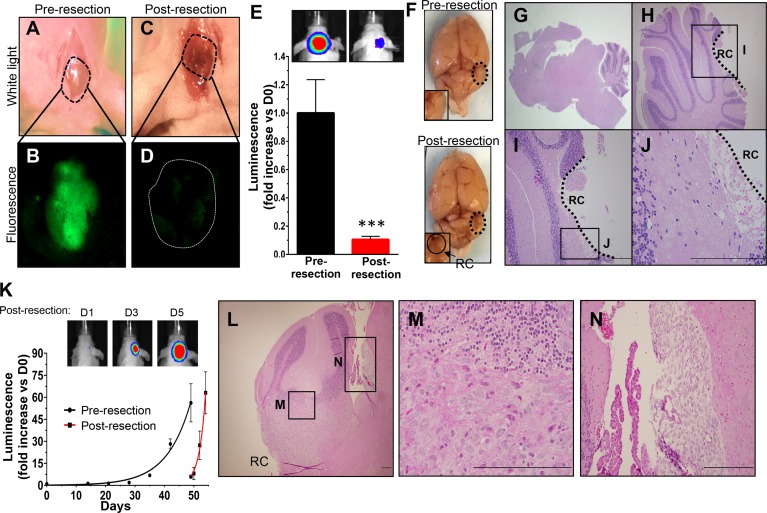
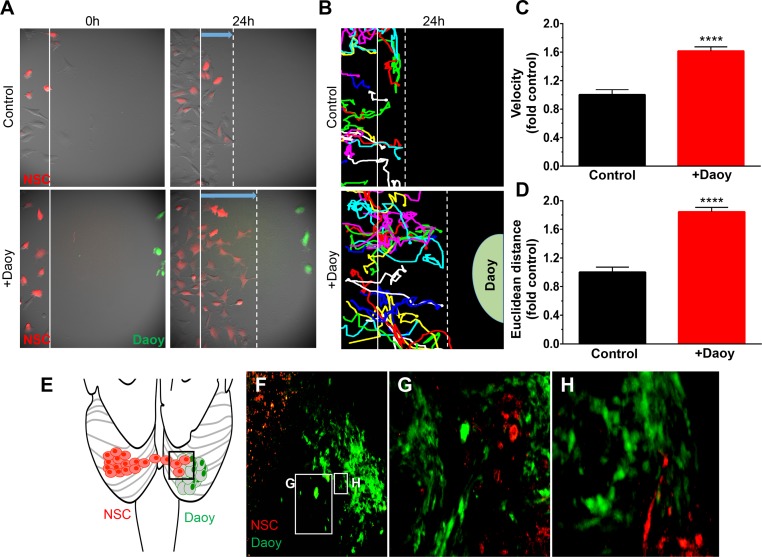
We found that surgery reduced MB volumes by 92%, and the rate of post-operative MB regrowth increased 3-fold compared to pre-resection growth. Real-time imaging showed NSCs rapidly homed to MB, migrating 1.6-fold faster and 2-fold farther in the presence of tumors, and co-localized with MB present in the contra-lateral hemisphere. Seeding of cytotoxic NSCs into the post-operative surgical cavity decreased MB volumes 15-fold and extended median survival 133%. As an initial step towards novel autologous therapy in human MB patients, we found skin-derived iNSCs homed to MB cells, while intra-cavity iNSC therapy suppressed post-surgical tumor growth and prolonged survival of MB-bearing mice by 123%.
We report a novel image-guided model of MB resection/recurrence and provide new evidence of cytotoxic NSCs/iNSCs delivered into the surgical cavity effectively target residual MB foci.
细胞毒性神经干细胞(NSC)已成为治疗髓母细胞瘤(MB)的一种有前途的方法,MB 是最常见的小儿原发性脑肿瘤。缺乏包含手术切除和肿瘤复发的准确临床前模型限制了手术后 MB 治疗的进展。在本研究中,我们使用来自 5 个不同 MB 分子亚组中的 2 个细胞系,开发了一种 MB 手术切除的图像引导小鼠模型,并研究了用于术后 MB 的腔内 NSC 治疗。
使用表达多模态光学报告器的 D283 和 Daoy 人 MB 细胞系,我们创建了首个用于 MB 同源性切除的图像引导切除模型。脑源性 NSCs 和从儿科皮肤生成的新型诱导 NSCs(iNSC)被设计表达前药/酶治疗胸苷激酶/更昔洛韦,接种到术后腔中,并用于研究用于术后 MB 的腔内治疗。
我们发现手术使 MB 体积减少了 92%,与术前切除生长相比,术后 MB 复发的速度增加了 3 倍。实时成像显示 NSCs 迅速归巢到 MB,在存在肿瘤的情况下,迁移速度快 1.6 倍,距离远 2 倍,并且与对侧半球中的 MB 共定位。将细胞毒性 NSCs 播种到术后手术腔中可使 MB 体积减少 15 倍,并将中位生存期延长 133%。作为在人类 MB 患者中进行新型自体治疗的初始步骤,我们发现皮肤源性 iNSC 归巢到 MB 细胞,而腔内 iNSC 治疗通过 123%延长了 MB 荷瘤小鼠的肿瘤生长抑制和生存时间。
我们报告了一种新的 MB 切除/复发的图像引导模型,并提供了新的证据表明,递送到手术腔中的细胞毒性 NSCs/iNSC 可以有效靶向残留的 MB 病灶。