• 文献检索
  • 文档翻译
  • 深度研究
  • 学术资讯
  • Suppr Zotero 插件Zotero 插件
  • 邀请有礼
  • 套餐&价格
  • 历史记录
应用&插件
Suppr Zotero 插件Zotero 插件浏览器插件Mac 客户端Windows 客户端微信小程序
定价
高级版会员购买积分包购买API积分包
服务
文献检索文档翻译深度研究API 文档MCP 服务
关于我们
关于 Suppr公司介绍联系我们用户协议隐私条款
关注我们

Suppr 超能文献

核心技术专利:CN118964589B侵权必究
粤ICP备2023148730 号-1Suppr @ 2026

文献检索

告别复杂PubMed语法,用中文像聊天一样搜索,搜遍4000万医学文献。AI智能推荐,让科研检索更轻松。

立即免费搜索

文件翻译

保留排版,准确专业,支持PDF/Word/PPT等文件格式,支持 12+语言互译。

免费翻译文档

深度研究

AI帮你快速写综述,25分钟生成高质量综述,智能提取关键信息,辅助科研写作。

立即免费体验

由菠萝皮纳米纤维素提取过程中的副产物得到的基于生物成因硅的微颗粒。

Biogenic silica-based microparticles obtained as a sub-product of the nanocellulose extraction process from pineapple peels.

机构信息

National Laboratory of Nanotechnology LANOTEC - National Center of High Technology CeNAT, 1.3 km north from the USA embassy, San José, Costa Rica.

Technical University of Costa Rica, UTN, San Carlos, Costa Rica.

出版信息

Sci Rep. 2018 Jul 10;8(1):10417. doi: 10.1038/s41598-018-28444-4.

DOI:10.1038/s41598-018-28444-4
PMID:29991803
原文链接:https://pmc.ncbi.nlm.nih.gov/articles/PMC6039511/
Abstract

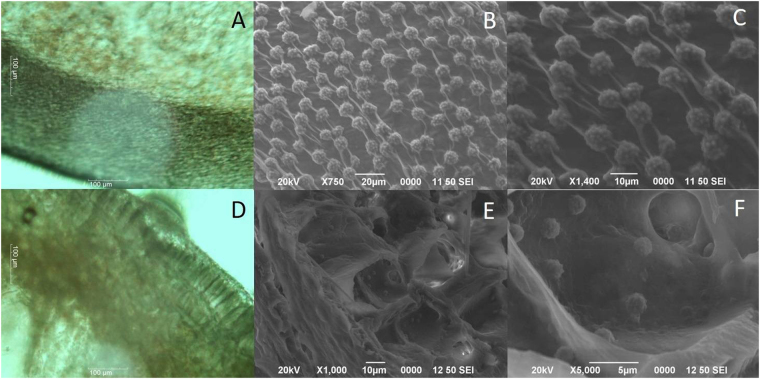
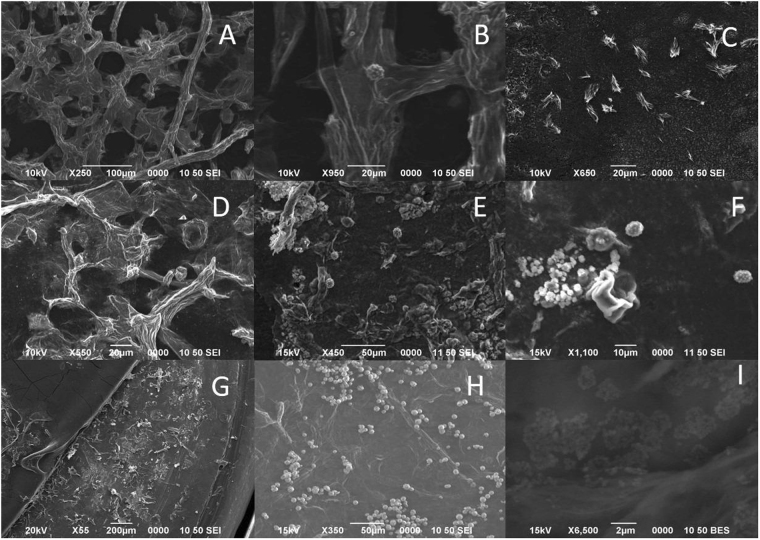
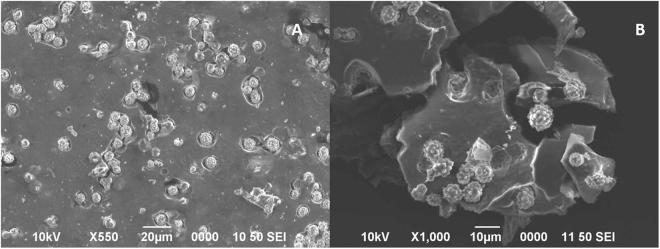
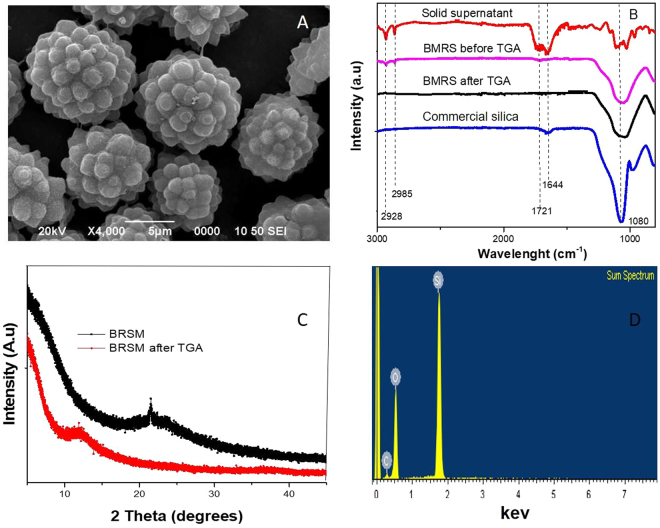
Silica in plant tissues has been suggested as a component for enhancing mechanical properties, and as a physical barrier. Pineapples present in their shell and bracts rosette-like microparticles that could be associated to biogenic silica. In this study, we show for the first time that silica-based microparticles are co-purified during the extraction process of nanocellulose from pineapple (Ananas comosus). This shows that vegetable biomass could be an underappreciated source, not only for nanocellulose, but also for a highly valuable sub-product, like 10 µm biogenic rosette-like silica-based microparticles. The recovery yield obtained was 7.2 wt.%; based on the dried initial solid. Due to their size and morphology, the microparticles have potential applications as reinforcement in adhesives, polymer composites, in the biomedical field, and even as a source of silica for fertilizers.

摘要

植物组织中的硅被认为是一种增强机械性能的成分,也是一种物理屏障。菠萝的外壳和苞片中存在着类似玫瑰花的微粒子,这些微粒子可能与生物硅有关。在这项研究中,我们首次表明,在从菠萝(菠萝)中提取纳米纤维素的过程中,基于硅的微粒子是共同纯化的。这表明蔬菜生物质不仅是纳米纤维素的未被充分认识的来源,而且也是高价值的副产品,例如 10 µm 生物玫瑰花形硅基微粒子。所获得的回收产率为 7.2wt%;基于初始干燥固体。由于其尺寸和形态,这些微粒子在作为增强剂用于粘合剂、聚合物复合材料、生物医学领域,甚至作为肥料用硅源方面具有潜在的应用。

https://cdn.ncbi.nlm.nih.gov/pmc/blobs/616c/6039511/e53ff97342fc/41598_2018_28444_Fig8_HTML.jpg
https://cdn.ncbi.nlm.nih.gov/pmc/blobs/616c/6039511/6909495c1a48/41598_2018_28444_Fig1_HTML.jpg
https://cdn.ncbi.nlm.nih.gov/pmc/blobs/616c/6039511/34435228da04/41598_2018_28444_Fig2_HTML.jpg
https://cdn.ncbi.nlm.nih.gov/pmc/blobs/616c/6039511/4b1ba4d3e958/41598_2018_28444_Fig3_HTML.jpg
https://cdn.ncbi.nlm.nih.gov/pmc/blobs/616c/6039511/ffa57ef26040/41598_2018_28444_Fig4_HTML.jpg
https://cdn.ncbi.nlm.nih.gov/pmc/blobs/616c/6039511/e74fbf8eda83/41598_2018_28444_Fig5_HTML.jpg
https://cdn.ncbi.nlm.nih.gov/pmc/blobs/616c/6039511/fb3acc093b5d/41598_2018_28444_Fig6_HTML.jpg
https://cdn.ncbi.nlm.nih.gov/pmc/blobs/616c/6039511/d4528cb1a087/41598_2018_28444_Fig7_HTML.jpg
https://cdn.ncbi.nlm.nih.gov/pmc/blobs/616c/6039511/e53ff97342fc/41598_2018_28444_Fig8_HTML.jpg
https://cdn.ncbi.nlm.nih.gov/pmc/blobs/616c/6039511/6909495c1a48/41598_2018_28444_Fig1_HTML.jpg
https://cdn.ncbi.nlm.nih.gov/pmc/blobs/616c/6039511/34435228da04/41598_2018_28444_Fig2_HTML.jpg
https://cdn.ncbi.nlm.nih.gov/pmc/blobs/616c/6039511/4b1ba4d3e958/41598_2018_28444_Fig3_HTML.jpg
https://cdn.ncbi.nlm.nih.gov/pmc/blobs/616c/6039511/ffa57ef26040/41598_2018_28444_Fig4_HTML.jpg
https://cdn.ncbi.nlm.nih.gov/pmc/blobs/616c/6039511/e74fbf8eda83/41598_2018_28444_Fig5_HTML.jpg
https://cdn.ncbi.nlm.nih.gov/pmc/blobs/616c/6039511/fb3acc093b5d/41598_2018_28444_Fig6_HTML.jpg
https://cdn.ncbi.nlm.nih.gov/pmc/blobs/616c/6039511/d4528cb1a087/41598_2018_28444_Fig7_HTML.jpg
https://cdn.ncbi.nlm.nih.gov/pmc/blobs/616c/6039511/e53ff97342fc/41598_2018_28444_Fig8_HTML.jpg

相似文献

1
Biogenic silica-based microparticles obtained as a sub-product of the nanocellulose extraction process from pineapple peels.由菠萝皮纳米纤维素提取过程中的副产物得到的基于生物成因硅的微颗粒。
Sci Rep. 2018 Jul 10;8(1):10417. doi: 10.1038/s41598-018-28444-4.
2
Morphology, transport characteristics and viscoelastic polymer chain confinement in nanocomposites based on thermoplastic potato starch and cellulose nanofibers from pineapple leaf.基于热塑性马铃薯淀粉和菠萝叶纤维素纳米纤维的纳米复合材料的形态、传输特性和粘弹性聚合物链约束
Carbohydr Polym. 2017 Aug 1;169:176-188. doi: 10.1016/j.carbpol.2017.04.017. Epub 2017 Apr 10.
3
Influence of PVA and silica on chemical, thermo-mechanical and electrical properties of Celluclast-treated nanofibrillated cellulose composites.PVA 和二氧化硅对纤维素酶处理纳米纤维纤维素复合材料的化学、热机械和电性能的影响。
Int J Biol Macromol. 2017 Nov;104(Pt A):384-392. doi: 10.1016/j.ijbiomac.2017.06.018. Epub 2017 Jun 9.
4
Biotechnological innovations in nanocellulose production from waste biomass with a focus on pineapple waste.从废弃生物质生产纳米纤维素的生物技术创新,重点关注菠萝废料。
Chemosphere. 2024 Feb;349:140833. doi: 10.1016/j.chemosphere.2023.140833. Epub 2023 Dec 1.
5
Synthesis of aspirin-loaded polymer-silica composites and their release characteristics.载阿司匹林聚合物-二氧化硅复合材料的合成及其释放特性。
ACS Appl Mater Interfaces. 2014 Aug 27;6(16):14369-76. doi: 10.1021/am5036384. Epub 2014 Jul 30.
6
A review on processing techniques of bast fibers nanocellulose and its polylactic acid (PLA) nanocomposites.麻纤维纳米纤维素及其聚乳酸(PLA)纳米复合材料加工技术研究进展综述。
Int J Biol Macromol. 2019 Jan;121:1314-1328. doi: 10.1016/j.ijbiomac.2018.09.040. Epub 2018 Sep 9.
7
Thermally stable polymer composites with improved transparency by using colloidal mesoporous silica nanoparticles as inorganic fillers.使用胶体介孔二氧化硅纳米粒子作为无机填料的热稳定聚合物复合材料,透明度得到提高。
Phys Chem Chem Phys. 2012 May 28;14(20):7427-32. doi: 10.1039/c2cp40356k. Epub 2012 Apr 24.
8
Synthesis and characterization of polyester bionanocomposite membrane with ultrasonic irradiation process for gas permeation and antibacterial activity.超声辐照法制备聚酯纳米复合膜及其气体渗透和抗菌性能研究。
Ultrason Sonochem. 2018 Mar;41:538-550. doi: 10.1016/j.ultsonch.2017.10.020. Epub 2017 Oct 23.
9
Powder compression mechanics of spray-dried lactose nanocomposites.喷雾干燥乳糖纳米复合材料的粉末压缩力学。
Int J Pharm. 2017 Feb 25;518(1-2):1-10. doi: 10.1016/j.ijpharm.2016.12.041. Epub 2016 Dec 19.
10
Recent advances in qualitative and quantitative characterization of nanocellulose-reinforced nanocomposites: A review.纳米纤维素增强纳米复合材料的定性和定量表征的最新进展:综述。
Adv Colloid Interface Sci. 2023 Aug;318:102961. doi: 10.1016/j.cis.2023.102961. Epub 2023 Jul 16.

引用本文的文献

1
Food loss and waste valorization offers a sustainable source of biopolymers in bioinks for 3D printing.食物损失和浪费的增值为3D打印生物墨水提供了可持续的生物聚合物来源。
Nat Food. 2025 Apr;6(4):323-330. doi: 10.1038/s43016-025-01146-7. Epub 2025 Mar 27.
2
Phytolith assemblages from palm leaves and palm-leaf manuscripts: what is the difference and what it could mean?来自棕榈叶和棕榈叶手稿的植物硅酸体组合:差异何在以及意味着什么?
Front Plant Sci. 2025 Jan 14;15:1482790. doi: 10.3389/fpls.2024.1482790. eCollection 2024.
3
Nature-inspired innovations: unlocking the potential of biomimicry in bionanotechnology and beyond.

本文引用的文献

1
Mechanism of silica deposition in sorghum silica cells.高粱硅细胞中硅沉积的机制。
New Phytol. 2017 Jan;213(2):791-798. doi: 10.1111/nph.14173. Epub 2016 Sep 13.
2
The Plant Polyester Cutin: Biosynthesis, Structure, and Biological Roles.植物聚酯角鲨烯:生物合成、结构和生物学作用。
Annu Rev Plant Biol. 2016 Apr 29;67:207-33. doi: 10.1146/annurev-arplant-043015-111929. Epub 2016 Feb 8.
3
Isolation and Compositional Analysis of Plant Cuticle Lipid Polyester Monomers.植物角质层脂质聚酯单体的分离与成分分析
受自然启发的创新:释放生物纳米技术及其他领域中仿生学的潜力。
Discov Nano. 2024 Nov 21;19(1):186. doi: 10.1186/s11671-024-04153-y.
4
Closing the Nutrient Loop-The New Approaches to Recovering Biomass Minerals during the Biorefinery Processes.闭环营养-The 生物炼制过程中回收生物质矿物质的新方法。
Int J Environ Res Public Health. 2023 Jan 23;20(3):2096. doi: 10.3390/ijerph20032096.
5
Encapsulated salts in velvet worm slime drive its hardening.鞘氨醇虫黏液中的包裹盐驱动其硬化。
Sci Rep. 2022 Nov 10;12(1):19261. doi: 10.1038/s41598-022-23523-z.
6
The Food-Materials Nexus: Next Generation Bioplastics and Advanced Materials from Agri-Food Residues.食品材料纽带:农业食品废弃物中的下一代生物塑料和先进材料。
Adv Mater. 2021 Oct;33(43):e2102520. doi: 10.1002/adma.202102520. Epub 2021 Sep 12.
7
Biogenic Metal Oxides.生物源金属氧化物
Biomimetics (Basel). 2020 Jun 23;5(2):29. doi: 10.3390/biomimetics5020029.
J Vis Exp. 2015 Nov 22(105):53386. doi: 10.3791/53386.
4
Cutin from watermelon peels: A novel inducer for cutinase production and its physicochemical characterization.西瓜皮角质:一种用于角质酶生产的新型诱导剂及其理化特性
Int J Biol Macromol. 2015 Aug;79:398-404. doi: 10.1016/j.ijbiomac.2015.05.006. Epub 2015 May 15.
5
A hemicellulose-bound form of silicon with potential to improve the mechanical properties and regeneration of the cell wall of rice.一种与半纤维素结合的硅形式,具有改善水稻细胞壁的机械性能和再生的潜力。
New Phytol. 2015 May;206(3):1051-1062. doi: 10.1111/nph.13282. Epub 2015 Jan 23.
6
Biocompatibility assessment of rice husk-derived biogenic silica nanoparticles for biomedical applications.用于生物医学应用的稻壳衍生生物成因硅纳米粒子的生物相容性评估。
Mater Sci Eng C Mater Biol Appl. 2015 Feb;47:8-16. doi: 10.1016/j.msec.2014.11.005. Epub 2014 Nov 7.
7
Synthesis and surface functionalization of silica nanoparticles for nanomedicine.用于纳米医学的二氧化硅纳米颗粒的合成与表面功能化
Surf Sci Rep. 2014 Sep;69(2-3):132-158. doi: 10.1016/j.surfrep.2014.07.001.
8
Role of HF in oxygen removal from carbon nanotubes: implications for high performance carbon electronics.HF 在从碳纳米管中去除氧的作用:对高性能碳电子学的影响。
Nano Lett. 2014 Nov 12;14(11):6179-84. doi: 10.1021/nl502401c. Epub 2014 Oct 29.
9
Silica in plants: biological, biochemical and chemical studies.植物中的硅:生物学、生物化学及化学研究
Ann Bot. 2007 Dec;100(7):1383-9. doi: 10.1093/aob/mcm247. Epub 2007 Oct 6.