Division of Molecular Medicine, Research Department, Faculty of Medicine Siriraj Hospital, Mahidol University, Bangkok, 10700, Thailand.
Division of Molecular Genetics, Research Department, Faculty of Medicine Siriraj Hospital, Mahidol University, Bangkok, 10700, Thailand.
Sci Rep. 2018 Jul 11;8(1):10453. doi: 10.1038/s41598-018-28623-3.
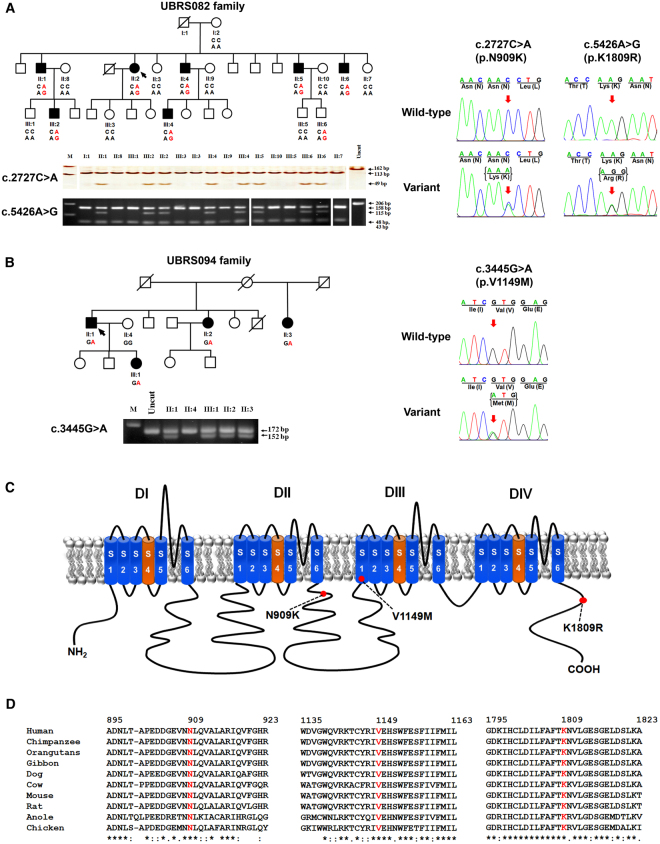
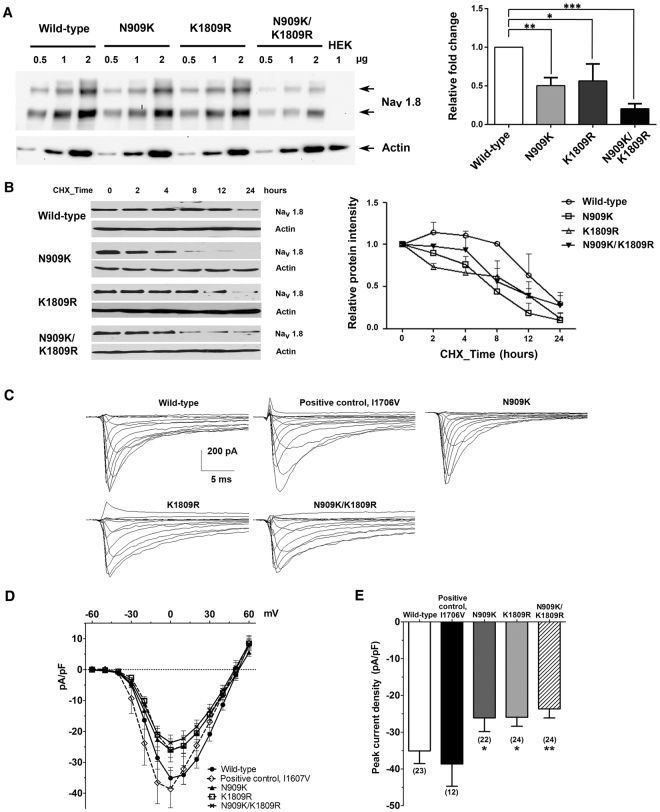
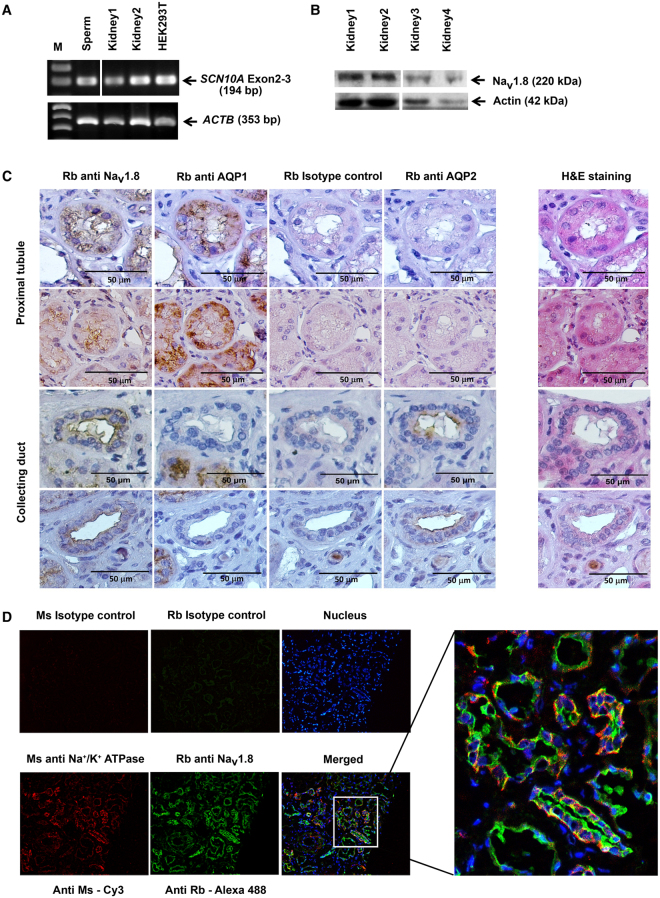
Human kidney stone disease (KSD) causes significant morbidity and public health burden worldwide. The etiology of KSD is heterogeneous, ranging from monogenic defects to complex interaction between genetic and environmental factors. However, the genetic defects causing KSD in the majority of affected families are still unknown. Here, we report the discovery of mutations of SCN10A, encoding Na1.8 α subunit of voltage-gated sodium channel, in families with KSD. The region on chromosome 3 where SCN10A locates was initially identified in a large family with KSD by genome-wide linkage analysis and exome sequencing. Two mutations (p.N909K and p.K1809R) in the same allele of SCN10A co-segregated with KSD in the affected family. Additional mutation (p.V1149M) of SCN10A was identified in another affected family, strongly supporting the causal role of SCN10A for KSD. The amino acids at these three positions, N909, K1809, and V1149, are highly conserved in vertebrate evolution, indicating their structural and functional significances. Na1.8 α subunit mRNA and protein were found to express in human kidney tissues. The mutant proteins expressed in cultured cells were unstable and causing reduced current density as analyzed by whole-cell patch-clamp technique. Thus, loss-of-function mutations of SCN10A were associated with KSD in the families studied.
人类肾结石病(KSD)在全球范围内导致了显著的发病率和公共卫生负担。KSD 的病因是异质的,从单基因缺陷到遗传和环境因素之间的复杂相互作用都有。然而,在大多数受影响的家族中导致 KSD 的遗传缺陷仍然未知。在这里,我们报告了 SCN10A 突变导致 KSD 的家族的发现。SCN10A 编码电压门控钠离子通道的 Na1.8 α 亚基,其所在的染色体 3 区域最初通过全基因组连锁分析和外显子组测序在一个有 KSD 的大型家族中被发现。SCN10A 同一等位基因中的两个突变(p.N909K 和 p.K1809R)与受影响家族中的 KSD 共分离。在另一个受影响的家族中还发现了 SCN10A 的另一个突变(p.V1149M),这强烈支持了 SCN10A 对 KSD 的因果作用。这三个位置(N909、K1809 和 V1149)的氨基酸在脊椎动物进化中高度保守,表明它们具有结构和功能意义。Na1.8 α 亚基 mRNA 和蛋白质在人肾脏组织中表达。通过全细胞膜片钳技术分析,培养细胞中表达的突变蛋白不稳定,导致电流密度降低。因此,SCN10A 的功能丧失突变与研究中的家族性 KSD 有关。