Institute of Environmental Sciences, Jagiellonian University, Gronostajowa 7, 30-387, Kraków, Poland.
Evolutionary Biology Group, Faculty of Biology, Adam Mickiewicz University, Poznań, Poland.
BMC Evol Biol. 2018 Jul 11;18(1):109. doi: 10.1186/s12862-018-1226-x.
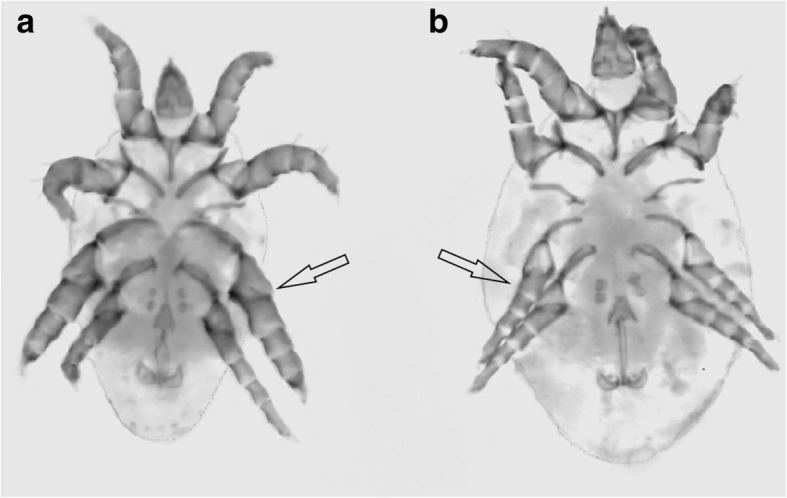
The maintenance of considerable genetic variation in sexually selected traits (SSTs) is puzzling given directional selection expected to act on these traits. A possible explanation is the existence of a genotype-by-environment (GxE) interaction for fitness, by which elaborate SSTs are favored in some environments but selected against in others. In the current study, we look for such interactions for fitness-related traits in the bulb mite, a male-dimorphic species with discontinuous expression of a heritable SST in the form of enlarged legs that are used as weapons.
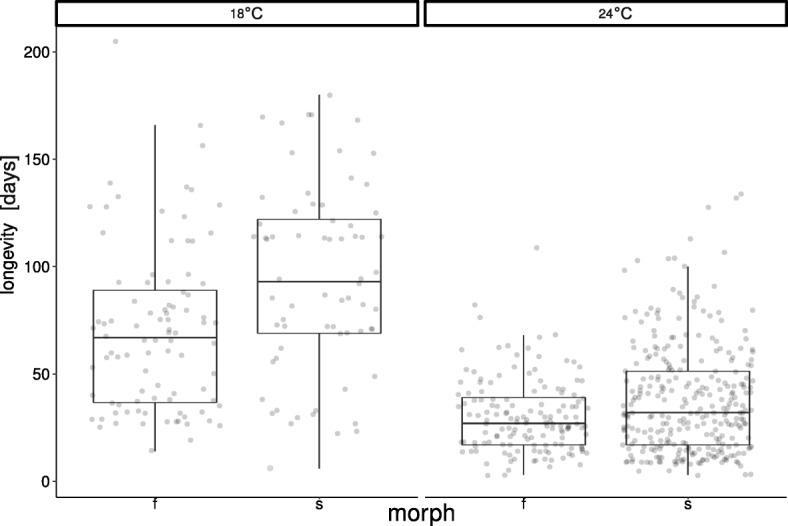
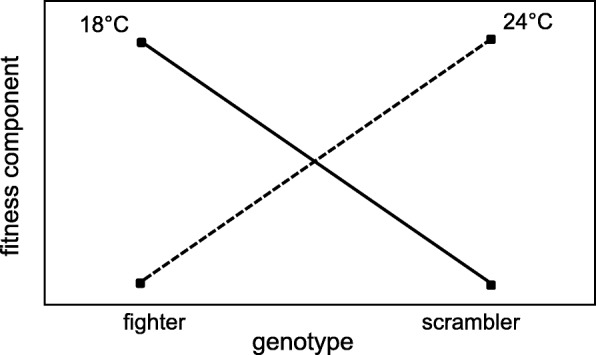
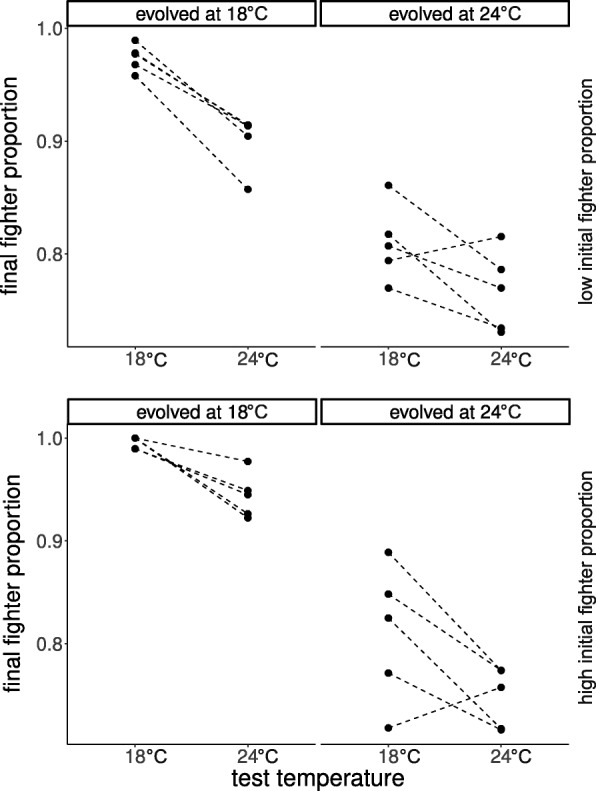
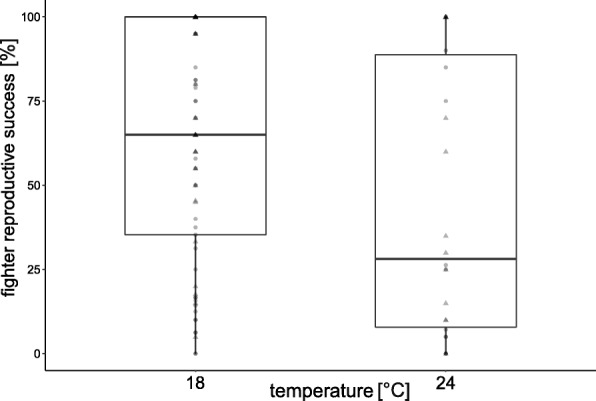
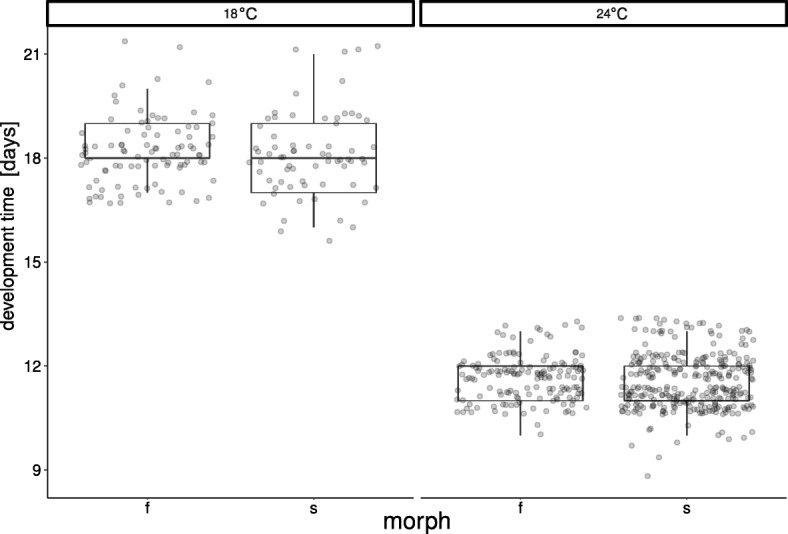
We show that evolution at 18 °C resulted in populations with a higher prevalence of this SST compared to evolution at 24 °C. We further demonstrate that temperature modified male reproductive success in a way that was consistent with these changes. There was a genotype-by-environment interaction for reproductive success - at 18 °C the relative reproductive success of armored males competing with unarmored ones was higher than at the moderate temperature of 24 °C. However, male morph did not have interactive effects with temperature with respect to other life history traits (development time and longevity).
A male genotype that is associated with the expression of a SST interacted with temperature in determining male reproductive success. This interaction caused an elaborate SST to evolve in different directions (more or less prevalent) depending on the thermal environment. The implication of this finding is that seasonal temperature fluctuations have the potential to maintain male polymorphism within populations. Furthermore, spatial heterogeneity in thermal conditions may cause differences among populations in SST selection. This could potentially cause selection against male immigrants from populations in different environments and thus strengthen barriers to gene flow.
具有性选择特征(SST)的遗传变异的维持令人费解,因为这些特征预计会受到定向选择的影响。一种可能的解释是,适应性存在基因型-环境(GxE)相互作用,复杂的 SST 在某些环境中受到青睐,但在其他环境中则受到选择。在当前的研究中,我们寻找了灯泡螨中与适应性相关的特征的这种相互作用,这是一种雄性二态性物种,其遗传 SST 以腿部增大的形式表现为不连续表达,这些腿被用作武器。
我们表明,与在 24°C 进化相比,在 18°C 进化导致具有这种 SST 的种群更为普遍。我们进一步证明,温度以一种与这些变化一致的方式改变了雄性的生殖成功率。生殖成功率存在基因型-环境相互作用 - 在 18°C 时,与未装备的雄性竞争的装甲雄性的相对生殖成功率高于中等温度 24°C。然而,在其他生活史特征(发育时间和寿命)方面,雄性形态与温度之间没有交互作用。
与 SST 表达相关的雄性基因型与温度相互作用,决定了雄性生殖成功率。这种相互作用导致复杂的 SST 朝着不同的方向进化(更普遍或不那么普遍),具体取决于热环境。这一发现的意义在于,季节性温度波动有可能在种群内维持雄性多态性。此外,热条件的空间异质性可能导致不同种群的 SST 选择存在差异。这可能导致对来自不同环境的雄性移民的选择,并因此加强基因流动的障碍。