Akkapeddi Padma, Azizi Saara-Anne, Freedy Allyson M, Cal Pedro M S D, Gois Pedro M P, Bernardes Gonçalo J L
Instituto de Medicina Molecular , Faculdade de Medicina , Universidade de Lisboa , Avenida Professor Egas Moniz , 1649-028 Lisboa , Portugal . Email:
Department of Chemistry , University of Cambridge , Lensfield Road , CB2 1EW Cambridge , UK . Email:
Chem Sci. 2016 May 1;7(5):2954-2963. doi: 10.1039/c6sc00170j. Epub 2016 Feb 12.
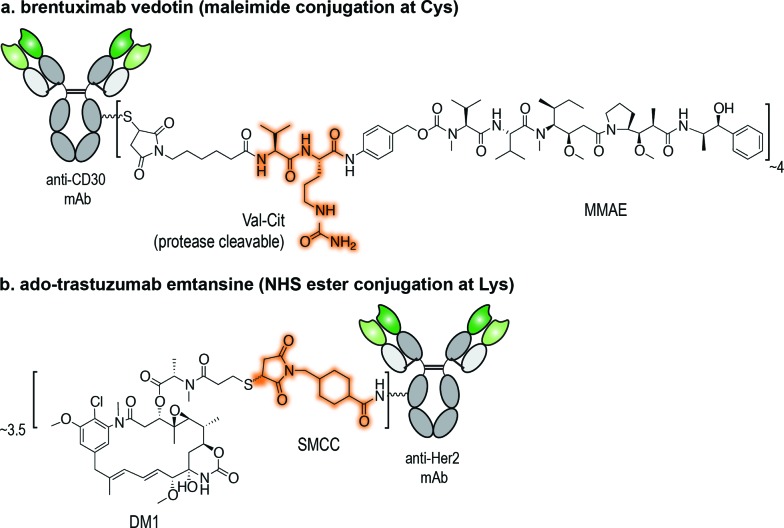
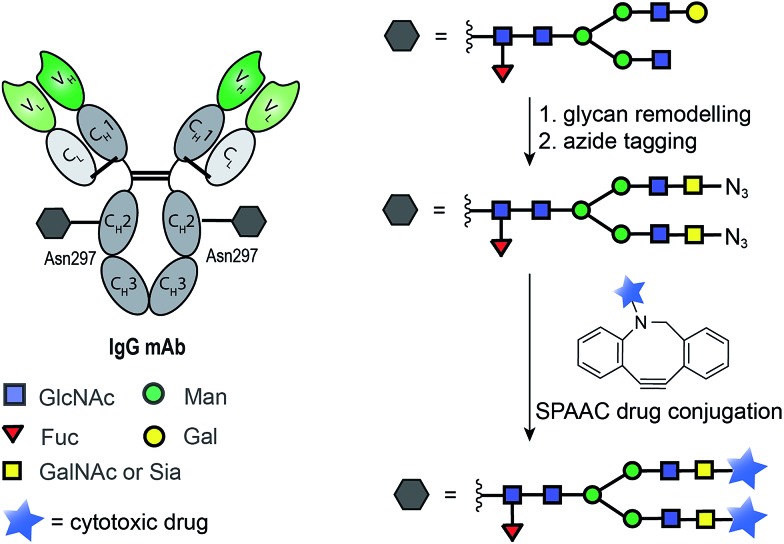
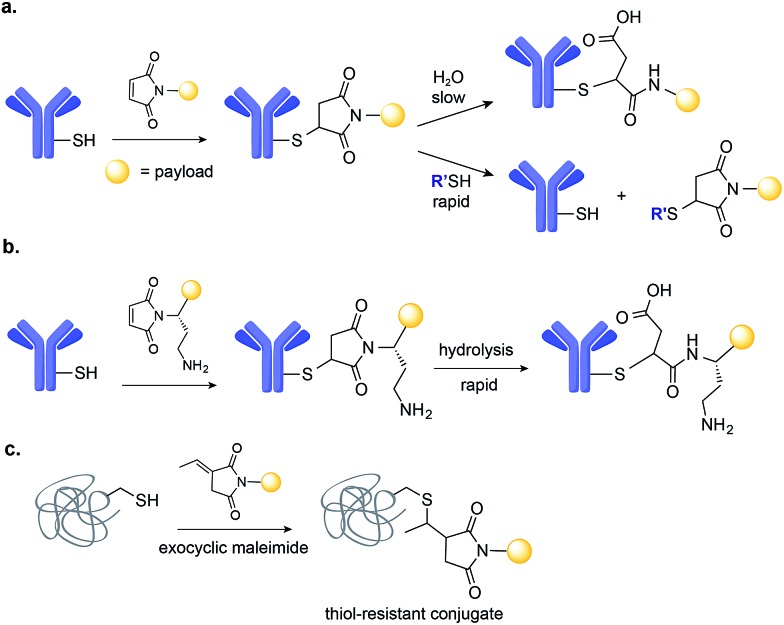
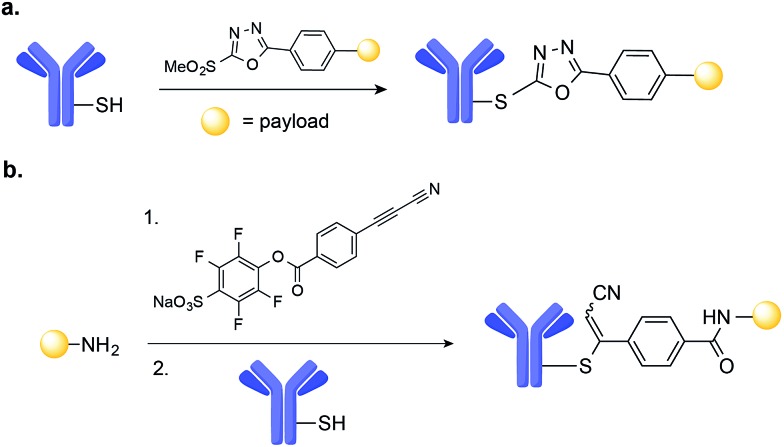
Systemic chemotherapy, the current standard of care for the treatment of cancer, is rarely curative and is often accompanied by debilitating side effects. Targeted drug delivery stands as an alternative to chemotherapy, with the potential to improve upon its low efficacy and systemic toxicity. Among targeted therapeutic options, antibody-drug conjugates (ADCs) have emerged as the most promising. These conjugates represent a new class of biopharmaceuticals that selectively deliver potent cytotoxic drugs to cancer cells, sparing healthy tissue throughout the body. Despite this promise, early heterogenous ADCs suffered from stability, pharmacokinetic, and efficacy issues that hindered clinical development. Recent advances in antibody engineering, linkers for drug-release, and chemical site-selective antibody conjugation have led to the creation of homogenous ADCs that have proven to be more efficacious than their heterogeneous predecessors both and . In this minireview, we focus on and discuss recent advances in chemical site-selective modification strategies for the conjugation of drugs to antibodies and the resulting potential for the development of a new generation of homogenous ADCs.
全身化疗是目前癌症治疗的标准疗法,但很少能治愈癌症,且常常伴有使人虚弱的副作用。靶向给药是化疗的一种替代方法,有可能改善其疗效低下和全身毒性的问题。在靶向治疗选择中,抗体药物偶联物(ADC)已成为最有前景的一种。这些偶联物代表了一类新型生物制药,它们能将强效细胞毒性药物选择性地递送至癌细胞,同时使全身的健康组织免受影响。尽管有这样的前景,但早期的异质性ADC存在稳定性、药代动力学和疗效等问题,阻碍了其临床开发。抗体工程、药物释放连接子以及化学位点选择性抗体偶联等方面的最新进展,已促成了同质性ADC的产生,事实证明,同质性ADC比其异质性前身在多个方面都更有效。在这篇小型综述中,我们重点关注并讨论了药物与抗体偶联的化学位点选择性修饰策略的最新进展,以及由此产生的新一代同质性ADC的开发潜力。