Brighton and Sussex University Hospitals NHS Trust, Brighton, UK.
Department of Nuclear Medicine, Royal Sussex County Hospital, Eastern Road, Brighton, BN2 5BE, UK.
Eur J Nucl Med Mol Imaging. 2018 Dec;45(13):2264-2273. doi: 10.1007/s00259-018-4083-3. Epub 2018 Jul 11.
We first assessed whether the pattern of referrals to a nuclear medicine clinic improved as experience with Ra-dichloride increased, and whether referral patterns affected patient outcomes, and second assessed the value of bone scintigraphy, total alkaline phosphatase (tALP) and lymphadenopathy as prognostic factors in patients receiving Ra-dichloride.
A total of 57 patients eligible to receive Ra-dichloride over a 2-year period (March 2014 to March 2016) were retrospectively assessed and prospectively followed (median follow up 298 days). Ra-Dichloride was administered at 4-week intervals for a maximum of six injections. The numbers of patients in years 1 and 2 referred in relation to extent of bone disease (EOBD) category and overall survival (OS) were determined. The prognostic factors EOBD category, baseline tALP (tALP), tALP response, greatest percentage reduction in tALP from baseline in any treatment cycle (ALP; among patients with elevated ALP), and the presence of lymphadenopathy were assessed as predictors of OS.
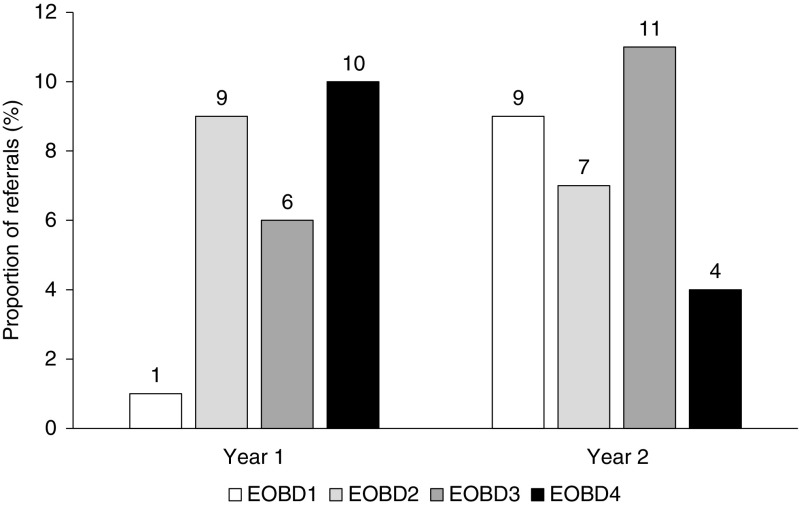
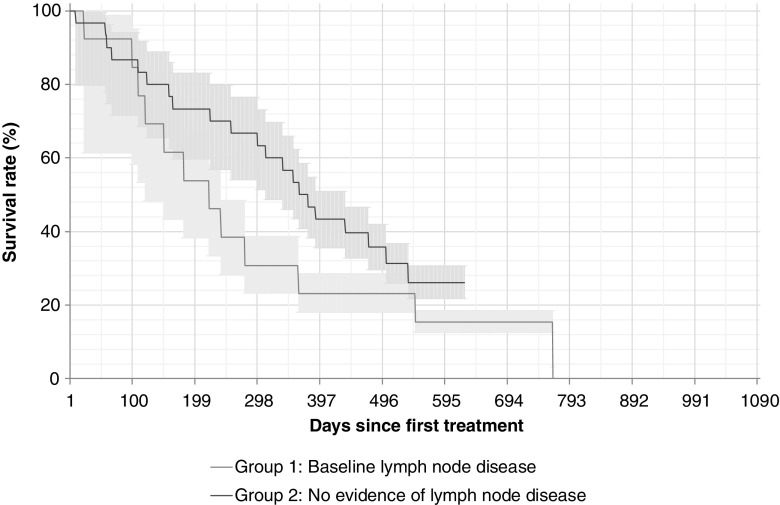
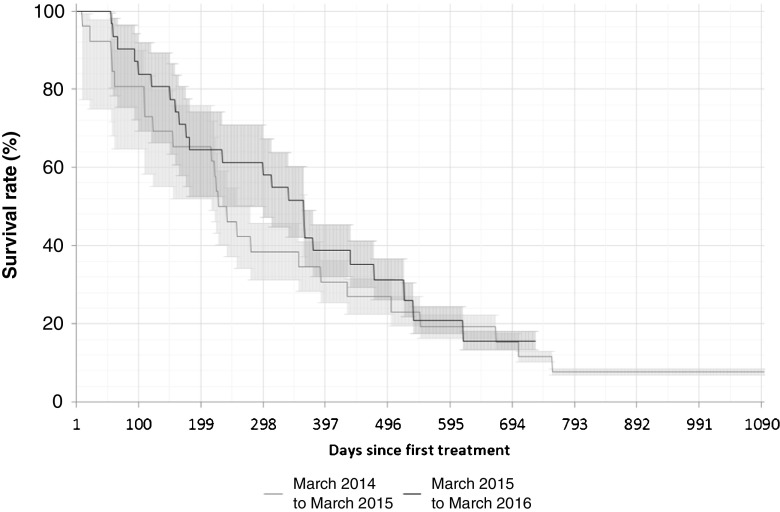
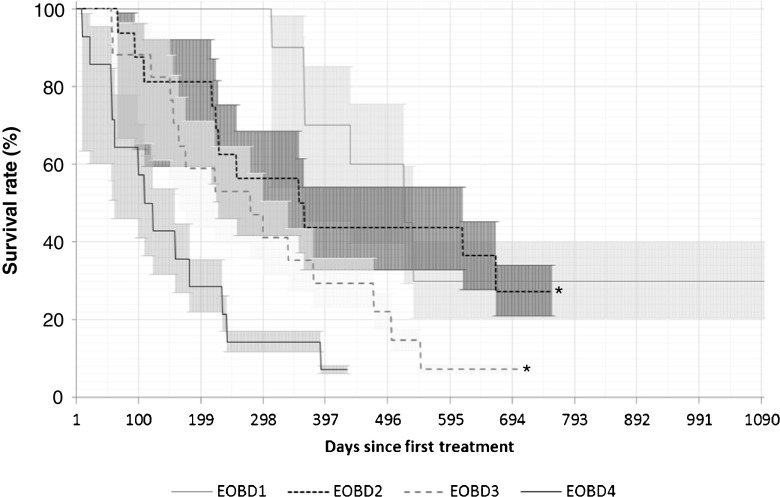
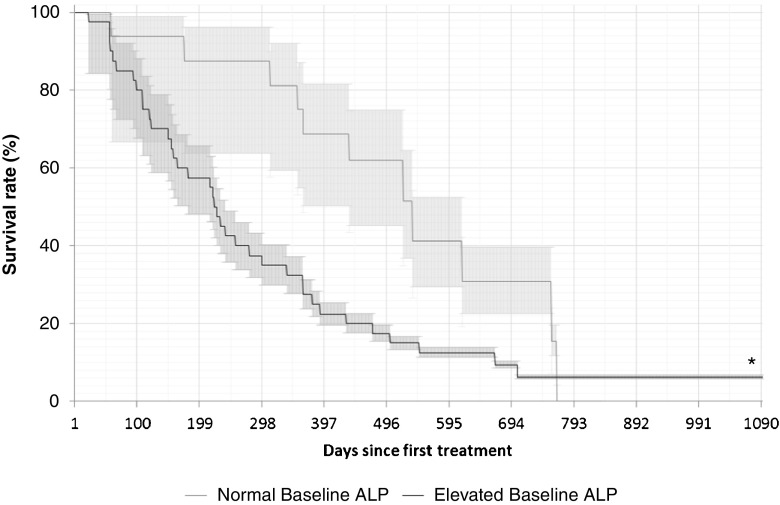
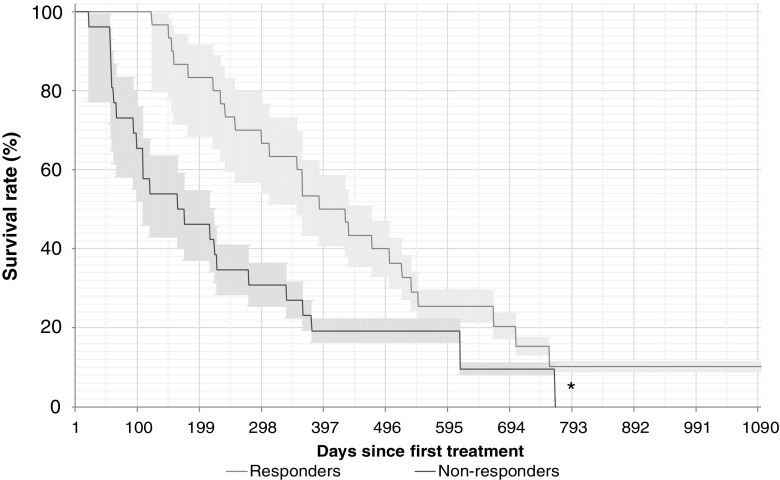
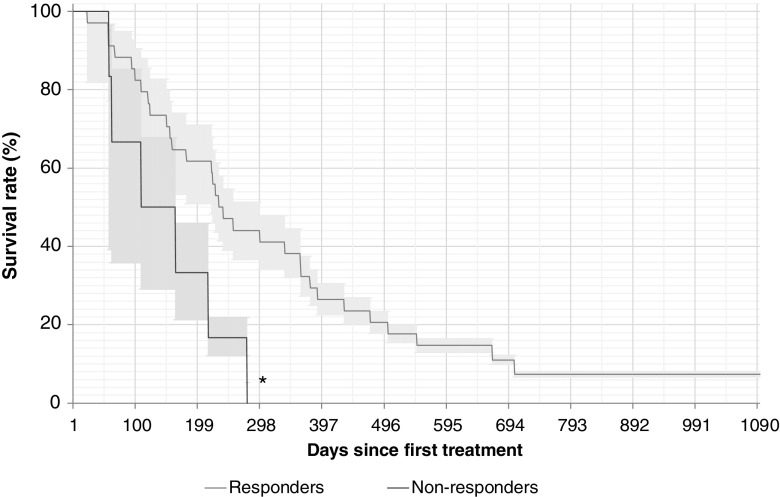
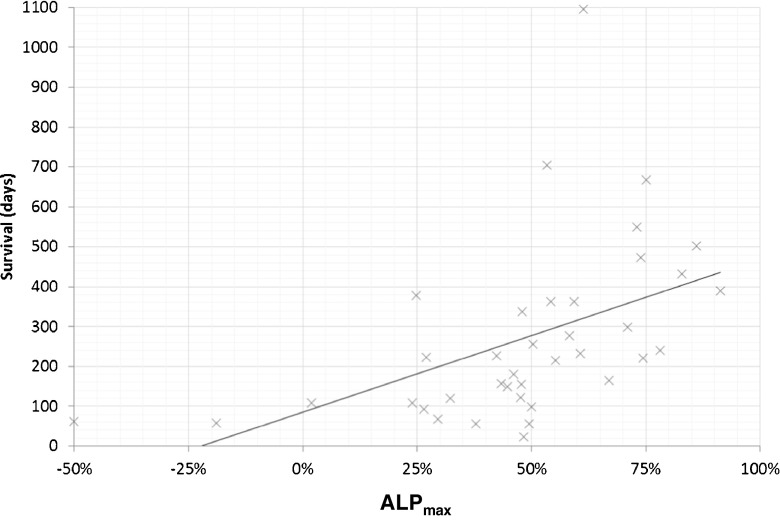
The proportion of patients with EOBD1 was higher in year 2 than in year 1 (29% and 4%, respectively), and in year 2 there was a lower rate of symptomatic skeleton-related events, a higher proportion of patients completing six cycles, and longer (albeit nonsignificant) OS (p = 0.55). There were significant differences in OS between EOBD4 patients and those in all other groups and between EOBD1 and EOBD3 patients (p < 0.05). OS was longer in patients with normal tALP than in those with elevated tALP (p = 0.01), in ALP responders than in nonresponders (p < 0.05), and in patients without lymphadenopathy than in those with lymphadenopathy (p = 0.29). OS was correlated with ALP (r = 0.24).
A collaborative multidisciplinary referrals pathway, together with increased experience with Ra-dichloride, led to improved outcomes. In patients with elevated tALP, tALP dynamics may be useful for monitoring response and predicting OS. Imaging and prognostic markers may therefore be of value for individualizing Ra-dichloride treatment and planning retreatment; however, further studies are required.
首先,我们评估了随着氯化镭经验的增加,向核医学诊所转诊的模式是否有所改善,以及转诊模式是否会影响患者的预后;其次,评估骨闪烁扫描、总碱性磷酸酶(tALP)和淋巴结病作为接受氯化镭治疗的患者的预后因素的价值。
对 57 名在 2014 年 3 月至 2016 年 3 月期间有资格接受氯化镭治疗的患者进行回顾性评估和前瞻性随访(中位随访时间 298 天)。每 4 周给予氯化镭治疗,最多 6 个疗程。确定第 1 年和第 2 年患者的数量与骨疾病范围(EOBD)类别和总生存(OS)相关。评估 EOBD 类别、基线 tALP(tALP)、tALP 反应、任何治疗周期中 tALP 最大百分比降低(ALP;在 ALP 升高的患者中)、以及存在淋巴结病作为 OS 的预测因素。
第 2 年 EOBD1 患者的比例高于第 1 年(分别为 29%和 4%),第 2 年发生症状性骨骼相关事件的比率较低,完成 6 个周期的患者比例较高,OS 延长(尽管无统计学意义)(p=0.55)。EOBD4 患者与所有其他组之间以及 EOBD1 与 EOBD3 患者之间的 OS 存在显著差异(p<0.05)。tALP 正常的患者的 OS 长于 tALP 升高的患者(p=0.01),ALP 反应者的 OS 长于无反应者(p<0.05),无淋巴结病的患者的 OS 长于有淋巴结病的患者(p=0.29)。OS 与 ALP 相关(r=0.24)。
协作式多学科转诊途径以及氯化镭经验的增加,导致了更好的结果。在 tALP 升高的患者中,tALP 动力学可能有助于监测反应和预测 OS。因此,影像学和预后标志物可能对氯化镭个体化治疗和再治疗计划具有价值;但是,还需要进一步的研究。