Yang Tzu-Ruei, Chen Ying-Hsuan, Wiemann Jasmina, Spiering Beate, Sander P Martin
Bereich Paläontologie, Steinmann-Institut für Geologie, Mineralogie und Paläontologie, Universität Bonn, Bonn, Germany.
Max-Planck-Institut für Eisenforschung, Düsseldorf, Germany.
PeerJ. 2018 Jul 6;6:e5144. doi: 10.7717/peerj.5144. eCollection 2018.
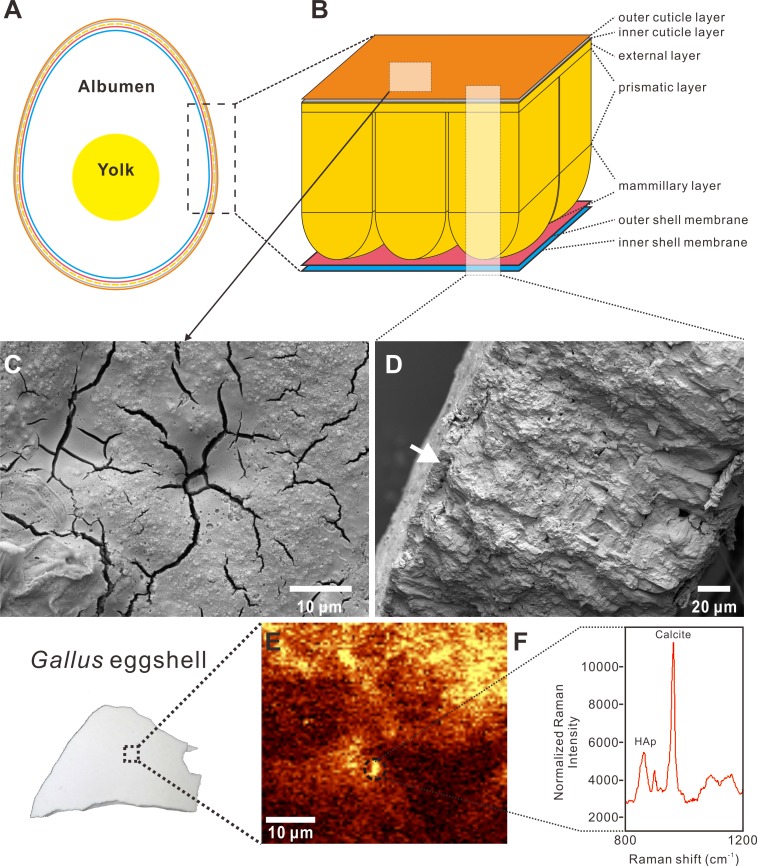
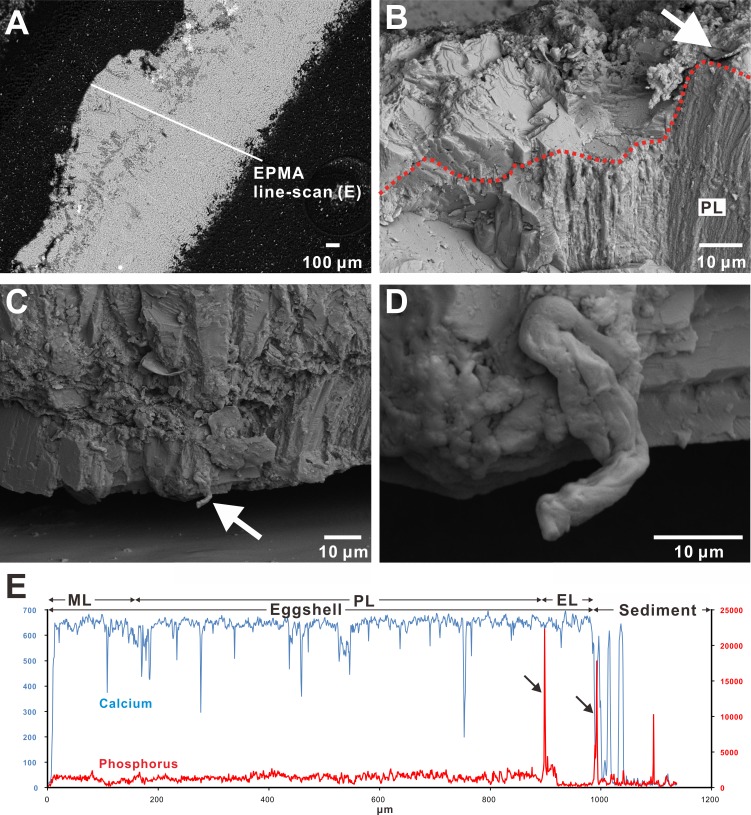
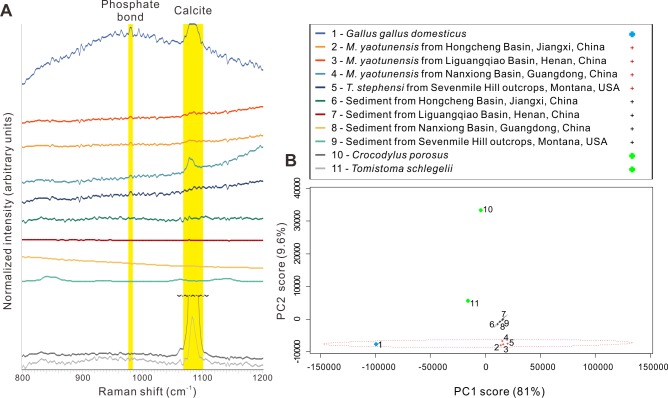
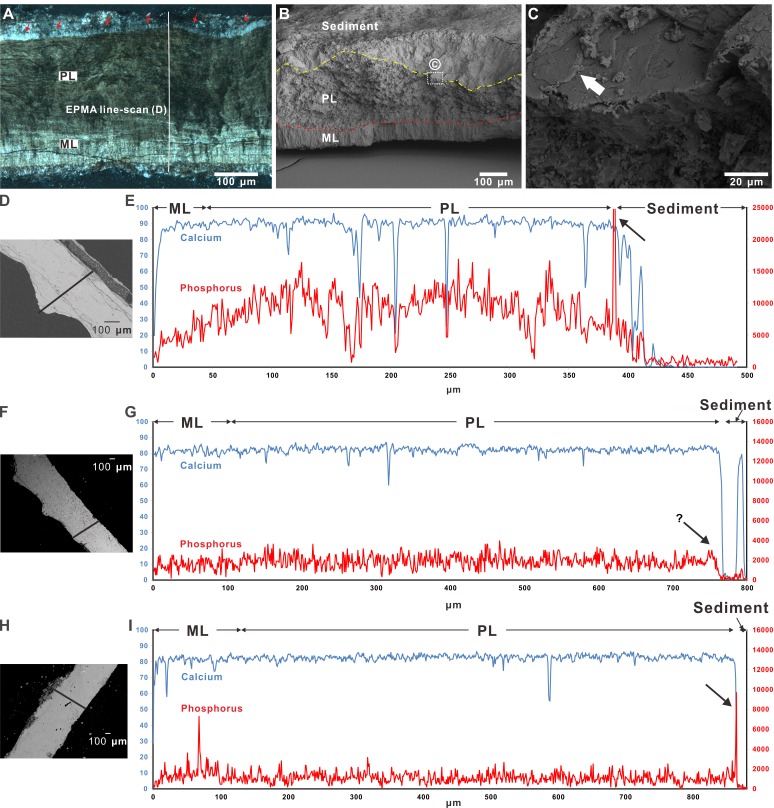
The cuticle layer consisting mainly of lipids and hydroxyapatite (HAp) atop the mineralized avian eggshell is a protective structure that prevents the egg from dehydration and microbial invasions. Previous ornithological studies have revealed that the cuticle layer is also involved in modulating the reflectance of eggshells in addition to pigments (protoporphyrin and biliverdin). Thus, the cuticle layer represents a crucial trait that delivers ecological signals. While present in most modern birds, direct evidence for cuticle preservation in stem birds and non-avian dinosaurs is yet missing. Here we present the first direct and chemical evidence for the preservation of the cuticle layer on dinosaur eggshells. We analyze several theropod eggshells from various localities, including oviraptorid eggshells from the Late Cretaceous deposits of Henan, Jiangxi, and Guangdong in China and alvarezsaurid eggshell from the Two Medicine Formation of Montana, United States, with the scanning electron microscope (SEM), electron probe micro-analysis (EPMA), and Raman spectroscopy (RS). The elemental analysis with EPMA shows high concentration of phosphorus at the boundary between the eggshell and sediment, representing the hydroxyapatitic cuticle layer (HAp). Depletion of phosphorus in sediment excludes the allochthonous origin of the phosphorus in these eggshells. The chemometric analysis of Raman spectra collected from fossil and extant eggs provides further supportive evidence for the cuticle preservation in oviraptorid and probable alvarezsaurid eggshells. In accordance with our previous discovery of pigments preserved in Cretaceous oviraptorid dinosaur eggshells, we validate the cuticle preservation on dinosaur eggshells through deep time and offer a yet unexplored resource for chemical studies targeting the evolution of dinosaur nesting ecology. Our study also suggests that the cuticle structure can be traced far back to maniraptoran dinosaurs and enhance their reproductive success in a warm and mesic habitat such as Montana and southern China during the Late Cretaceous.
矿化禽蛋壳顶部主要由脂质和羟基磷灰石(HAp)组成的角质层是一种保护结构,可防止鸡蛋脱水和微生物入侵。以往的鸟类学研究表明,除色素(原卟啉和胆绿素)外,角质层还参与调节蛋壳的反射率。因此,角质层是传递生态信号的关键特征。虽然大多数现代鸟类都有角质层,但在基干鸟类和非鸟恐龙中,角质层保存的直接证据仍然缺失。在此,我们展示了恐龙蛋壳上角质层保存的首个直接化学证据。我们用扫描电子显微镜(SEM)、电子探针微分析(EPMA)和拉曼光谱(RS)分析了来自不同地点的几种兽脚类恐龙蛋壳,包括中国河南、江西和广东晚白垩世沉积层的窃蛋龙蛋壳,以及美国蒙大拿州二药组的阿瓦雷兹龙蛋壳。EPMA的元素分析显示,在蛋壳与沉积物的边界处磷浓度很高,代表羟基磷灰石角质层(HAp)。沉积物中磷的耗尽排除了这些蛋壳中磷的外来来源。对化石蛋和现存蛋收集的拉曼光谱进行化学计量分析,为窃蛋龙和可能的阿瓦雷兹龙蛋壳中的角质层保存提供了进一步的支持证据。根据我们之前在白垩纪窃蛋龙恐龙蛋壳中发现色素保存的情况,我们通过漫长的时间验证了恐龙蛋壳上的角质层保存,并为针对恐龙筑巢生态演化的化学研究提供了一个尚未探索的资源。我们的研究还表明,角质层结构可以追溯到很遥远的手盗龙类恐龙,并在晚白垩世温暖湿润的栖息地(如蒙大拿州和中国南方)提高了它们的繁殖成功率。