Brown Anna L, Winter Hayden, Goforth Andrea M, Sahay Gaurav, Sun Conroy
Department of Pharmaceutical Science, Oregon State University, 2730 SW Moody Ave, Portland, OR, 97201, USA.
Department of Chemistry, Portland State University, 1719 SW 10th Ave, Portland, OR, 97201, USA.
Nanoscale Res Lett. 2018 Jul 13;13(1):208. doi: 10.1186/s11671-018-2621-3.
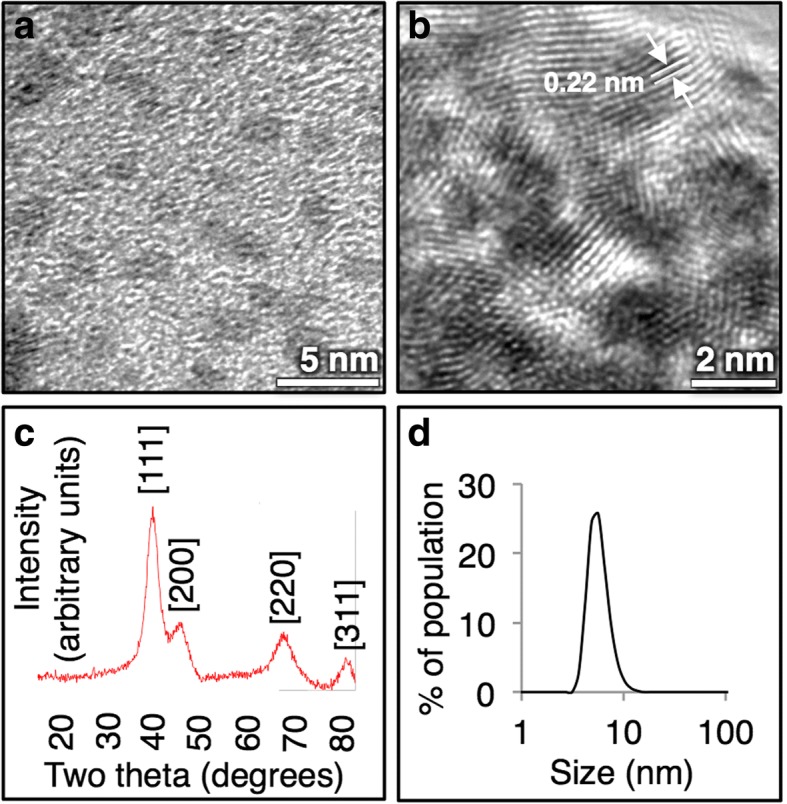
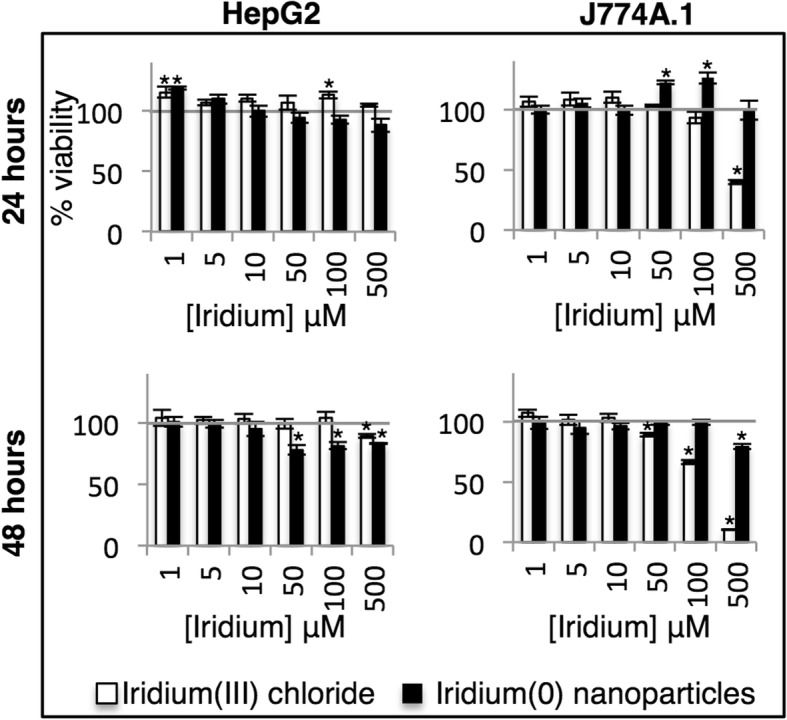
High-density inorganic nanoparticles have shown promise in medical applications that utilize radiation including X-ray imaging and as radiation dose enhancers for radiotherapy. We have developed an aqueous synthetic method to produce small (~ 2 nm) iridium nanoparticles (IrNPs) by reduction of iridium(III) chloride using a borohydride reducing agent. Unlike other solution-based synthesis methods, uniform and monodispersed IrNPs are produced without the use of surfactants or other solubilizing ligands. These nanoparticles are highly crystalline as observed by X-ray diffraction and high-resolution transmission electron microscopy (TEM). In vitro metabolic toxicity assays using hepatocyte and macrophage cells demonstrate that both IrNPs and iridium(III) chloride are well tolerated at concentrations of up to 10 μM iridium. Furthermore, the IrNPs were assessed in a hemolytic assay and found to have no significant impact on red blood cells when exposed to concentrations up to 100 μM. Overall, these results support the potential for the in vivo application of this nanomaterial.
高密度无机纳米粒子在利用辐射的医学应用中显示出前景,这些应用包括X射线成像以及作为放射治疗的辐射剂量增强剂。我们已经开发出一种水相合成方法,通过使用硼氢化物还原剂还原氯化铱(III)来制备小尺寸(约2纳米)的铱纳米粒子(IrNPs)。与其他基于溶液的合成方法不同,无需使用表面活性剂或其他增溶配体就能制备出均匀且单分散的IrNPs。通过X射线衍射和高分辨率透射电子显微镜(TEM)观察发现,这些纳米粒子具有高度结晶性。使用肝细胞和巨噬细胞进行的体外代谢毒性试验表明,在铱浓度高达10 μM时,IrNPs和氯化铱(III)都具有良好的耐受性。此外,在溶血试验中对IrNPs进行评估,发现当暴露于浓度高达100 μM时,它们对红细胞没有显著影响。总体而言,这些结果支持了这种纳米材料在体内应用的潜力。