Janjić Klara, Kurzmann Christoph, Moritz Andreas, Agis Hermann
Department of Conservative Dentistry and Periodontology, University Clinic of Dentistry, Medical University of Vienna, Vienna, Austria.
Austrian Cluster for Tissue Regeneration, Vienna, Austria.
Eur J Oral Sci. 2018 Aug;126(4):263-271. doi: 10.1111/eos.12535.
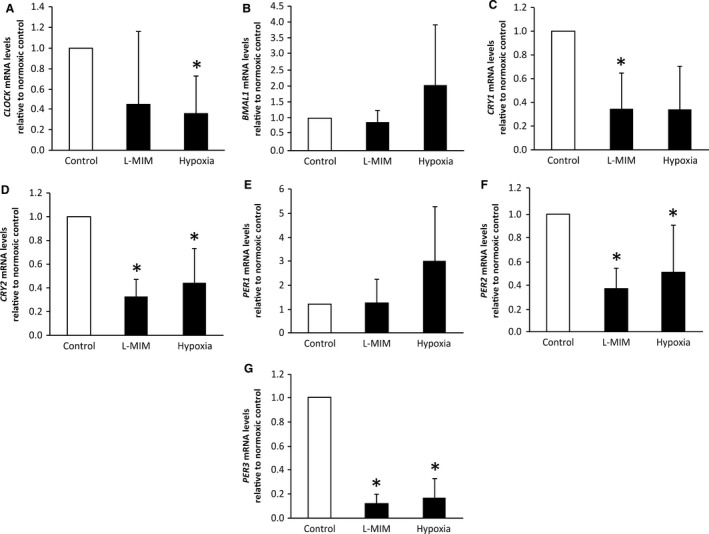
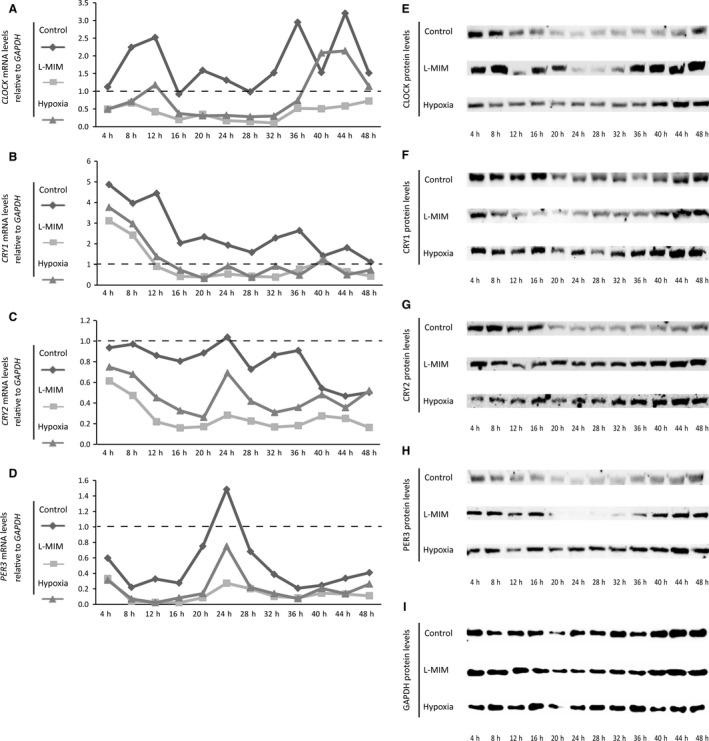
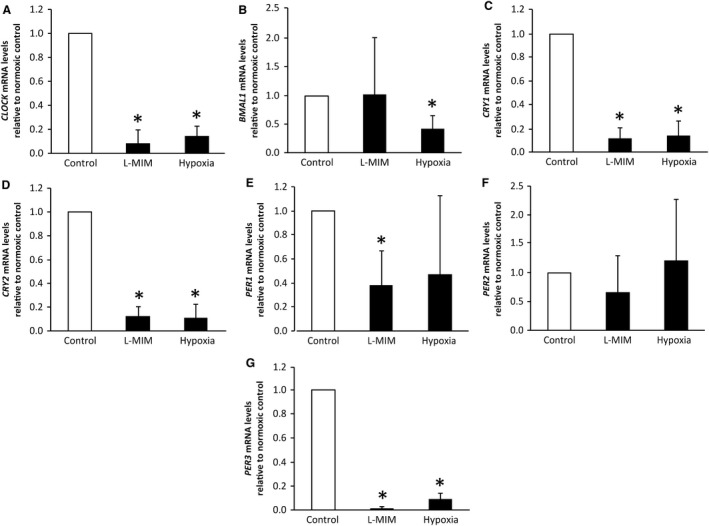
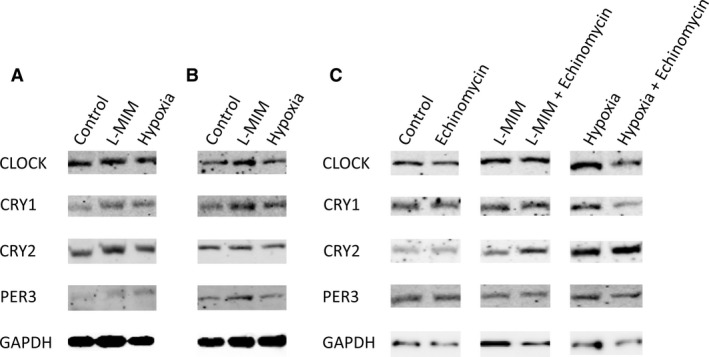
Core circadian clock genes set the pace for a wide range of physiological functions, including regeneration. The role of these genes and their regulation in the dental pulp, in particular under hypoxic conditions, is unknown. Here we investigated if core clock genes are expressed in human dental pulp-derived cells (DPC) and if their expression is modulated by the hypoxia mimetic agent, L-mimosine (L-MIM), hypoxia or echinomycin. Dental pulp-derived cells in monolayers and spheroids were treated with L-MIM, hypoxia or echinomycin. mRNA levels of the core circadian clock genes were analysed using quantitative PCR (qPCR) and their protein levels were analysed by western blot. All core clock genes and proteins were produced in DPC monolayer and spheroid cultures. The expression of cryptochrome circadian regulators and period circadian regulators was reduced by L-MIM, hypoxia and echinomycin at mRNA, but not at protein levels. Time course experiments indicated that modulations were based on alterations in overall mRNA levels of core circadian clock genes. Our results suggest a potential role of the core circadian clock in the response of dental pulp to hypoxia. Future studies need to consider that regulation of the core circadian clock at mRNA levels might not be paralleled by modulation of protein levels.
核心生物钟基因设定了包括再生在内的广泛生理功能的节奏。这些基因及其调控在牙髓中的作用,特别是在缺氧条件下的作用,尚不清楚。在这里,我们研究了核心生物钟基因是否在人牙髓来源细胞(DPC)中表达,以及它们的表达是否受到缺氧模拟剂L-含羞草碱(L-MIM)、缺氧或放线菌素的调节。用L-MIM、缺氧或放线菌素处理单层和球体中的牙髓来源细胞。使用定量PCR(qPCR)分析核心生物钟基因的mRNA水平,并通过蛋白质印迹分析其蛋白质水平。所有核心生物钟基因和蛋白质均在DPC单层和球体培养物中产生。隐花色素生物钟调节因子和周期生物钟调节因子的表达在mRNA水平上被L-MIM、缺氧和放线菌素降低,但在蛋白质水平上没有降低。时间进程实验表明,调节是基于核心生物钟基因总体mRNA水平的改变。我们的结果表明核心生物钟在牙髓对缺氧的反应中可能发挥作用。未来的研究需要考虑到,核心生物钟在mRNA水平上的调节可能与蛋白质水平的调节不一致。