Chiou Tzung-Wen, Tseng Yen-Ming, Lu Tsai-Te, Weng Tsu-Chien, Sokaras Dimosthenes, Ho Wei-Chieh, Kuo Ting-Shen, Jang Ling-Yun, Lee Jyh-Fu, Liaw Wen-Feng
Department of Chemistry , National Tsing Hua University , Hsinchu , 30013 , Taiwan . Email:
Department of Chemistry , Chung Yuan Christian University , Taoyuan , 32023 , Taiwan.
Chem Sci. 2016 Jun 1;7(6):3640-3644. doi: 10.1039/c5sc04652a. Epub 2016 Feb 24.
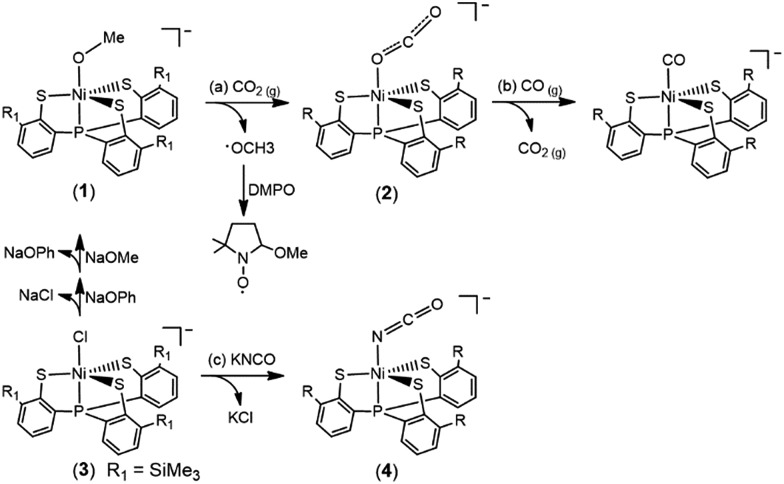
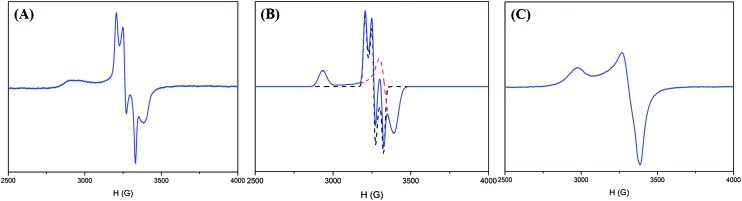
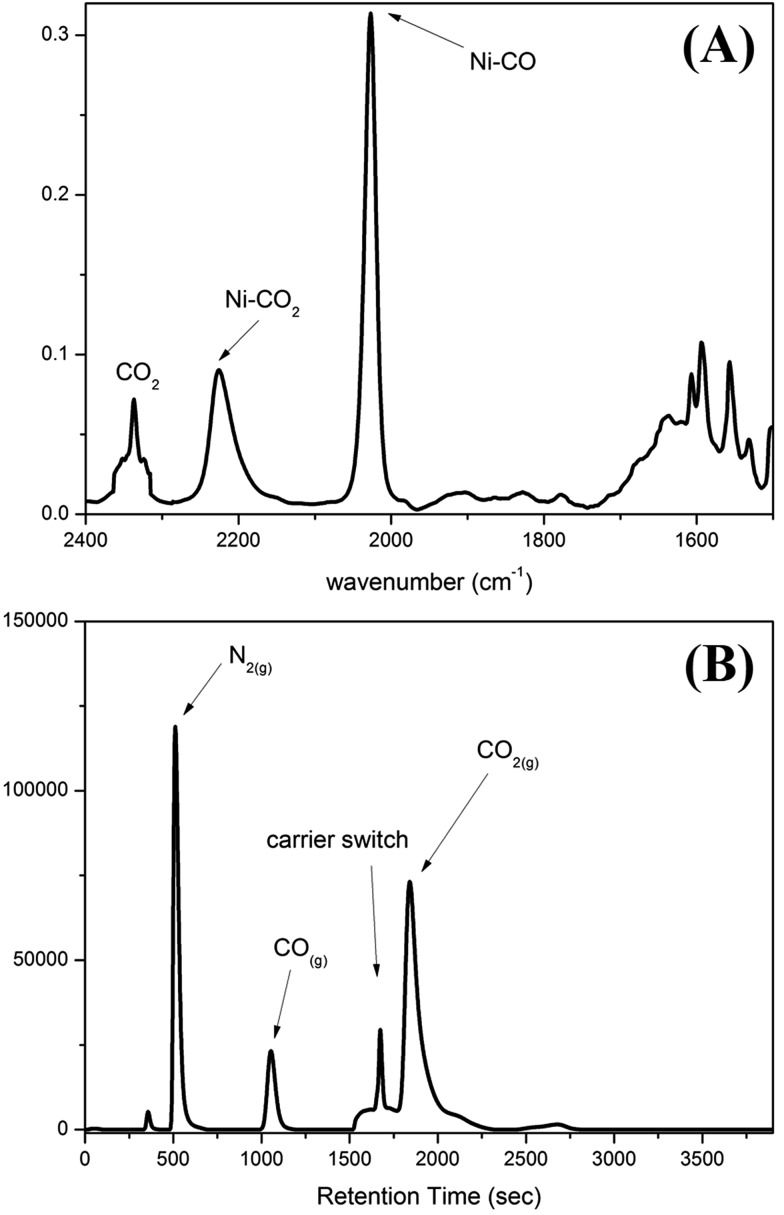
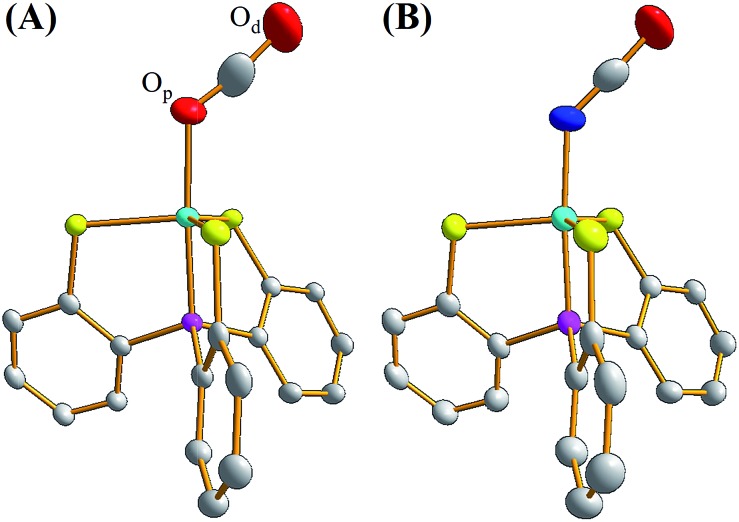
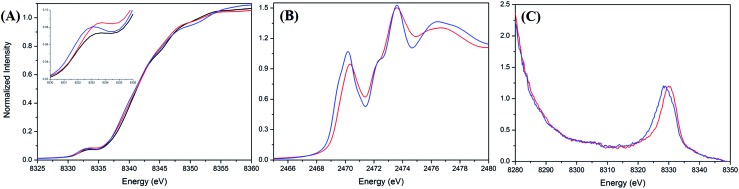
Carbon dioxide is expected to be employed as an inexpensive and potential feedstock of C sources for the mass production of valuable chemicals and fuel. Versatile chemical transformations of CO, insertion of CO producing bicarbonate/acetate/formate, cleavage of CO yielding μ-CO/μ-oxo transition-metal complexes, and electrocatalytic reduction of CO affording CO/HCOOH/CHOH/CH/CH/oxalate were well documented. Herein, we report a novel pathway for the reductive activation of CO by the [Ni(OMe)(P(CH-3-SiMe-2-S))] complex, yielding the [Ni(κ-OCO˙)(P(CH-3-SiMe-2-S))] complex. The formation of this unusual Ni(κ-OCO˙) complex was characterized by single-crystal X-ray diffraction, EPR, IR, SQUID, Ni/S K-edge X-ray absorption spectroscopy, and Ni valence-to-core X-ray emission spectroscopy. The inertness of the analogous complexes [Ni(SPh)], [Ni(CO)], and [Ni(NH)] toward CO, in contrast, demonstrates that the ionic [Ni(OMe)] core attracts the binding of weak σ-donor CO and triggers the subsequent reduction of CO by the nucleophilic [OMe] in the immediate vicinity. This metal-ligand cooperative activation of CO may open a novel pathway promoting the subsequent incorporation of CO in the buildup of functionalized products.
二氧化碳有望作为一种廉价且有潜力的碳源原料,用于大规模生产有价值的化学品和燃料。二氧化碳的多种化学转化,如一氧化碳的插入生成碳酸氢盐/乙酸盐/甲酸盐,一氧化碳的裂解生成μ-CO/μ-氧代过渡金属配合物,以及一氧化碳的电催化还原生成CO/HCOOH/CHOH/CH/CH/草酸盐等,都有充分的文献记载。在此,我们报道了一种通过[Ni(OMe)(P(CH-3-SiMe-2-S))]配合物对一氧化碳进行还原活化的新途径,生成了[Ni(κ-OCO˙)(P(CH-3-SiMe-2-S))]配合物。这种不寻常的Ni(κ-OCO˙)配合物的形成通过单晶X射线衍射、电子顺磁共振、红外光谱、超导量子干涉仪、Ni/S K边X射线吸收光谱和Ni价到芯X射线发射光谱进行了表征。相比之下,类似的配合物[Ni(SPh)]、[Ni(CO)]和[Ni(NH)]对一氧化碳的惰性表明,离子型[Ni(OMe)]核心吸引了弱σ供体一氧化碳的结合,并引发了附近亲核性[OMe]对一氧化碳的后续还原。这种一氧化碳的金属-配体协同活化可能会开辟一条新途径,促进一氧化碳在功能化产物构建中的后续掺入。