Ganot N, Tshuva E Y
The Institute of Chemistry, The Hebrew University of Jerusalem, Jerusalem 9190401, Israel. Email:
RSC Adv. 2018 Feb 5;8(11):5822-5827. doi: 10.1039/c8ra00229k. Epub 2018 Feb 6.
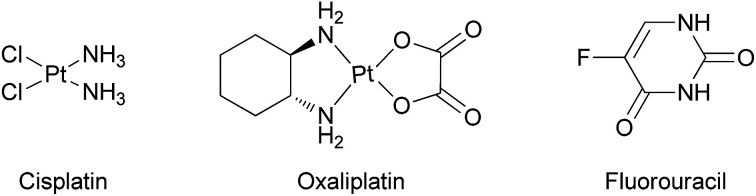
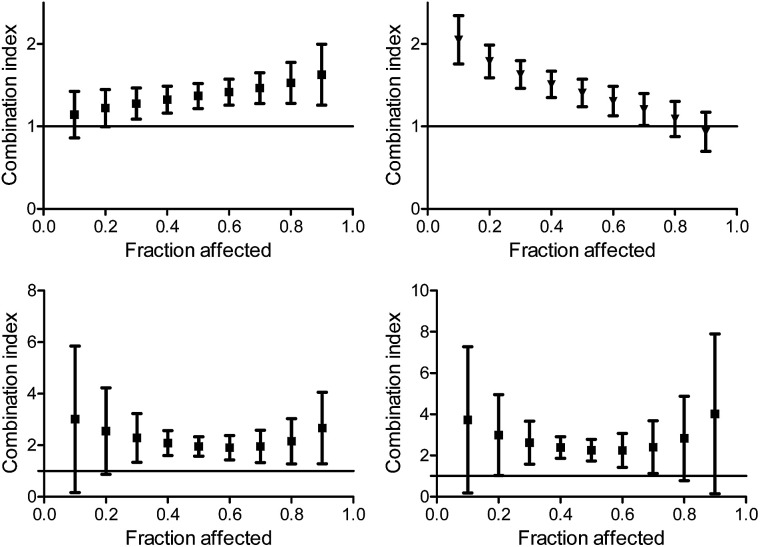
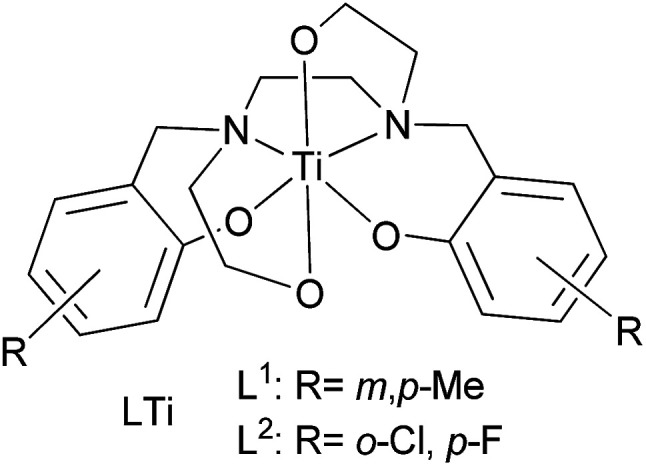
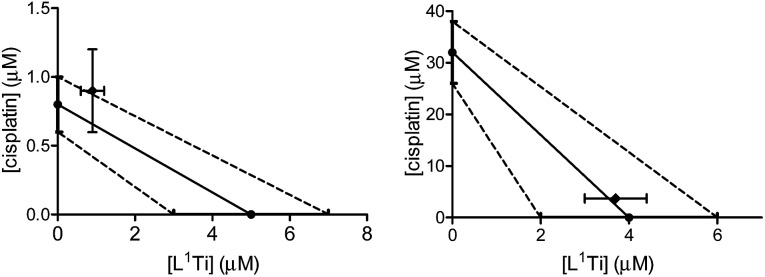
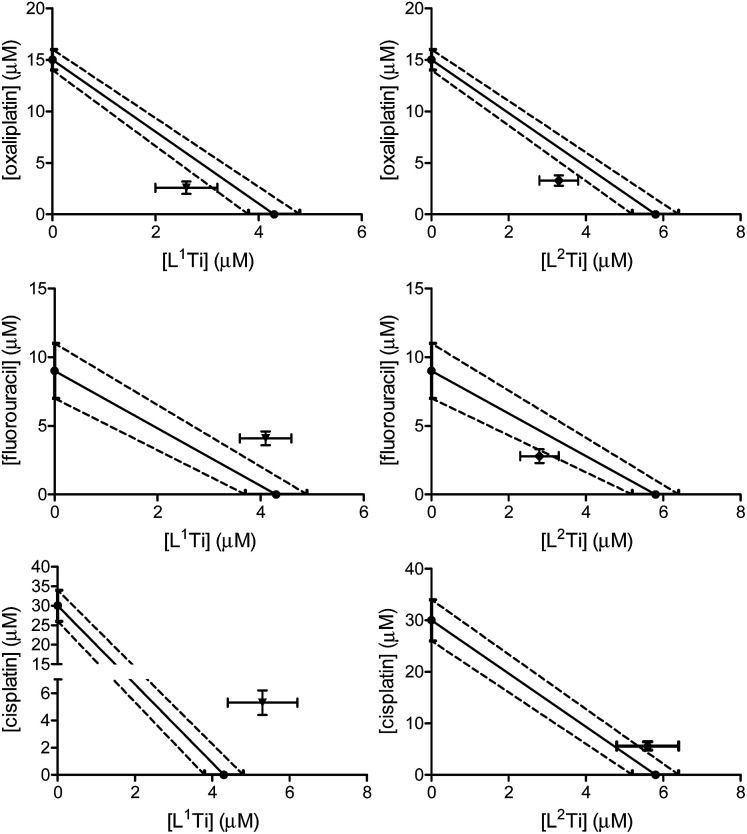
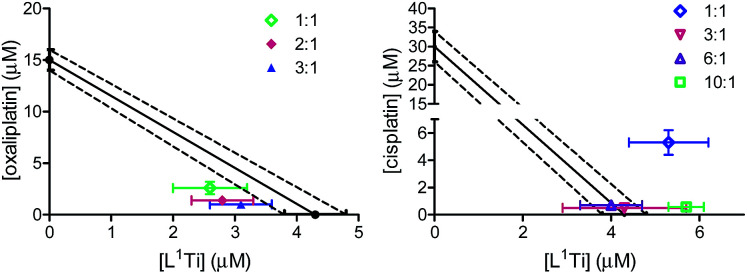
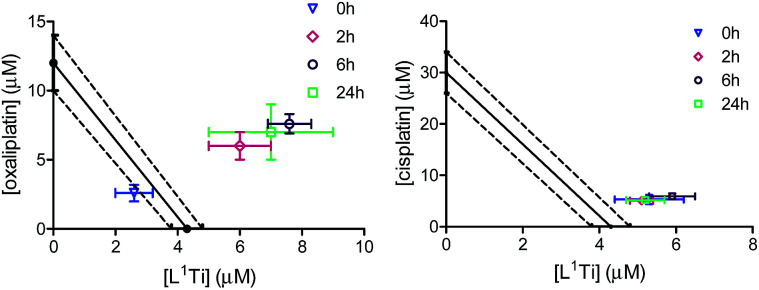
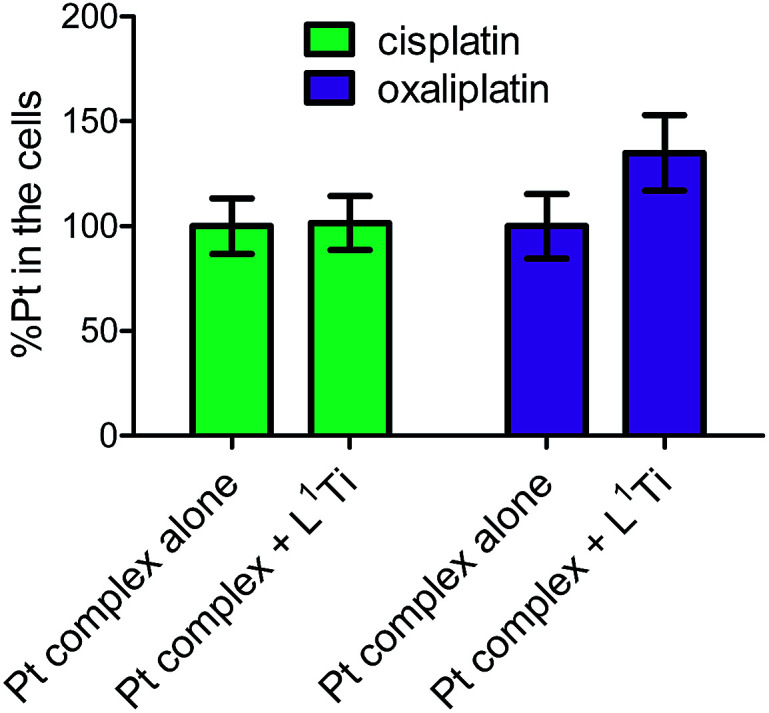
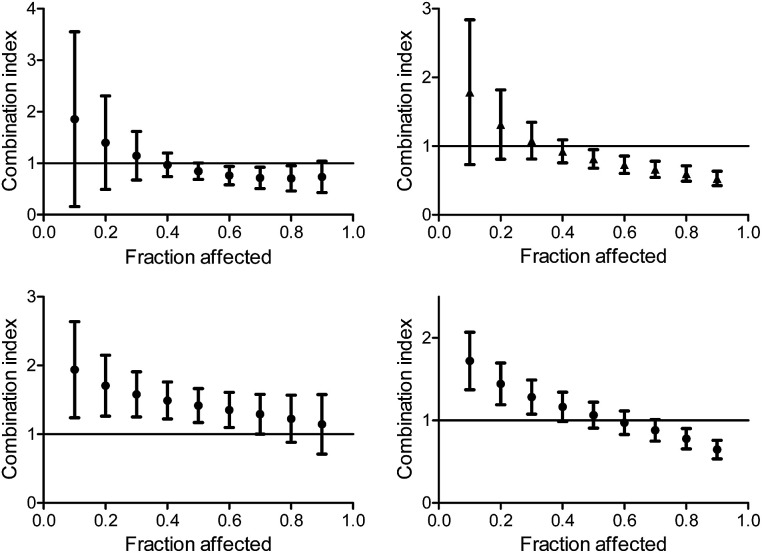
Advanced anticancer phenolato titanium(iv) complexes were combined with known chemotherapeutic anticancer drugs applied in the clinic and were analyzed on cell lines most sensitive to the Ti(iv) complex and relevant to the clinical application of the known drugs. Combination of the Ti(iv) complex with cisplatin on ovarian cells showed mostly an additive behavior, also on a line resistant to cisplatin. Combination of the Ti(iv) complex with fluorouracil on colon cells gave near additive behavior, and that with oxaliplatin gave a synergistic behavior at a wide range of Ti : Pt ratios, but only when the drugs were administered together. Increasing the time intervals between the administration of Ti and of Pt turned the behavior to antagonistic, suggesting some deactivation of Pt by the Ti agent. For combinations where the drugs were applied together, the behavior depended on the effect level, and higher effects gave greater synergism, implying that technical aspects such as solubility are influential. Nevertheless, more complex patterns recorded for combinations where the drugs had been applied separately suggested multiple mechanisms with different concentration dependence. Overall the results point to high medicinal potential for the tested compounds for anticancer combination treatments.
先进的抗癌酚氧基钛(IV)配合物与临床应用的已知化疗抗癌药物相结合,并在对钛(IV)配合物最敏感且与已知药物临床应用相关的细胞系上进行分析。钛(IV)配合物与顺铂在卵巢细胞上的组合大多表现为加和行为,在对顺铂耐药的细胞系上也是如此。钛(IV)配合物与氟尿嘧啶在结肠细胞上的组合表现出接近加和行为,与奥沙利铂在广泛的钛:铂比例下表现出协同行为,但仅当药物一起给药时才如此。增加钛和铂给药之间的时间间隔会使行为转变为拮抗,这表明钛试剂会使铂失活。对于药物一起应用的组合,其行为取决于效应水平,更高的效应会产生更大的协同作用,这意味着诸如溶解度等技术方面有影响。然而,对于药物分别应用的组合记录到的更复杂模式表明存在具有不同浓度依赖性的多种机制。总体而言,结果表明所测试的化合物在抗癌联合治疗方面具有很高的药用潜力。