
跨膜蛋白 165(TMEM165)是一种高尔基体跨膜蛋白,是肝细胞癌的新型标志物,其缺失可损害侵袭活性。
TMEM165, a Golgi transmembrane protein, is a novel marker for hepatocellular carcinoma and its depletion impairs invasion activity.
机构信息
Division of Radiation Cancer Research, Korea Institute of Radiological and Medical Sciences, Seoul 01812, Republic of Korea.
Department of Surgery, Korea Institute of Radiological and Medical Sciences, Seoul 01812, Republic of Korea.
出版信息
Oncol Rep. 2018 Sep;40(3):1297-1306. doi: 10.3892/or.2018.6565. Epub 2018 Jul 12.
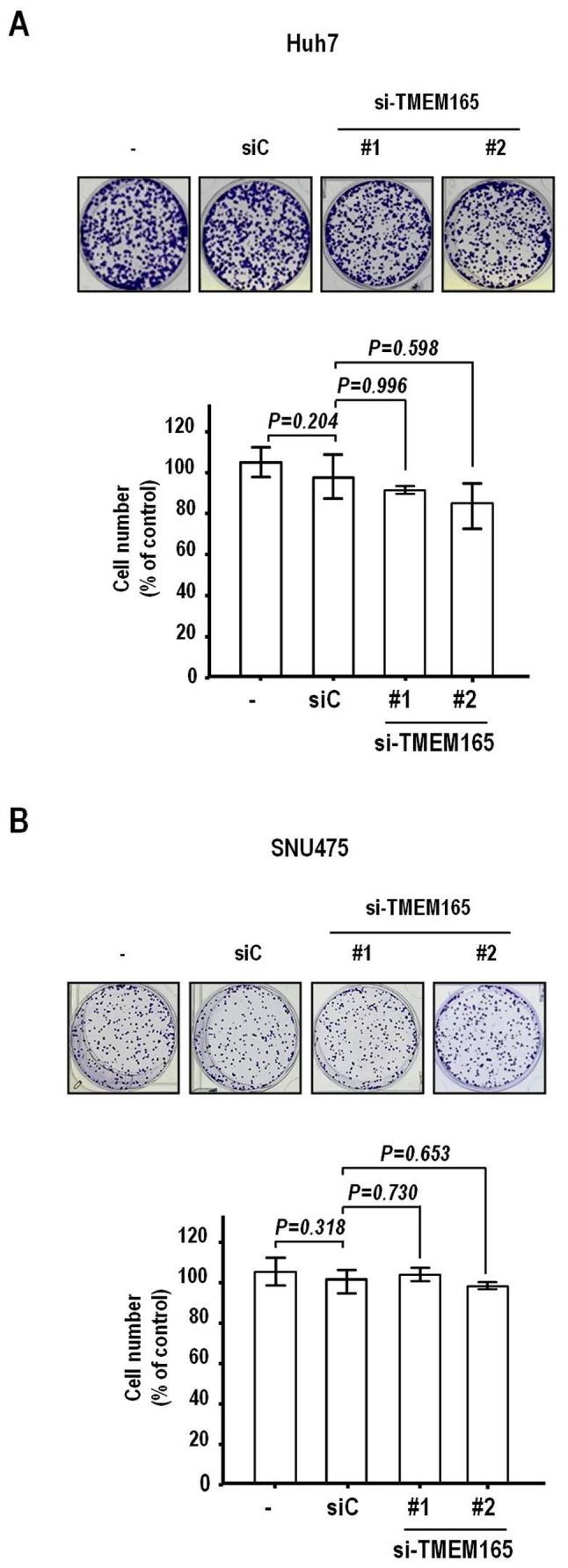
Transmembrane protein 165 (TMEM165), a Golgi protein, functions in ion homeostasis and vesicular trafficking in the Golgi apparatus. While mutations in TMEM165 are known to cause human 'congenital disorders of glycosylation', a recessive autosomal metabolic disease, the potential association of this protein with human cancer development has not been explored to date. In the present study, we revealed that TMEM165 is overexpressed in HCC and its depletion weakens the invasive activity of cancer cells through suppression of matrix metalloproteinase‑2 (MMP‑2) expression. Levels of TMEM165 mRNA and protein were clearly increased in HCC patient tissues and cell cultures. Quantitative real‑time RT‑PCR analysis of fresh HCC tissues (n=88) revealed association of TMEM165 overexpression with more frequent macroscopic vascular invasion, microscopic serosal invasion and higher α‑fetoprotein levels. Notably, depletion of TMEM165 led to a marked decrease in the invasive activity of two different HCC cell types, Huh7 and SNU475, accompanied by downregulation of MMP‑2. Our collective findings clearly indicated that TMEM165 contributed to the progression of HCC by promoting invasive activity, supporting its utility as a novel biomarker and therapeutic target for cancer.
跨膜蛋白 165(TMEM165)是一种高尔基体蛋白,在高尔基体中参与离子稳态和囊泡运输。虽然已知 TMEM165 的突变会导致人类“先天性糖基化紊乱”,这是一种隐性常染色体代谢疾病,但迄今为止,尚未探索该蛋白与人类癌症发展的潜在关联。在本研究中,我们揭示了 TMEM165 在 HCC 中过表达,其缺失通过抑制基质金属蛋白酶-2(MMP-2)的表达来削弱癌细胞的侵袭活性。在 HCC 患者组织和细胞培养物中,TMEM165 的 mRNA 和蛋白水平明显升高。对 88 例新鲜 HCC 组织的定量实时 RT-PCR 分析显示,TMEM165 过表达与更频繁的宏观血管侵犯、微观浆膜侵犯和更高的甲胎蛋白水平相关。值得注意的是,TMEM165 的缺失导致两种不同的 HCC 细胞系(Huh7 和 SNU475)的侵袭活性明显下降,同时 MMP-2 的表达下调。我们的研究结果清楚地表明,TMEM165 通过促进侵袭活性促进 HCC 的进展,支持其作为癌症的新型生物标志物和治疗靶点的应用。


 Zotero 插件