Centro de Biología Molecular "Severo Ochoa" Consejo Superior de Investigaciones Científicas (C.S.I.C.)/Universidad Autónoma de Madrid (Madrid), Madrid, Spain.
Sci Rep. 2018 Jul 17;8(1):10780. doi: 10.1038/s41598-018-29236-6.
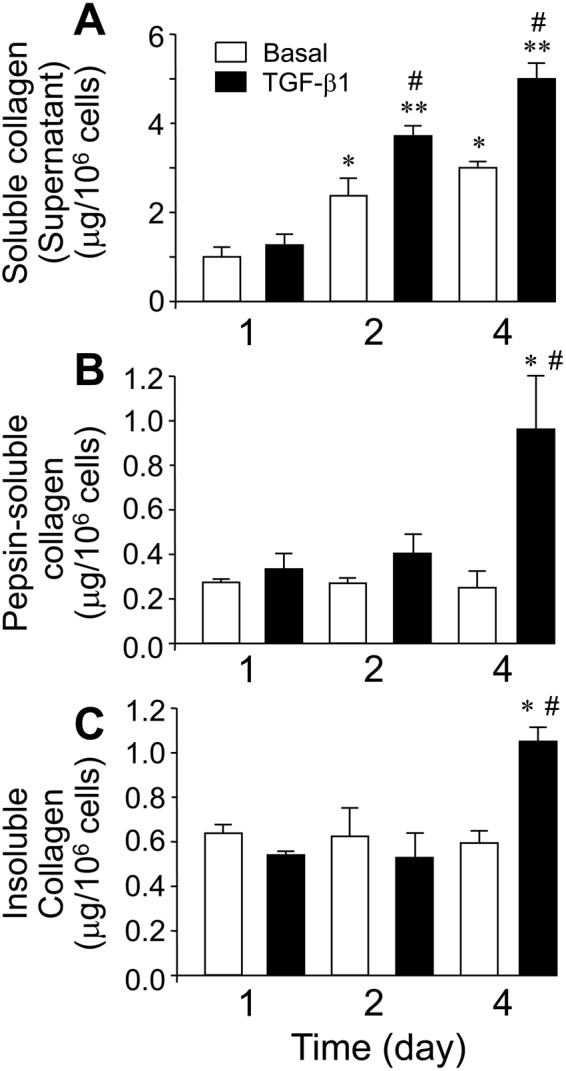
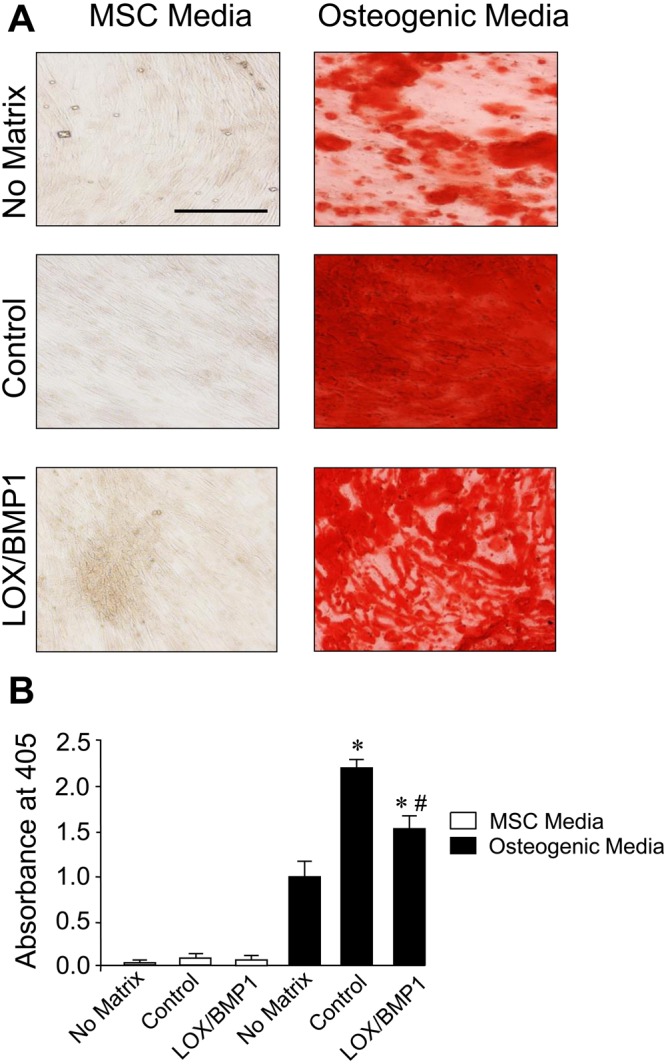
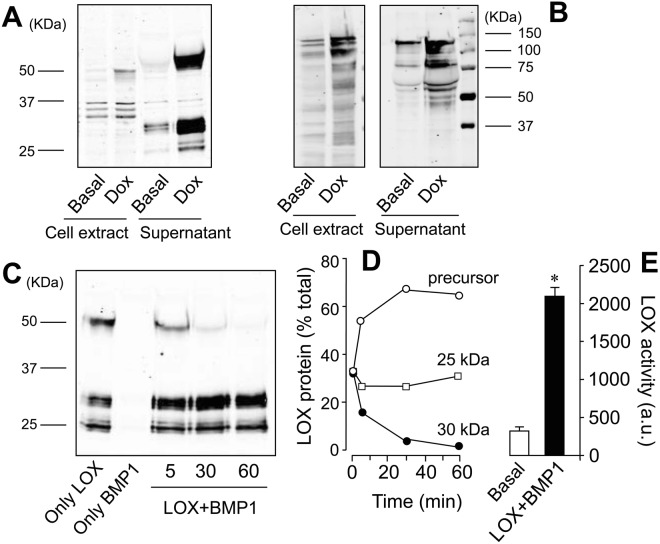
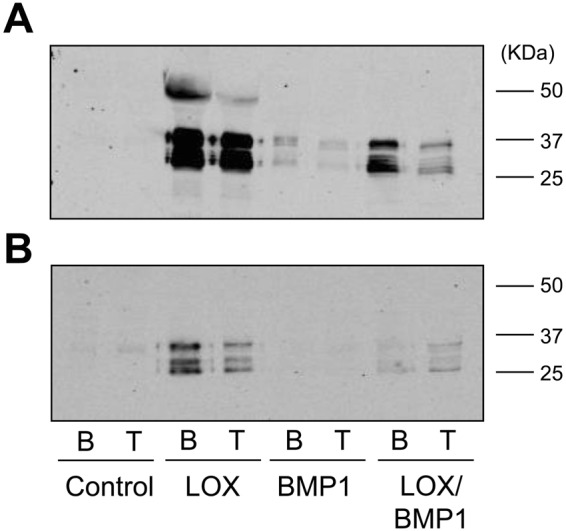
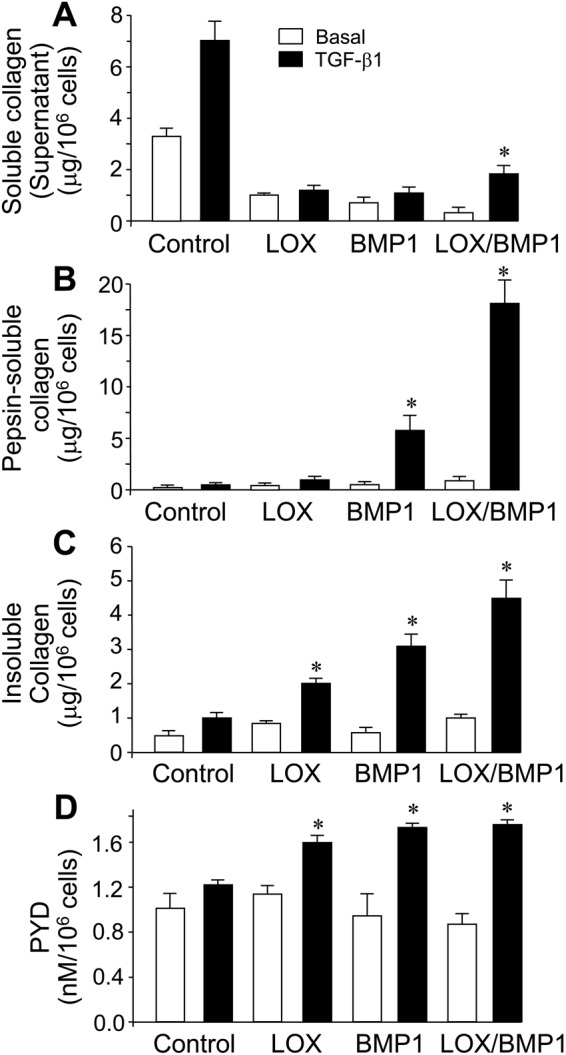
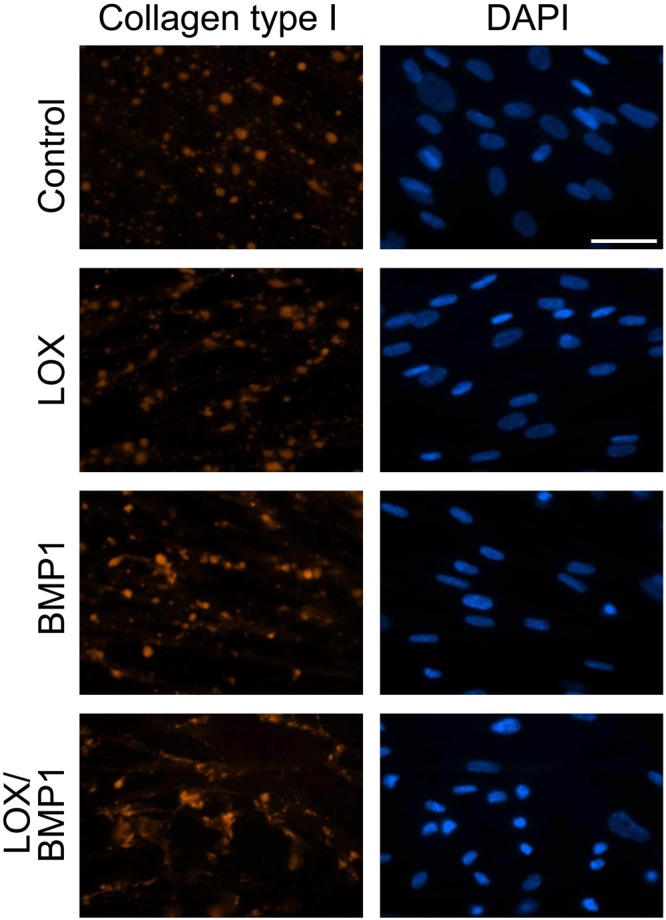
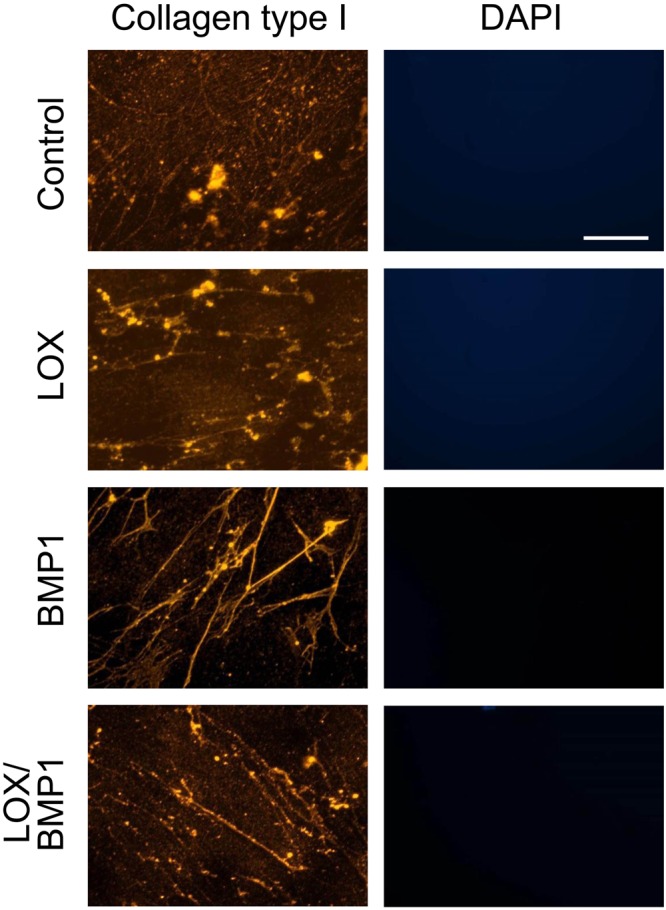
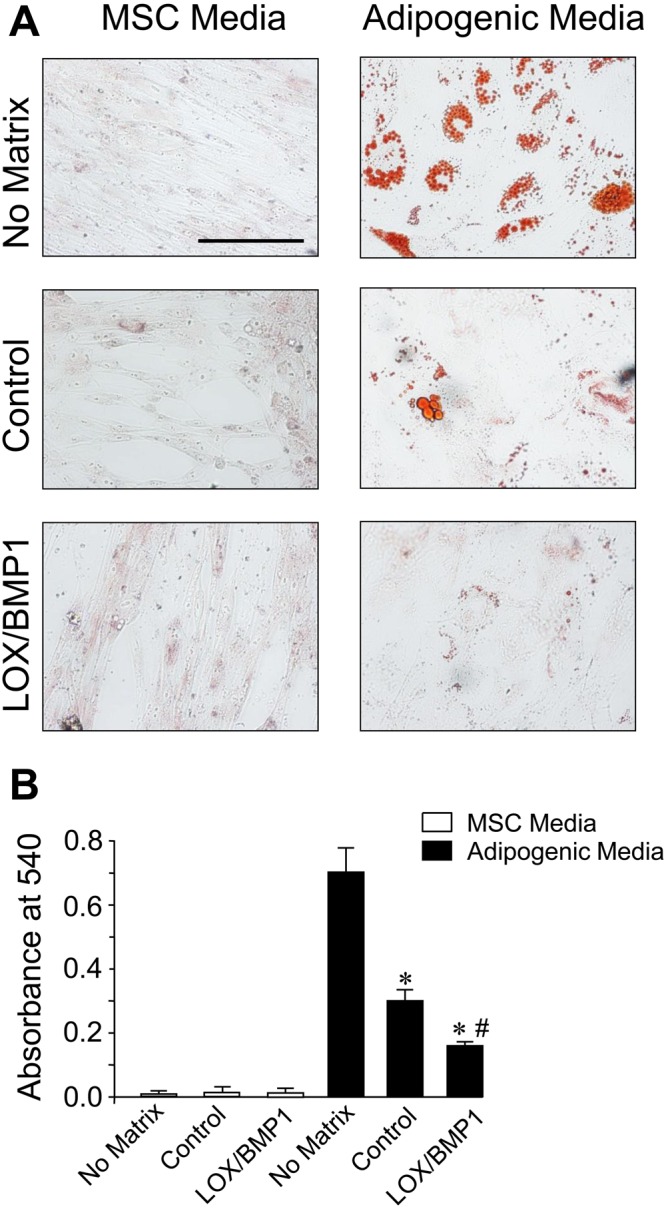
Cultured cell-derived extracellular matrices (ECM)-based biomaterials exploit the inherent capacity of cells to create highly sophisticated supramolecular assemblies. However, standard cell culture conditions are far from ideal given the fact that the diluted microenvironment does not favor the production of ECM components, a circumstance particularly relevant for collagen. An incomplete conversion of procollagen by C-proteinase/bone morphogenetic protein 1 (BMP1) has been proposed to severely limit in vitro collagen deposition. BMP1 also catalyzes the proteolytic activation of the precursor of the collagen cross-linking enzyme, lysyl oxidase (LOX) to yield the active form, suggesting a deficit in cross-linking activity under standard conditions. We hypothesized that the implementation of fibroblast cultures with LOX and BMP1 may be an effective way to increase collagen deposition. To test it, we have generated stable cell lines overexpressing LOX and BMP1 and studied the effect of supernatants enriched in LOX and BMP1 on collagen synthesis and deposition from fibroblasts. Herein, we demonstrate that the supplementation with LOX and BMP1 strongly increased the deposition of collagen onto the insoluble matrix at the expense of the soluble fraction in the extracellular medium. Using decellularization protocols, we also show that fibroblast-derived matrices regulate adipogenic and osteogenic differentiation of human mesenchymal stem cells (MSC), and this effect was modulated by LOX/BMP1. Collectively, these data demonstrate that we have developed a convenient protocol to enhance the capacity of in vitro cell cultures to deposit collagen in the ECM, representing this approach a promising technology for application in tissue engineering.
细胞培养衍生的细胞外基质(ECM)基生物材料利用细胞的固有能力来创建高度复杂的超分子组装。然而,鉴于稀释的微环境不利于 ECM 成分的产生,标准的细胞培养条件远非理想,这种情况对胶原蛋白尤其相关。据推测,C-蛋白酶/骨形态发生蛋白 1(BMP1)对前胶原蛋白的不完全转化严重限制了体外胶原蛋白的沉积。BMP1 还催化胶原蛋白交联酶前体赖氨酰氧化酶(LOX)的蛋白水解激活,产生活性形式,表明在标准条件下交联活性不足。我们假设实施 LOX 和 BMP1 的成纤维细胞培养可能是增加胶原蛋白沉积的有效方法。为了验证这一点,我们生成了过表达 LOX 和 BMP1 的稳定细胞系,并研究了富含 LOX 和 BMP1 的上清液对成纤维细胞胶原蛋白合成和沉积的影响。在此,我们证明补充 LOX 和 BMP1 强烈增加了胶原蛋白在不溶性基质上的沉积,而牺牲了细胞外培养基中的可溶性部分。使用脱细胞化方案,我们还表明,成纤维细胞衍生的基质调节人间充质干细胞(MSC)的成脂和成骨分化,而这种效应受 LOX/BMP1 调节。总的来说,这些数据表明我们已经开发出一种方便的方案来增强体外细胞培养在 ECM 中沉积胶原蛋白的能力,这一方法代表了在组织工程中应用的有前途的技术。