School of Physiology, Pharmacology and Neuroscience, Biomedical Sciences Building, University of Bristol , Bristol , United Kingdom.
Veterans Affairs San Diego Healthcare System and Department of Anesthesiology, University of California-San Diego , La Jolla, California.
Am J Physiol Heart Circ Physiol. 2018 Nov 1;315(5):H1101-H1111. doi: 10.1152/ajpheart.00209.2018. Epub 2018 Jul 20.
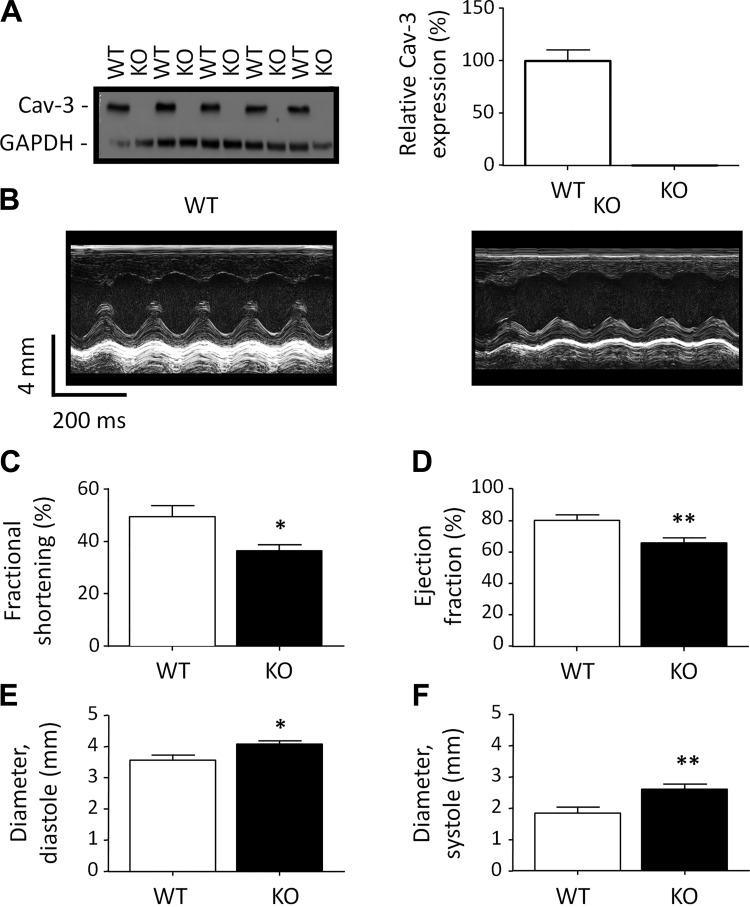
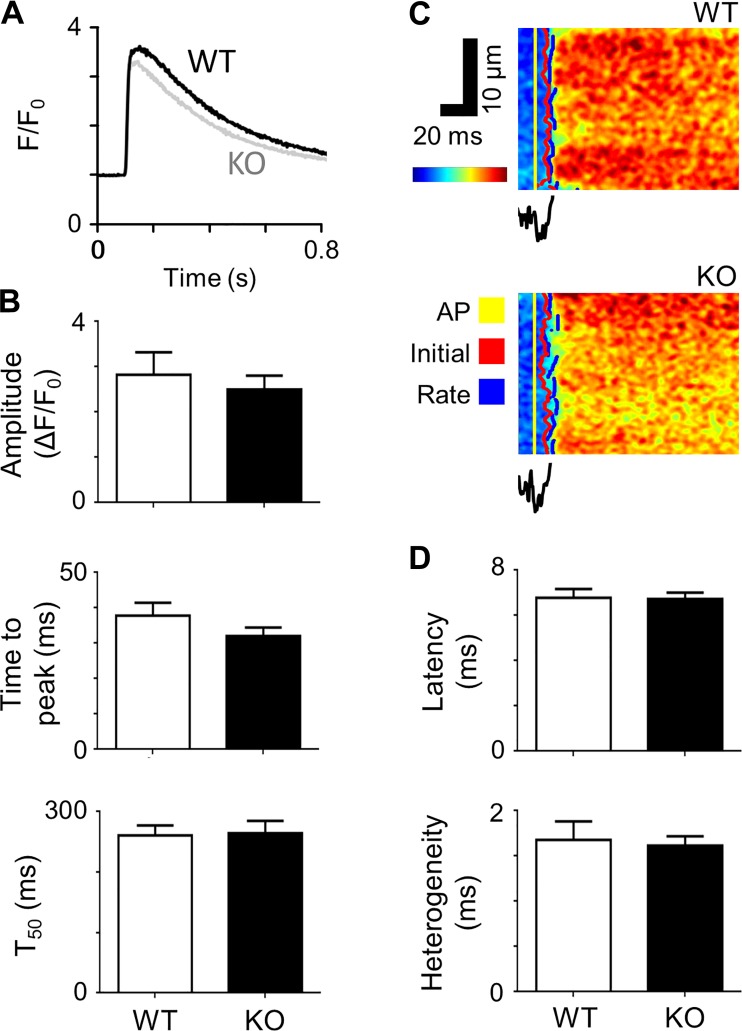
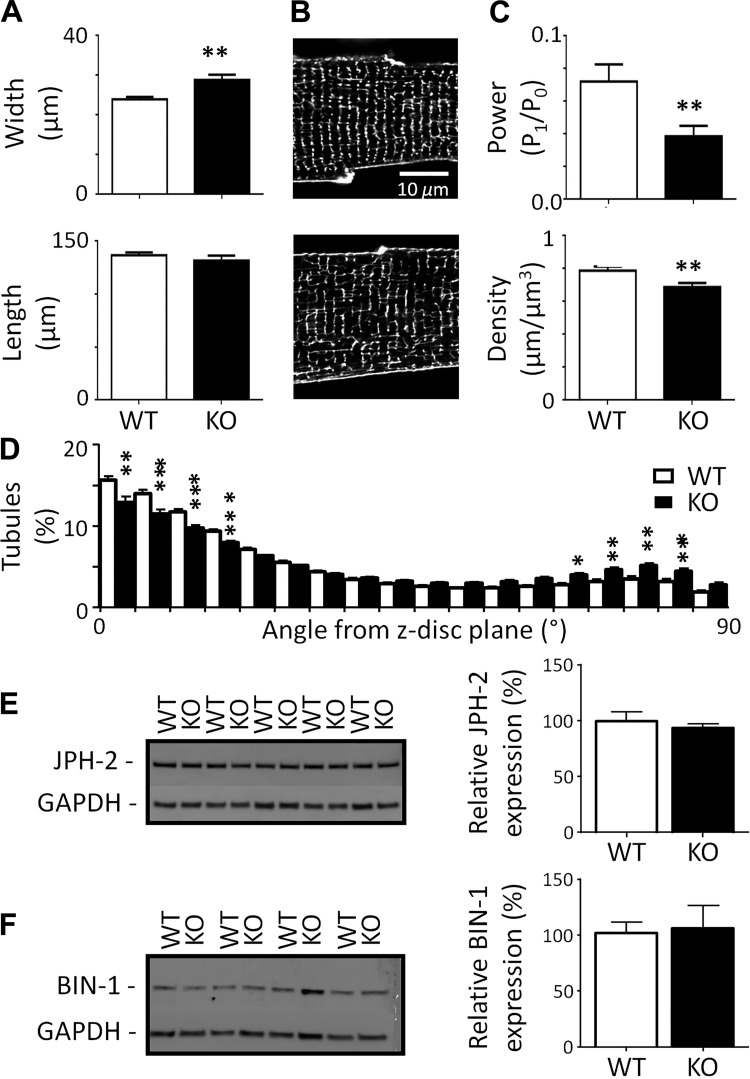
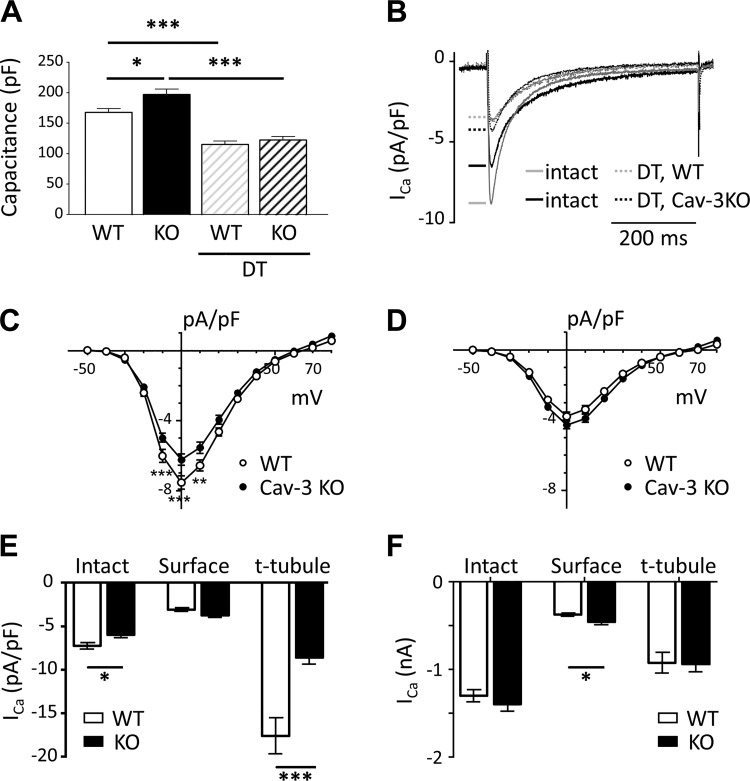
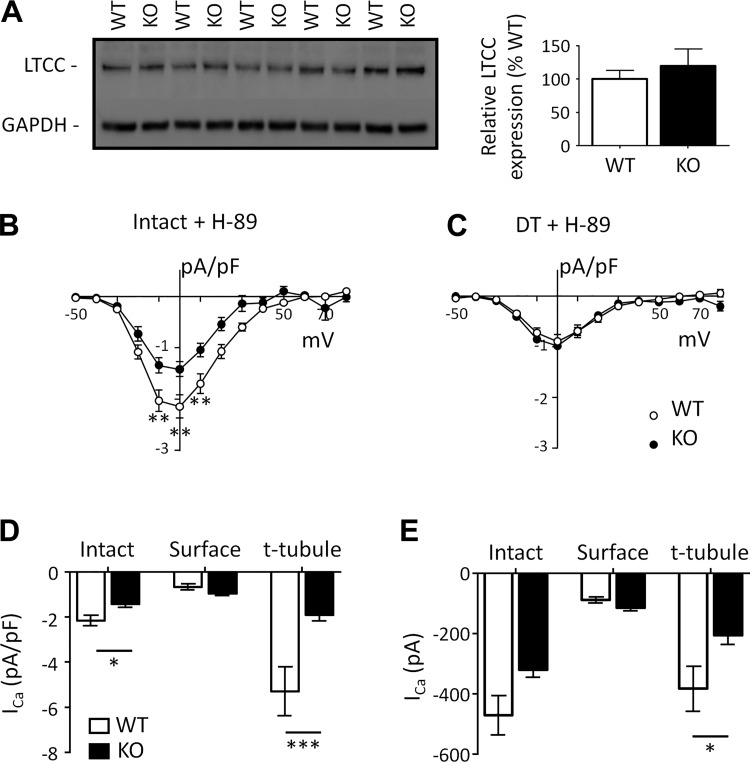
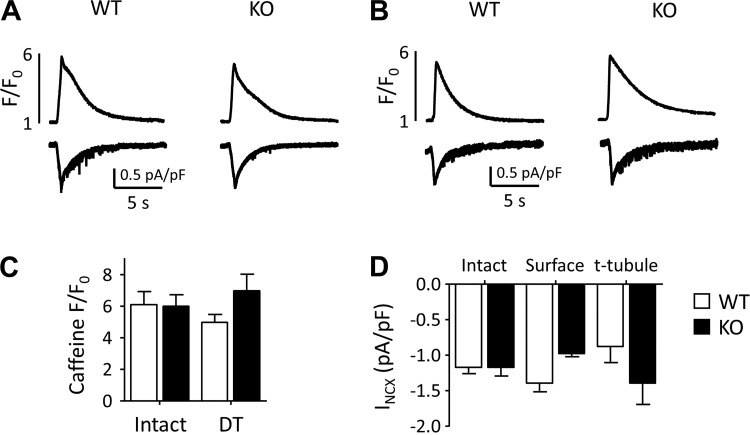
Caveolin-3 (Cav-3) is a protein that has been implicated in t-tubule formation and function in cardiac ventricular myocytes. In cardiac hypertrophy and failure, Cav-3 expression decreases, t-tubule structure is disrupted, and excitation-contraction coupling is impaired. However, the extent to which the decrease in Cav-3 expression underlies these changes is unclear. We therefore investigated the structure and function of myocytes isolated from the hearts of Cav-3 knockout (KO) mice. These mice showed cardiac dilatation and decreased ejection fraction in vivo compared with wild-type control mice. Isolated KO myocytes showed cellular hypertrophy, altered t-tubule structure, and decreased L-type Ca channel current ( I) density. This decrease in density occurred predominantly in the t-tubules, with no change in total I, and was therefore a consequence of the increase in membrane area. Cav-3 KO had no effect on L-type Ca channel expression, and C3SD peptide, which mimics the scaffolding domain of Cav-3, had no effect on I in KO myocytes. However, inhibition of PKA using H-89 decreased I at the surface and t-tubule membranes in both KO and wild-type myocytes. Cav-3 KO had no significant effect on Na/Ca exchanger current or Ca release. These data suggest that Cav-3 KO causes cellular hypertrophy, thereby decreasing t-tubular I density. NEW & NOTEWORTHY Caveolin-3 (Cav-3) is a protein that inhibits hypertrophic pathways, has been implicated in the formation and function of cardiac t-tubules, and shows decreased expression in heart failure. This study demonstrates that Cav-3 knockout mice show cardiac dysfunction in vivo, while isolated ventricular myocytes show cellular hypertrophy, changes in t-tubule structure, and decreased t-tubular L-type Ca current density, suggesting that decreased Cav-3 expression contributes to these changes in cardiac hypertrophy and failure.
窖蛋白-3(Cav-3)是一种蛋白,它与心肌细胞的 T 小管形成和功能有关。在心衰和衰竭中,Cav-3 的表达降低,T 小管结构破坏,兴奋-收缩偶联受损。然而,Cav-3 表达的降低在多大程度上导致了这些变化尚不清楚。因此,我们研究了 Cav-3 敲除(KO)小鼠心脏分离的心肌细胞的结构和功能。与野生型对照小鼠相比,这些小鼠在体内表现出心脏扩张和射血分数降低。分离的 KO 心肌细胞表现出细胞肥大、T 小管结构改变和 L 型钙通道电流(I)密度降低。这种密度的降低主要发生在 T 小管中,总 I 没有变化,因此是膜面积增加的结果。Cav-3 KO 对 L 型钙通道表达没有影响,C3SD 肽模拟 Cav-3 的支架结构域,对 KO 心肌细胞的 I 没有影响。然而,使用 H-89 抑制 PKA 会降低 KO 和野生型心肌细胞表面和 T 小管膜上的 I。Cav-3 KO 对 Na/Ca 交换器电流或 Ca 释放没有显著影响。这些数据表明,Cav-3 KO 导致细胞肥大,从而降低 T 小管 I 密度。新的和值得注意的是窖蛋白-3(Cav-3)是一种抑制肥大途径的蛋白,与心脏 T 小管的形成和功能有关,在心衰中表达降低。这项研究表明,Cav-3 KO 小鼠在体内表现出心脏功能障碍,而分离的心室肌细胞表现出细胞肥大、T 小管结构改变和 T 小管 L 型钙电流密度降低,表明 Cav-3 表达的降低导致了心脏肥大和衰竭中的这些变化。