Taslimi Zahra, Komaki Alireza, Haghparast Abbas, Sarihi Abdolrahman
Neurophysiology Research Center, Hamadan University of Medical Sciences, Hamadan, Iran.
Neuroscience Research Center, School of Medicine, Shahid Beheshti University of Medical Sciences, Tehran, Iran.
Basic Clin Neurosci. 2018 May-Jun;9(3):157-166. doi: 10.29252/nirp.bcn.9.3.157.
Methamphetamine (METH) is a neurotoxic psychostimulant with highly addictive potential that leads to compulsive drug use and vulnerability to relapse. Environmental cues, such as drug exposure, peer influence, and social stress, are the powerful triggers of drug relapse. In this study, we tried to find out the effect of acute and chronic restraint stress on reinstatement of extinguished METH-induced Conditioned Place Preference (CPP) in rats.
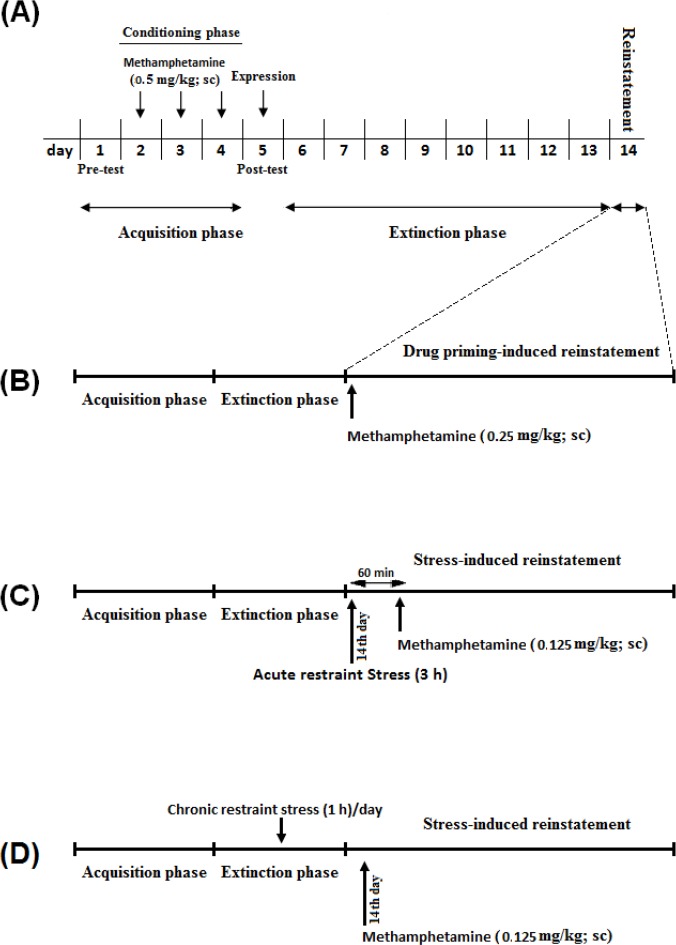
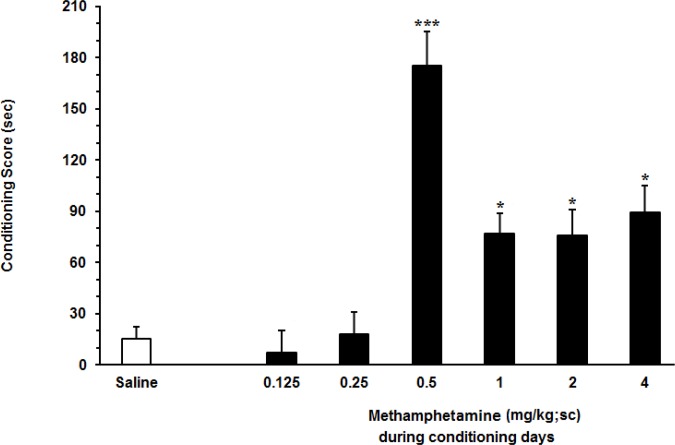
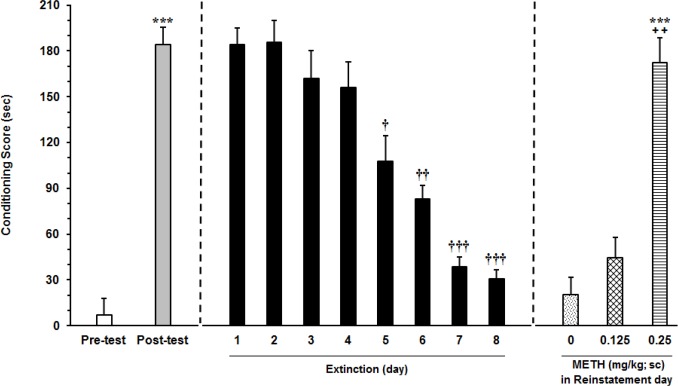
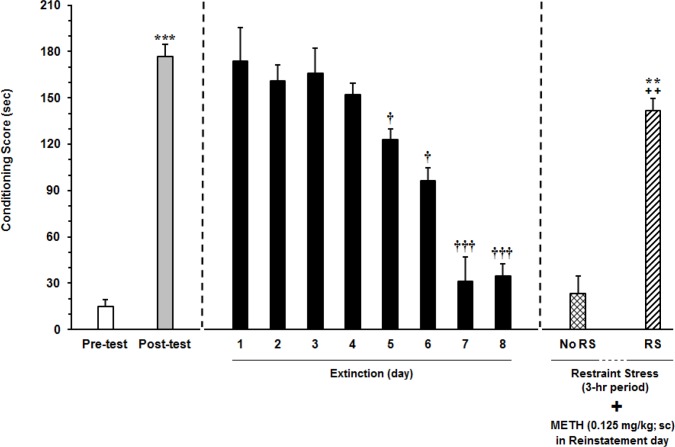
Subcutaneous (SC) administration of METH (0.125, 0.25, 0.5, 1, 2 and 4 mg/kg) could induce CPP and it was found that METH with the dose of 0.5 mg/kg was more potent than other doses. In extinction phase, rats were put in the CPP box for 30 min per day for 8 consecutive days. After extinction, animals were exposed to restraint stress (3-h period, as an acute stress) 60 min before subcutaneous administration of ineffective dose of METH (0.125 mg/kg) in order to reinstate the extinguished METH-induced CPP. For induction of the chronic stress during extinction phase, the animals were exposed to the restraint stress for one hour per day.
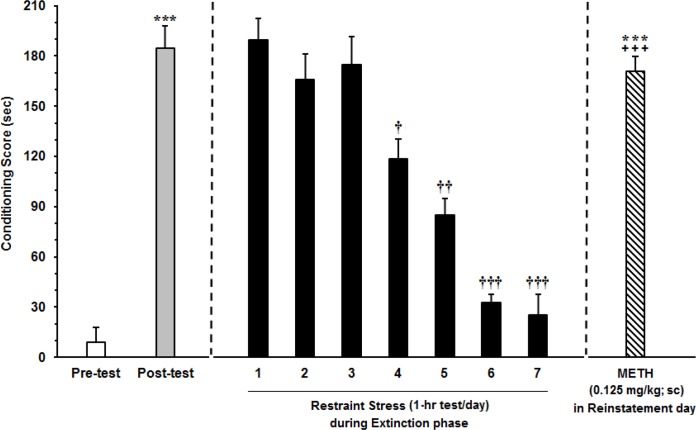
The results showed that the effective dose of METH to induce CPP was 0.5 mg/kg. Based on the results, physical stress (restraint stress) whether acute and chronic, can significantly induce reinstatement of METH-induced CPP (P˂0.001) in extinguished animals.
Additionally, the chronic restraint stress could reduce duration of extinction (maintenance) of METH-induced CPP. It seems that exposure to the stress induces the relapse in abstinent amphetamine, but acute and chronic situation have a different reaction.
甲基苯丙胺(METH)是一种具有高度成瘾潜力的神经毒性精神兴奋剂,会导致强迫性药物使用和复吸易感性。环境线索,如药物暴露、同伴影响和社会压力,是药物复吸的强大触发因素。在本研究中,我们试图探究急性和慢性束缚应激对大鼠中消退的METH诱导的条件性位置偏爱(CPP)恢复的影响。
皮下注射METH(0.125、0.25、0.5、1、2和4mg/kg)可诱导CPP,结果发现0.5mg/kg剂量的METH比其他剂量更有效。在消退阶段,大鼠连续8天每天在CPP箱中放置30分钟。消退后,在皮下注射无效剂量的METH(0.125mg/kg)前60分钟,将动物暴露于束缚应激(3小时,作为急性应激),以恢复消退的METH诱导的CPP。为了在消退阶段诱导慢性应激,每天将动物暴露于束缚应激1小时。
结果表明,诱导CPP的METH有效剂量为0.5mg/kg。基于这些结果,无论是急性还是慢性的身体应激(束缚应激),都能显著诱导消退动物中METH诱导的CPP恢复(P˂0.001)。
此外,慢性束缚应激可缩短METH诱导的CPP的消退(维持)持续时间。似乎暴露于应激会诱导戒断苯丙胺者复吸,但急性和慢性情况有不同反应。