Sahlgrenska Translational Melanoma Group, Sahlgrenska Cancer Center, Departments of Surgery and Oncology, Institute of Clinical Sciences, University of Gothenburg and Sahlgrenska University Hospital, Gothenburg, Sweden.
Department of Medical Chemistry, Institute of Biomedicine, University of Gothenburg, Gothenburg, Sweden.
Cell Death Dis. 2018 Jul 24;9(8):810. doi: 10.1038/s41419-018-0865-6.
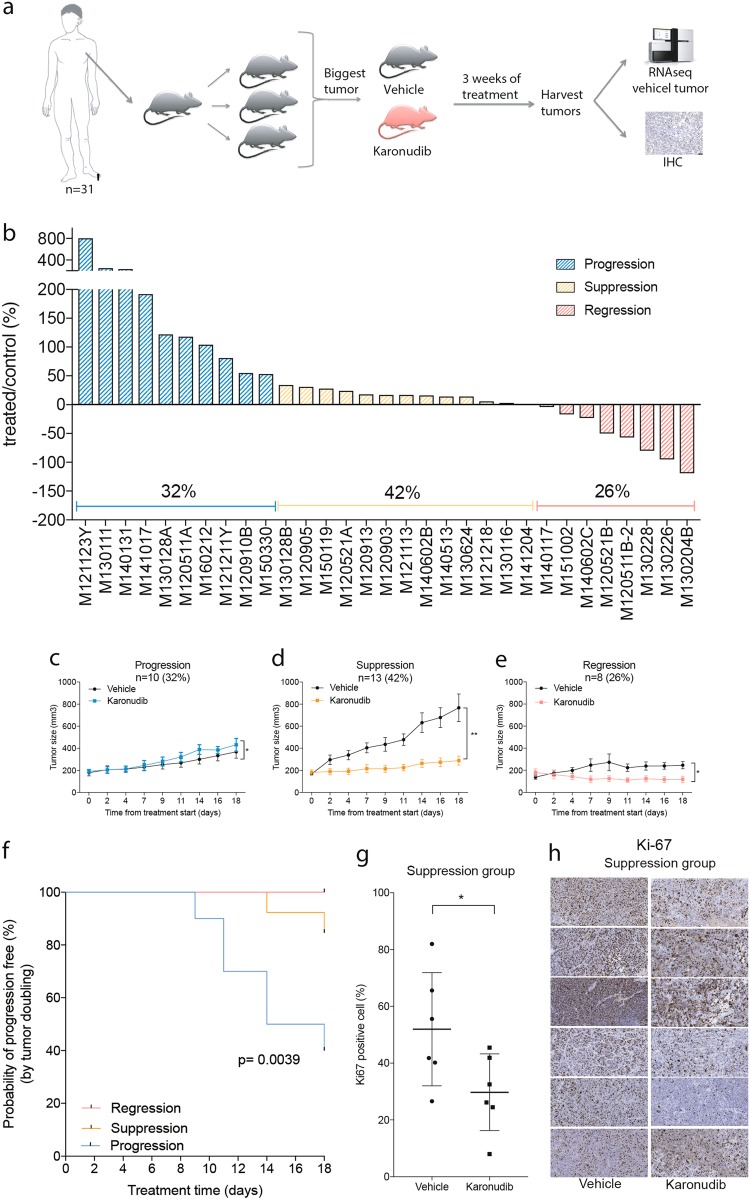
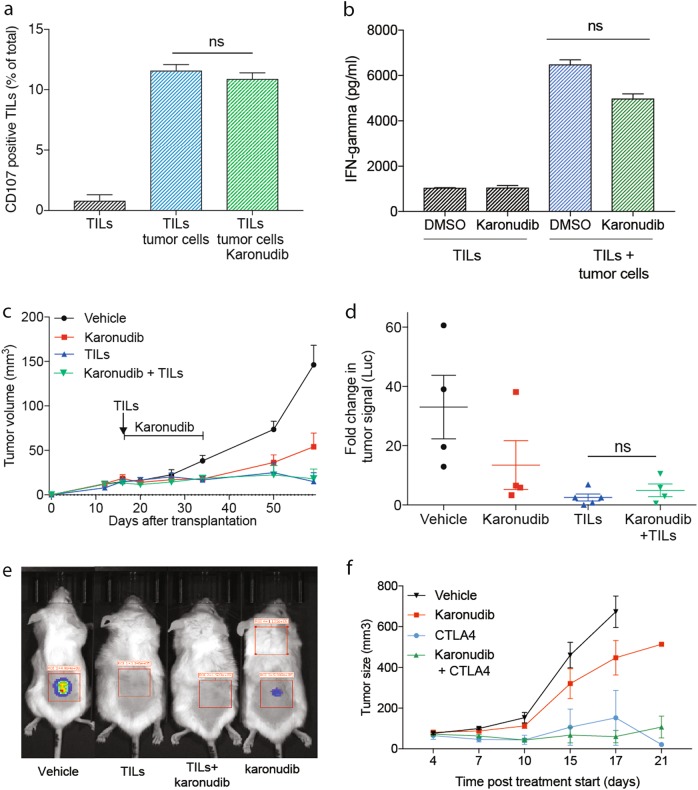
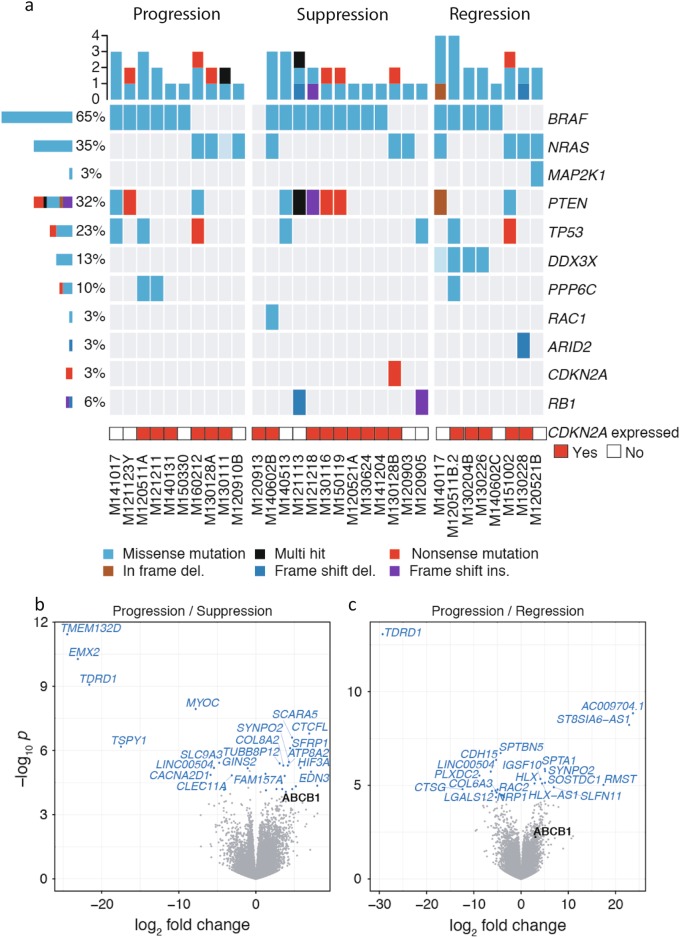
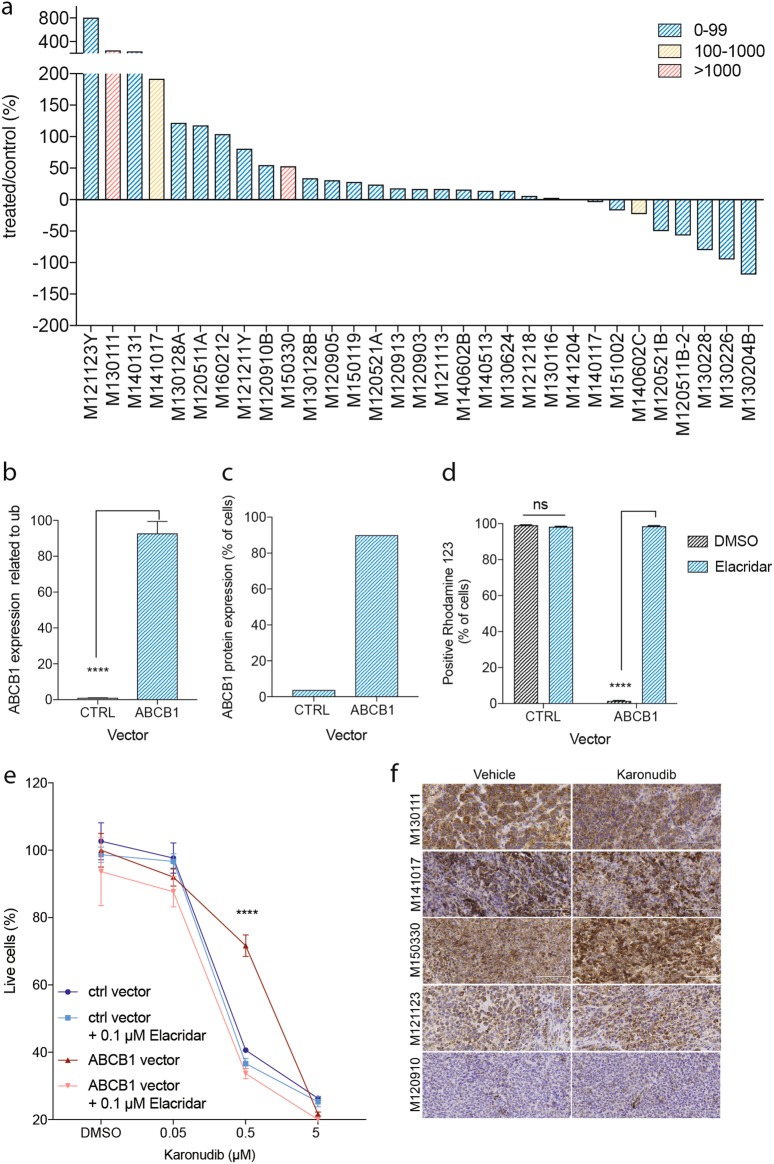
Karonudib (TH1579) is a novel compound that exerts anti-tumor activities and has recently entered phase I clinical testing. The aim of this study was to conduct a pre-clinical trial in patient-derived xenografts to identify the possible biomarkers of response or resistance that could guide inclusion of patients suffering from metastatic melanoma in phase II clinical trials. Patient-derived xenografts from 31 melanoma patients with metastatic disease were treated with karonudib or a vehicle for 18 days. Treatment responses were followed by measuring tumor sizes, and the models were categorized in the response groups. Tumors were harvested and processed for RNA sequencing and protein analysis. To investigate the effect of karonudib on T-cell-mediated anti-tumor activities, tumor-infiltrating T cells were injected in mice carrying autologous tumors and the mice treated with karonudib. We show that karonudib has heterogeneous anti-tumor effect on metastatic melanoma. Thus, based on the treatment responses, we could divide the 31 patient-derived xenografts in three treatment groups: progression group (32%), suppression group (42%), and regression group (26%). Furthermore, we show that karonudib has anti-tumor effect, irrespective of major melanoma driver mutations. Also, we identify high expression of ABCB1, which codes for p-gp pumps as a resistance biomarker. Finally, we show that karonudib treatment does not hamper T-cell-mediated anti-tumor responses. These findings can be used to guide future use of karonudib in clinical use with a potential approach as precision medicine.
卡隆迪布(TH1579)是一种新型化合物,具有抗肿瘤活性,最近已进入 I 期临床试验。本研究旨在对患者来源的异种移植物进行临床前试验,以确定可能的反应或耐药生物标志物,从而指导转移性黑色素瘤患者纳入 II 期临床试验。对 31 名转移性黑色素瘤患者的患者来源异种移植物用卡隆迪布或载体治疗 18 天。通过测量肿瘤大小来监测治疗反应,并将模型分为反应组。采集肿瘤并进行 RNA 测序和蛋白质分析。为了研究卡隆迪布对 T 细胞介导的抗肿瘤活性的影响,将肿瘤浸润性 T 细胞注射到携带自体肿瘤的小鼠中,并对小鼠进行卡隆迪布治疗。我们表明卡隆迪布对转移性黑色素瘤具有异质性的抗肿瘤作用。因此,根据治疗反应,我们可以将 31 个患者来源的异种移植物分为三组:进展组(32%)、抑制组(42%)和消退组(26%)。此外,我们表明卡隆迪布具有抗肿瘤作用,而与主要黑色素瘤驱动突变无关。此外,我们发现 ABCB1 高表达,其编码 p-gp 泵作为耐药生物标志物。最后,我们表明卡隆迪布治疗不会阻碍 T 细胞介导的抗肿瘤反应。这些发现可用于指导卡隆迪布在临床应用中的未来应用,作为一种潜在的精准医学方法。