Leading Technology of Bioanalysis and Protein Chemistry SHIMADZU Corporation Kyoto Japan.
Department of Clinical Pharmacology and Therapeutics Kyoto University Hospital Kyoto Japan.
Pharmacol Res Perspect. 2018 Jul 24;6(4):e00422. doi: 10.1002/prp2.422. eCollection 2018 Jul.
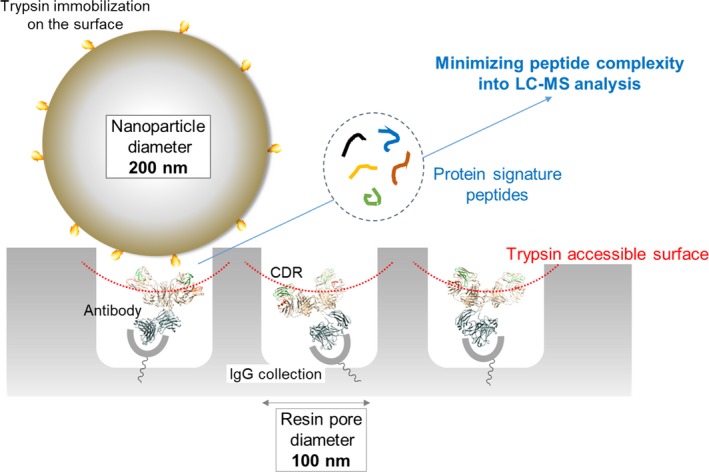
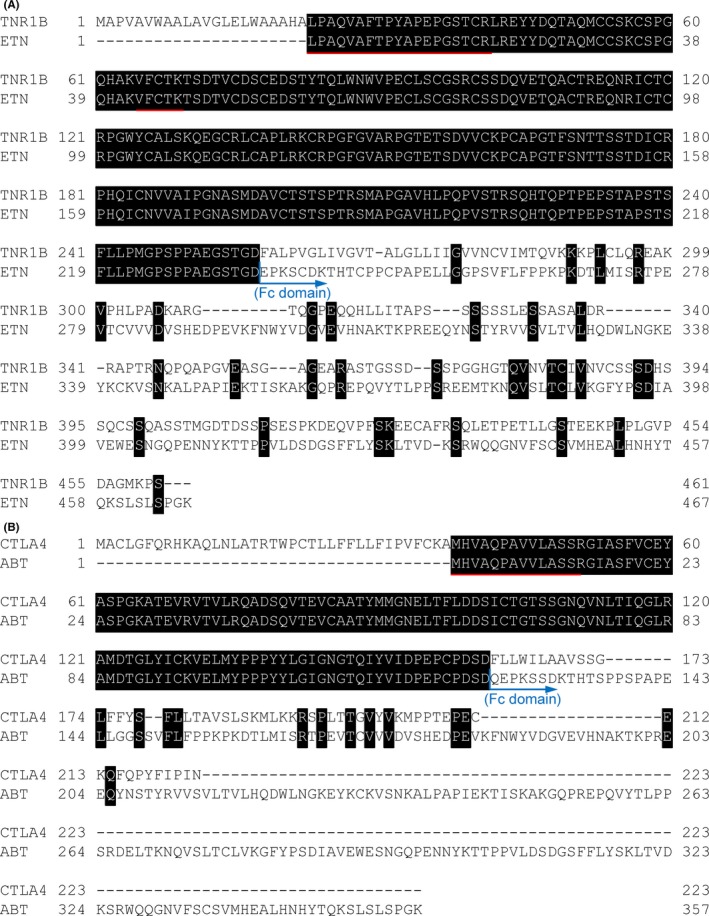
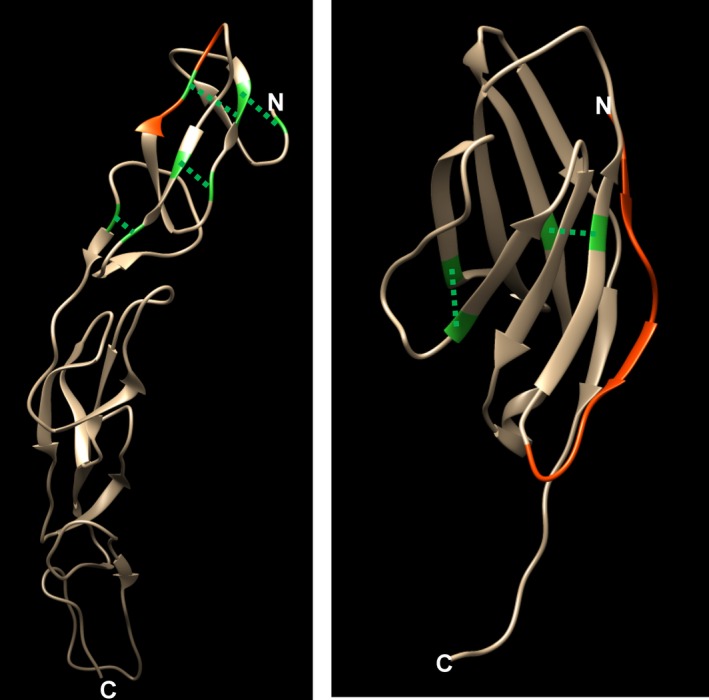
The principle of nano-surface and molecular-orientation limited (nSMOL) proteolysis has a unique characteristic Fab-selective proteolysis for antibody bioanalysis that is independent of a variety of monoclonal antibodies by the binding antibody Fc via Protein A/G in a pore with 100 nm diameter and modified trypsin immobilization on the surface of nanoparticles with 200 nm diameter. Since minimizing peptide complexity and protease contamination while maintaining antibody sequence specificity enables a rapid and broad development of optimized methods for liquid chromatography-mass spectrometry (LC-MS) bioanalysis, the application of regulatory LC-MS for monitoring antibody biopharmaceuticals is expected. nSMOL is theoretically anticipated to be applicable for representative Fc-fusion biopharmaceuticals, because Protein A/G-binding site Fc exists on the C-terminus, and its functional domain is available to orient and interact with the reaction solution. In this report, we describe the validated LC-MS bioanalysis for monitoring Ethanercept and Abatacept using nSMOL technology. The quantitation range of Ethanercept in human serum was from 0.195 to 100 μg/mL using the signature peptide VFCTK (aa.43-47), and that of Abatacept was from 0.391 to 100 μg/mL using the signature peptide MHVAQPAVVLASSR (aa.1-14). Both proteins fulfilled the guideline criteria for low-molecular-weight drug compounds. The results indicate that the clinical and therapeutic monitoring for antibody and Fc-fusion biopharmaceuticals are adequately applicable using nSMOL proteolysis coupled with LC-MS bioanalysis.
纳米表面和分子定向限制(nSMOL)蛋白水解的原理具有独特的特性,即针对抗体生物分析的 Fab 选择性蛋白水解,该特性独立于各种通过结合抗体 Fc 与孔径为 100nm 的蛋白 A/G 相互作用的单克隆抗体,并且经过修饰的蛋白酶固定在直径为 200nm 的纳米颗粒表面上。由于最小化肽复杂性和蛋白酶污染同时保持抗体序列特异性,从而能够快速广泛地开发优化的用于液相色谱-质谱(LC-MS)生物分析的方法,因此预计监管 LC-MS 将应用于监测抗体生物制药。nSMOL 理论上预计适用于代表性的 Fc 融合生物制药,因为蛋白 A/G 结合位点 Fc 存在于 C 末端,并且其功能域可用于定向和与反应溶液相互作用。在本报告中,我们描述了使用 nSMOL 技术验证的用于监测依那西普和阿巴西普的 LC-MS 生物分析。使用特征肽 VFCTK(aa.43-47),人血清中依那西普的定量范围为 0.195 至 100μg/mL,使用特征肽 MHVAQPAVVLASSR(aa.1-14),阿巴西普的定量范围为 0.391 至 100μg/mL。这两种蛋白质均满足低分子量药物化合物的指南标准。结果表明,使用 nSMOL 蛋白水解与 LC-MS 生物分析相结合,足以适用于抗体和 Fc 融合生物制药的临床和治疗监测。