Hira Daiki, Suzuki Asami, Kono Yusuke, Shimokawa Kosuke, Matsuoka Serika, Hasumoto Ken-Yuh, Kawahara Hiroyuki, Onoue Masahide, Fujita Takuya, Okano Tomonobu, Kakumoto Mikio
1Laboratory of Clinical Pharmacy, College of Pharmaceutical Sciences, Ritsumeikan University, 1-1-1 Noji-higashi, Kusatsu, Shiga 525-8577 Japan.
2Department of Pharmacy, Shiga University of Medical Science Hospital, Seta Tsukinowa-Cho, Otsu, Shiga 520-2192 Japan.
J Pharm Health Care Sci. 2018 Jul 25;4:21. doi: 10.1186/s40780-018-0116-0. eCollection 2018.
Colloidal saccharated iron oxide injection is used for the treatment of iron deficiency anemia in patients with a poor oral intake. Because of the poor stability of the colloid particle, there have been concerns regarding its compatibility with various injections in clinical practice. To assess the stability of colloidal saccharated iron oxide in normal saline as a diluent, pharmaceutical stability analyses were conducted using various concentrations of glucose and sodium chloride (NaCl).
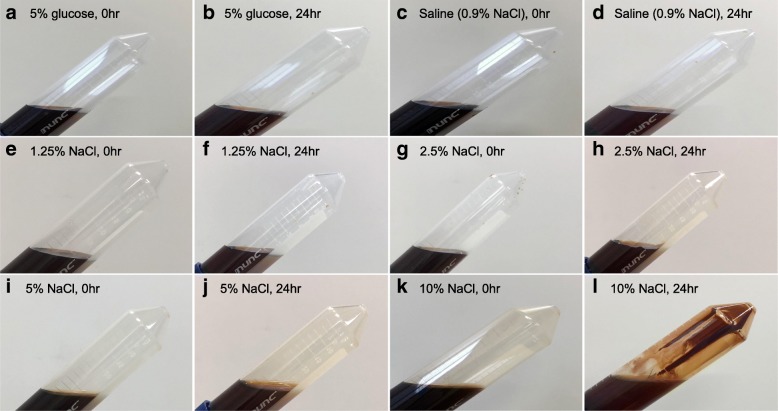
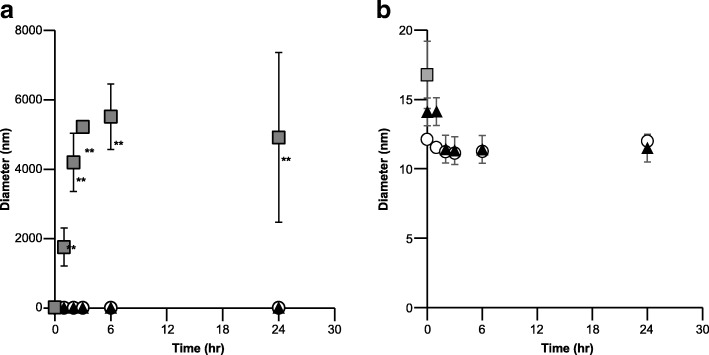
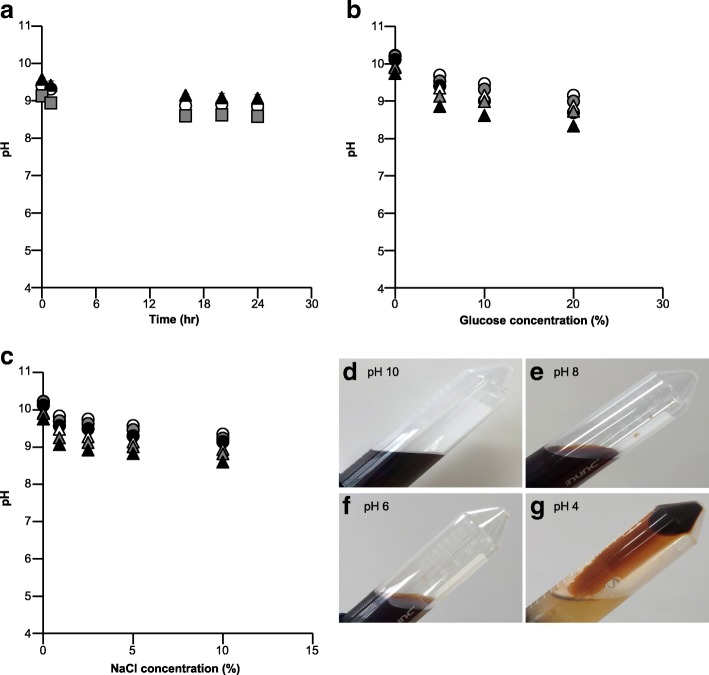
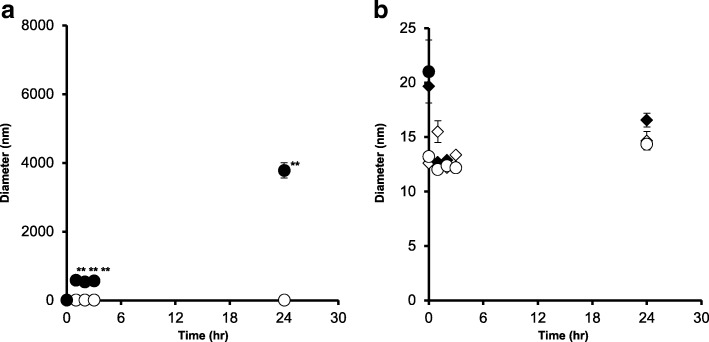
Colloidal saccharated iron oxide injection was diluted in three different diluents (5% glucose solution, normal saline, and 10% NaCl solution), and its appearance, colloid particle diameter, and pH were assessed. Free iron ions, which cause adverse effects, such as nausea and vomiting, were separated from the colloid particle using a dialysis membrane for 24 h, and their concentration was determined.
No difference in the appearance, colloid diameter, and free iron ion fraction was observed after dilution in 5% glucose solution and normal saline. Conversely, an increased colloid aggregation and iron ion release were observed after dilution in 10% NaCl solution. Although iron colloid is unstable in acidic conditions (pH 4.0-6.0), normal diluents such as 5% glucose and normal saline did not cause colloid destabilization by pH change (pH > 8.0).
Normal saline may be used as a diluent of colloidal saccharated iron oxide injection as well as glucose solution, which is recommended by the pharmaceutical company. Therefore, normal saline can be used as a diluent of colloidal saccharated iron oxide injection in patients with an underlying disease, such as diabetes mellitus, who are difficult to use glucose solution as a diluent.
含糖氧化铁胶体注射液用于治疗口服摄入不良患者的缺铁性贫血。由于胶体颗粒稳定性较差,临床实践中一直担心其与各种注射液的相容性。为评估含糖氧化铁胶体在生理盐水作为稀释剂中的稳定性,使用不同浓度的葡萄糖和氯化钠(NaCl)进行了药物稳定性分析。
将含糖氧化铁胶体注射液稀释于三种不同的稀释剂(5%葡萄糖溶液、生理盐水和10%NaCl溶液)中,评估其外观、胶体粒径和pH值。使用透析膜将引起恶心和呕吐等不良反应的游离铁离子与胶体颗粒分离24小时,并测定其浓度。
在5%葡萄糖溶液和生理盐水中稀释后,外观、胶体直径和游离铁离子分数无差异。相反,在10%NaCl溶液中稀释后,观察到胶体聚集增加和铁离子释放。尽管铁胶体在酸性条件(pH 4.0 - 6.0)下不稳定,但5%葡萄糖和生理盐水等常规稀释剂不会因pH值变化(pH > 8.0)导致胶体不稳定。
生理盐水可作为含糖氧化铁胶体注射液的稀释剂,葡萄糖溶液也是制药公司推荐的稀释剂。因此,生理盐水可作为含糖氧化铁胶体注射液的稀释剂,用于患有潜在疾病(如糖尿病)且难以使用葡萄糖溶液作为稀释剂的患者。