Sun Wuping, Zhou Qian, Ba Xiyuan, Feng Xiaojin, Hu Xuexue, Cheng Xiaoe, Liu Tao, Guo Jing, Xiao Lizu, Jiang Jin, Xiong Donglin, Hao Yue, Chen Zixian, Jiang Changyu
Department of Pain Medicine, Shenzhen Municipal Key Laboratory for Pain Medicine, Shenzhen Nanshan People's Hospital and the 6th Affiliated Hospital, Health Science Center, Shenzhen University, Shenzhen, China.
Department of Pain Medicine, The Third People's Hospital of Hubei Province, Wuhan, China.
Front Mol Neurosci. 2018 Jul 17;11:248. doi: 10.3389/fnmol.2018.00248. eCollection 2018.
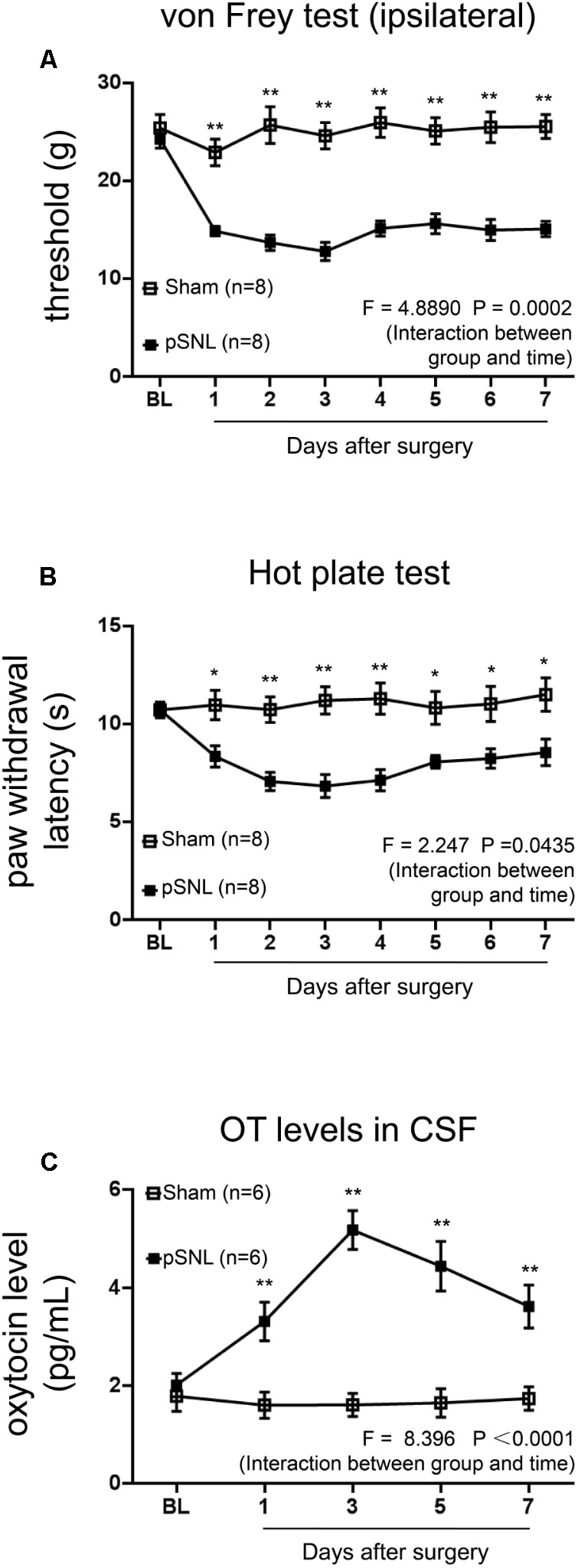
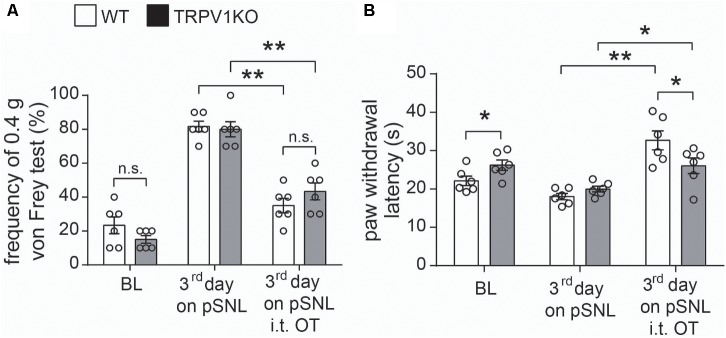
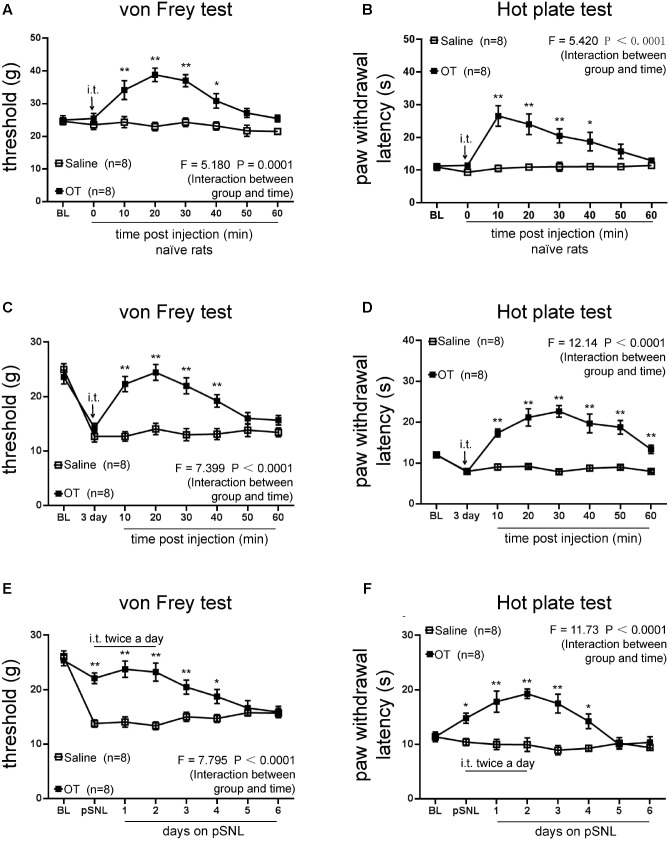
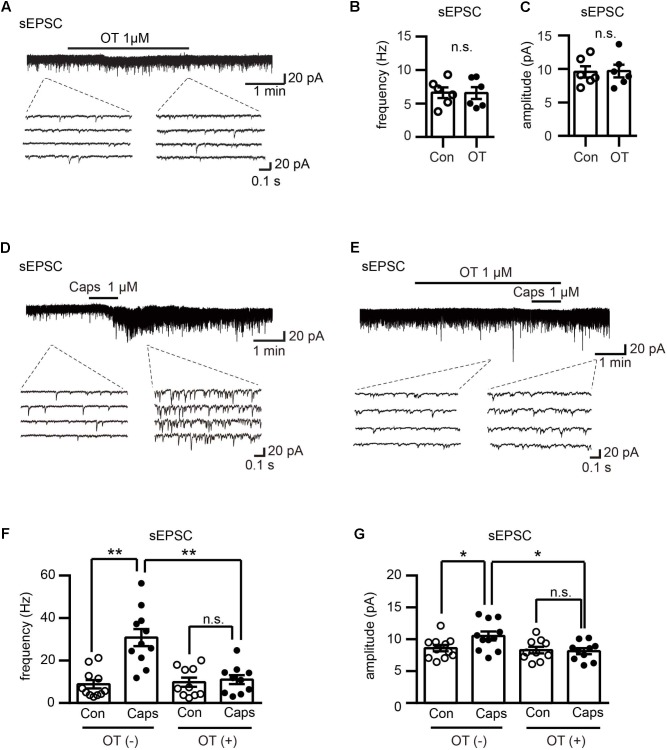
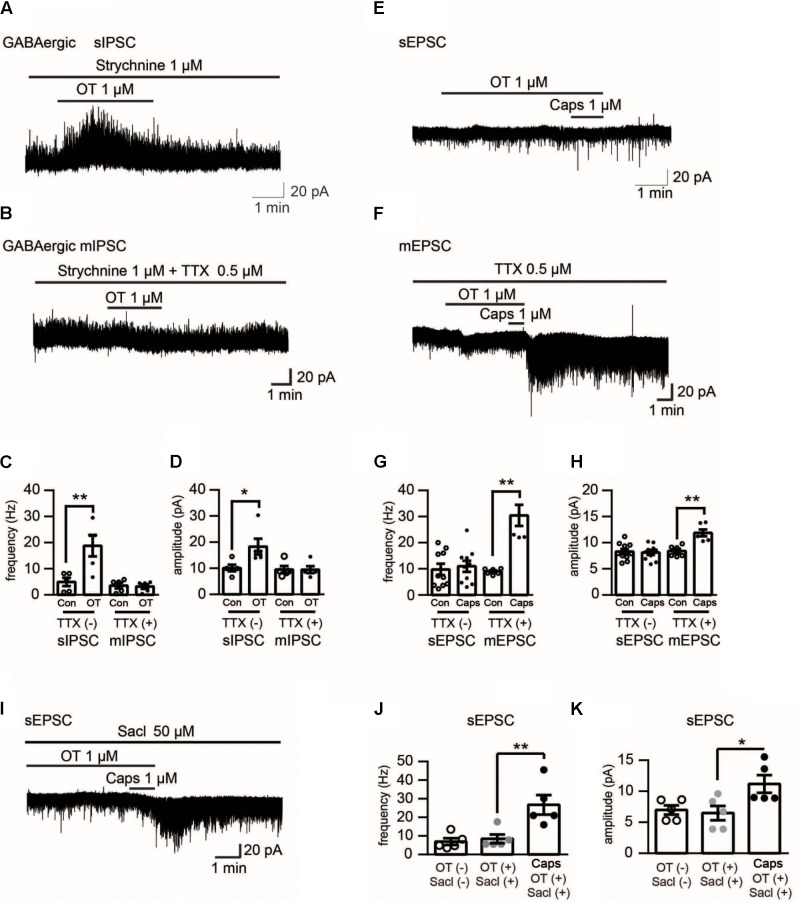
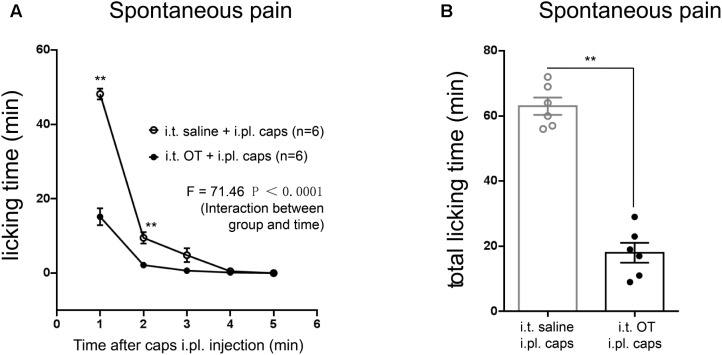
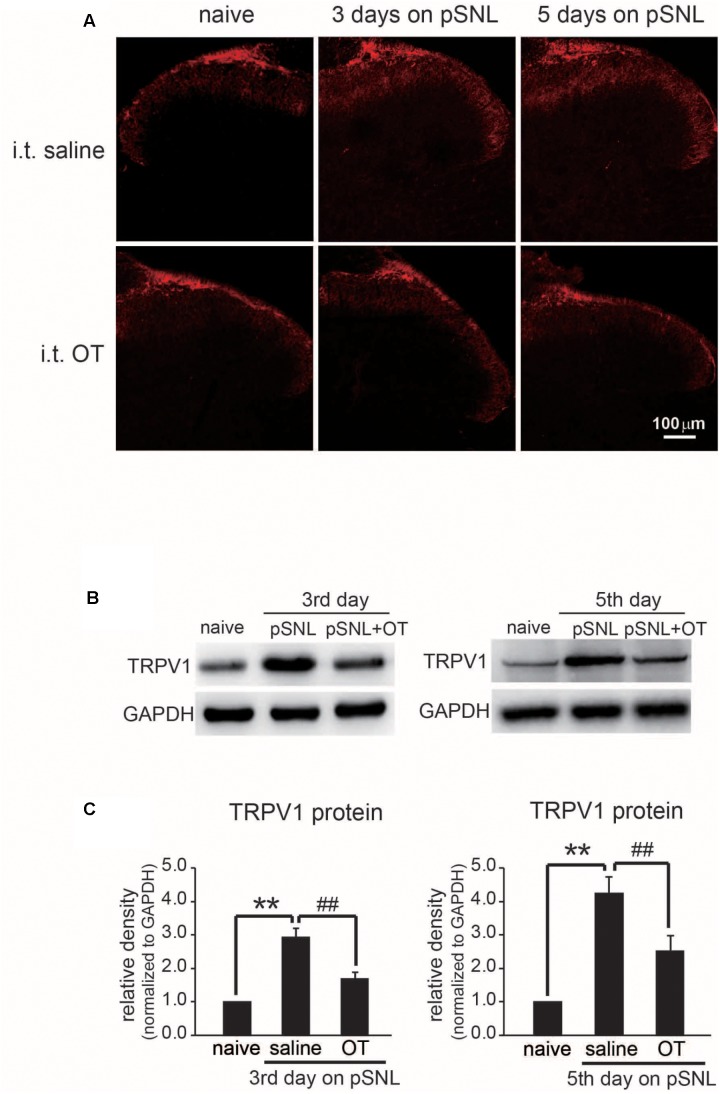
Oxytocin (OT) is synthesized within the paraventricular nucleus and supraoptic nucleus of the hypothalamus. In addition to its role in uterine contraction, OT plays an important antinociceptive role; however, the underlying molecular mechanisms of antinociceptive role of OT remain elusive. We hypothesized that the antinociceptive effect of OT on neuropathic pain may occur via inhibition of TRPV1 activation in the spinal cord. The present study explores the antinociceptive role of OT and its mechanisms in neuropathic pain. Partial sciatic nerve ligation (pSNL) was performed to induce neuropathic pain. Animal behaviors were measured using a set of electronic von Frey apparatus and hot plate. Electrophysiological recordings and molecular biological experiments were performed. Intrathecal administration of OT alleviated both mechanical allodynia and thermal hyperalgesia in pSNL rats ( = 6, per group, < 0.0001, saline vs. OT group). Electrophysiological data revealed that OT significantly inhibited the enhancement of frequency and amplitude of spontaneous excitatory post-synaptic currents induced presynaptically by TRPV1 activation in the spinal cord. Moreover, the inhibitory effect of OT on capsaicin-induced facilitation of excitatory transmission was blocked by co-treatment with saclofen, while intrathecal administration of OT dramatically inhibited capsaicin-induced ongoing pain in rats, ( = 6, per group, < 0.0001, saline vs. OT group). The paw withdrawal latency in response to heat stimulation was significantly impaired in TRPV1KO mice 3 days after pSNL upon OT (i.t.) treatment, compared with wild type mice ( = 6, < 0.05). Finally, OT prevented TRPV1 up-regulation in spinal cords of pSNL model rats. OT relieves neuropathic pain through GABA release and presynaptic TRPV1 inhibition in the spinal cord. OT and its receptor system might be an intriguing target for the treatment and prevention of neuropathic pain.
催产素(OT)在下丘脑的室旁核和视上核中合成。除了其在子宫收缩中的作用外,OT还发挥着重要的抗伤害感受作用;然而,OT抗伤害感受作用的潜在分子机制仍不清楚。我们假设OT对神经性疼痛的抗伤害感受作用可能通过抑制脊髓中TRPV1的激活而发生。本研究探讨了OT在神经性疼痛中的抗伤害感受作用及其机制。进行部分坐骨神经结扎(pSNL)以诱导神经性疼痛。使用一套电子von Frey仪器和热板测量动物行为。进行了电生理记录和分子生物学实验。鞘内注射OT可减轻pSNL大鼠的机械性异常性疼痛和热痛觉过敏(每组n = 6,P < 0.0001,生理盐水组与OT组)。电生理数据显示,OT显著抑制脊髓中由TRPV1激活突触前诱导的自发性兴奋性突触后电流频率和幅度的增强。此外,OT对辣椒素诱导的兴奋性传递促进作用的抑制效应被与氯苯氨丁酸共同处理所阻断,而鞘内注射OT可显著抑制辣椒素诱导的大鼠持续性疼痛(每组n = 6,P < 0.0001,生理盐水组与OT组)。与野生型小鼠相比,在OT(鞘内注射)处理后3天,TRPV1基因敲除小鼠在pSNL后对热刺激的爪退缩潜伏期显著受损(n = 6,P < 0.05)。最后,OT可防止pSNL模型大鼠脊髓中TRPV1上调。OT通过脊髓中GABA释放和突触前TRPV1抑制来缓解神经性疼痛。OT及其受体系统可能是治疗和预防神经性疼痛的一个有趣靶点。