Program in Genetic Epidemiology and Statistical Genetics, Harvard T.H. Chan School of Public Health, Boston, Massachusetts, United States of America.
Department of Epidemiology, Harvard T.H. Chan School of Public Health, Boston, Massachusetts, United States of America.
PLoS One. 2018 Aug 2;13(8):e0201555. doi: 10.1371/journal.pone.0201555. eCollection 2018.
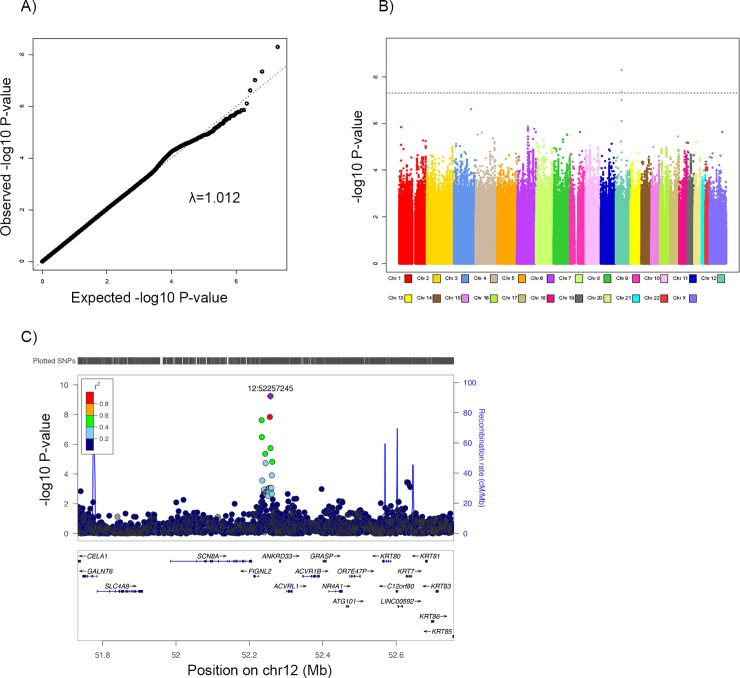
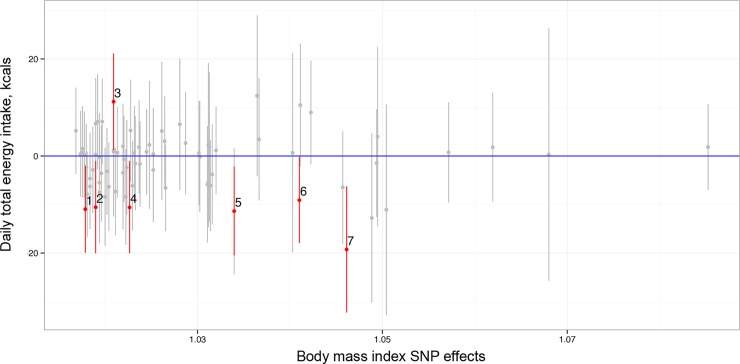
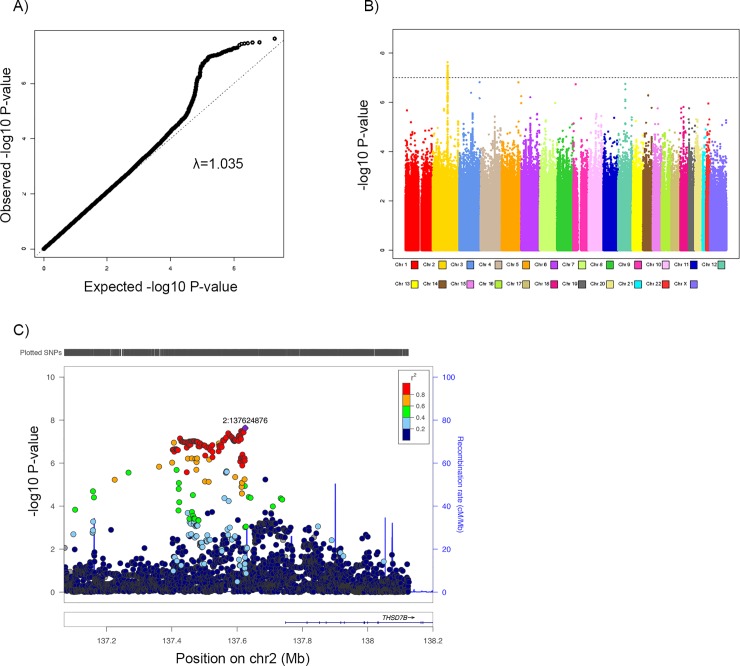
Excessive energy intake or insufficient energy expenditure, which result in energy imbalance, contribute to the development of obesity. Obesity-related genes, such as FTO, are associated with energy traits. No genome-wide association studies (GWAS) have been conducted to detect the genetic associations with energy-related traits, including energy intake and energy expenditure, among European-ancestry populations. In this study, we conducted a genome-wide study using pooled GWAS including 12,030 European-ancestry women and 6,743 European-ancestry men to identify genetic variants associated with these two energy traits. We observed a statistically significant genome-wide SNP heritability for energy intake of 6.05% (95%CI = (1.76, 10.34), P = 0.006); the SNP heritability for expenditure was not statistically significantly greater than zero. We discovered three SNPs on chromosome 12q13 near gene ANKRD33 that were genome-wide significantly associated with increased total energy intake among all men. We also identified signals on region 2q22 that were associated with energy expenditure among lean people. Body mass index related SNPs were found to be significantly associated with energy intake and expenditure through SNP set analyses. Larger GWAS studies of total energy traits are warranted to explore the genetic basis of energy intake, including possible differences between men and women, and the association between total energy intake and other downstream phenotypes, such as diabetes and chronic diseases.
能量摄入过多或能量消耗不足,导致能量失衡,是肥胖发生的主要原因。肥胖相关基因,如 FTO,与能量特征有关。目前还没有全基因组关联研究(GWAS)来检测与能量相关特征(包括能量摄入和能量消耗)相关的遗传关联,这些研究在欧洲血统人群中进行。在这项研究中,我们使用包含 12030 名欧洲血统女性和 6743 名欧洲血统男性的汇总 GWAS 进行了全基因组研究,以确定与这两种能量特征相关的遗传变异。我们观察到能量摄入的全基因组 SNP 遗传度具有统计学意义,为 6.05%(95%CI = (1.76, 10.34),P = 0.006);支出的 SNP 遗传度没有统计学意义大于零。我们在染色体 12q13 附近发现了三个与基因 ANKRD33 附近的 SNP,这些 SNP 与所有男性的总能量摄入增加呈全基因组显著相关。我们还在 2q22 区域发现了与瘦人能量消耗相关的信号。通过 SNP 集分析发现,与体重指数相关的 SNP 与能量摄入和消耗显著相关。需要更大规模的全基因组能量特征研究来探索能量摄入的遗传基础,包括男性和女性之间的可能差异,以及总能量摄入与其他下游表型(如糖尿病和慢性疾病)之间的关联。