Zhu Bing, Zhang Pei, Liu Mulin, Jiang Congqiao, Liu Hao, Fu Jun
Department of Gastrointestinal Surgery, The first Affiliated Hospital of Bengbu Medical College, Bengbu, 233000, China.
Faculty of Pharmacy, Bengbu Medical College, Bengbu, 233000, China.
Transl Oncol. 2018 Oct;11(5):1202-1212. doi: 10.1016/j.tranon.2018.07.006. Epub 2018 Jul 31.
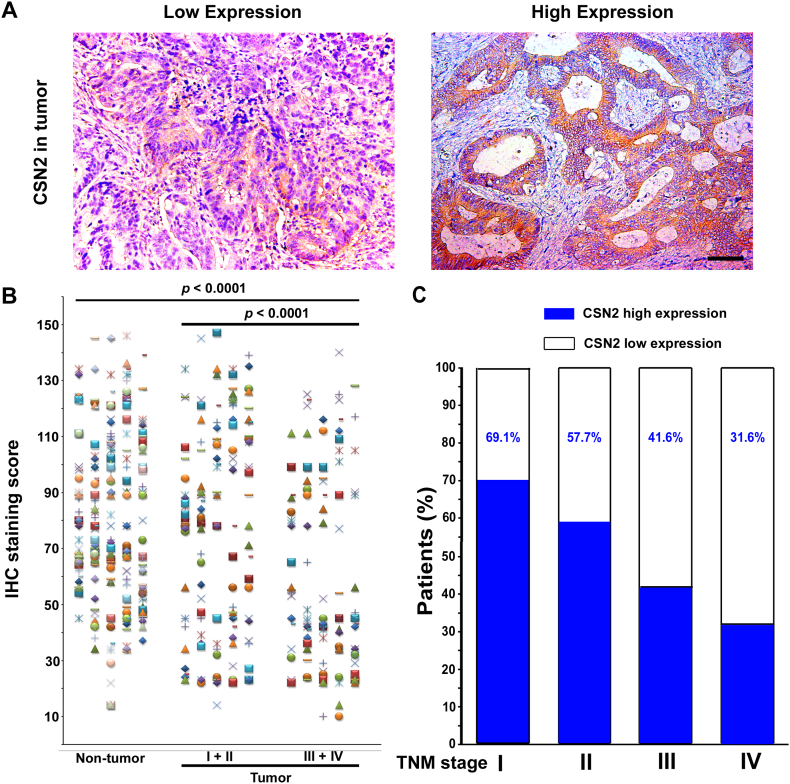
COP9 signalosome subunit 2 (CSN2) is believed to be involved in human cancer, but its prognostic significance in colorectal cancer (CRC) has not been elucidated.
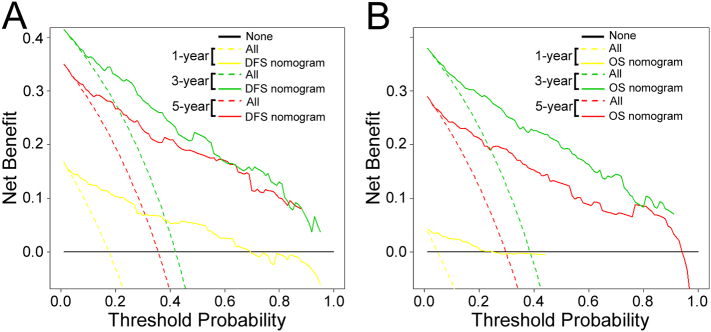
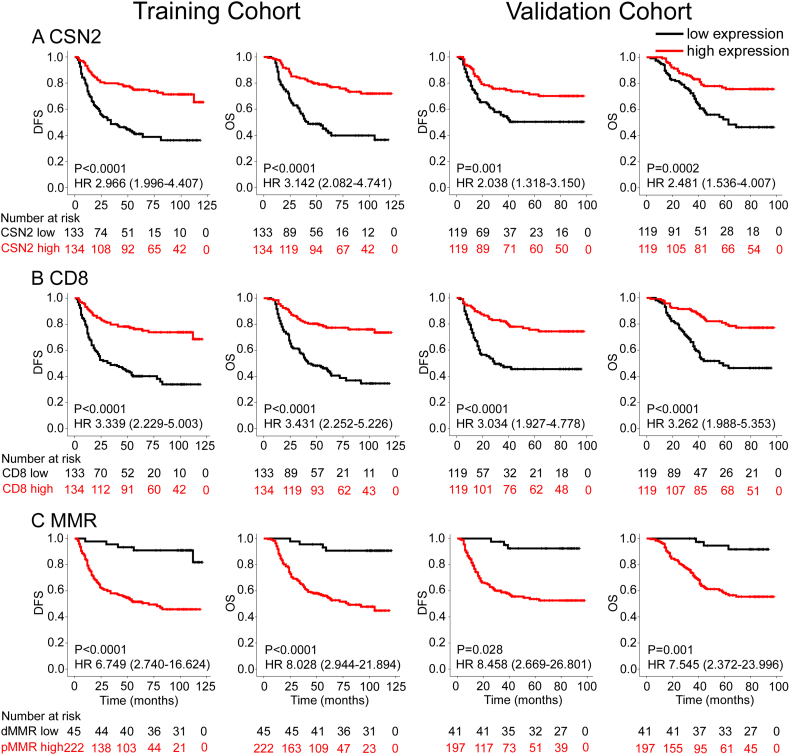
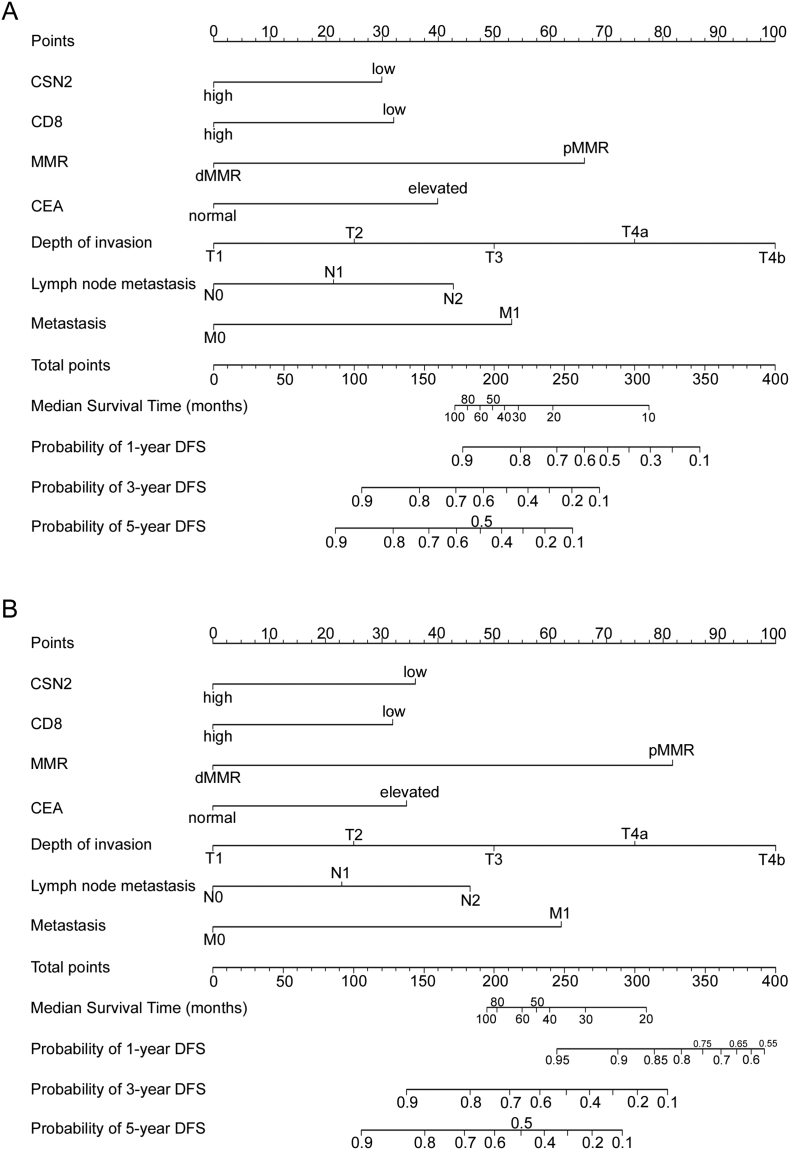
We retrospectively analyzed the expression of CSN2 andCD8+ tumor-infiltrating lymphocytes (TILs), and mismatch repair (MMR) status in 267 paraffin-embedded specimens using immunohistochemistry in a training cohort. A number of risk factors were used to form nomograms to evaluate survival, and Harrell's concordance index (C-index) was used to evaluate the predictive accuracy. Further validation was performed in an independent cohort of 238cases.
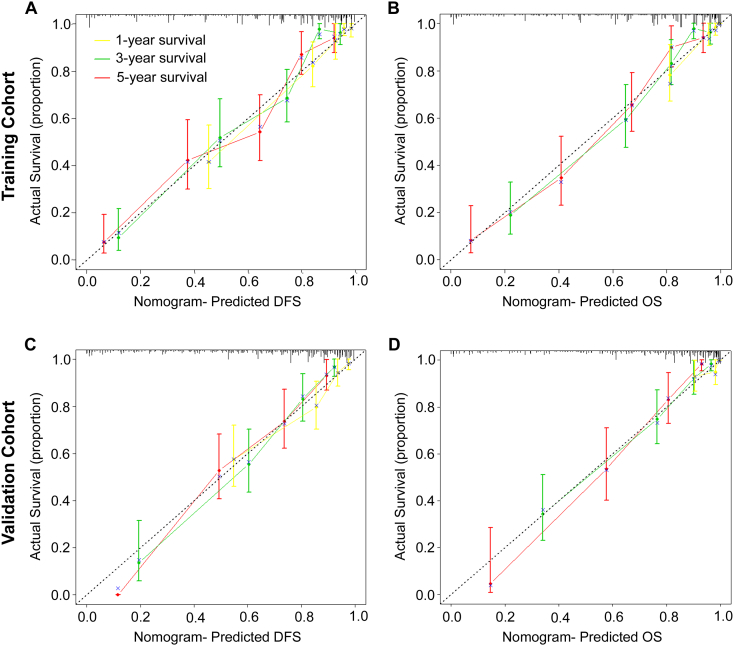
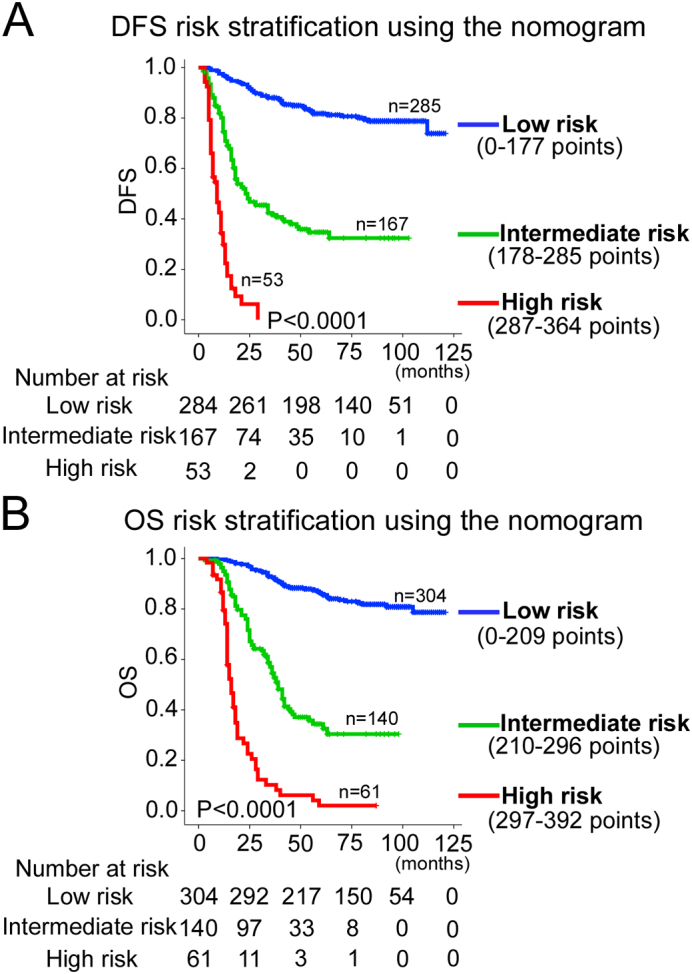
Low CSN2 expression and a low number of CD8 + TILs were significantly associated with diminished disease-free survival (DFS) and overall survival (OS) in CRC patients, and patients with MMR-deficient CRC had enhanced DFS and OS. Moreover, the multivariate Cox analysis identified CSN2, CD8 + TILs, and MMR status as independent prognostic factors for DFS and OS. Using these three markers and four clinicopathological risk variables, two nomograms were constructed and validated for predicting DFS and OS (C-index: training cohort, 0.836 (95% CI:0.804-0.868) and 0.841 (0.808-0.874), respectively; validation cohort, 0.801 (0.760-843) and 0.843 (0.806-0.881), respectively).
CSN2, CD8+ TILs, and MMR status were independent prognostic factors. The nomograms could be used to generate individualized predictions for DFS and OS.
COP9信号体亚基2(CSN2)被认为与人类癌症有关,但其在结直肠癌(CRC)中的预后意义尚未阐明。
我们在一个训练队列中,使用免疫组织化学回顾性分析了267份石蜡包埋标本中CSN2和CD8 +肿瘤浸润淋巴细胞(TILs)的表达以及错配修复(MMR)状态。使用多种风险因素构建列线图以评估生存率,并使用Harrell一致性指数(C指数)评估预测准确性。在一个238例的独立队列中进行了进一步验证。
CSN2低表达和CD8 + TILs数量少与CRC患者无病生存期(DFS)和总生存期(OS)缩短显著相关,而MMR缺陷型CRC患者的DFS和OS得到改善。此外,多变量Cox分析确定CSN2、CD8 + TILs和MMR状态是DFS和OS的独立预后因素。使用这三个标志物和四个临床病理风险变量,构建并验证了两个列线图用于预测DFS和OS(C指数:训练队列分别为0.836(95%CI:0.804 - 0.868)和0.841(0.808 - 0.874);验证队列分别为0.801(0.760 - 843)和0.843(0.806 - 0.881))。
CSN2、CD8 + TILs和MMR状态是独立的预后因素。列线图可用于生成DFS和OS的个体化预测。