Pulmonary and Critical Care Medicine Division, Department of Medicine, Brigham and Women's Hospital and Harvard Medical School, Boston, MA 02115, USA.
Program in Cellular and Molecular Medicine, Division of Hematology and Oncology, Boston Children's Hospital, Boston, MA 02115, USA.
Sci Immunol. 2018 Aug 3;3(26). doi: 10.1126/sciimmunol.aao4747.
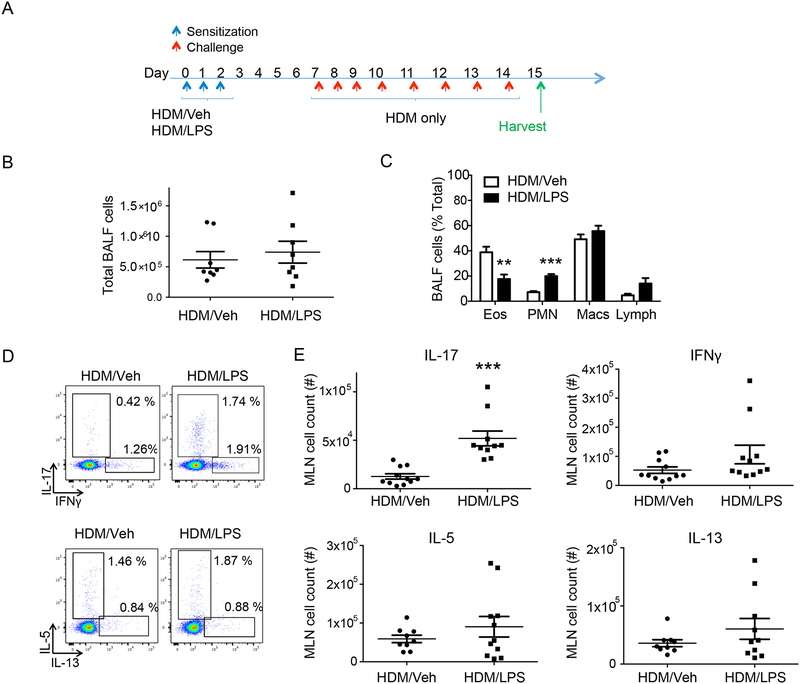
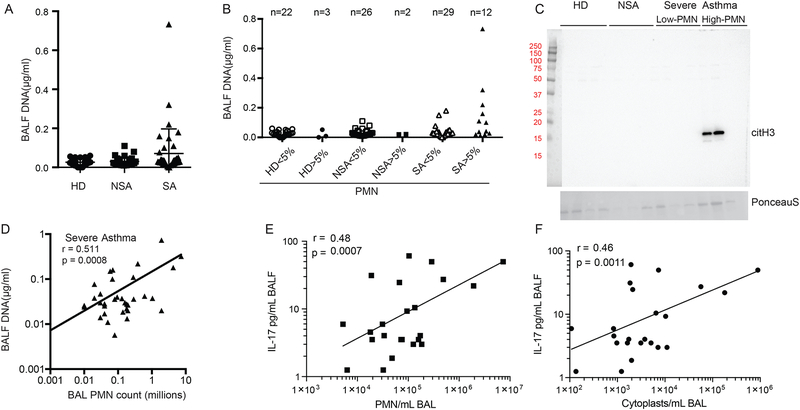
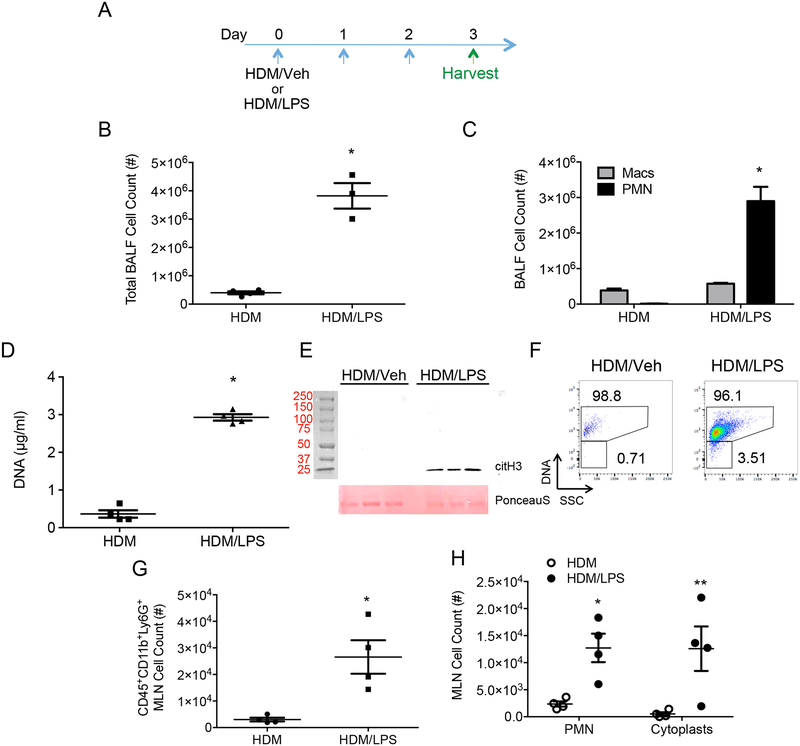
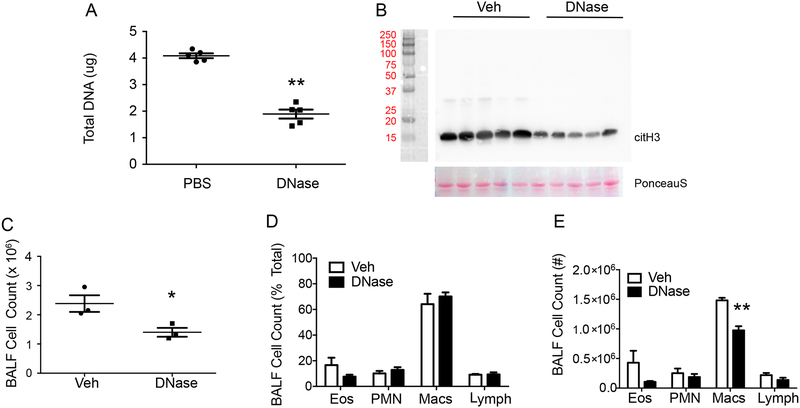
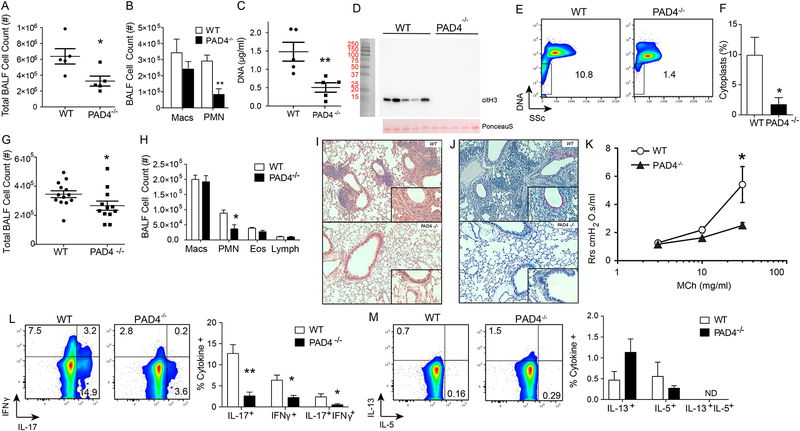
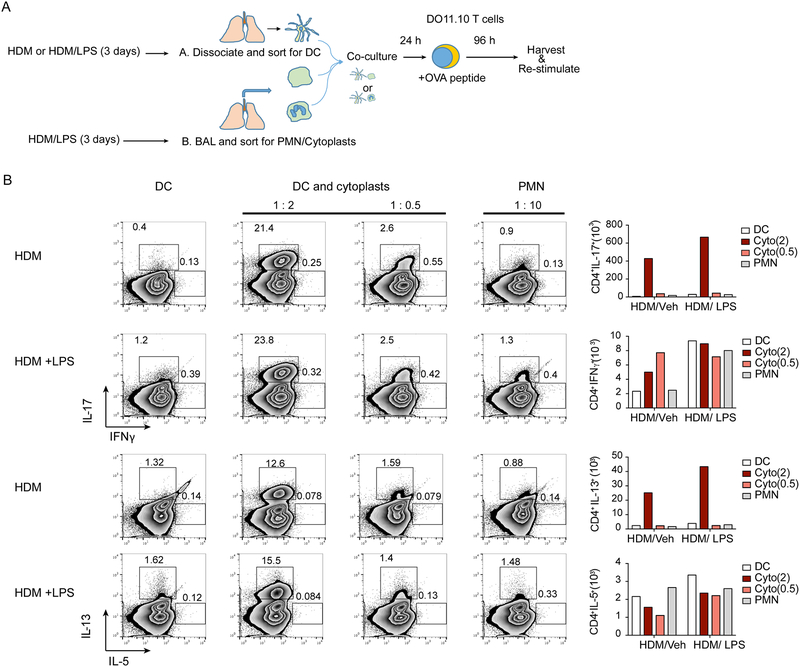
Severe asthma is a debilitating and treatment refractory disease. As many as half of these patients have complex neutrophil-predominant lung inflammation that is distinct from milder asthma with type 2 eosinophilic inflammation. New insights into severe asthma pathogenesis are needed. Concomitant exposure of mice to an aeroallergen and endotoxin during sensitization resulted in complex neutrophilic immune responses to allergen alone during later airway challenge. Unlike allergen alone, sensitization with allergen and endotoxin led to NETosis. In addition to neutrophil extracellular traps (NETs), enucleated neutrophil cytoplasts were evident in the lungs. Surprisingly, allergen-driven airway neutrophilia was decreased in peptidyl arginine deiminase 4-deficient mice with defective NETosis but not by deoxyribonuclease treatment, implicating the cytoplasts for the non-type 2 immune responses to allergen. Neutrophil cytoplasts were also present in mediastinal lymph nodes, and the cytoplasts activated lung dendritic cells in vitro to trigger antigen-specific interleukin-17 (IL-17) production from naïve CD4 T cells. Bronchoalveolar lavage fluid from patients with severe asthma and high neutrophil counts had detectable NETs and cytoplasts that were positively correlated with IL-17 levels. Together, these translational findings have identified neutrophil cytoplast formation in asthmatic lung inflammation and linked the cytoplasts to T helper 17-mediated neutrophilic inflammation in severe asthma.
严重哮喘是一种使人衰弱且难以治疗的疾病。这些患者中有多达一半的人存在复杂的中性粒细胞为主的肺部炎症,与以 2 型嗜酸性粒细胞炎症为主的轻度哮喘不同。需要深入了解严重哮喘的发病机制。在致敏期间,同时使小鼠暴露于变应原和内毒素中,会导致在随后的气道挑战中仅对变应原产生复杂的中性粒细胞免疫反应。与仅变应原不同,用变应原和内毒素致敏会导致 NETosis。除了中性粒细胞细胞外陷阱 (NETs) 外,在肺中还可以明显看到去核中性粒细胞胞质体。令人惊讶的是,在 NETosis 有缺陷的肽基精氨酸脱亚氨酶 4 缺陷型小鼠中,变应原驱动的气道中性粒细胞增多减少,但脱氧核糖核酸酶治疗没有减少,这表明胞质体是针对变应原的非 2 型免疫反应的原因。中性粒细胞胞质体也存在于纵隔淋巴结中,并且这些胞质体在体外激活肺树突状细胞,从幼稚 CD4 T 细胞触发抗原特异性白细胞介素-17 (IL-17) 产生。严重哮喘和高中性粒细胞计数患者的支气管肺泡灌洗液中可检测到 NETs 和胞质体,其与 IL-17 水平呈正相关。总之,这些转化研究结果在哮喘性肺炎症中发现了中性粒细胞胞质体的形成,并将胞质体与严重哮喘中 Th17 介导的中性粒细胞炎症联系起来。