Li Wenting, Wu Hao, Gao Chong, Yang Dan, Yang Depo, Shen Jiangang
LKS Faculty of Medicine, School of Chinese Medicine, The University of Hong Kong, Hong Kong, Hong Kong.
Department of Chemistry, The University of Hong Kong, Hong Kong, Hong Kong.
Front Physiol. 2018 Jul 20;9:864. doi: 10.3389/fphys.2018.00864. eCollection 2018.
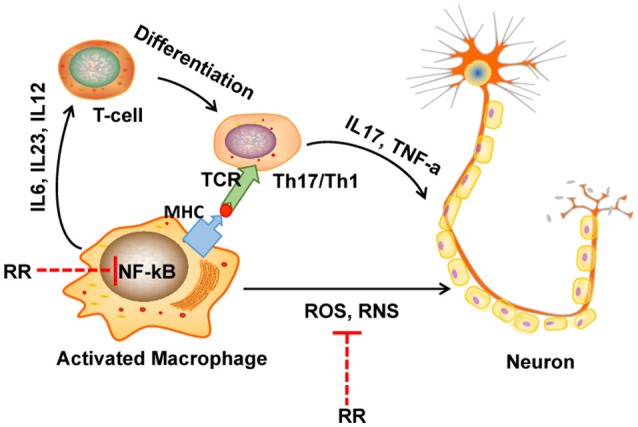
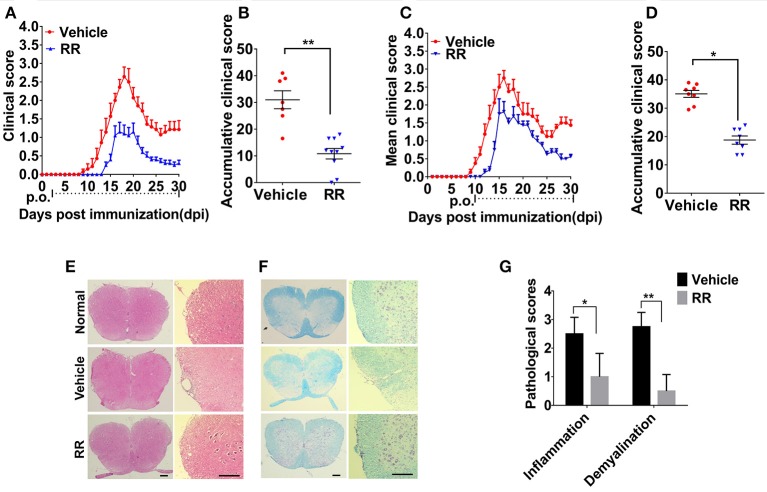
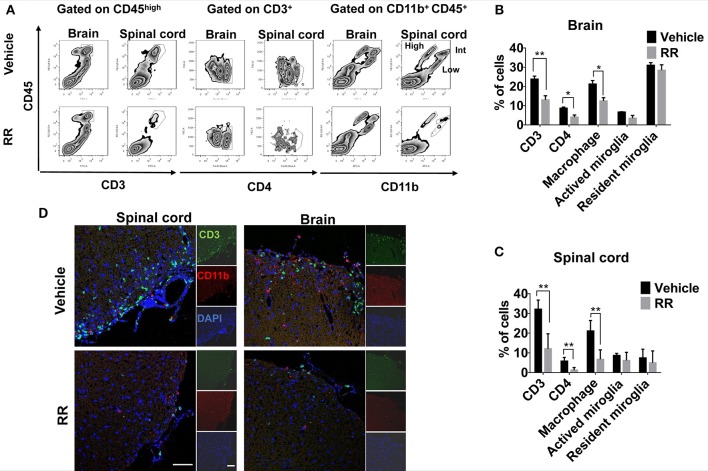
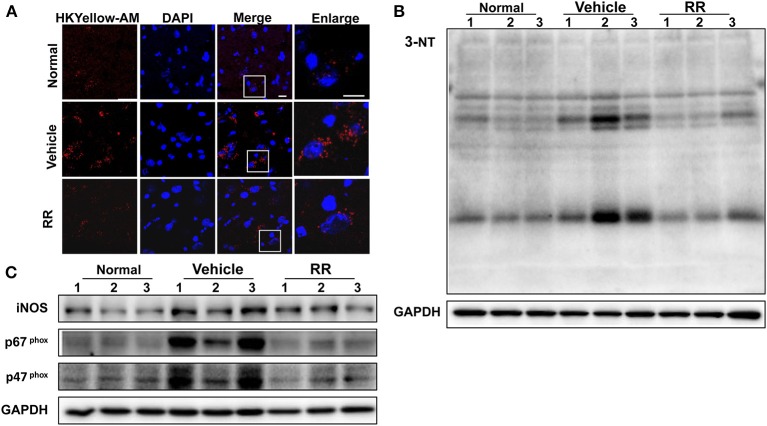
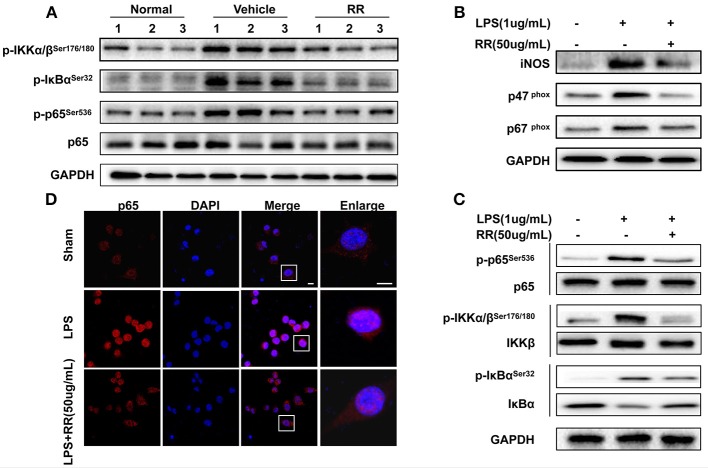
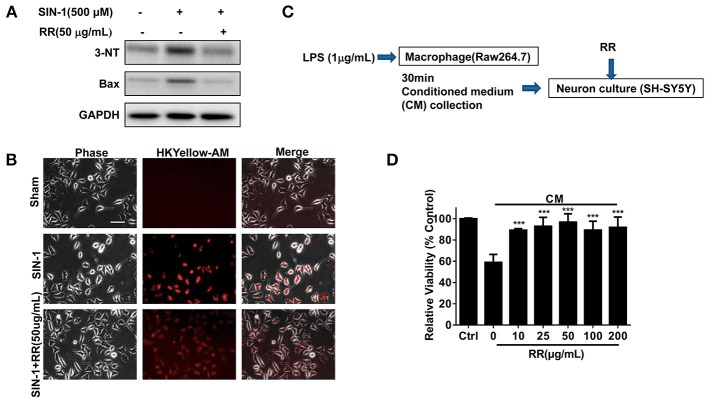
Multiple sclerosis (MS) is a neuroinflammatory disease in central nervous system (CNS) without effective treatment or medication yet. With high prevalence of MS patients worldwide and poor therapeutic outcome, seeking novel therapeutic strategy for MS is timely important. (RR), a typical Chinese Medicinal herb, has been used for neuroinflammatory diseases in Traditional Chinese Medicine for centuries. However, scientific evidence and underlying mechanisms of RR for MS are unclear. In this study, we tested the hypothesis that RR could attenuate the progress and severity of MS via suppressing macrophage-derived nitrative damage and inflammation by using experimental autoimmune encephalomyelitis (EAE) model for mimicking MS pathology. The results showed the RR treatment effectively ameliorated clinical disease severity, inhibited inflammation/demyelination in spinal cord, and alleviated CNS infiltration of encephalitogenic T cells and activated macrophages. Meanwhile, RR possessed bioactivities of scavenging ONOO and reducing the expression of iNOS and NADPH oxidases in the spinal cords of the EAE mice. Furthermore, RR treatment suppressed nuclear factor-κB (NF-κB) signaling pathway in the splenocytes of EAE mice. The experiments on macrophages and neuronal cells exerted consistent results with the animal experiments. Taken together, we conclude that extract has therapeutic values for ameliorating EAE/MS pathological process and disease severity and its underlying mechanisms are associated with anti-inflammation and inhibiting macrophage-derived nitrative damages. Further study could yield novel promising therapeutic agent for multiple sclerosis.
多发性硬化症(MS)是一种中枢神经系统(CNS)的神经炎症性疾病,目前尚无有效的治疗方法或药物。鉴于全球MS患者的高患病率和较差的治疗效果,寻求MS的新型治疗策略具有重要的现实意义。 (RR)是一种典型的中药材,在传统中医中用于治疗神经炎症性疾病已有数百年历史。然而,RR治疗MS的科学证据和潜在机制尚不清楚。在本研究中,我们通过使用实验性自身免疫性脑脊髓炎(EAE)模型模拟MS病理,验证了RR可以通过抑制巨噬细胞衍生的硝化损伤和炎症来减轻MS的进展和严重程度这一假设。结果表明,RR治疗有效改善了临床疾病严重程度,抑制了脊髓中的炎症/脱髓鞘,并减轻了致脑炎性T细胞和活化巨噬细胞对中枢神经系统的浸润。同时,RR具有清除过氧亚硝酸盐(ONOO)以及降低EAE小鼠脊髓中诱导型一氧化氮合酶(iNOS)和烟酰胺腺嘌呤二核苷酸磷酸(NADPH)氧化酶表达的生物活性。此外,RR治疗抑制了EAE小鼠脾细胞中的核因子κB(NF-κB)信号通路。在巨噬细胞和神经元细胞上进行的实验与动物实验结果一致。综上所述,我们得出结论,RR提取物对改善EAE/MS病理过程和疾病严重程度具有治疗价值,其潜在机制与抗炎和抑制巨噬细胞衍生的硝化损伤有关。进一步的研究可能会产生用于治疗多发性硬化症的新型有前景的治疗药物。