Department of Experimental, Diagnostic and Specialty Medicine, University of Bologna, Bologna, Italy.
Department of Veterinary Medical Sciences, University of Bologna, Bologna, Italy.
PLoS Pathog. 2018 Aug 6;14(8):e1007209. doi: 10.1371/journal.ppat.1007209. eCollection 2018 Aug.
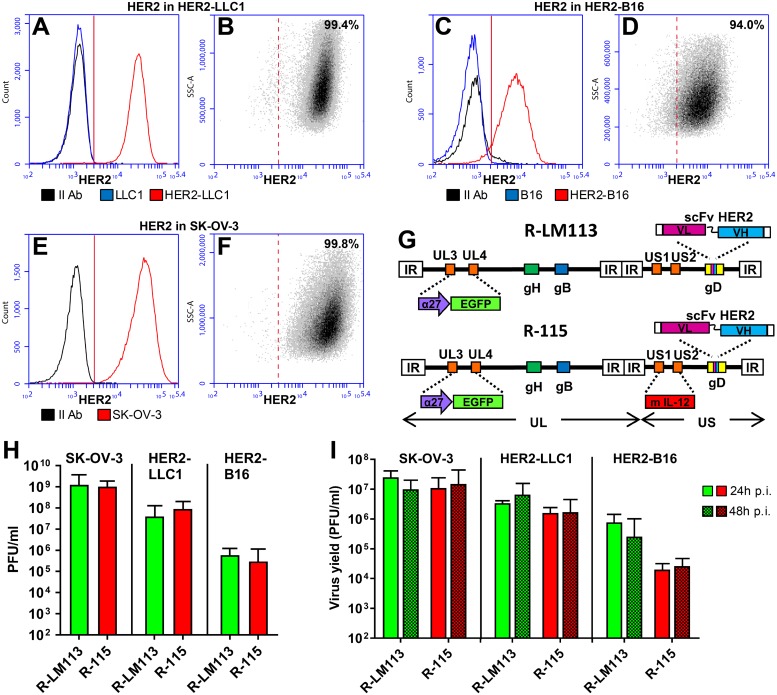
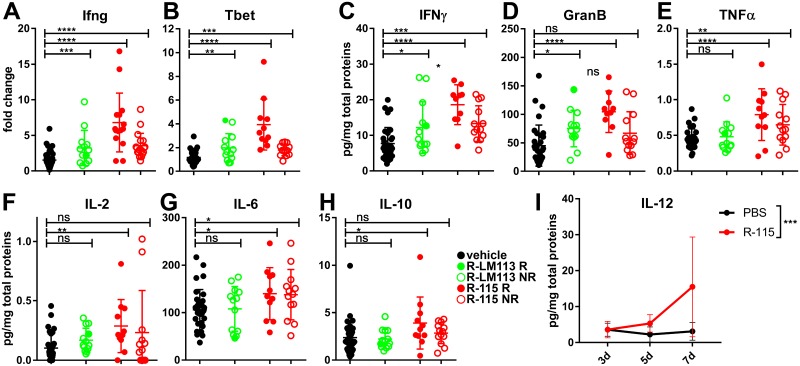
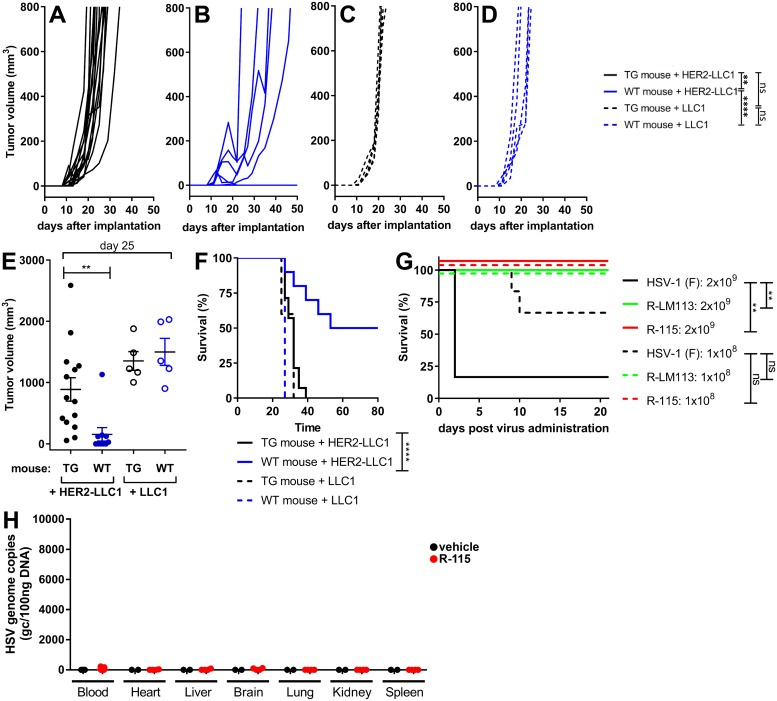
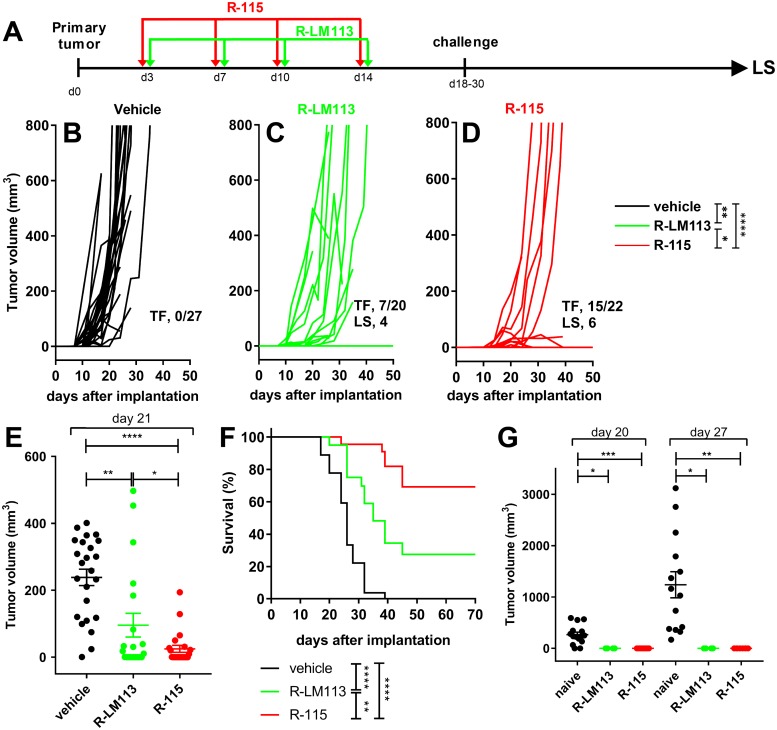
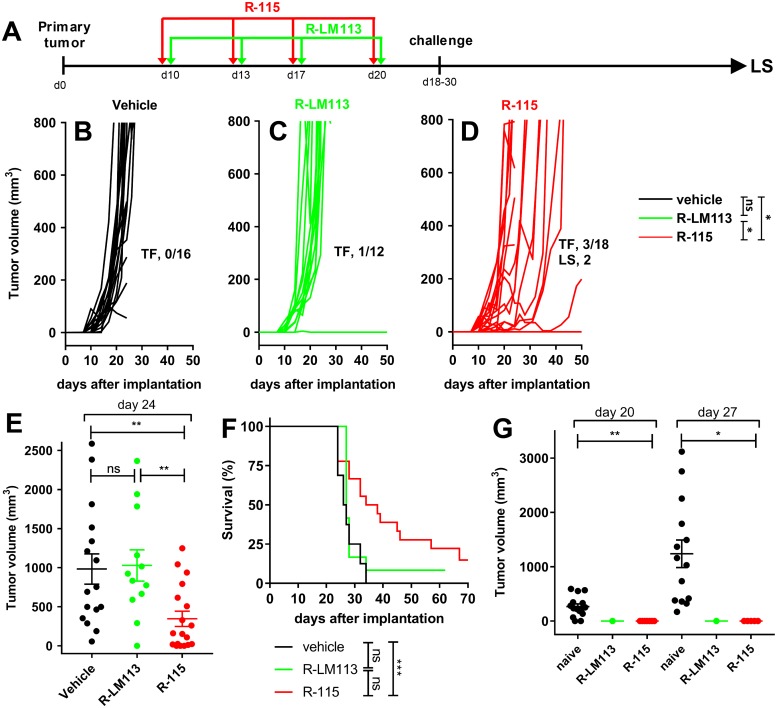
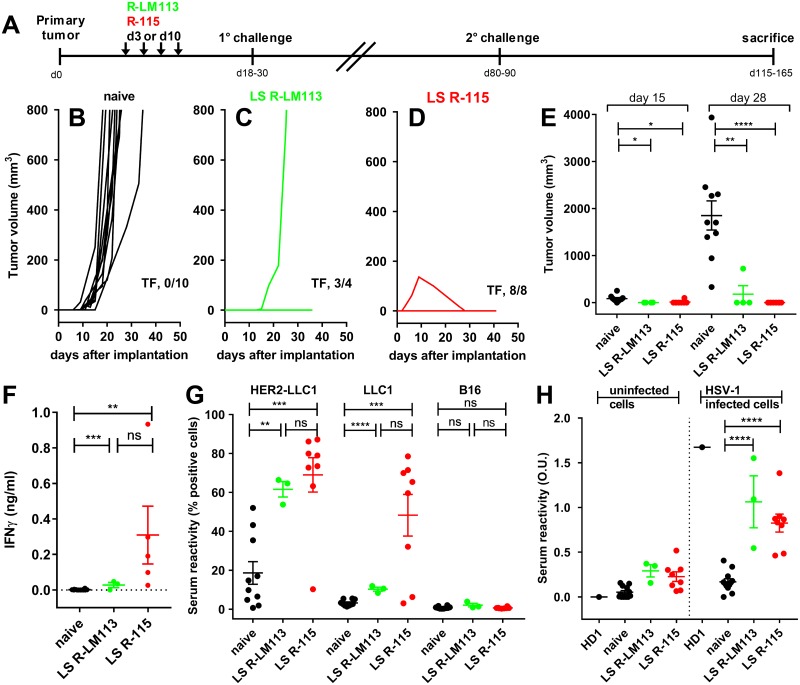
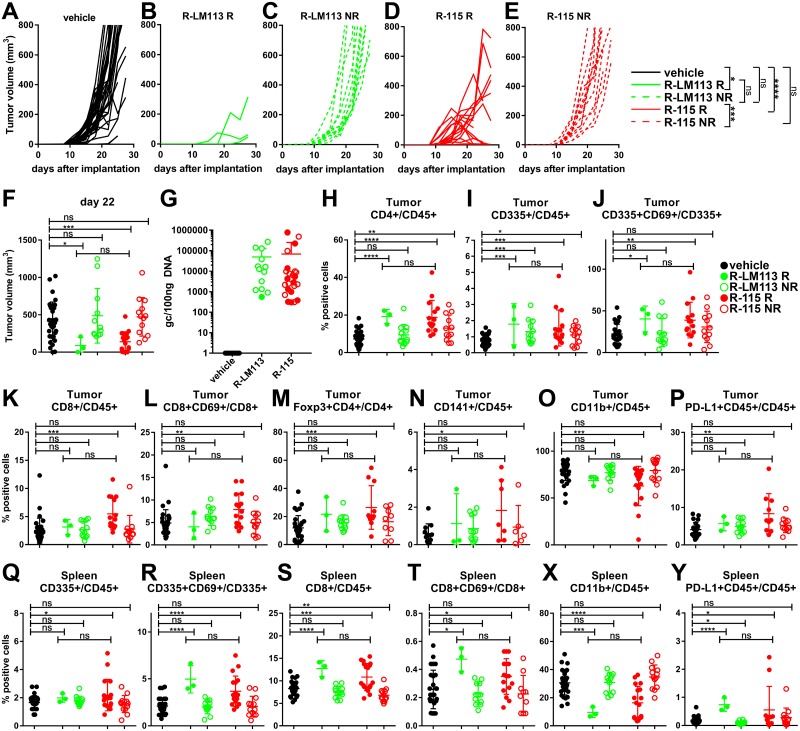
Oncolytic herpes simplex viruses (oHSVs) showed efficacy in clinical trials and practice. Most of them gain cancer-specificity from deletions/mutations in genes that counteract the host response, and grow selectively in cancer cells defective in anti-viral response. Because of the deletions/mutations, they are frequently attenuated or over-attenuated. We developed next-generation oHSVs, which carry no deletion/mutation, gain cancer-specificity from specific retargeting to tumor cell receptors-e.g. HER2 (human epidermal growth factor receptor 2)-hence are fully-virulent in the targeted cancer cells. The type of immunotherapy they elicit was not predictable, since non-attenuated HSVs induce and then dampen the innate response, whereas deleted/attenuated viruses fail to contrast it, and since the retargeted oHSVs replicate efficiently in tumor cells, but spare other cells in the tumor. We report on the first efficacy study of HER2-retargeted, fully-virulent oHSVs in immunocompetent mice. Their safety profile was very high. Both the unarmed R-LM113 and the IL-12-armed R-115 inhibited the growth of the primary HER2-Lewis lung carcinoma-1 (HER2-LLC1) tumor, R-115 being constantly more efficacious. All the mice that did not die because of the primary treated tumors, were protected from the growth of contralateral untreated tumors. The long-term survivors were protected from a second contralateral tumor, providing additional evidence for an abscopal immunotherapeutic effect. Analysis of the local response highlighted that particularly R-115 unleashed the immunosuppressive tumor microenvironment, i.e. induced immunomodulatory cytokines, including IFNγ, T-bet which promoted Th1 polarization. Some of the tumor infiltrating cells, e.g. CD4+, CD335+ cells were increased in the tumors of all responders mice, irrespective of which virus was employed, whereas CD8+, Foxp3+, CD141+ were increased and CD11b+ cells were decreased preferentially in R-115-treated mice. The durable response included a breakage of tolerance towards both HER2 and the wt tumor cells, and underscored a systemic immunotherapeutic vaccine response.
溶瘤单纯疱疹病毒(oHSV)在临床试验和实践中显示出疗效。它们中的大多数通过基因缺失/突变获得对宿主反应的抗癌特异性,并且在抗病毒反应有缺陷的癌细胞中选择性生长。由于缺失/突变,它们经常被减弱或过度减弱。我们开发了下一代 oHSV,它们没有缺失/突变,通过特异性重定向到肿瘤细胞受体(例如人表皮生长因子受体 2 [HER2])获得癌症特异性,因此在靶向癌细胞中具有完全毒力。它们引发的免疫疗法类型是不可预测的,因为非减弱的单纯疱疹病毒会引发并随后抑制先天反应,而缺失/减弱的病毒则无法抑制它,并且由于靶向 oHSV 在肿瘤细胞中高效复制,但在肿瘤中的其他细胞中则不会。我们报告了在免疫功能正常的小鼠中进行的首例 HER2 靶向、完全毒力的 oHSV 疗效研究。它们的安全性非常高。未武装的 R-LM113 和 IL-12 武装的 R-115 均抑制了原发性 HER2-刘易斯肺癌-1(HER2-LLC1)肿瘤的生长,R-115 始终更有效。所有未因原发治疗肿瘤而死亡的小鼠均受到未治疗对侧肿瘤生长的保护。长期存活者受到第二对侧肿瘤的保护,为远处免疫治疗效应提供了额外证据。局部反应分析强调,特别是 R-115 释放了免疫抑制性肿瘤微环境,即诱导免疫调节细胞因子,包括 IFNγ、T-bet,促进 Th1 极化。一些肿瘤浸润细胞,例如所有应答者小鼠肿瘤中的 CD4+、CD335+细胞增加,而不管使用哪种病毒,CD8+、Foxp3+、CD141+细胞增加,CD11b+细胞减少,在 R-115 治疗的小鼠中更明显。持久的反应包括对 HER2 和 wt 肿瘤细胞的耐受性的破坏,并强调了系统性免疫治疗疫苗反应。