Villegas José A, Gradolatto Angeline, Truffault Frédérique, Roussin Régine, Berrih-Aknin Sonia, Le Panse Rozen, Dragin Nadine
INSERM, AIM, Center of Research in Myology, UMRS974, Sorbonne University, Paris, France.
Hospital Marie Lannelongue, Le Plessis-Robinson, France.
Front Immunol. 2018 Jul 23;9:1663. doi: 10.3389/fimmu.2018.01663. eCollection 2018.
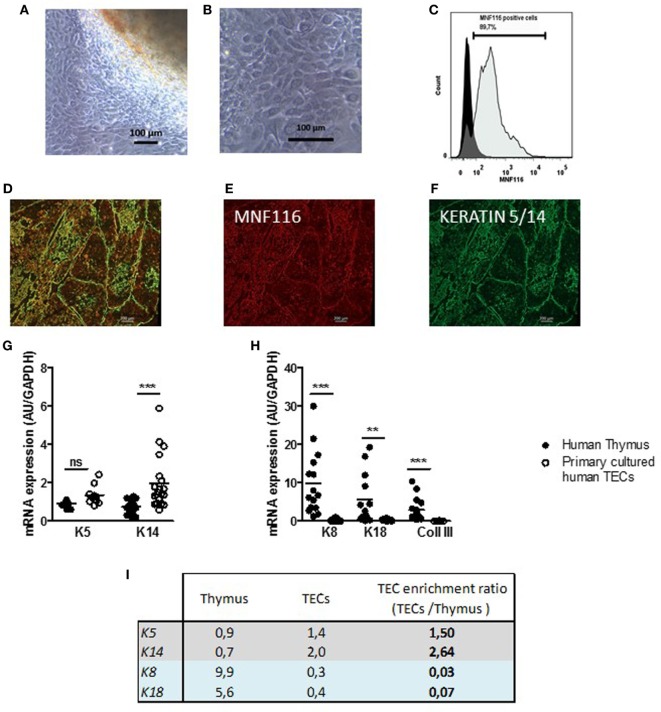
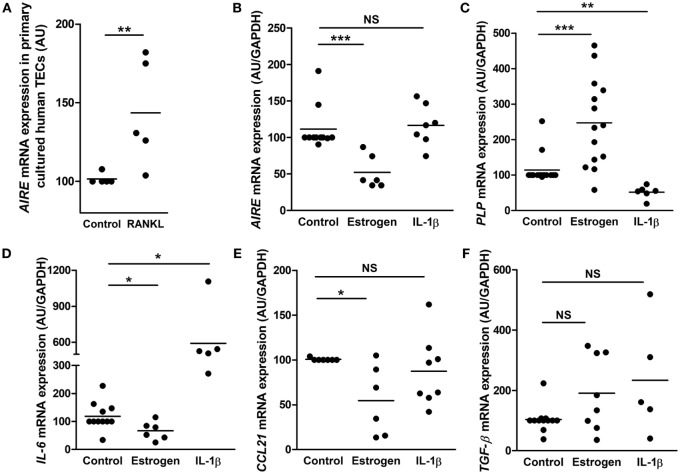
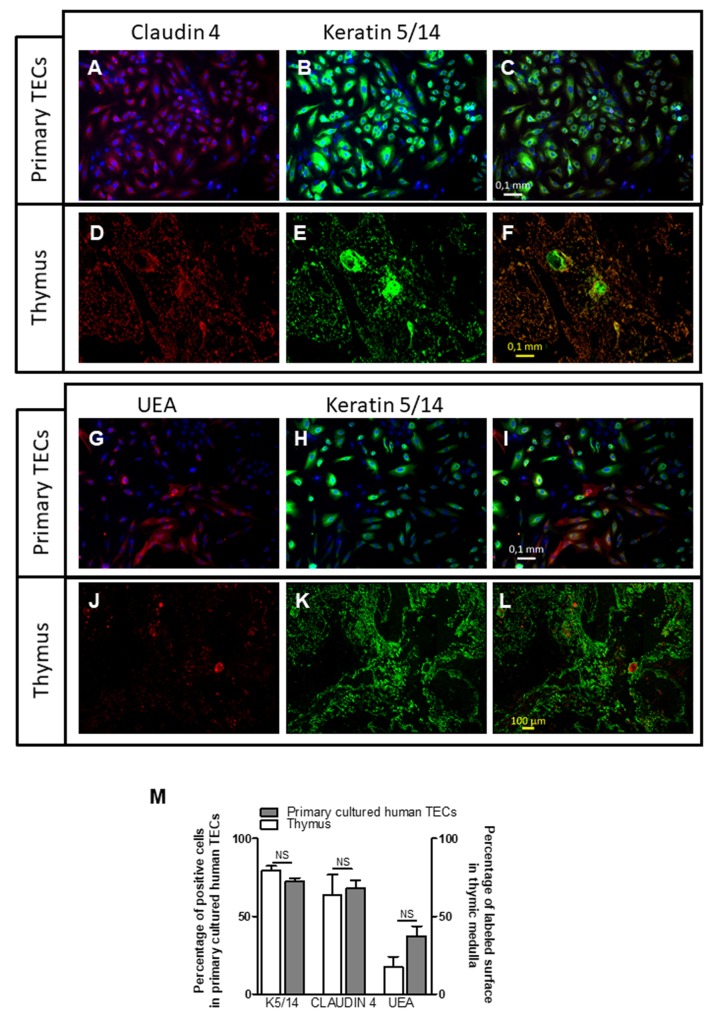
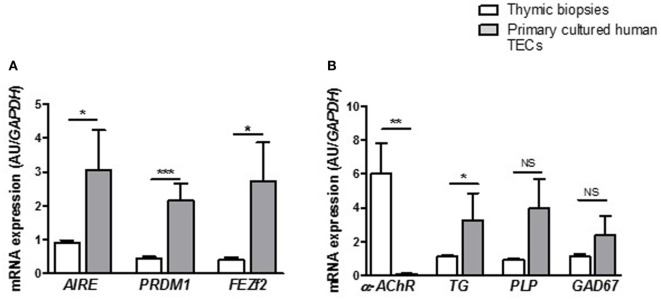
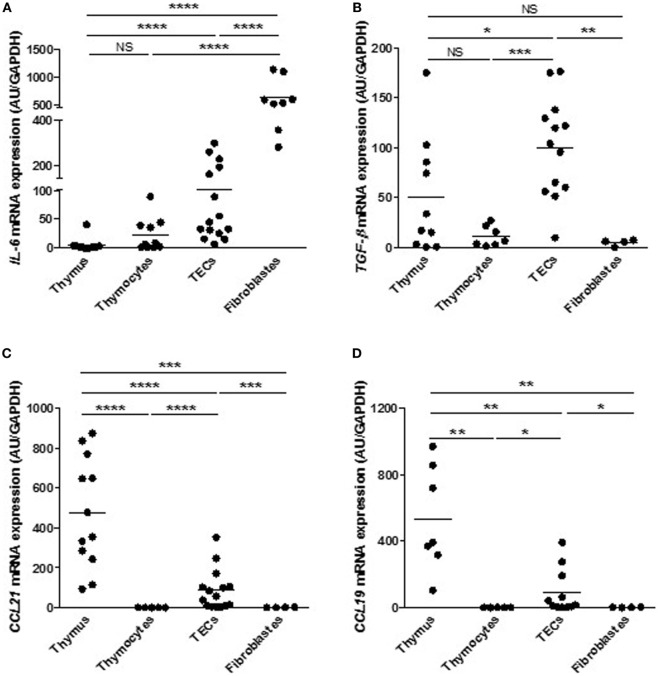
Thymic epithelial cells are one of the main components of the thymic microenvironment required for T-cell development. In this work, we describe an efficient method free of enzymatic and Facs-sorted methods to culture human medullary thymic epithelial cells without affecting the cell phenotypic, physiologic and functional features. Human medulla thymic epithelial cells (mTECs) are obtained by culturing thymic biopsies explants. After 7 days of primo-culture, mTECs keep their ability to express key molecules involved in immune tolerance processes such as autoimmune regulator, tissue-specific antigens, chemokines, and cytokines. In addition, the cells sensor their cultured environment and consequently adjust their gene expression network. Therefore, we describe and provide a human mTEC model that may be used to test the effect of various molecules on thymic epithelial cell homeostasis and physiology. This method should allow the investigations of the specificities and the knowledge of human mTECs in normal or pathological conditions and therefore discontinue the extrapolations done on the murine models.
胸腺上皮细胞是T细胞发育所需胸腺微环境的主要组成部分之一。在这项工作中,我们描述了一种无需酶法和流式细胞分选法的高效方法,用于培养人髓质胸腺上皮细胞,且不影响细胞的表型、生理和功能特性。人髓质胸腺上皮细胞(mTECs)通过培养胸腺活检组织外植体获得。原代培养7天后,mTECs保持表达参与免疫耐受过程的关键分子的能力,如自身免疫调节因子、组织特异性抗原、趋化因子和细胞因子。此外,细胞感知其培养环境并相应地调整其基因表达网络。因此,我们描述并提供了一种人mTEC模型,可用于测试各种分子对胸腺上皮细胞稳态和生理的影响。该方法应有助于研究正常或病理条件下人mTECs的特异性和知识,从而停止对小鼠模型的推断。