Key Laboratory of Biorheological Science and Technology of Ministry of Education, Bioengineering College of Chongqing University, Chongqing, China.
Collaborative Innovation Center for Brain Science, Chongqing University, Chongqing, China.
Front Neural Circuits. 2018 Jul 24;12:55. doi: 10.3389/fncir.2018.00055. eCollection 2018.
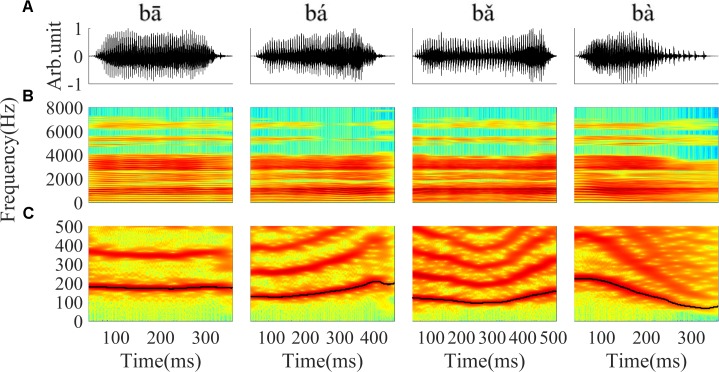
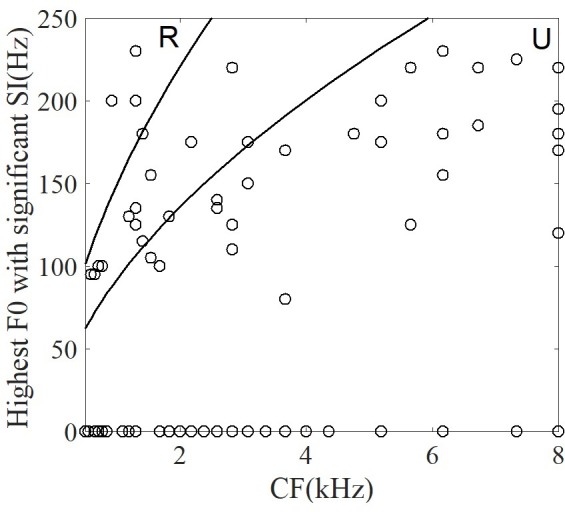
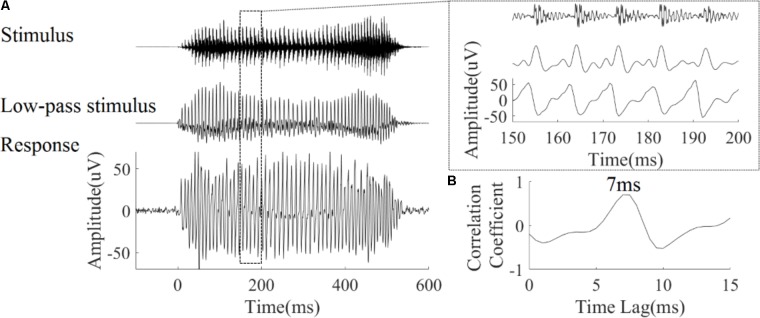
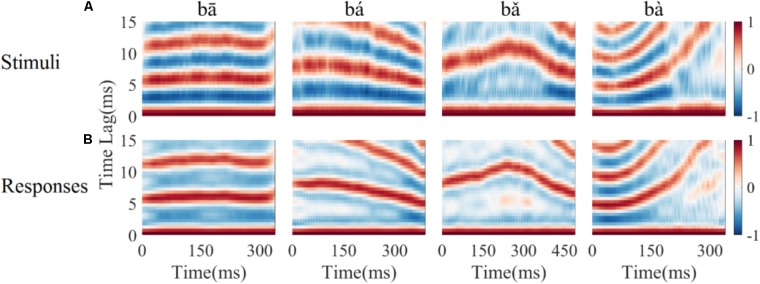
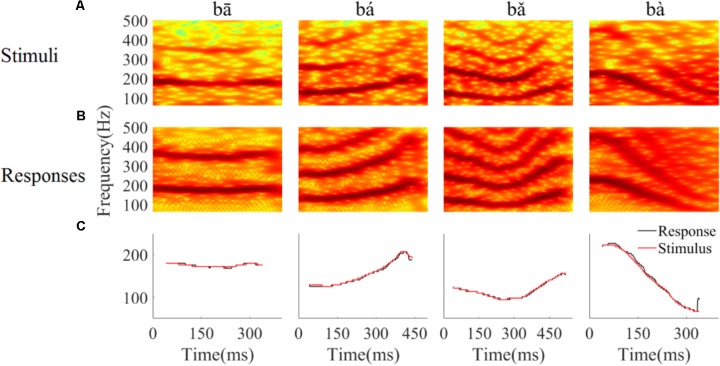
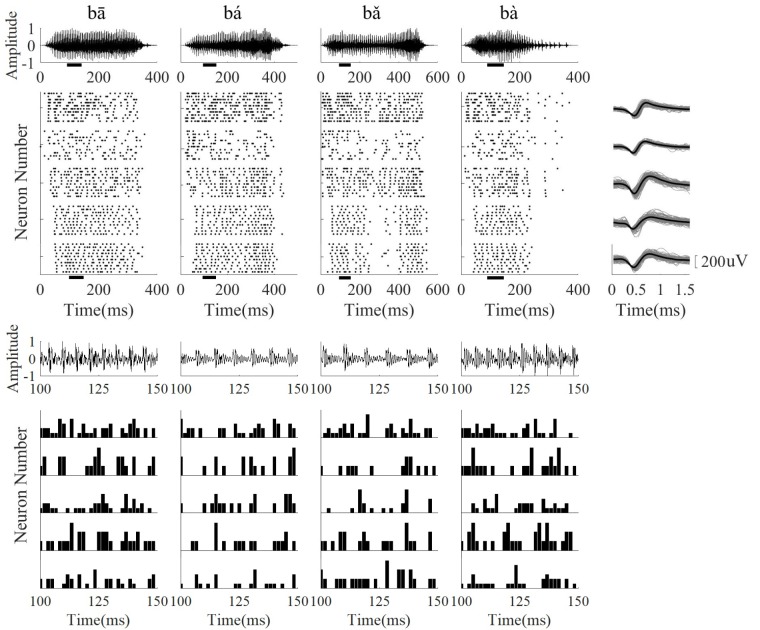
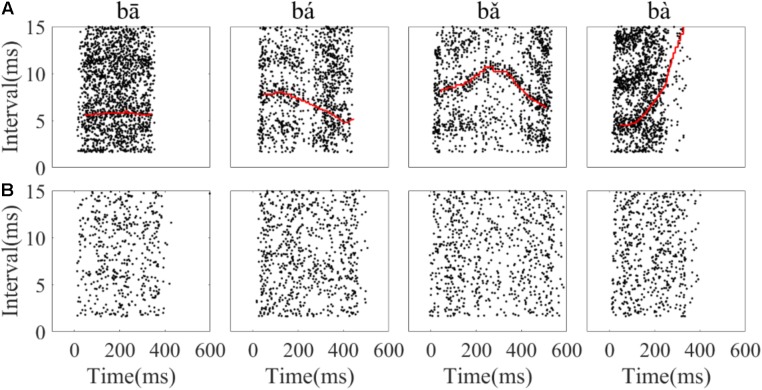
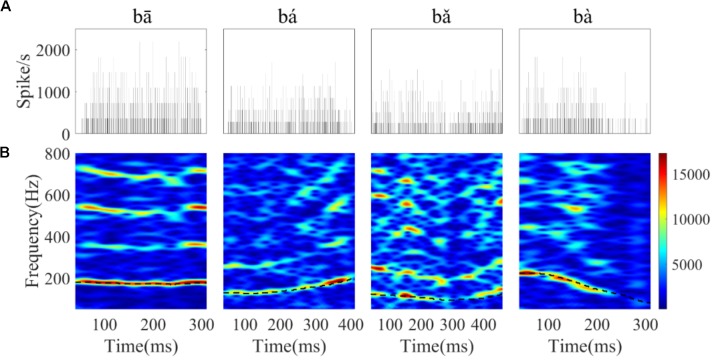
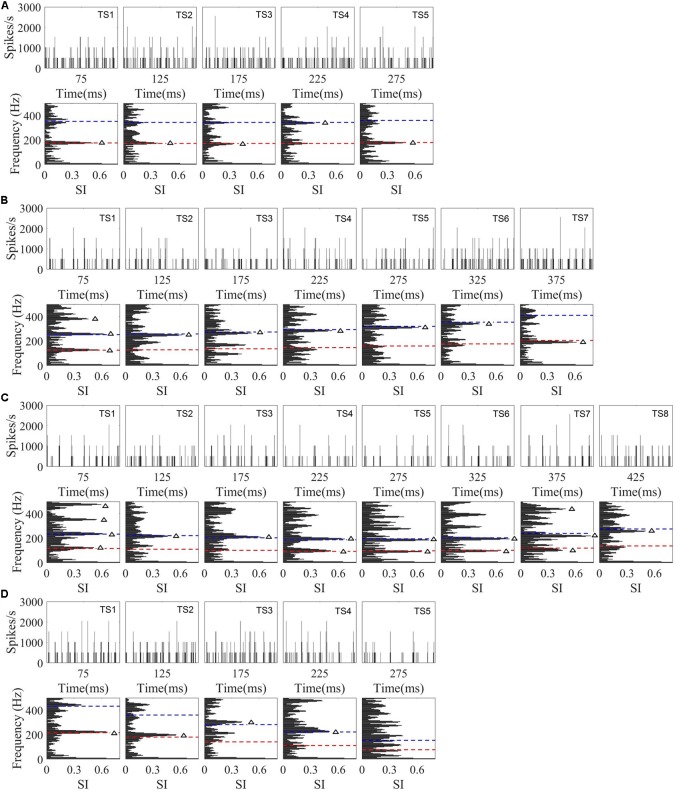
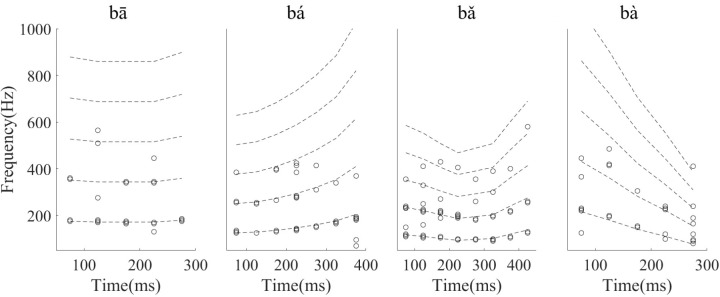
Accurate perception of time-variant pitch is important for speech recognition, particularly for tonal languages with different lexical tones such as Mandarin, in which different tones convey different semantic information. Previous studies reported that the auditory nerve and cochlear nucleus can encode different pitches through phase-locked neural activities. However, little is known about how the inferior colliculus (IC) encodes the time-variant periodicity pitch of natural speech. In this study, the Mandarin syllable /ba/ pronounced with four lexical tones (flat, rising, falling then rising and falling) were used as stimuli. Local field potentials (LFPs) and single neuron activity were simultaneously recorded from 90 sites within contralateral IC of six urethane-anesthetized and decerebrate guinea pigs in response to the four stimuli. Analysis of the temporal information of LFPs showed that 93% of the LFPs exhibited robust encoding of periodicity pitch. Pitch strength of LFPs derived from the autocorrelogram was significantly ( < 0.001) stronger for rising tones than flat and falling tones. Pitch strength are also significantly increased ( < 0.05) with the characteristic frequency (CF). On the other hand, only 47% (42 or 90) of single neuron activities were significantly synchronized to the fundamental frequency of the stimulus suggesting that the temporal spiking pattern of single IC neuron could encode the time variant periodicity pitch of speech robustly. The difference between the number of LFPs and single neurons that encode the time-variant F0 voice pitch supports the notion of a transition at the level of IC from direct temporal coding in the spike trains of individual neurons to other form of neural representation.
准确感知时变音高对于语音识别很重要,特别是对于具有不同声调的语言,如普通话,其中不同的声调传达不同的语义信息。先前的研究报告称,听觉神经和耳蜗核可以通过锁相神经活动来编码不同的音高。然而,对于下丘(IC)如何编码自然语音的时变周期性音高知之甚少。在这项研究中,使用了四个声调(平调、升调、降调然后升调和降调)发音的普通话音节 /ba/ 作为刺激。在 6 只乌拉坦麻醉和去大脑的豚鼠对四个刺激的反应中,从对侧 IC 的 90 个部位同时记录局部场电位(LFPs)和单个神经元活动。LFPs 时间信息的分析表明,93%的 LFPs 对周期性音高进行了强有力的编码。自相关图得出的 LFPs 音强对于升调和降调的音高比平调要强(<0.001)。音强也随着特征频率(CF)显著增加(<0.05)。另一方面,只有 47%(42 个或 90 个)的单个神经元活动与刺激的基频显著同步,这表明单个 IC 神经元的时间尖峰模式可以稳健地编码语音的时变周期性音高。编码时变 F0 语音音高的 LFPs 和单个神经元的数量之间的差异支持了这样一种观点,即在 IC 水平上,从单个神经元的尖峰序列的直接时间编码到其他形式的神经表示存在一种转变。