• 文献检索
  • 文档翻译
  • 深度研究
  • 学术资讯
  • Suppr Zotero 插件Zotero 插件
  • 邀请有礼
  • 套餐&价格
  • 历史记录
应用&插件
Suppr Zotero 插件Zotero 插件浏览器插件Mac 客户端Windows 客户端微信小程序
定价
高级版会员购买积分包购买API积分包
服务
文献检索文档翻译深度研究API 文档MCP 服务
关于我们
关于 Suppr公司介绍联系我们用户协议隐私条款
关注我们

Suppr 超能文献

核心技术专利:CN118964589B侵权必究
粤ICP备2023148730 号-1Suppr @ 2026

文献检索

告别复杂PubMed语法,用中文像聊天一样搜索,搜遍4000万医学文献。AI智能推荐,让科研检索更轻松。

立即免费搜索

文件翻译

保留排版,准确专业,支持PDF/Word/PPT等文件格式,支持 12+语言互译。

免费翻译文档

深度研究

AI帮你快速写综述,25分钟生成高质量综述,智能提取关键信息,辅助科研写作。

立即免费体验

对挥发性信号反应性降低在一种专性的食物换保护互利共生关系中形成模块化的奖励供应。

Reduced Responsiveness to Volatile Signals Creates a Modular Reward Provisioning in an Obligate Food-for-Protection Mutualism.

作者信息

Hernández-Zepeda Omar F, Razo-Belman Rosario, Heil Martin

机构信息

Departamento de Ingeniería Genética, Centro de Investigación y de Estudios Avanzados del Instituto Politécnico Nacional-Irapuato, Guanajuato, Mexico.

出版信息

Front Plant Sci. 2018 Jul 24;9:1076. doi: 10.3389/fpls.2018.01076. eCollection 2018.

DOI:10.3389/fpls.2018.01076
PMID:30087690
原文链接:https://pmc.ncbi.nlm.nih.gov/articles/PMC6066664/
Abstract

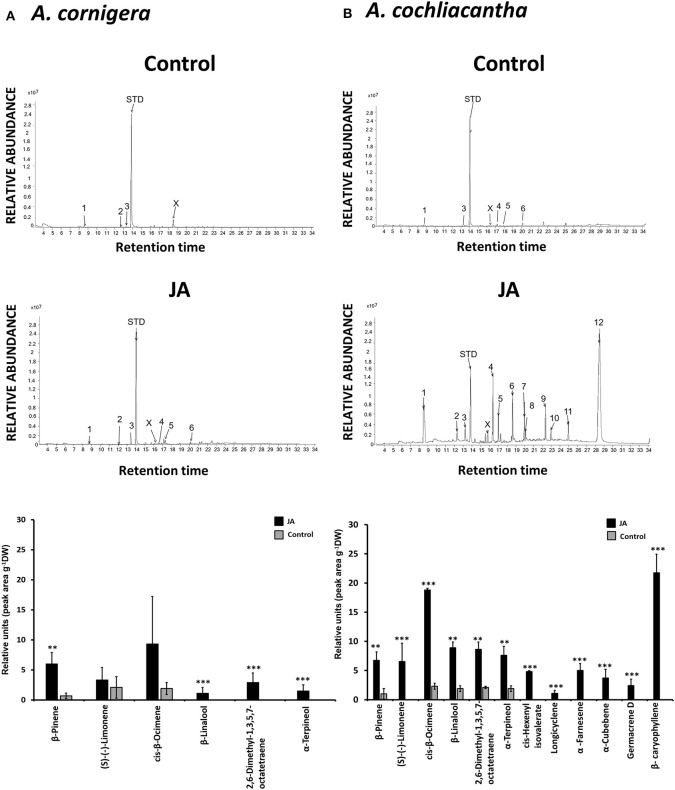
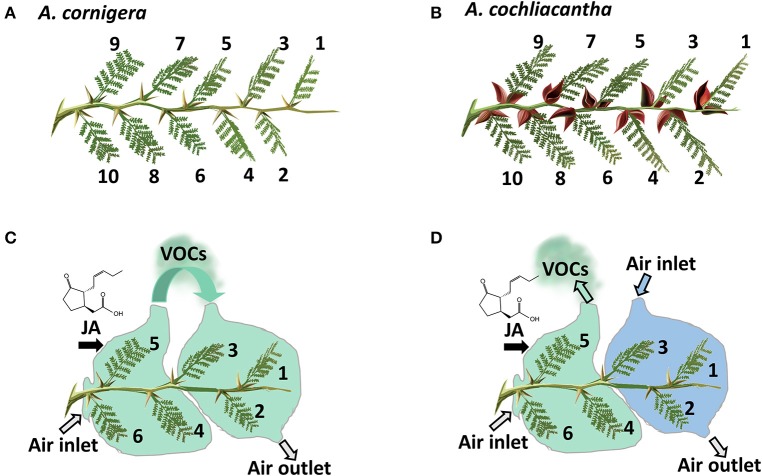
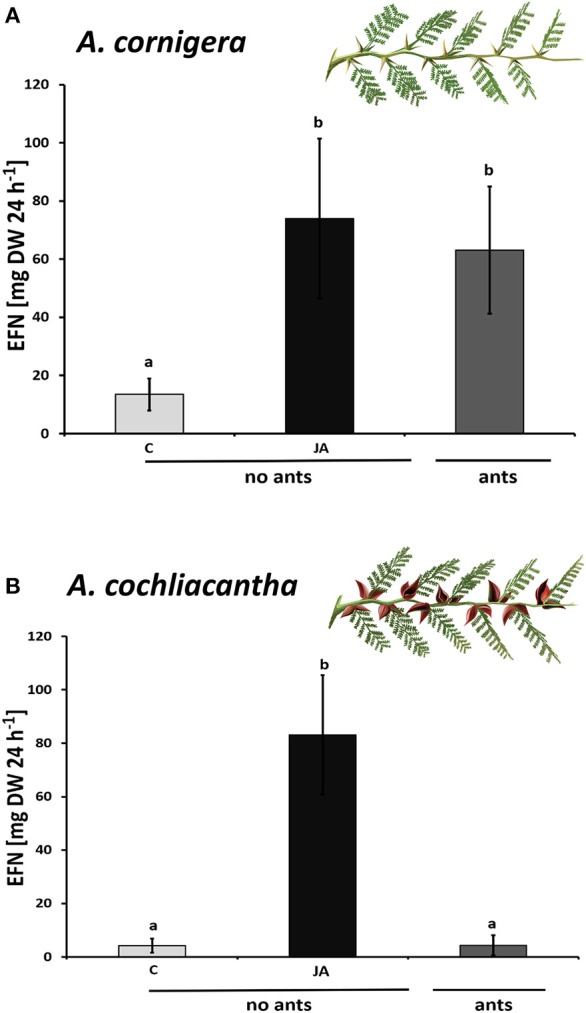
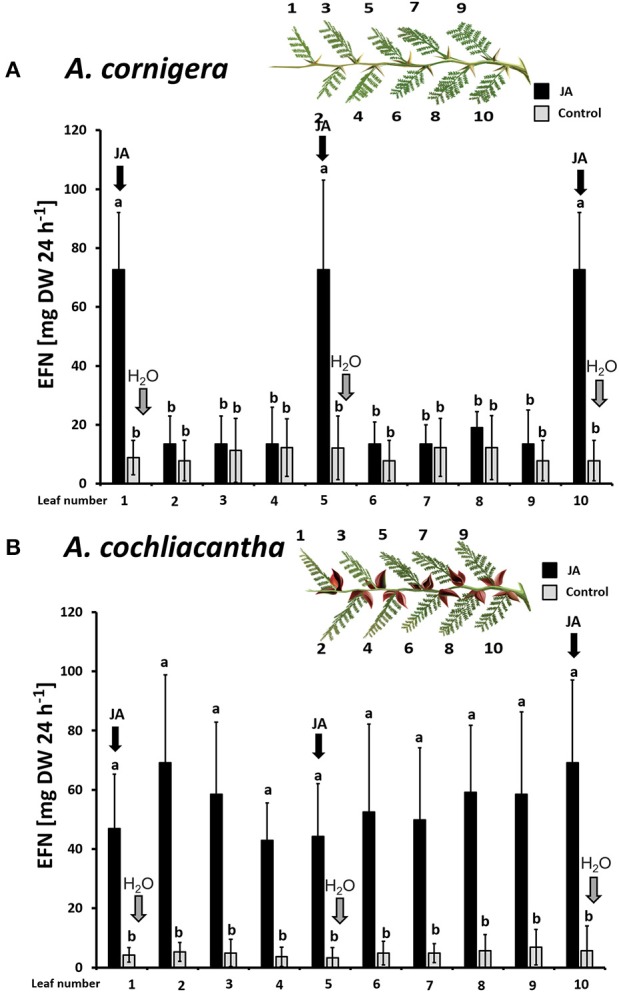
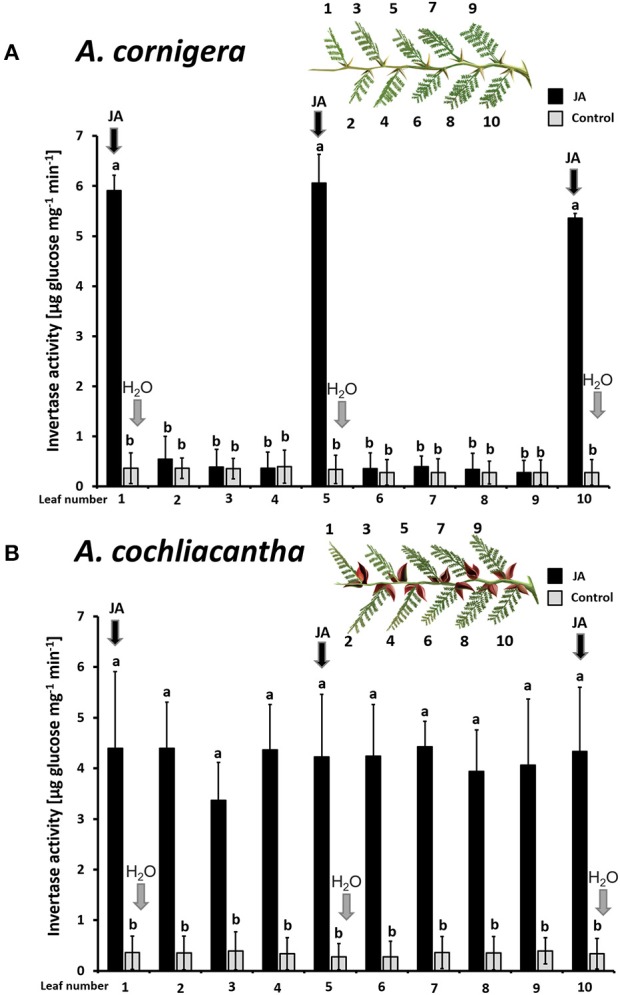
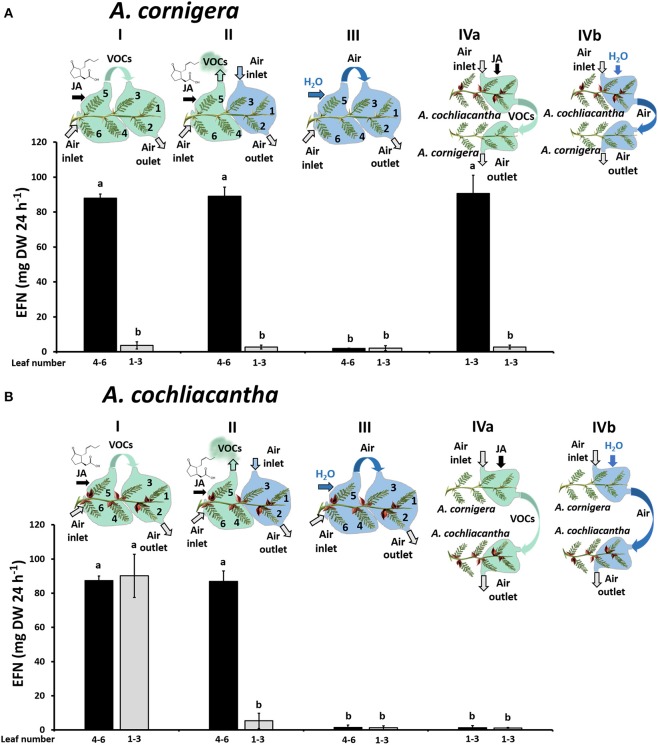
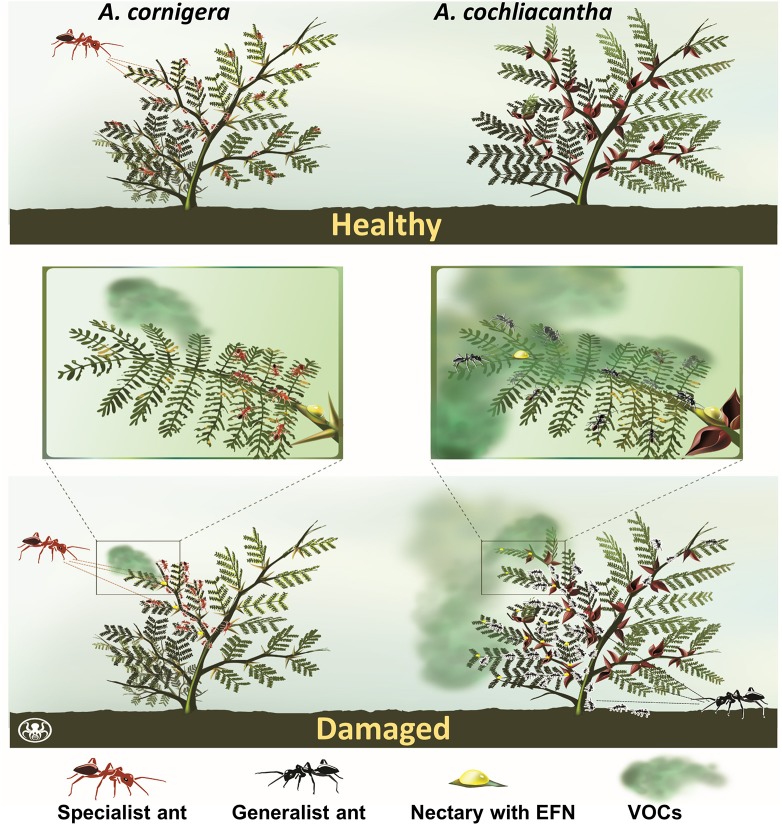
Plants in more than 100 families secrete extrafloral nectar (EFN) to establish food-for-protection mutualisms with ants. Facultative ant-plants secrete EFN as a jasmonic acid (JA)-dependent response to attract generalist ants. In contrast, obligate ant-plants like the Central American "Swollen-Thorn Acacias" are colonized by specialized ants, although an individual host can carry ant colonies from different species that differ in the degree of protection they provide. We hypothesized that hosts that associate simultaneously with various partners should produce rewards in a modular manner to preferentially reward high quality partners. To test this hypothesis, we applied JA to distinct leaves and quantified cell wall invertase activity (CWIN; a regulator of nectar secretion) and EFN secretion by these "local" (i.e., treated) and the "systemic" (i.e., non-treated) leaves of the same branch. Both CWIN activity and EFN secretion increased in local and systemic leaves of the facultative ant-plant , but only in the local leaves of the obligate ant-plant, . The systemic EFN secretion in was associated with an enhanced emission of volatile organic compounds (VOCs). Such VOCs function as "external signals" that control systemic defense responses in diverse plant species. Indeed, the headspace of JA-treated branches of induced EFN secretion in both plant species, whereas the headspace of caused no detectable induction effect. Analyses of the headspace using GC-MS identified six VOCs in the headspace of that were not emitted by . Among these VOCs, β-caryophyllene and ()-hexenyl isovalerate have already been reported in other plant species to induce defense traits, including EFN secretion. Our observations underline the importance of VOCs as systemic within-plant signals and show that the modular rewarding in is likely to result from a reduced emission of the systemic signal, rather than from a reduced responsiveness to the signal. We suggest that modular rewarding allows hosts to restrict the metabolic investment to specific partners and to efficiently sanction potential exploiters.

摘要

100多个科的植物会分泌花外蜜(EFN),以与蚂蚁建立“以食物换保护”的互利共生关系。兼性蚁栖植物分泌花外蜜是一种依赖茉莉酸(JA)的反应,用于吸引广食性蚂蚁。相比之下,中美洲的“多刺合欢树”等专性蚁栖植物会被特定的蚂蚁定植,尽管单个宿主可能会携带不同物种的蚁群,而这些蚁群提供的保护程度有所不同。我们推测,同时与不同伙伴建立联系的宿主应该以模块化的方式产生回报,以便优先奖励高质量的伙伴。为了验证这一假设,我们将JA施用于不同的叶片,并对同一枝条上这些“局部”(即处理过的)和“系统”(即未处理的)叶片的细胞壁转化酶活性(CWIN;花蜜分泌的调节因子)和花外蜜分泌进行了量化。在兼性蚁栖植物的局部和系统叶片中,CWIN活性和花外蜜分泌均增加,但仅在专性蚁栖植物的局部叶片中增加。专性蚁栖植物的系统花外蜜分泌与挥发性有机化合物(VOCs)排放增加有关。这些VOCs作为“外部信号”,控制着多种植物物种的系统防御反应。事实上,用JA处理过的专性蚁栖植物枝条的顶空诱导了两种植物的花外蜜分泌,而兼性蚁栖植物的顶空则没有可检测到的诱导作用。使用气相色谱 - 质谱联用仪(GC - MS)对顶空进行分析,在专性蚁栖植物的顶空中鉴定出六种兼性蚁栖植物未释放的VOCs。在这些VOCs中,β-石竹烯和()-己烯基异戊酸酯在其他植物物种中已被报道可诱导包括花外蜜分泌在内的防御性状。我们的观察结果强调了VOCs作为植物体内系统信号的重要性,并表明专性蚁栖植物的模块化回报可能是由于系统信号排放减少,而不是对信号的反应性降低。我们认为,模块化回报使宿主能够将代谢投入限制在特定伙伴身上,并有效地制裁潜在的剥削者。
https://cdn.ncbi.nlm.nih.gov/pmc/blobs/1d1a/6066664/8c69676cc5f1/fpls-09-01076-g0008.jpg
https://cdn.ncbi.nlm.nih.gov/pmc/blobs/1d1a/6066664/8531d3520f5d/fpls-09-01076-g0001.jpg
https://cdn.ncbi.nlm.nih.gov/pmc/blobs/1d1a/6066664/f095b36bc848/fpls-09-01076-g0002.jpg
https://cdn.ncbi.nlm.nih.gov/pmc/blobs/1d1a/6066664/62d01abf5938/fpls-09-01076-g0003.jpg
https://cdn.ncbi.nlm.nih.gov/pmc/blobs/1d1a/6066664/6c22c7f2fced/fpls-09-01076-g0004.jpg
https://cdn.ncbi.nlm.nih.gov/pmc/blobs/1d1a/6066664/8ef2774f1f1a/fpls-09-01076-g0005.jpg
https://cdn.ncbi.nlm.nih.gov/pmc/blobs/1d1a/6066664/e27d9e02eb8b/fpls-09-01076-g0006.jpg
https://cdn.ncbi.nlm.nih.gov/pmc/blobs/1d1a/6066664/607d14baa807/fpls-09-01076-g0007.jpg
https://cdn.ncbi.nlm.nih.gov/pmc/blobs/1d1a/6066664/8c69676cc5f1/fpls-09-01076-g0008.jpg
https://cdn.ncbi.nlm.nih.gov/pmc/blobs/1d1a/6066664/8531d3520f5d/fpls-09-01076-g0001.jpg
https://cdn.ncbi.nlm.nih.gov/pmc/blobs/1d1a/6066664/f095b36bc848/fpls-09-01076-g0002.jpg
https://cdn.ncbi.nlm.nih.gov/pmc/blobs/1d1a/6066664/62d01abf5938/fpls-09-01076-g0003.jpg
https://cdn.ncbi.nlm.nih.gov/pmc/blobs/1d1a/6066664/6c22c7f2fced/fpls-09-01076-g0004.jpg
https://cdn.ncbi.nlm.nih.gov/pmc/blobs/1d1a/6066664/8ef2774f1f1a/fpls-09-01076-g0005.jpg
https://cdn.ncbi.nlm.nih.gov/pmc/blobs/1d1a/6066664/e27d9e02eb8b/fpls-09-01076-g0006.jpg
https://cdn.ncbi.nlm.nih.gov/pmc/blobs/1d1a/6066664/607d14baa807/fpls-09-01076-g0007.jpg
https://cdn.ncbi.nlm.nih.gov/pmc/blobs/1d1a/6066664/8c69676cc5f1/fpls-09-01076-g0008.jpg

相似文献

1
Reduced Responsiveness to Volatile Signals Creates a Modular Reward Provisioning in an Obligate Food-for-Protection Mutualism.对挥发性信号反应性降低在一种专性的食物换保护互利共生关系中形成模块化的奖励供应。
Front Plant Sci. 2018 Jul 24;9:1076. doi: 10.3389/fpls.2018.01076. eCollection 2018.
2
The role of extrafloral nectar amino acids for the preferences of facultative and obligate ant mutualists.花外蜜腺氨基酸对兼性和专性蚂蚁共生伙伴偏好的作用。
J Chem Ecol. 2009 Apr;35(4):459-68. doi: 10.1007/s10886-009-9618-4. Epub 2009 Apr 16.
3
Glucanases and chitinases as causal agents in the protection of Acacia extrafloral nectar from infestation by phytopathogens.葡聚糖酶和几丁质酶作为诱导金合欢属植物非传粉蜜腺抵御植物病原体侵害的作用因子。
Plant Physiol. 2010 Mar;152(3):1705-15. doi: 10.1104/pp.109.148478. Epub 2009 Dec 18.
4
Increased host investment in extrafloral nectar (EFN) improves the efficiency of a mutualistic defensive service.植物增加对额外花蜜(EFN)的投入可以提高互利防御服务的效率。
PLoS One. 2012;7(10):e46598. doi: 10.1371/journal.pone.0046598. Epub 2012 Oct 4.
5
Postsecretory hydrolysis of nectar sucrose and specialization in ant/plant mutualism.花蜜蔗糖的分泌后水解与蚂蚁/植物共生关系的特化
Science. 2005 Apr 22;308(5721):560-3. doi: 10.1126/science.1107536.
6
Phloem sugar flux and jasmonic acid-responsive cell wall invertase control extrafloral nectar secretion in Ricinus communis.韧皮部糖通量和茉莉酸响应性细胞壁转化酶控制蓖麻的花外蜜分泌。
J Chem Ecol. 2014 Jul;40(7):760-9. doi: 10.1007/s10886-014-0476-3. Epub 2014 Jul 15.
7
The defensive role of volatile emission and extrafloral nectar secretion for lima bean in nature.自然界中,利马豆挥发性物质释放和花外蜜分泌的防御作用。
J Chem Ecol. 2008 Jan;34(1):1-13. doi: 10.1007/s10886-007-9404-0. Epub 2007 Dec 12.
8
Influence of neighboring plants on the dynamics of an ant-acacia protection mutualism.邻近植物对蚂蚁-金合欢保护共生关系动态的影响。
Ecology. 2017 Dec;98(12):3034-3043. doi: 10.1002/ecy.2008.
9
Partner manipulation stabilises a horizontally transmitted mutualism.伴侣操纵稳定了水平传播的互利共生关系。
Ecol Lett. 2014 Feb;17(2):185-92. doi: 10.1111/ele.12215. Epub 2013 Nov 4.
10
Three's a Crowd: Trade-Offs between Attracting Pollinators and Ant Bodyguards with Nectar Rewards in Turnera.三人成众:金午时花通过花蜜奖励在吸引传粉者和蚂蚁保镖之间的权衡
Am Nat. 2016 Jul;188(1):38-51. doi: 10.1086/686766. Epub 2016 May 11.

引用本文的文献

1
Combined -omics framework reveals how ant symbionts benefit the Neotropical ant-plant at different levels.多组学联合框架揭示了蚂蚁共生体如何在不同层面上使新热带地区的蚁栖植物受益。
iScience. 2022 Oct 2;25(10):105261. doi: 10.1016/j.isci.2022.105261. eCollection 2022 Oct 21.
2
Ontogenetic trajectories of direct and indirect defenses of myrmecophytic plants colonized either by mutualistic or opportunistic ant species.被互利共生或机会主义蚂蚁物种定殖的蚁栖植物直接和间接防御的个体发育轨迹。
Oecologia. 2019 Aug;190(4):857-865. doi: 10.1007/s00442-019-04469-y. Epub 2019 Jul 12.

本文引用的文献

1
What happens in the pith stays in the pith: tissue-localized defense responses facilitate chemical niche differentiation between two spatially separated herbivores.中心质发生的事情就停留在中心质里:组织局部防御反应有助于两种空间分离的食草动物之间的化学生态位分化。
Plant J. 2017 Nov;92(3):414-425. doi: 10.1111/tpj.13663. Epub 2017 Sep 21.
2
Review: Nectar biology: From molecules to ecosystems.综述:花蜜生物学:从分子到生态系统
Plant Sci. 2017 Sep;262:148-164. doi: 10.1016/j.plantsci.2017.04.012. Epub 2017 May 4.
3
COEVOLUTION OF MUTUALISM BETWEEN ANTS AND ACACIAS IN CENTRAL AMERICA.
中美洲蚂蚁与金合欢互利共生的协同进化
Evolution. 1966 Sep;20(3):249-275. doi: 10.1111/j.1558-5646.1966.tb03364.x.
4
Monoterpenes Support Systemic Acquired Resistance within and between Plants.单萜类化合物支持植物内部及植物之间的系统获得性抗性。
Plant Cell. 2017 Jun;29(6):1440-1459. doi: 10.1105/tpc.16.00898. Epub 2017 May 23.
5
Policing the legume-Rhizobium symbiosis: a critical test of partner choice.豆科植物-根瘤菌共生关系的监管:伙伴选择的关键检验。
Sci Rep. 2017 May 3;7(1):1419. doi: 10.1038/s41598-017-01634-2.
6
The acacia ants revisited: convergent evolution and biogeographic context in an iconic ant/plant mutualism.再探阿拉伯树胶蚁:一种标志性蚂蚁与植物共生关系中的趋同进化及生物地理背景
Proc Biol Sci. 2017 Mar 15;284(1850). doi: 10.1098/rspb.2016.2569.
7
Terpenoids in plant and arbuscular mycorrhiza-reinforced defence against herbivorous insects.植物和丛枝菌根中的萜类化合物增强对食草昆虫的防御。
Ann Bot. 2017 Mar 1;119(5):791-801. doi: 10.1093/aob/mcw263.
8
Variation in Extrafloral Nectary Productivity Influences the Ant Foraging.花外蜜腺生产力的变化影响蚂蚁觅食。
PLoS One. 2017 Jan 3;12(1):e0169492. doi: 10.1371/journal.pone.0169492. eCollection 2017.
9
Quantity over quality: light intensity, but not red/far-red ratio, affects extrafloral nectar production in Senna mexicana var. chapmanii.量优于质:光强而非红/远红比率影响墨西哥决明变种查普曼决明的花外蜜分泌。
Ecol Evol. 2015 Sep 4;5(18):4108-14. doi: 10.1002/ece3.1644. eCollection 2015 Sep.
10
The Influence of Host Plant Extrafloral Nectaries on Multitrophic Interactions: An Experimental Investigation.寄主植物花外蜜腺对多营养级相互作用的影响:一项实验研究。
PLoS One. 2015 Sep 22;10(9):e0138157. doi: 10.1371/journal.pone.0138157. eCollection 2015.