Department of Microbiology and Immunology, Witebsky Center for Microbial Pathogenesis and Immunology, Jacobs School of Medicine and Biomedical Sciences, University at Buffalo, Buffalo, New York, USA.
Department of Microbiology and Immunology, Witebsky Center for Microbial Pathogenesis and Immunology, Jacobs School of Medicine and Biomedical Sciences, University at Buffalo, Buffalo, New York, USA
mSphere. 2018 Aug 8;3(4):e00201-18. doi: 10.1128/mSphere.00201-18.
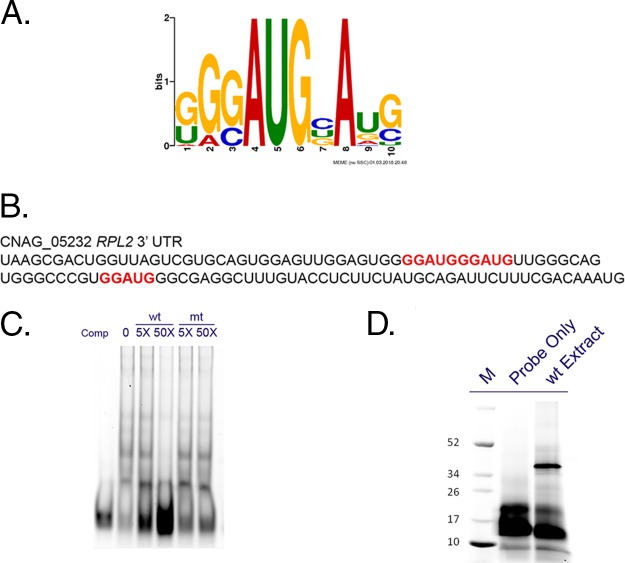
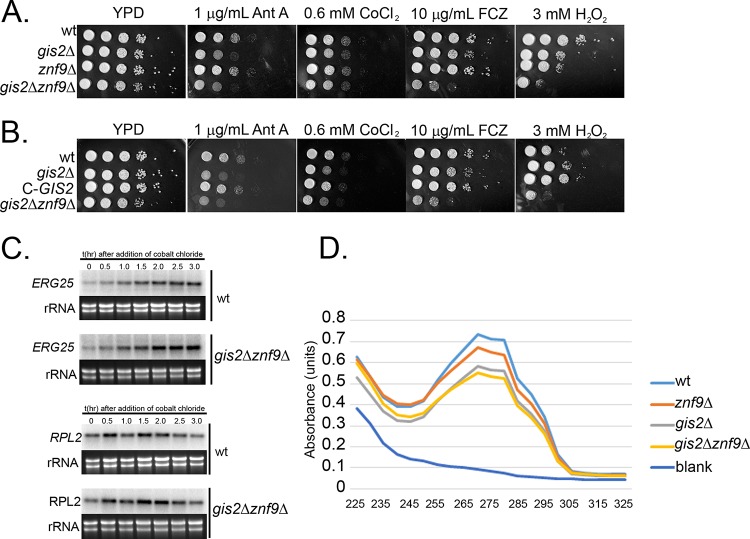
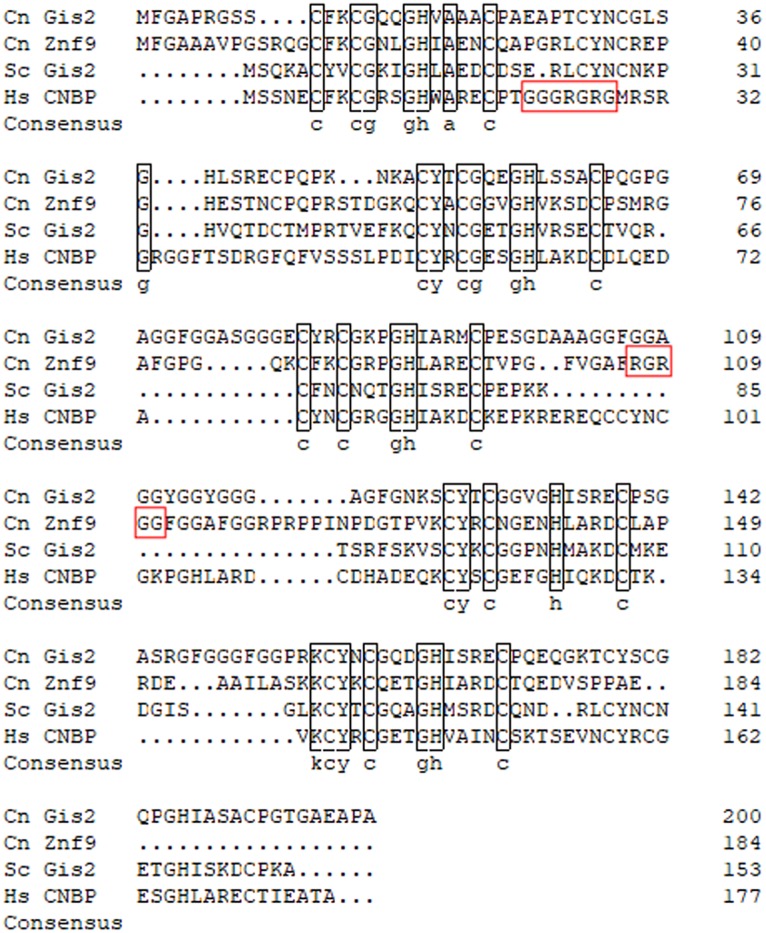
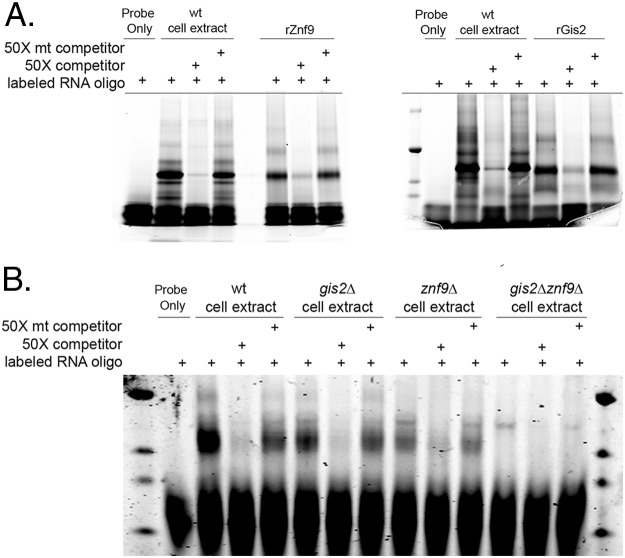
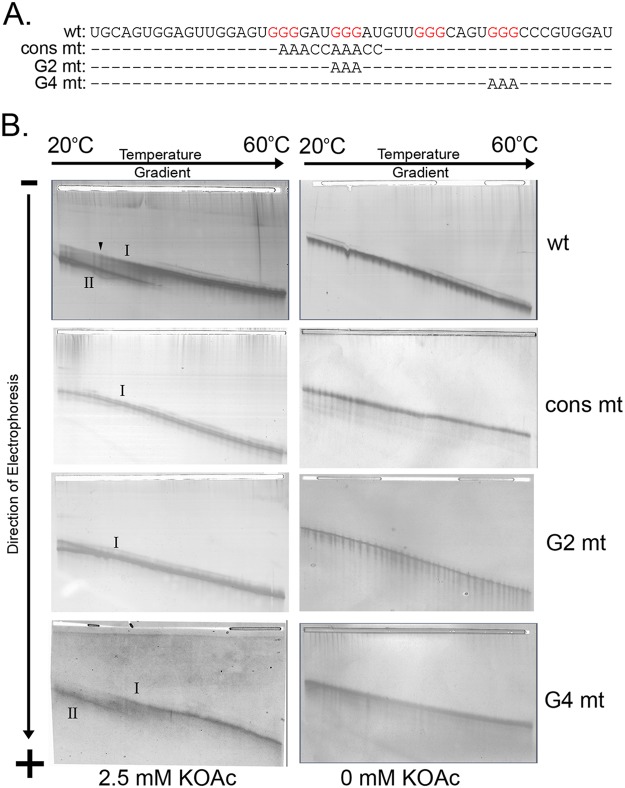
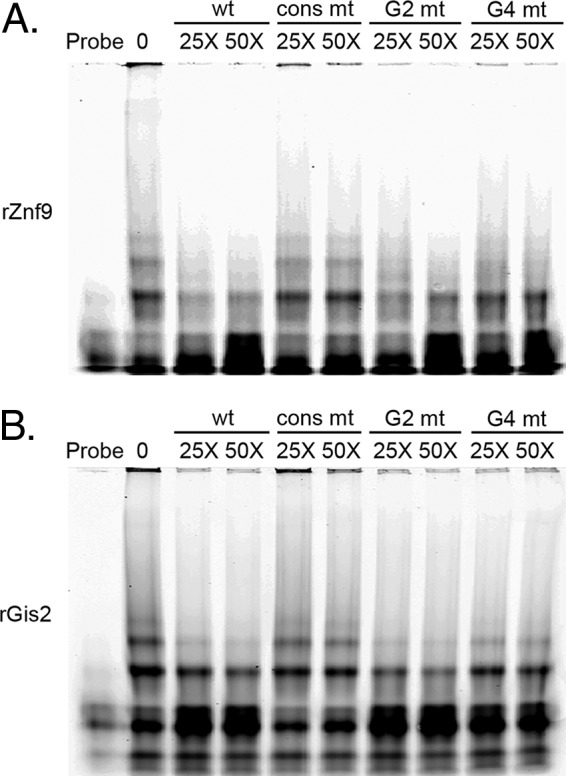
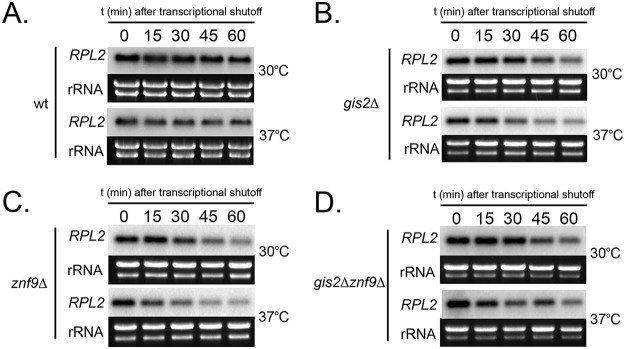
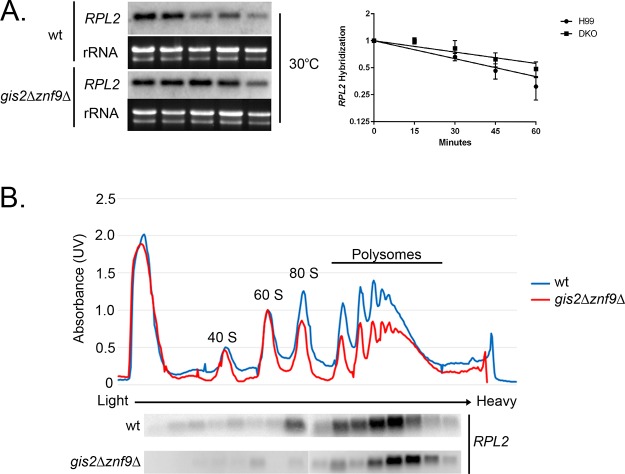
In , mRNAs encoding ribosomal proteins (RP) are rapidly and specifically repressed during cellular stress, and the bulk of this repression is mediated by deadenylation-dependent mRNA decay. A motif-finding approach was applied to the 3' untranslated regions (UTRs) of RP transcripts regulated by mRNA decay, and a single, significant motif, GGAUG, was identified. Znf9, a small zinc knuckle RNA binding protein identified by mass spectrometry, was found to interact specifically with the 3'-UTR probe. A second, homologous protein, Gis2, was identified in the genome of and also bound the 3'-UTR probe, and deletion of both genes resulted in loss of binding in cell extracts. The 3' UTR contains four G-triplets (GGG) that have the potential to form a G-quadruplex, and temperature gradient gel electrophoresis revealed a potassium-dependent structure consistent with a G-quadruplex that was abrogated by mutation of G-triplets. However, deletion of G-triplets did not abrogate the binding of either Znf9 or Gis2, suggesting that these proteins either bind irrespective of structure or act to prevent structure formation. Deletion of both and resulted in a modest increase in basal stability of the mRNA which resulted in an association with higher-molecular-weight polysomes under unstressed conditions. The Δ mutant and Δ Δ double mutant exhibited sensitivity to cobalt chloride, fluconazole, and oxidative stress, and although transcriptional induction of was similar to that of the wild type, analysis of sterol content revealed repressed levels of sterols in the Δ and Δ Δ double mutant, suggesting a role in translational regulation of sterol biosynthesis. Stress adaptation is fundamental to the success of as a human pathogen and requires a reprogramming of the translating pool of mRNA. This reprogramming begins with the regulated degradation of mRNAs encoding the translational machinery. The mechanism by which these mRNAs are specified has not been determined. This study has identified a element within a G-quadruplex structure that binds two homologues of cellular nucleic acid binding protein (CNBP). These proteins regulate the polysome association of the target mRNA but perform functions related to sterol homeostasis which appear independent of ribosomal protein mRNAs. The presence of two CNBP homologues in suggests a diversification of function of these proteins, one of which appears to regulate sterol biosynthesis and fluconazole sensitivity.
在细胞应激过程中,编码核糖体蛋白 (RP) 的 mRNAs 会迅速且特异性地受到抑制,这种抑制的大部分是由依赖于脱腺苷化的 mRNA 衰变介导的。我们应用 motif-finding 方法对受 mRNA 衰变调控的 RP 转录本的 3'非翻译区 (UTR) 进行了分析,发现了一个单一的、显著的 motif,即 GGAUG。通过质谱鉴定发现,小分子锌指 RNA 结合蛋白 Znf9 特异性地与 3'-UTR 探针相互作用。在 的基因组中发现了第二个同源蛋白 Gis2,也与 3'-UTR 探针结合,并且这两个基因的缺失导致细胞提取物中的结合丢失。UTR 包含四个 G-三联体 (GGG),它们有可能形成 G-四链体,温度梯度凝胶电泳显示出一种钾依赖性结构,与 G-四链体一致,而 G-三联体的突变则破坏了这种结构。然而,删除 G-三联体并没有破坏 Znf9 或 Gis2 的结合,这表明这些蛋白要么不依赖于结构结合,要么起防止结构形成的作用。和的缺失导致基础状态下 mRNA 的稳定性略有增加,这导致在未受应激条件下与高分子量多核糖体结合。Δ突变体和 Δ Δ 双突变体对氯化钴、氟康唑和氧化应激敏感,尽管 的转录诱导与野生型相似,但固醇含量分析显示 Δ 和 Δ Δ 双突变体中的固醇水平受到抑制,表明其在固醇生物合成的翻译调控中起作用。适应应激是作为人类病原体的成功所必需的,需要对翻译池的 mRNA 进行重新编程。这种重新编程始于翻译机制相关 mRNAs 的调控性降解。目前还没有确定这些 mRNA 被指定的机制。本研究在 G-四链体结构内鉴定出一个与细胞核酸结合蛋白 (CNBP) 的两个 同源物结合的 元件。这些蛋白调节靶 mRNA 的多核糖体结合,但发挥与核糖体蛋白 mRNAs 相关的功能与固醇稳态有关,这似乎与核糖体蛋白 mRNAs 无关。在 中存在两个 CNBP 同源物表明这些蛋白的功能多样化,其中一个似乎调节固醇生物合成和氟康唑敏感性。