Department of Medical Microbiology, University Medical Center Utrecht, Utrecht, The Netherlands.
Cell Microbiol. 2018 Nov;20(11):e12941. doi: 10.1111/cmi.12941. Epub 2018 Sep 17.
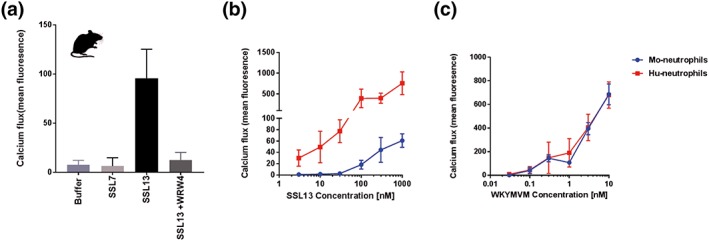
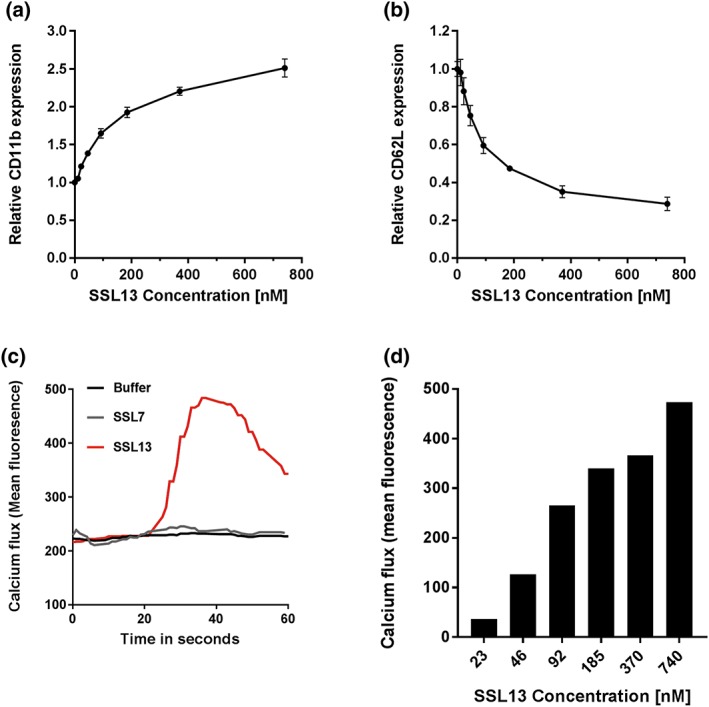
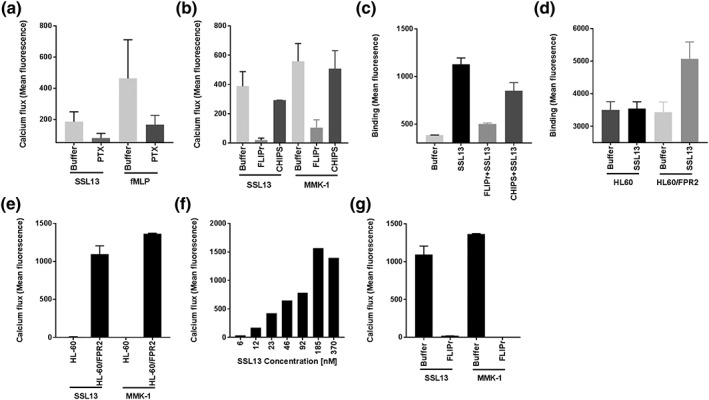
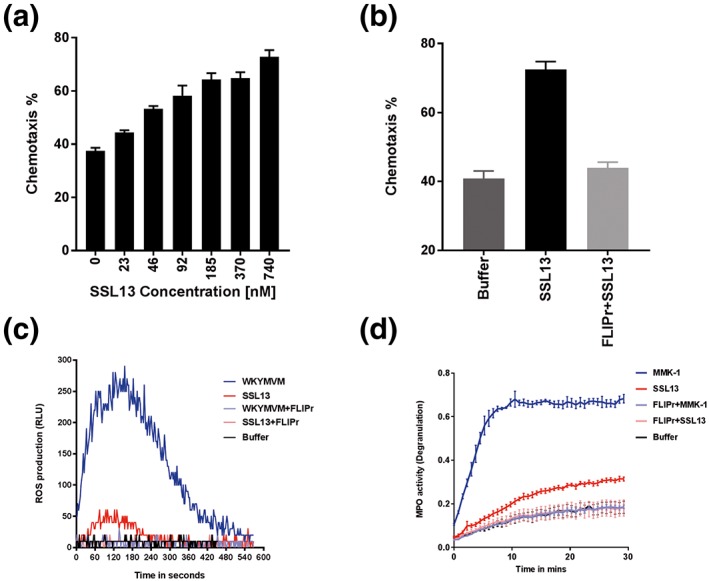
Staphylococcal superantigen-like (SSL) proteins, one of the major virulence factor families produced by Staphylococcus aureus, were previously demonstrated to be immune evasion molecules that interfere with a variety of innate immune defences. However, in contrast to characterised SSLs, which inhibit immune functions, we show that SSL13 is a strong activator of neutrophils via the formyl peptide receptor 2 (FPR2). Moreover, our data show that SSL13 acts as a chemoattractant and induces degranulation and oxidative burst in neutrophils. As with many other staphylococcal immune evasion proteins, SSL13 shows a high degree of human specificity. SSL13 is not able to efficiently activate mouse neutrophils, hampering in vivo experiments. In conclusion, SSL13 is a neutrophil chemoattractant and activator that acts via FPR2. Therefore, SSL13 is a unique SSL member that does not belong to the immune evasion class but is a pathogen alarming molecule. Our study provides a new concept of SSLs; SSLs not only inhibit host immune processes but also recruit human neutrophils to the site of infection. This new insight allows us to better understand complex interactions between host and S. aureus pathological processes.
葡萄球菌超抗原样(SSL)蛋白是金黄色葡萄球菌产生的主要毒力因子家族之一,先前被证明是免疫逃逸分子,可干扰多种先天免疫防御。然而,与具有特征的 SSL 不同,SSL13 通过甲酰肽受体 2(FPR2)强烈激活中性粒细胞。此外,我们的数据表明 SSL13 作为趋化因子诱导中性粒细胞脱颗粒和氧化爆发。与许多其他葡萄球菌免疫逃逸蛋白一样,SSL13 显示出高度的人类特异性。SSL13 不能有效地激活小鼠中性粒细胞,阻碍了体内实验。总之,SSL13 是一种通过 FPR2 激活中性粒细胞的趋化因子和激活剂。因此,SSL13 是一种独特的 SSL 成员,不属于免疫逃逸类,而是一种病原体警报分子。我们的研究提供了 SSL 的新概念;SSL 不仅抑制宿主免疫过程,还招募人类中性粒细胞到感染部位。这一新的见解使我们能够更好地理解宿主和金黄色葡萄球菌病理过程之间的复杂相互作用。