Mijele Domnic, Njoroge Michael, Kaitho Titus
Veterinary Services Department, Species Conservation and Management Division, Kenya Wildlife Service, Nairobi, Kenya,
Vet Med (Auckl). 2015 May 7;6:165-170. doi: 10.2147/VMRR.S74756. eCollection 2015.
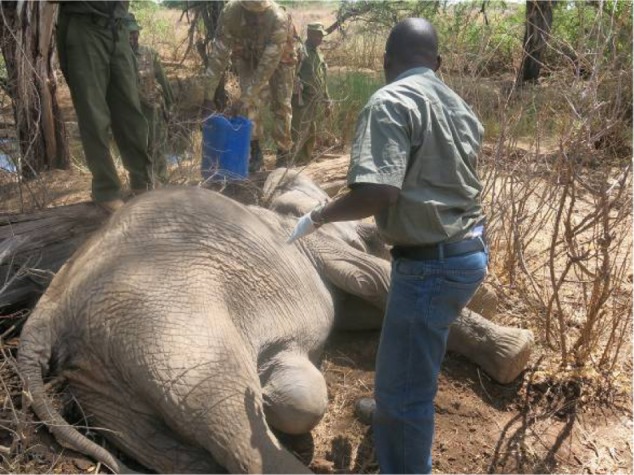
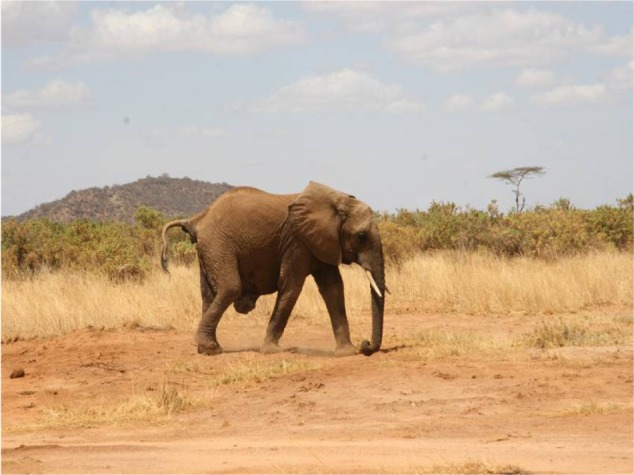
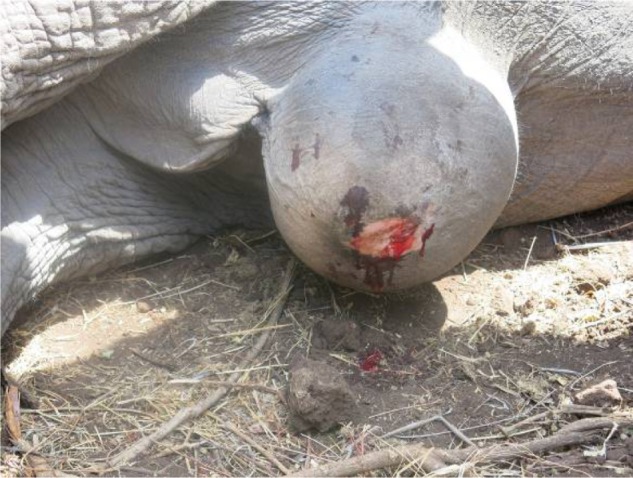
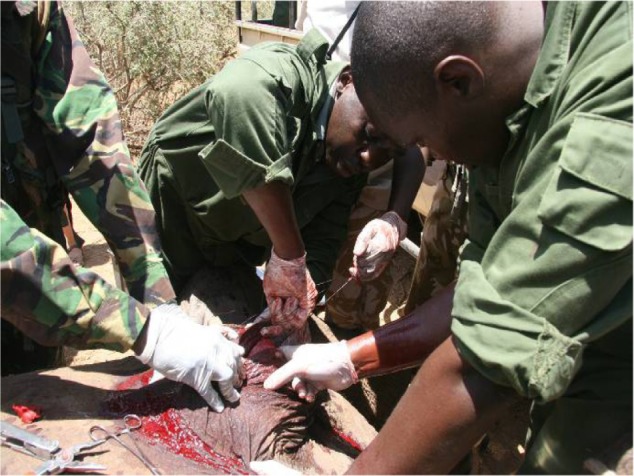
A 10-year-old male African elephant ( at Samburu National Reserve in Northern Kenya, weighing approximately 1,600 kg, presented with an umbilical hernia in October 2013. Umbilical herniorrhaphy was carried out under field conditions. Anesthesia was induced and maintained using etorphine hydrochloride for 3 hours during the surgery. This case report details both the surgical and anesthetic procedure carried out to correct the hernia, and the eventual successful recovery of the elephant from anesthesia. However, the elephant died weeks after the surgery and a postmortem could not reveal the cause of death because predators had scavenged the carcass. The challenges of the surgical procedure and outcome including possible causes of death are highlighted in this report.
一头10岁的雄性非洲象(位于肯尼亚北部的桑布鲁国家保护区,体重约1600千克)于2013年10月出现脐疝。在野外条件下进行了脐疝修补术。手术过程中使用盐酸埃托啡诱导并维持麻醉3小时。本病例报告详细描述了为纠正疝气所进行的手术和麻醉过程,以及大象最终从麻醉中成功苏醒的情况。然而,这头大象在手术后几周死亡,由于尸体已被食肉动物啃食,尸检无法揭示死亡原因。本报告强调了手术过程和结果所面临的挑战,包括可能的死亡原因。