Section Molecular Microbiology, Amsterdam Institute of Molecules, Medicines & Systems, Vrije Universiteit Amsterdam, Amsterdam, The Netherlands.
Department of Medical Microbiology and Infection Control, Amsterdam University Medical Centers, Amsterdam, the Netherlands.
PLoS Pathog. 2018 Aug 13;14(8):e1007247. doi: 10.1371/journal.ppat.1007247. eCollection 2018 Aug.
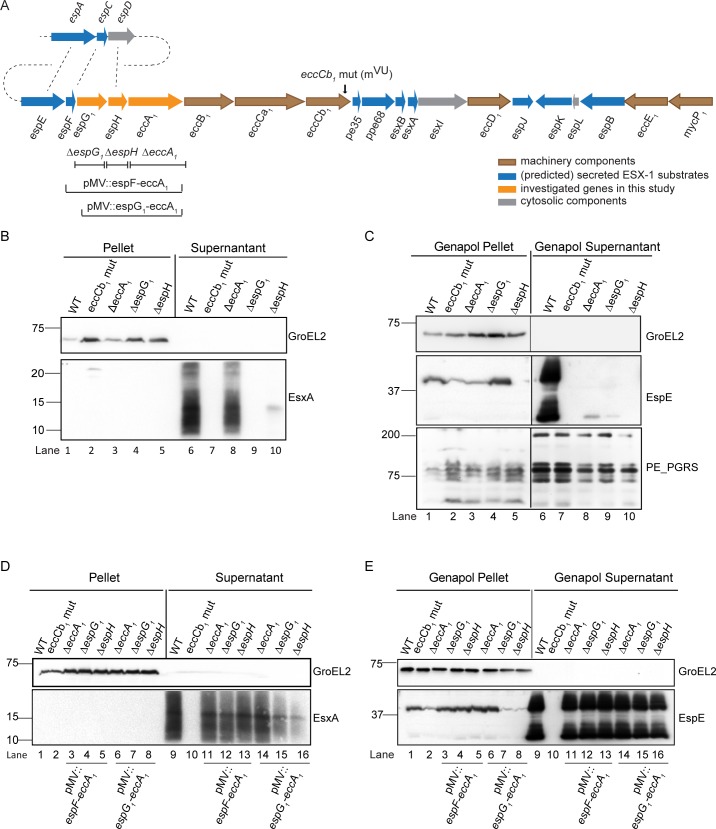
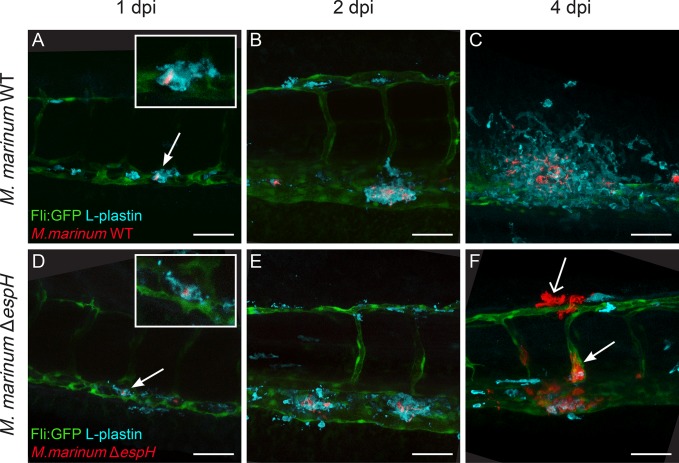
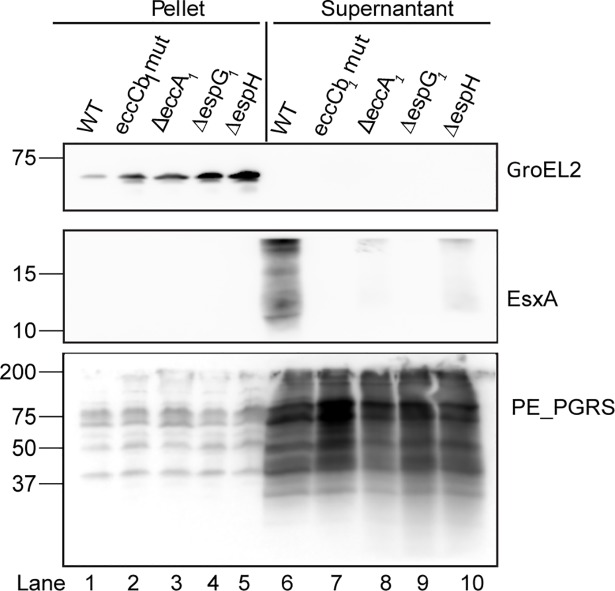
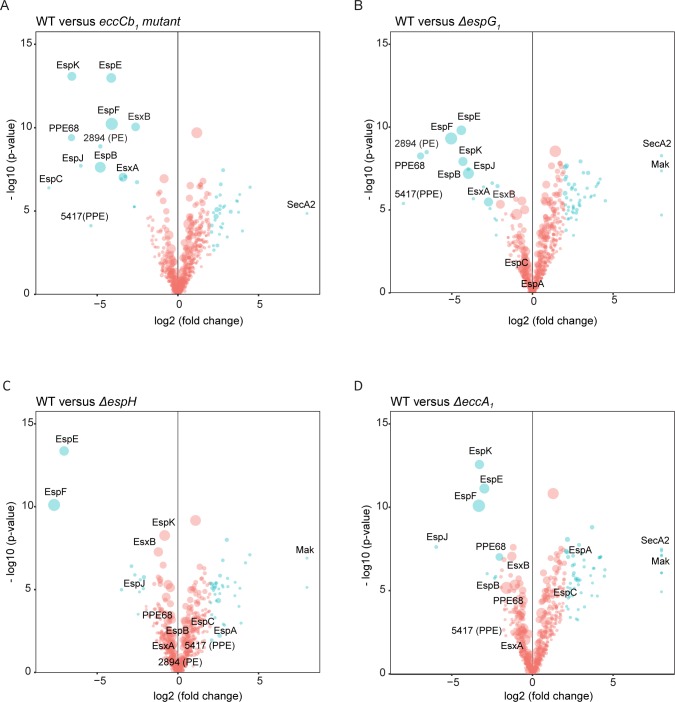
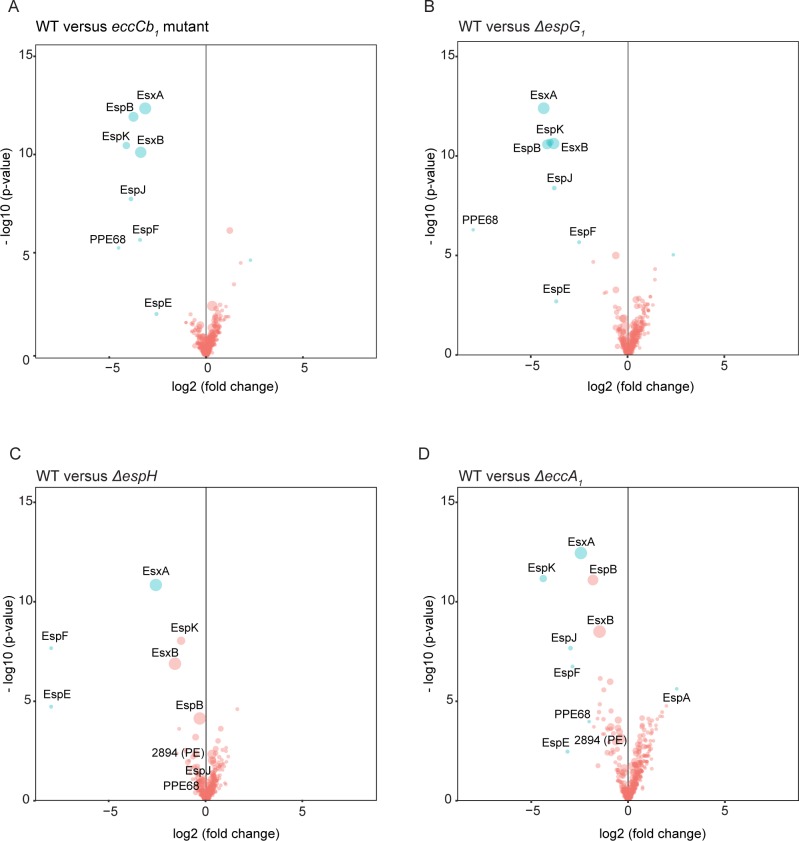
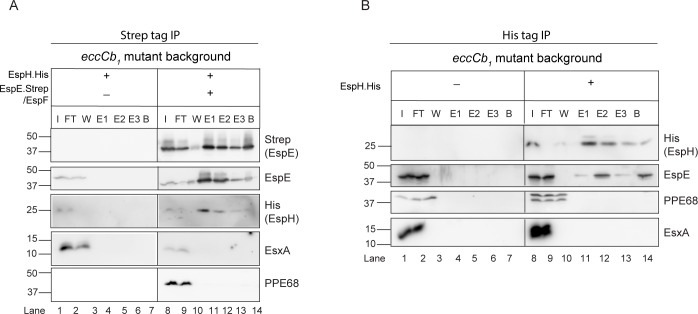
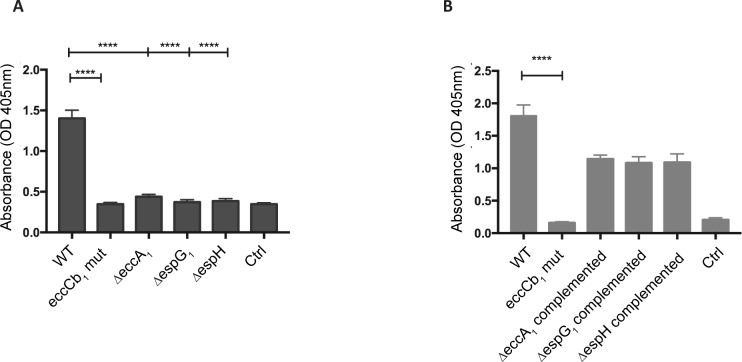
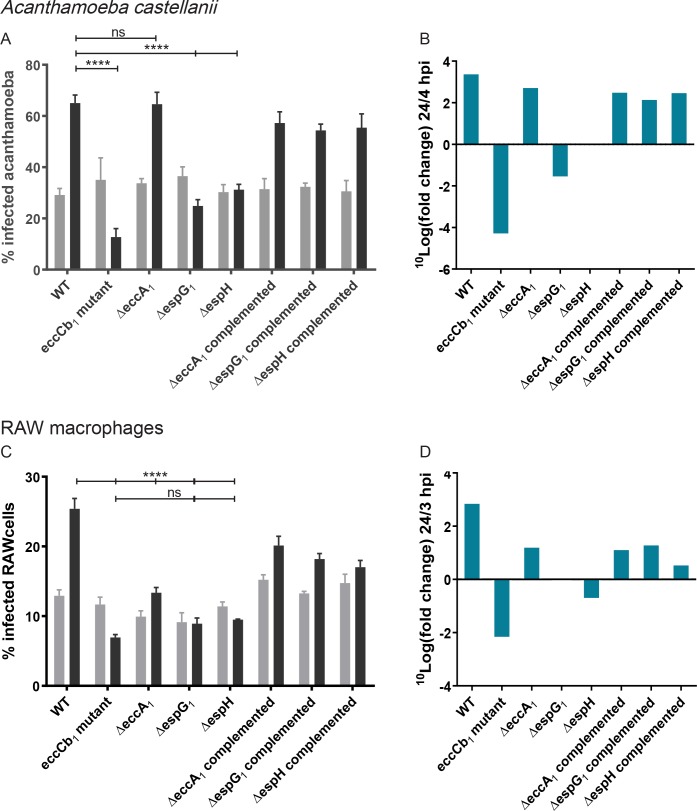
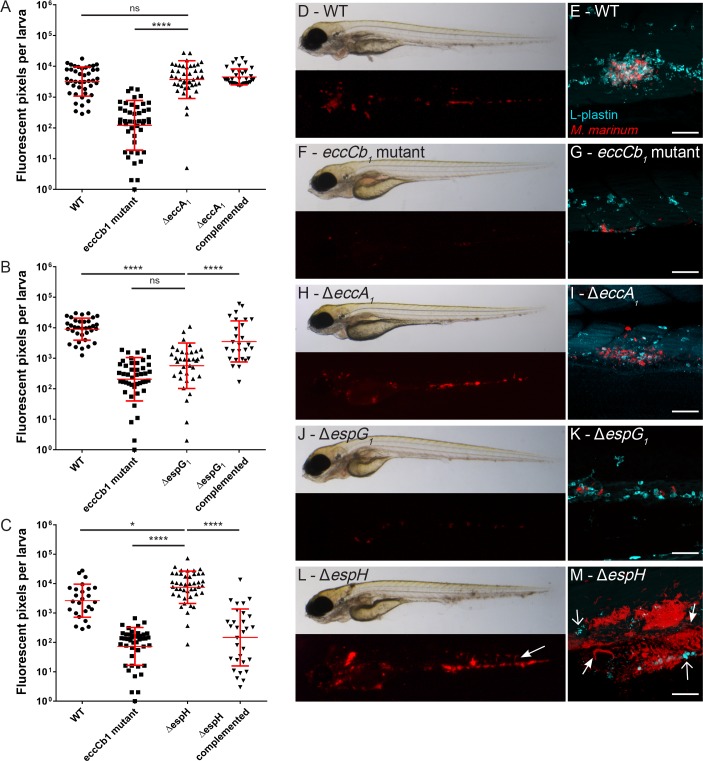
The pathogen Mycobacterium tuberculosis employs a range of ESX-1 substrates to manipulate the host and build a successful infection. Although the importance of ESX-1 secretion in virulence is well established, the characterization of its individual components and the role of individual substrates is far from complete. Here, we describe the functional characterization of the Mycobacterium marinum accessory ESX-1 proteins EccA1, EspG1 and EspH, i.e. proteins that are neither substrates nor structural components. Proteomic analysis revealed that EspG1 is crucial for ESX-1 secretion, since all detectable ESX-1 substrates were absent from the cell surface and culture supernatant in an espG1 mutant. Deletion of eccA1 resulted in minor secretion defects, but interestingly, the severity of these secretion defects was dependent on the culture conditions. Finally, espH deletion showed a partial secretion defect; whereas several ESX-1 substrates were secreted in normal amounts, secretion of EsxA and EsxB was diminished and secretion of EspE and EspF was fully blocked. Interaction studies showed that EspH binds EspE and therefore could function as a specific chaperone for this substrate. Despite the observed differences in secretion, hemolytic activity was lost in all M. marinum mutants, implying that hemolytic activity is not strictly correlated with EsxA secretion. Surprisingly, while EspH is essential for successful infection of phagocytic host cells, deletion of espH resulted in a significantly increased virulence phenotype in zebrafish larvae, linked to poor granuloma formation and extracellular outgrowth. Together, these data show that different sets of ESX-1 substrates play different roles at various steps of the infection cycle of M. marinum.
结核分枝杆菌利用一系列 ESX-1 底物来操纵宿主并建立成功的感染。尽管 ESX-1 分泌在毒力中的重要性已得到充分证实,但对其单个成分的特征及其单个底物的作用的了解还远远不够。在这里,我们描述了分枝杆菌附属 ESX-1 蛋白 EccA1、EspG1 和 EspH 的功能特征,即既不是底物也不是结构成分的蛋白。蛋白质组学分析表明 EspG1 对 ESX-1 分泌至关重要,因为在 espG1 突变体中,所有可检测到的 ESX-1 底物都不存在于细胞表面和培养上清液中。eccA1 的缺失导致轻微的分泌缺陷,但有趣的是,这些分泌缺陷的严重程度取决于培养条件。最后,espH 的缺失显示出部分分泌缺陷;尽管几种 ESX-1 底物以正常量分泌,但 EsxA 和 EsxB 的分泌减少,EspE 和 EspF 的分泌完全受阻。相互作用研究表明 EspH 结合 EspE,因此可以作为该底物的特异性伴侣。尽管观察到分泌差异,但所有分枝杆菌突变体的溶血活性均丧失,这意味着溶血活性与 EsxA 分泌并不严格相关。令人惊讶的是,虽然 EspH 对于吞噬宿主细胞的成功感染是必需的,但 espH 的缺失导致斑马鱼幼虫中的毒力表型显著增加,这与肉芽肿形成不良和细胞外生长有关。总之,这些数据表明,不同的 ESX-1 底物在分枝杆菌感染周期的各个步骤中发挥不同的作用。