Kimmel A R, Carlisle B
Proc Natl Acad Sci U S A. 1986 Apr;83(8):2506-10. doi: 10.1073/pnas.83.8.2506.
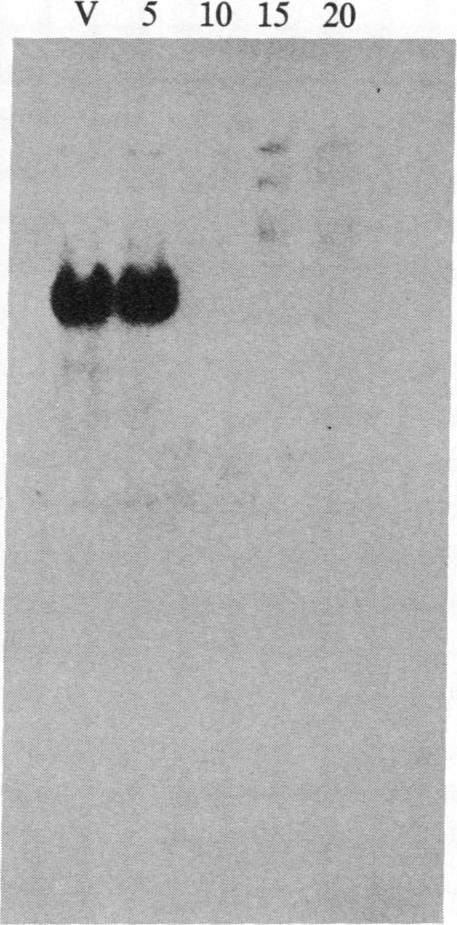
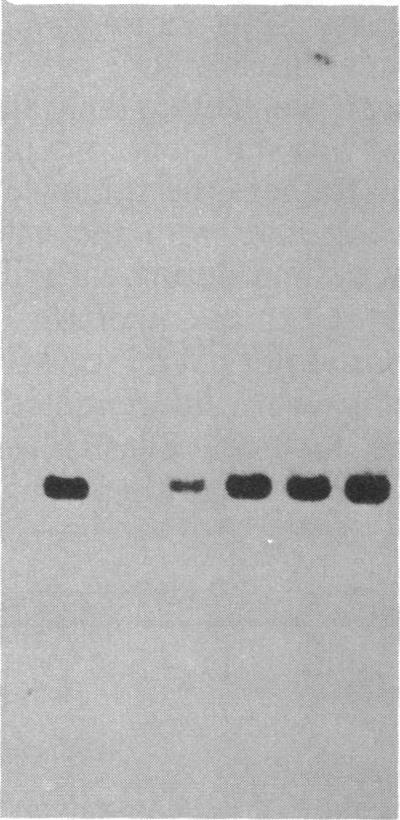
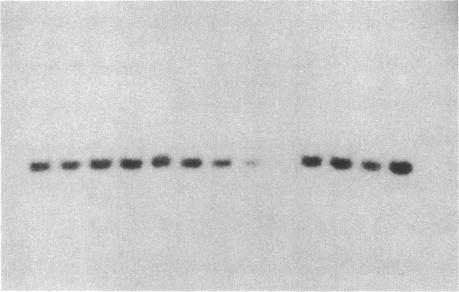
We describe the gene M4-1, whose unique pattern of developmental expression will allow us to study the molecular mechanisms controlling expression in undifferentiated cells in addition to repression in response to cAMP during development and reinduction during dedifferentiation. M4-1 is a Dictyostelium gene expressed in the undifferentiated cell. We have shown that M4-1 continues to be expressed very early during the developmental cycle but is repressed at a later stage of development, at a time coincident with the establishment of oscillations in the cAMP pool. Studies on the expression of the M4-1 gene in shaking culture, under conditions that mimic early development, have established that pulsatile stimulation of cells with cAMP is sufficient to repress M4-1 expression. Consistent with this, cells that are exposed to high levels of cAMP are unable to respond normally to cAMP oscillations and continue to express M4-1 at vegetative levels. These data indicate that low-level oscillations of cAMP are required for the repression of M4-1 expression rather than the continuous high levels of cAMP responsible for the regulation of a different class of Dictyostelium genes. We suggest that cAMP may mediate developmental expression of the Dictyostelium genome by different mechanisms. We also show that cell-cell interaction, a developmental event that occurs subsequent to the cAMP pulse, does not normally influence the regulation of M4-1. Finally, we have shown that when cAMP-pulsed cells are induced to dedifferentiate, M4-1 RNA sequences rapidly reappear in nuclei and cytoplasm, suggesting that regulation of M4-1 expression is primarily mediated at the level of transcription.
我们描述了基因M4-1,其独特的发育表达模式将使我们能够研究除了在发育过程中对cAMP作出反应的抑制以及在去分化过程中的再诱导之外,控制未分化细胞中基因表达的分子机制。M4-1是一种在未分化细胞中表达的盘基网柄菌基因。我们已经表明,M4-1在发育周期的早期持续表达,但在发育后期被抑制,这一时期与cAMP池振荡的建立同时发生。在模拟早期发育的条件下,对摇瓶培养中M4-1基因表达的研究表明,用cAMP对细胞进行脉冲刺激足以抑制M4-1的表达。与此一致的是,暴露于高水平cAMP的细胞无法对cAMP振荡作出正常反应,并继续以营养水平表达M4-基因。这些数据表明,cAMP的低水平振荡是抑制M4-1表达所必需的,而不是负责调控另一类盘基网柄菌基因的持续高水平cAMP。我们认为,cAMP可能通过不同机制介导盘基网柄菌基因组的发育表达。我们还表明,细胞间相互作用,这一在cAMP脉冲之后发生的发育事件,通常不会影响M4-1的调控。最后,我们已经表明,当cAMP脉冲处理的细胞被诱导去分化时,M4-1 RNA序列迅速重新出现在细胞核和细胞质中,这表明M4-1表达的调控主要在转录水平上介导。