Lian Yi-Fan, Huang Yan-Lin, Wang Jia-Liang, Deng Mei-Hai, Xia Tian-Liang, Zeng Mu-Sheng, Chen Min-Shan, Wang Hong-Bo, Huang Yue-Hua
Guangdong Provincial Key Laboratory of Liver Disease Research, the Third Affiliated Hospital of Sun Yat-sen University, Guangzhou, China.
Department of Infectious Diseases, the Third Affiliated Hospital of Sun Yat-sen University, Guangzhou, China.
Aging (Albany NY). 2018 Aug 9;10(8):1884-1901. doi: 10.18632/aging.101510.
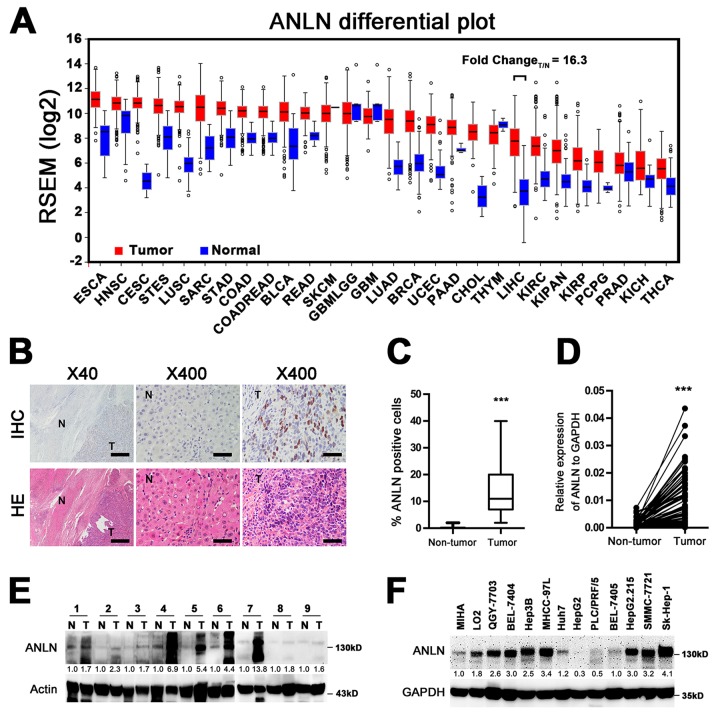
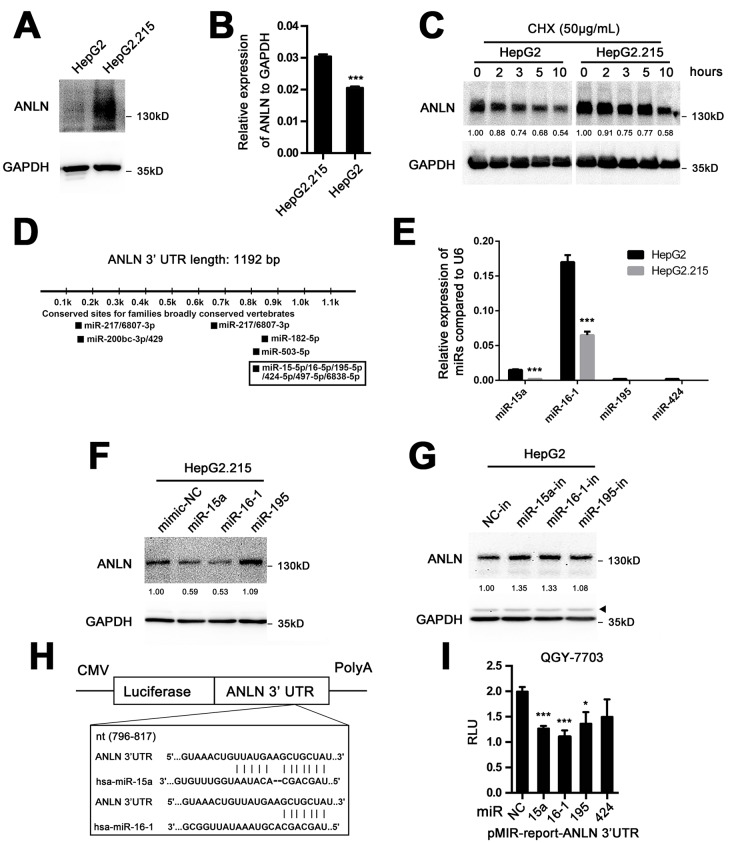
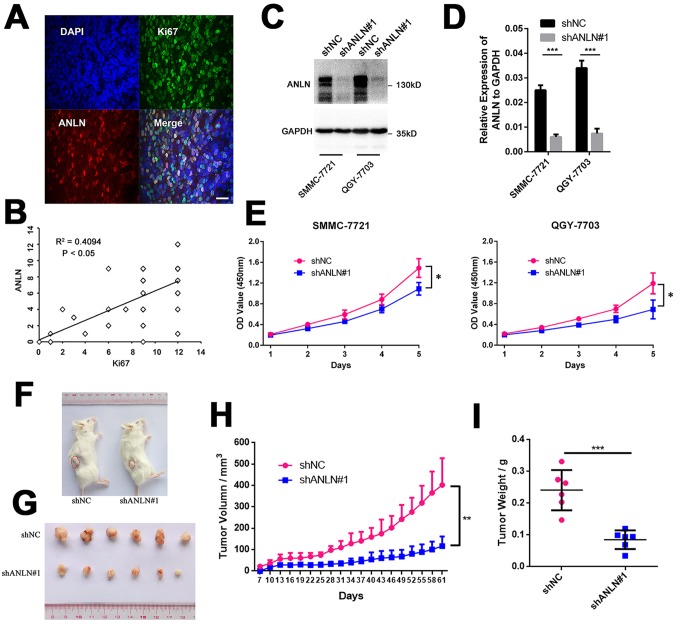
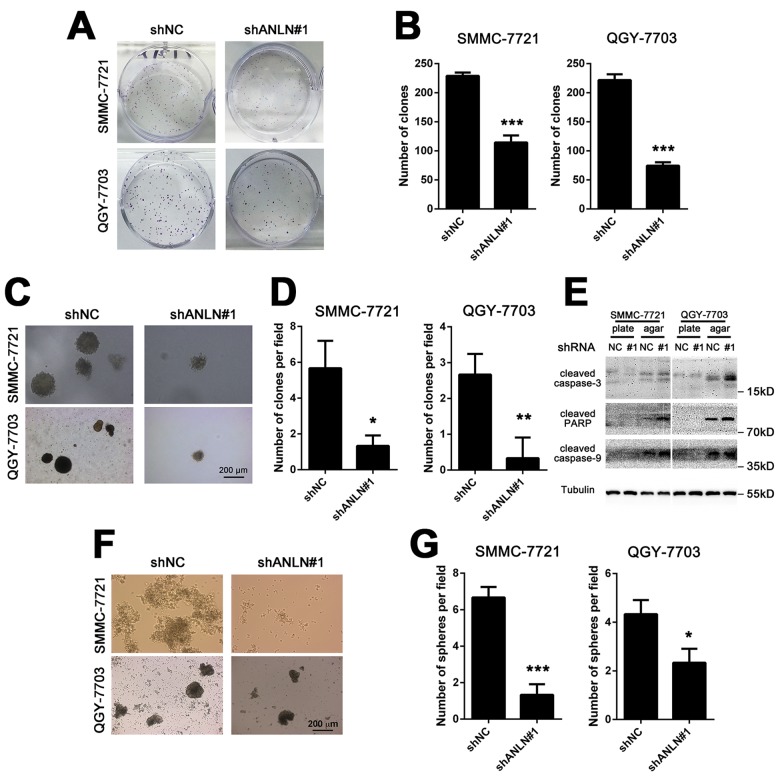
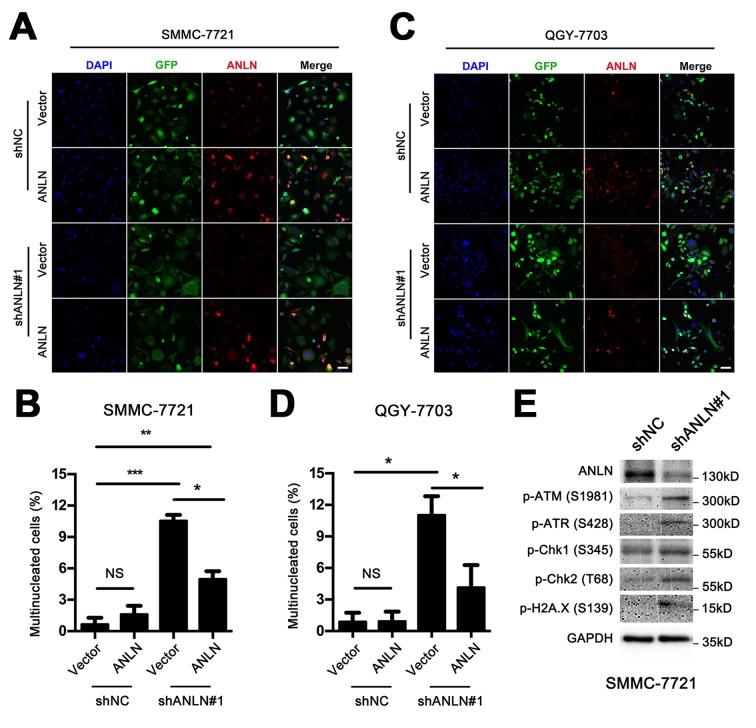
Anillin (ANLN) is an actin-binding protein essential for assembly of cleavage furrow during cytokinesis. Although reportedly overexpressed in various human cancers, its role in hepatocellular carcinoma (HCC) is unclear. To address this issue, we confirmed that in 436 liver samples obtained from surgically removed HCC tissues, higher ANLN expression was detected in tumor tissues than in adjacent non-tumor tissues of HCC as measured by immunohistochemistry, quantitative real-time PCR and western blotting. Correlation and Kaplan-Meier analysis revealed that patients with higher ANLN expression were associated with worse clinical outcomes and a shorter survival time, respectively. Moreover, ANLN inhibition resulted in growth restraint, reduced colony formation, and a lower sphere number in suspension culture. Mechanistically, ANLN deficiency induced an increasing number of multinucleated cells along with the activation of apoptosis signaling and DNA damage checkpoints. Furthermore, HBV infection increased ANLN expression by inhibiting the expression of microRNA (miR)-15a and miR-16-1, both of which were identified as ANLN upstream repressors by targeting its 3' untranslated region. Thus, we conclude that ANLN promotes tumor growth by ways of decreased apoptosis and DNA damage. Expression level of ANLN significantly influences the survival probability of HCC patients and may represent a promising prognostic biomarker.
肌动蛋白结合蛋白(ANLN)是一种肌动蛋白结合蛋白,在细胞分裂过程中对分裂沟的组装至关重要。尽管据报道在各种人类癌症中ANLN均有过表达,但其在肝细胞癌(HCC)中的作用尚不清楚。为解决这一问题,我们证实,通过免疫组织化学、定量实时PCR和蛋白质印迹法检测,在从手术切除的HCC组织中获得的436份肝脏样本中,肿瘤组织中检测到的ANLN表达高于HCC相邻的非肿瘤组织。相关性分析和Kaplan-Meier分析显示,ANLN表达较高的患者分别与较差的临床结局和较短的生存时间相关。此外,抑制ANLN导致生长受限、集落形成减少以及悬浮培养中球体数量减少。从机制上讲,ANLN缺乏导致多核细胞数量增加,同时激活凋亡信号和DNA损伤检查点。此外,乙型肝炎病毒(HBV)感染通过抑制微小RNA(miR)-15a和miR-16-1的表达来增加ANLN的表达,这两种微小RNA均通过靶向ANLN的3'非翻译区被确定为ANLN的上游抑制因子。因此,我们得出结论,ANLN通过减少凋亡和DNA损伤来促进肿瘤生长。ANLN的表达水平显著影响HCC患者的生存概率,可能是一种有前景的预后生物标志物。