Wan Ho Yi, Cushman Samuel A, Ganey Joseph L
School of Earth Sciences and Environmental Sustainability, Northern Arizona University, Flagstaff, AZ 86011, USA.
USDA Forest Service Rocky Mountain Research Station, 2500 S. Pine Knoll, Flagstaff, AZ 86001, USA.
Genes (Basel). 2018 Aug 10;9(8):403. doi: 10.3390/genes9080403.
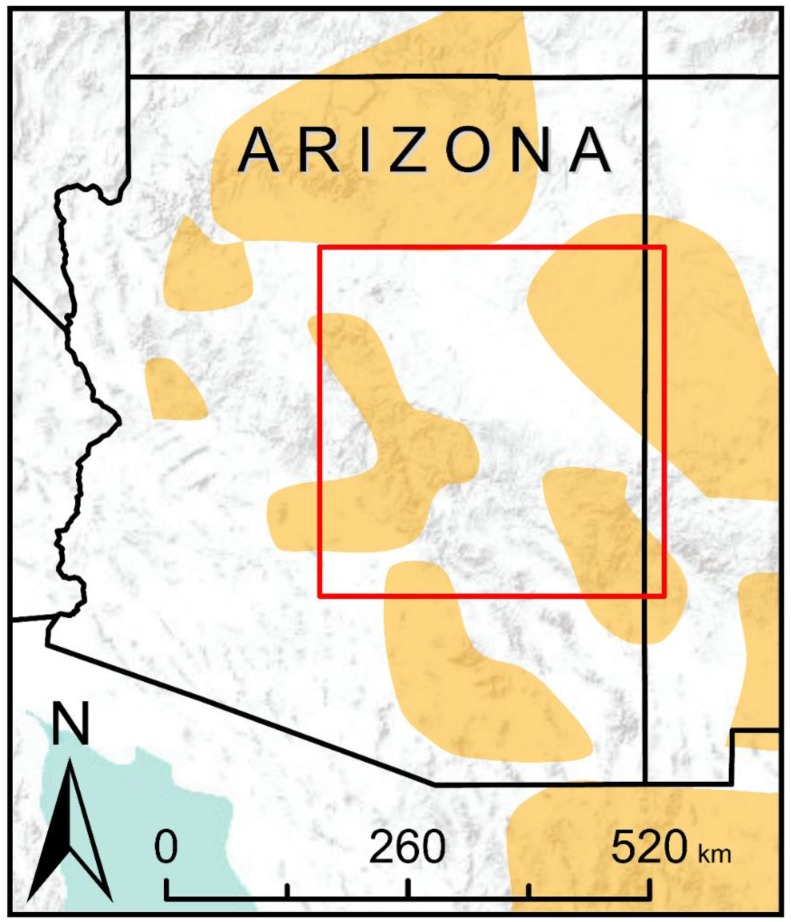
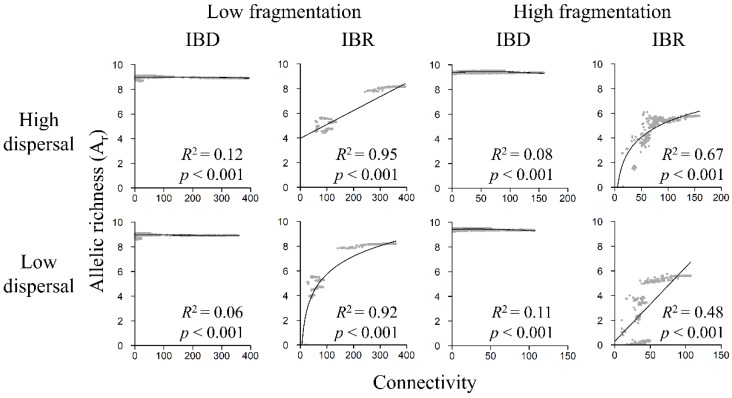
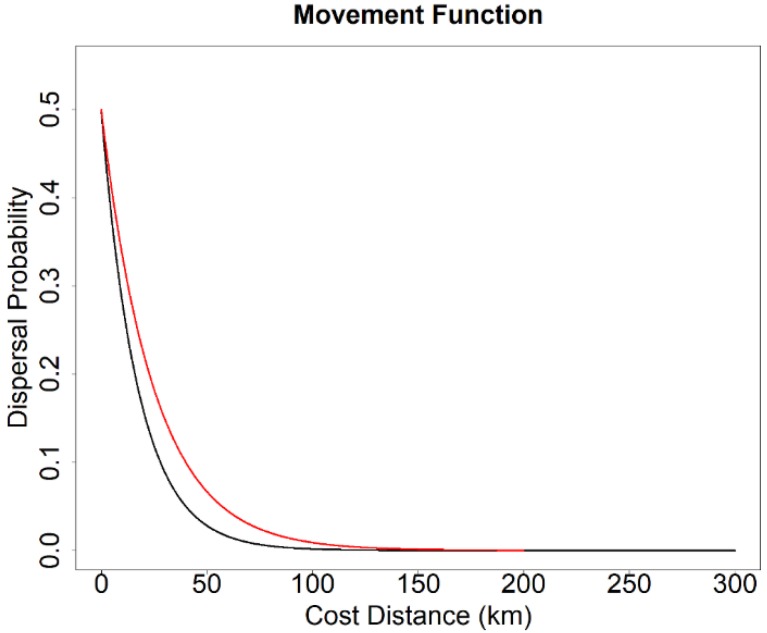
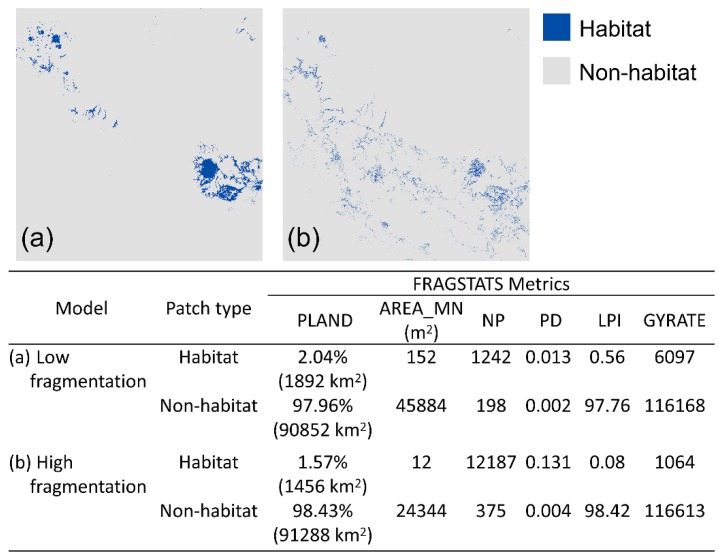
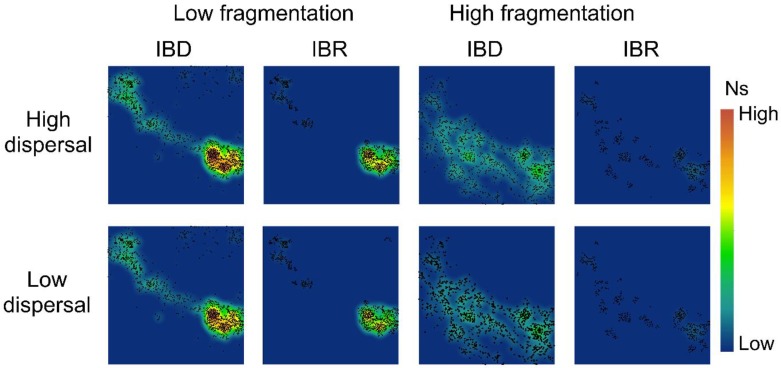
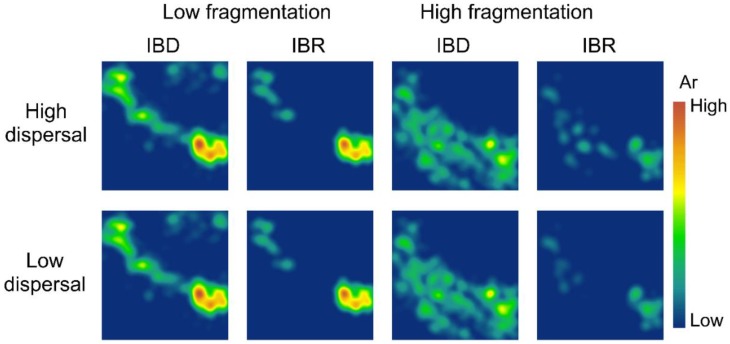
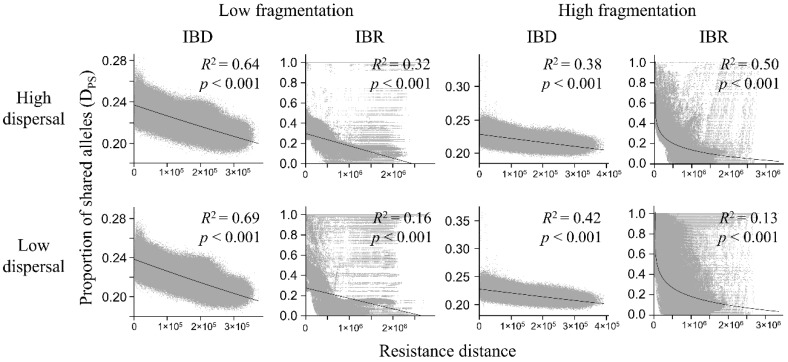
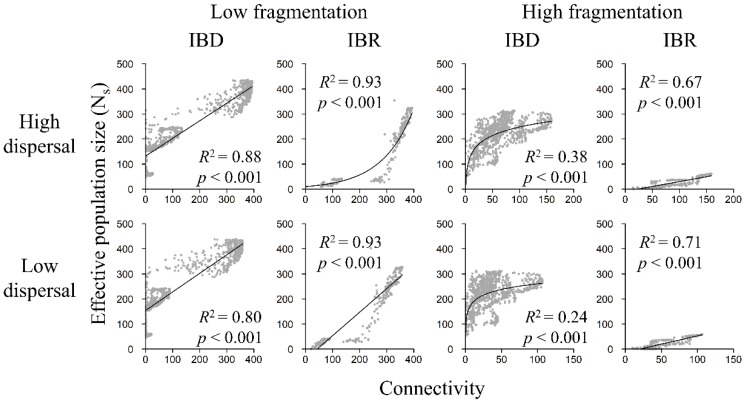
We evaluated how differences between two empirical resistance models for the same geographic area affected predictions of gene flow processes and genetic diversity for the Mexican spotted owl (). The two resistance models represented the landscape under low- and high-fragmentation parameters. Under low fragmentation, the landscape had larger but highly concentrated habitat patches, whereas under high fragmentation, the landscape had smaller habitat patches that scattered across a broader area. Overall habitat amount differed little between resistance models. We tested eight scenarios reflecting a factorial design of three factors: resistance model (low vs. high fragmentation), isolation hypothesis (isolation-by-distance, IBD, vs. isolation-by-resistance, IBR), and dispersal limit of species (200 km vs. 300 km). Higher dispersal limit generally had a positive but small influence on genetic diversity. Genetic distance increased with both geographic distance and landscape resistance, but landscape resistance displayed a stronger influence. Connectivity was positively related to genetic diversity under IBR but was less important under IBD. Fragmentation had a strong negative influence on the spatial patterns of genetic diversity and effective population size (Ns). Despite habitats being more concentrated and less widely distributed, the low-fragmentation landscape had greater genetic diversity than the high-fragmentation landscape, suggesting that highly concentrated but larger habitat patches may provide a genetic refuge for the Mexican spotted owl.
我们评估了针对同一地理区域的两个经验抗性模型之间的差异如何影响对墨西哥斑点鸮基因流动过程和遗传多样性的预测。这两个抗性模型分别代表了低破碎化参数和高破碎化参数下的景观。在低破碎化情况下,景观具有更大但高度集中的栖息地斑块,而在高破碎化情况下,景观具有较小的栖息地斑块,这些斑块散布在更广阔的区域。两个抗性模型之间的总体栖息地数量差异不大。我们测试了八种情景,这些情景反映了三个因素的析因设计:抗性模型(低破碎化与高破碎化)、隔离假说(距离隔离,IBD,与抗性隔离,IBR)以及物种的扩散极限(200公里与300公里)。较高的扩散极限通常对遗传多样性有积极但较小的影响。遗传距离随地理距离和景观抗性的增加而增加,但景观抗性显示出更强的影响。在IBR下,连通性与遗传多样性呈正相关,但在IBD下则不太重要。破碎化对遗传多样性的空间格局和有效种群大小(Ns)有强烈的负面影响。尽管栖息地更为集中且分布范围不那么广泛,但低破碎化景观的遗传多样性高于高破碎化景观,这表明高度集中但更大的栖息地斑块可能为墨西哥斑点鸮提供了一个遗传避难所。